
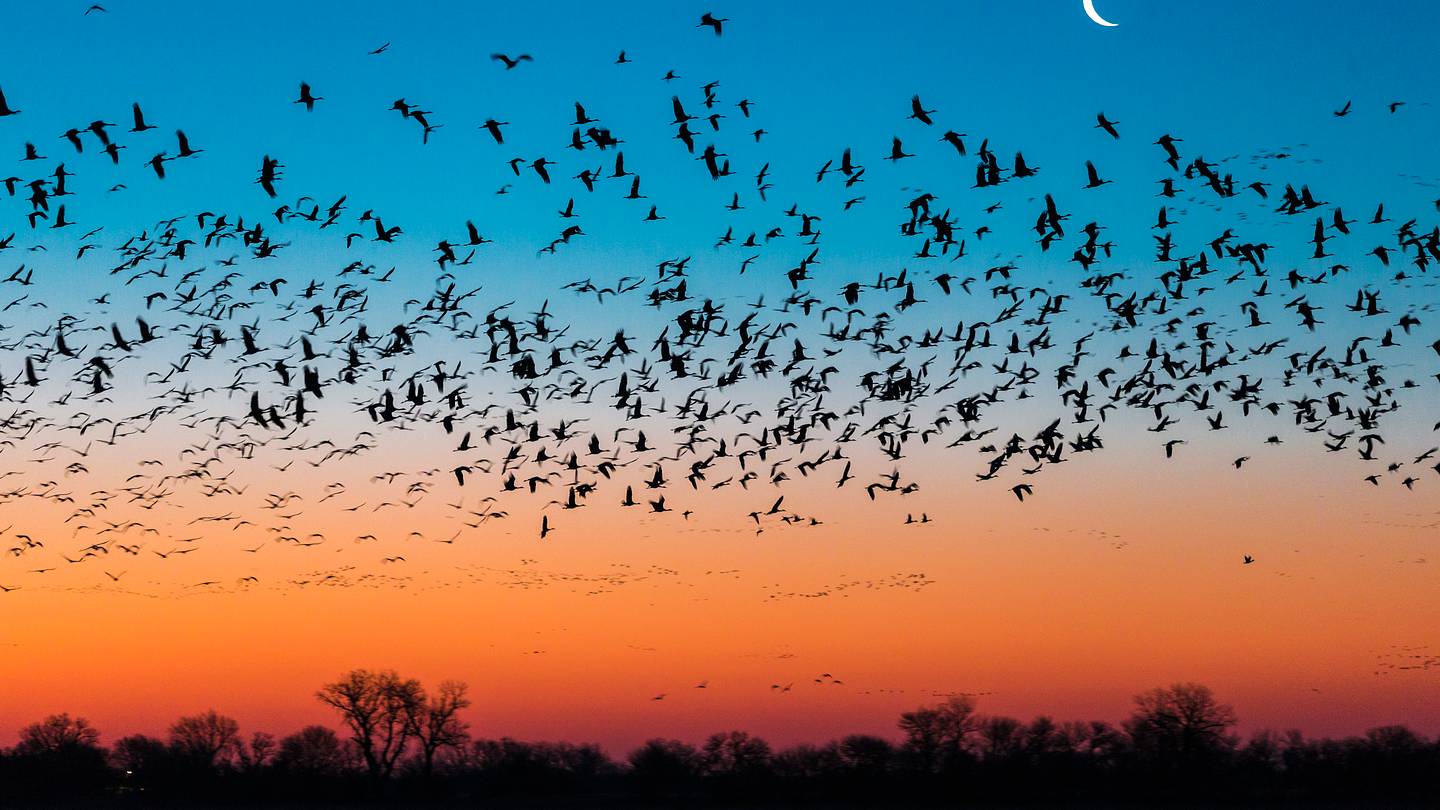
Every spring and fall, while most of us are doing extremely important things like forgetting to bring in the patio cushions, millions of birds are moving overhead in the dark. Warblers, thrushes, sparrows, orioles, tanagers, shorebirds, hawks, hummingbirds, and waterfowl may be passing above your neighborhood while you sleep, navigating by stars, weather patterns, instinct, and a biological travel itinerary that makes most airport apps look like a sticky note.
The tricky part is that bird migration is often invisible. You may wake up to a suddenly louder backyard, a mysterious new song in the maple tree, or a tiny bird on the fence that looks like it was painted by someone with excellent taste and very small brushes. But how do you know which birds are migrating through your area right now?
That is where BirdCast comes in. The BirdCast Migration Dashboard, developed by the Cornell Lab of Ornithology and partners, is an interactive bird migration tool that uses weather radar, modeling, and eBird data to show migration activity near you. Instead of guessing whether tonight is “a bird night,” you can look up your county or state and see how many birds passed overhead, which direction they were traveling, how high they were flying, and which species are most likely moving through your area.
In other words, it is a weather app for birdsexcept the forecast is feathers, flight, and the possibility that your local park will be full of tiny visitors tomorrow morning.
What Is BirdCast?
BirdCast is a bird migration forecasting and monitoring project that turns weather radar data into easy-to-understand migration maps. Weather radar does not only detect rain, snow, and the occasional dramatic blob that makes meteorologists squint. It can also detect living things moving through the atmosphere, including birds, bats, and insects.
During migration seasons, BirdCast analyzes radar signals to estimate the number of birds in flight across the contiguous United States. It then presents that information through tools such as live migration maps, three-day forecast maps, migration alerts, and the local Migration Dashboard.
The Local Migration Dashboard
The Migration Dashboard is the tool most people will want to bookmark. You can type in a county or state, choose a date, and see a local snapshot of migration activity. The dashboard can estimate how many birds crossed your area during the night, how many were in flight at peak traffic, the average direction they were moving, their speed, and their altitude.
It also includes an “expected nocturnal migrants” section. This part is especially useful because radar can estimate movement but cannot identify species. To solve that, BirdCast draws from eBird observations and migration timing to suggest which birds are most likely arriving, departing, or passing through your region.
So if the dashboard says a big wave moved through your county last night and the expected species list includes Swainson’s Thrush, Black-throated Blue Warbler, Baltimore Oriole, or White-throated Sparrow, you suddenly have a much better idea of what to listen and look for the next morning.
How the Interactive Tool Works
The genius of BirdCast is that it takes complex science and makes it useful for normal humansthe kind of people who may not own a radar station but do own binoculars, a coffee mug, and a strong opinion about squirrels.
1. Weather Radar Detects Birds in Flight
Most songbird migration happens at night. That surprises many beginners because our brains tend to imagine birds traveling in cheerful daytime flocks, maybe wearing tiny aviator goggles. In reality, nighttime offers cooler temperatures, calmer air, and fewer predators. Many species take off after sunset and land before dawn to rest and refuel.
As birds move through the sky, radar systems detect the motion. BirdCast processes this information to estimate migration intensity. The result is a live picture of where birds are moving, where migration is heavy, and how movement changes through the night.
2. Forecast Models Predict Migration
BirdCast also creates migration forecasts. These forecasts combine historical bird movement data with weather conditions such as wind, temperature, barometric pressure, and storms. When the conditions line up, migration may explode across a region. When weather is poor, birds may pause, concentrate in stopover areas, or shift routes.
This makes the tool valuable for planning. If a forecast shows heavy migration over your area tonight, tomorrow morning may be a great time to visit a park, lake edge, wooded trail, coastal preserve, cemetery, urban green space, or backyard with native plants.
3. eBird Data Helps Predict Species
Radar can tell us that birds are moving, but it cannot say, “That was definitely a Wood Thrush, and yes, it looked majestic.” Species predictions require another layer of data. BirdCast uses eBird, the global bird observation database from the Cornell Lab, to connect migration timing with local sightings.
Because birders submit checklists from parks, yards, refuges, campuses, farms, and waterfronts, eBird helps reveal which species usually occur in certain places during certain weeks. When paired with migration data, those observations make the expected species list far more practical than a generic field guide page.
Why This Matters for Birdwatchers
If you are new to birding, migration can feel random. One day your yard has robins and house finches. The next day there is a tiny yellow bird hopping in the shrubs like a lemon with wings. The BirdCast Migration Dashboard gives context to those surprise appearances.
It Helps You Know When to Go Birding
Birding is often about timing. During spring migration, a good morning after a heavy night of movement can feel like someone opened the sky and sprinkled birds into every tree. During fall migration, the action may be more subtle, but the variety can be spectacular.
By checking BirdCast before bed or early in the morning, birders can decide whether it is worth setting the alarm. A high-migration night does not guarantee a rare bird will politely pose at eye level, but it does improve your odds of seeing fresh arrivals.
It Helps You Learn Seasonal Patterns
Migration is not one giant bird parade. Different species move at different times. Early spring may bring blackbirds, waterfowl, and sparrows. Later spring often delivers warblers, vireos, orioles, tanagers, and flycatchers. Fall migration may begin with shorebirds and swallows, then shift into warblers, thrushes, raptors, sparrows, and waterfowl.
Using BirdCast regularly helps you notice these waves. You begin to understand that a “big night” in late April may look different from a “big night” in October. The tool turns migration from a vague seasonal idea into a pattern you can actually follow.
It Makes Backyard Birding More Exciting
You do not need to hike into a remote wilderness to enjoy migration. Birds use city parks, suburban yards, school campuses, golf courses, cemeteries, roadside trees, riversides, and even tiny patches of habitat. A small yard with native plants, clean water, leaf litter, and reduced pesticide use can become a snack bar for exhausted travelers.
When BirdCast shows heavy movement overhead, your own neighborhood may suddenly become more interesting. That unfamiliar chip note in the shrubs might be a migrating warbler. That brown bird under the hedge might be a thrush that spent the night crossing several states. That flicker in the sycamore might be passing through just long enough for breakfast.
Which Birds Might Be Migrating Through Your Area?
The exact answer depends on where you live, the date, weather conditions, and habitat. A person in coastal California will not see the same migration mix as someone in Ohio, Texas, Maine, Arizona, or Florida. But BirdCast can help narrow the possibilities.
Common Spring Migrants
In many parts of the United States, spring migration may include warblers, vireos, tanagers, orioles, grosbeaks, buntings, flycatchers, thrushes, swallows, shorebirds, and hummingbirds. In the East, birders often watch for species such as Black-and-white Warbler, American Redstart, Scarlet Tanager, Wood Thrush, Rose-breasted Grosbeak, and Baltimore Oriole. In the West, migrants may include Wilson’s Warbler, Western Tanager, Black-headed Grosbeak, Lazuli Bunting, and various flycatchers.
Near wetlands, lakes, and coastlines, migration can bring sandpipers, plovers, ducks, geese, herons, egrets, and terns. Along mountain ridges and coastlines, hawks and other raptors may concentrate during the day, creating dramatic migration spectacles.
Common Fall Migrants
Fall migration often feels different because many birds are quieter and less flashy. Adult males may have molted out of their bright breeding plumage, young birds are making their first major journeys, and songs are less common. Birders sometimes joke that fall warblers are a personality test with feathers.
Even so, fall can be extraordinary. Look for sparrows, thrushes, warblers, vireos, kinglets, raptors, blackbirds, shorebirds, and waterfowl. Species such as White-throated Sparrow, Ruby-crowned Kinglet, Yellow-rumped Warbler, Swainson’s Thrush, Broad-winged Hawk, and Canada Goose may appear depending on region and timing.
Night Migrants You May Never See Overhead
One of the humbling things about migration is that huge numbers of birds may pass directly above your home without you seeing a single feather. Many songbirds fly high at night, land before sunrise, and spend the day feeding quietly in cover. That is why the morning after a migration wave can be so rewarding. The birds you “missed” at midnight may now be refueling in your local park.
How to Use BirdCast Like a Pro
You do not need to be an expert birder to use BirdCast well. The basic routine is simple: check the forecast, check the local dashboard, compare the expected species list, then go outside and see what the sky delivered.
Step 1: Check the Three-Day Forecast
Start with the migration forecast maps. These show predicted nocturnal migration intensity across the Lower 48 states. Brighter or more intense areas generally suggest heavier bird movement. If your region is expected to have strong migration overnight, make a plan for the next morning.
Step 2: Search Your County or State
Open the Migration Dashboard and type in your county or state. You will see local numbers rather than only national patterns. This matters because migration can be uneven. One state may be quiet while a neighboring region lights up with movement because of wind, weather fronts, geography, or seasonal timing.
Step 3: Read the Expected Species List
The expected species section is where casual curiosity turns into a treasure hunt. Make a short list of birds that are likely moving through your area. Then compare that list with field marks, sounds, and habitat preferences. If you use a bird ID app such as Merlin Bird ID, you can also listen for calls and songs in the morning.
Step 4: Visit the Right Habitat
Different birds prefer different stopover habitats. Warblers and vireos often search tree canopies and shrubs. Thrushes may stay lower in wooded areas. Sparrows like brushy edges, fields, and weedy patches. Shorebirds need mudflats, beaches, ponds, and wetlands. Waterfowl favor lakes, marshes, rivers, and reservoirs.
Using BirdCast tells you when birds are moving; choosing the right habitat helps you find them after they land.
Step 5: Keep Notes
Migration rewards repeat observation. Write down the date, weather, location, species, and anything unusual. Over time, you will build your own local migration calendar. You may notice that certain birds appear around the same week each year or that particular parks become excellent after specific weather patterns.
How This Tool Helps Bird Conservation
BirdCast is not just a toy for bird nerds, though it is absolutely fun enough to qualify. It also has serious conservation value. Migration is one of the most dangerous parts of a bird’s life. Birds need safe places to rest, enough food to refuel, and dark skies to navigate.
Turning Off Lights Can Save Birds
Artificial light can disorient night-migrating birds, especially in cities. Bright buildings and skyglow may draw birds off course, increase exhaustion, and lead to collisions with glass. During heavy migration nights, turning off unnecessary outdoor lights, closing curtains, dimming indoor lights, and using downward-facing fixtures can make a real difference.
This is one of the most practical parts of BirdCast. If a high-migration night is forecast in your area, you can take action immediately. You do not need a committee, a grant, or a cape. You can simply flip a switch.
Making Windows Safer
Glass is another major hazard. Birds may see reflections of trees or sky and attempt to fly through them. Homes, low-rise buildings, glass walkways, and large lit structures can all create collision risks. Window films, screens, external patterns, decals placed close together, and other bird-safe treatments can help birds recognize glass as a barrier.
Protecting Stopover Habitat
Migrating birds burn huge amounts of energy. A stopover site with insects, berries, seeds, shelter, and water can be the avian equivalent of a roadside diner, hotel, and emergency room. Native plants, pesticide reduction, leaf litter, and protected natural areas all help create safer migration routes.
Best Times to Watch Bird Migration
In general, spring migration in the United States runs from late winter through early summer, with many BirdCast tools active from March 1 through June 15. Fall migration generally runs from late summer into late autumn, with BirdCast tools active from August 1 through November 15. The exact peak depends heavily on region.
Along the Gulf Coast, spring migration can be thrilling because birds crossing the Gulf of Mexico may land in coastal habitats after long flights. In the Midwest, major river corridors and Great Lakes shorelines can concentrate migrants. In the Northeast, wooded parks may fill with warblers in May. In the West, riparian corridors, desert oases, mountain passes, and coastal areas can be migration magnets.
The best time of day for many songbirds is early morning, when migrants are feeding after a night of travel. Shorebirds and waterfowl may depend more on tides, water levels, and weather. Raptors are usually daytime migrants, often moving when warming air creates lift.
Beginner Tips for Using Migration Data
Do Not Expect Every Big Night to Produce a Big Morning
A heavy migration night does not always mean every tree will be dripping with birds. Some birds may pass over without landing. Others may land in different habitats. Weather can scatter or concentrate them. Think of BirdCast as a powerful clue, not a guarantee.
Learn Bird Sounds
Many migrants are easier to hear than see. Warblers chip from leaves, thrushes give soft calls, and sparrows rustle in brush. Learning common calls can dramatically improve your success. Apps, online sound libraries, and repeated listening in the field are all helpful.
Look for Movement, Not Color
Beginners often search for bright colors, but many birds reveal themselves by movement. Watch for leaf twitching, tiny hops, tail flicks, silhouettes, and sudden flashes. A “boring brown bird” may turn out to be a long-distance traveler with a better passport history than most humans.
Be Patient With Identification
Migration identification can be challenging, especially in fall. Take photos if you can, note behavior and habitat, and avoid forcing an ID. Sometimes the correct answer is “small confusing bird,” and that is perfectly respectable. Birding is supposed to build curiosity, not create a courtroom drama.
Experience Notes: What It Feels Like to Follow Migration With BirdCast
The real magic of using BirdCast is that it changes how you experience your own neighborhood. A quiet Tuesday night is no longer just a quiet Tuesday night. It might be a night when thousands of birds are slipping over the rooftops, crossing highways, rivers, farms, shopping centers, apartment buildings, and backyards while everyone below argues with streaming passwords.
Imagine checking the Migration Dashboard before bed. Your county shows moderate movement, with birds heading north-northeast at a steady pace. The expected species list includes warblers, vireos, thrushes, and orioles. Suddenly, tomorrow morning has a plot. You set your alarm a little earlier, leave your binoculars by the door, and pretend this is a casual decision instead of a full birding operation.
At sunrise, the neighborhood feels different. The air is cool. The trees are not obviously full of birds at first, but then you hear a thin chip from a shrub. A small bird flicks behind the leaves. Another moves higher in the branches. A flash of yellow appears, disappears, and reappears like nature’s smallest magic trick. You may not identify everything, but you know something arrived overnight. The dashboard gave you the backstory.
A local park can feel even more alive after a strong migration night. One tree may hold several species at once: a vireo methodically checking leaves, a warbler moving like it has had too much espresso, a thrush standing still on the path edge, and an oriole glowing from the canopy. Other birders may be there too, speaking in cheerful fragments: “There’s a tanager,” “Did you hear that thrush?” “Something just flew into the oak,” and the classic, “No, wait, wrong branch.”
Fall brings a different mood. The colors are softer, the songs are fewer, and the identifications can be humbling. A bird that looked obvious in spring may now be wearing muted feathers and giving you one side-eye from behind a leaf. BirdCast helps here because it narrows the field. If you know which species are expected in your area this week, you can make smarter guesses and learn faster.
Following migration also makes everyday places feel connected to distant landscapes. A tiny thrush in your city park may have come from Central America and may be headed toward northern forests. A hummingbird at your feeder may be preparing for a journey that seems wildly ambitious for an animal that weighs less than a few coins. A shorebird on a muddy pond edge may be using your local patch as one stop in a continental route.
That sense of connection is the best reason to use the tool. BirdCast is not only about numbers on a screen. It is about realizing that your area is part of a living highway. The sky above your roof is not empty space. It is infrastructure for wings.
Once you start checking migration, small conservation actions feel more personal. Turning off lights is no longer an abstract environmental gesture. It is something you do because birds are actually moving tonight. Leaving native plants standing, keeping cats indoors, reducing pesticide use, and making windows safer all become practical ways to help the travelers passing through.
The experience can also be wonderfully addictive. One week you are casually checking the dashboard. The next week you are comparing wind direction, reading expected species lists, waking up early, and explaining to a confused friend that you cannot meet for brunch yet because “the sparrows are happening.” This is normal. Migration does that to people.
Most of all, BirdCast turns curiosity into attention. It teaches you to look up, listen closely, and treat the ordinary sky as something extraordinary. Whether you are a serious birder, a backyard nature lover, a teacher, a parent, or someone who simply enjoys knowing what is going on outside, this interactive bird migration tool gives you a front-row seat to one of the planet’s greatest seasonal events.
Conclusion
Bird migration has always been astonishing, but tools like BirdCast make it easier to witness in real time. With the Migration Dashboard, forecast maps, expected species lists, and migration alerts, you can discover which birds are migrating through your area, when to go birding, and how to help birds travel more safely.
The next time the forecast looks promising, step outside the following morning. Check the shrubs, scan the treetops, listen for unfamiliar calls, and keep your eyes open. The bird you notice for five seconds may have traveled hundreds or thousands of miles to be there. That is not just a backyard sighting. That is a tiny miracle with feathers, and it may have flown right over your house while you were asleep.












