
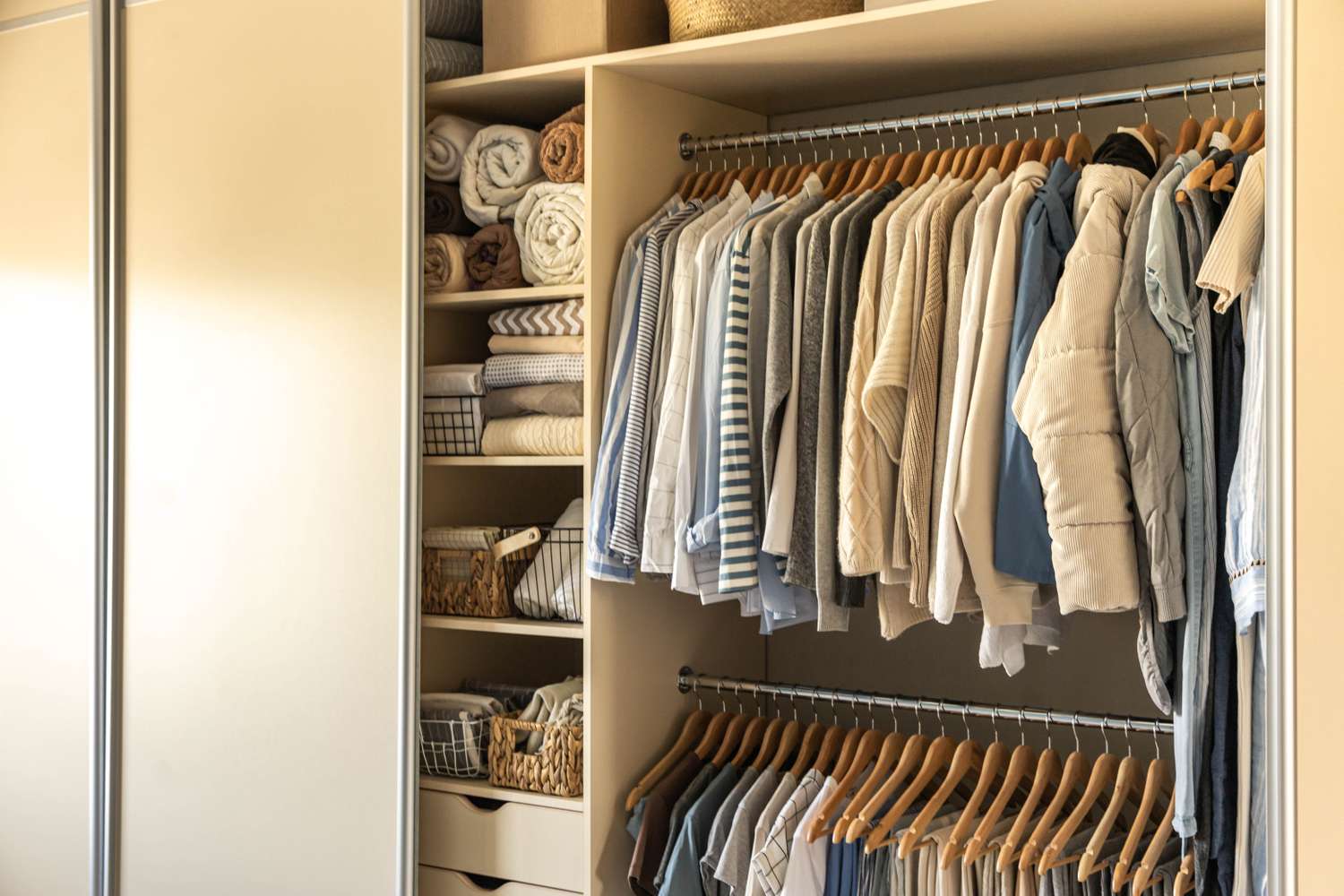
My closet used to be less of a storage area and more of a fabric-themed escape room. Shirts hid behind sweaters. Socks disappeared with the confidence of tiny magicians. Belts somehow turned into snakes. And every morning began with the same dramatic question: “Where is the one thing I actually need?”
Then I tried a simple $18 closet organizer, and I am only slightly embarrassed by how much it changed my daily routine. No contractor. No custom closet system. No weekend lost to measuring, drilling, arguing with anchors, or pretending I know what a stud finder is doing. Just one hanging organizer, a closet rod, and the shocking discovery that my closet had been wasting vertical space like it was being paid to do so.
The organizer that made the biggest difference was a 12-pocket hanging closet organizer style: compact, double-sided, lightweight, and designed to hang directly from the existing closet rod. It created easy-access compartments for small items that previously lived in messy piles: socks, underwear, scarves, soft accessories, rolled leggings, workout tops, and the mysterious “miscellaneous but important” category every home has.
Did it literally add square footage to my apartment? Sadly, no. My landlord remains undefeated. But it did make my closet function like it had doubled in size. The secret was not magic. It was smarter use of unused vertical space.
Why a Hanging Closet Organizer Works So Well
Most closets have a hidden problem: they are built around hanging clothes, but not every item deserves a hanger. T-shirts, socks, tanks, leggings, bras, scarves, hats, clutches, small bags, and folded basics often end up in piles because they do not have a proper home. Once those piles start leaning, your closet quietly becomes a laundry avalanche waiting for eye contact.
A hanging closet organizer solves that problem by turning one narrow section of rod space into stacked storage. Instead of spreading small items across shelves, drawers, the floor, and that chair in the corner that has become a second closet, you give each category a visible place.
The Real Storage Win: Vertical Space
The best small closet organization ideas usually come down to one principle: go vertical. If your closet has empty space between the rod and the floor, or between shelves and stacked items, you are not out of storage. You are out of structure.
A hanging organizer adds structure instantly. It works like a soft shelving unit, but without screws, brackets, or the emotional damage of assembling furniture with instructions that look like ancient treasure maps. The pockets or cubbies create zones, and zones are what keep a small closet from turning into a fabric swamp.
What Makes the $18 Closet Organizer So Useful?
The price is part of the appeal. At around $18, this kind of organizer sits in the sweet spot between “cheap enough to try” and “useful enough to keep.” But affordability is only helpful if the product actually solves a real problem. This one does because it focuses on the items that cause the most everyday chaos: small, soft, frequently used pieces.
1. It Creates Compartments for Small Items
Small items are the drama queens of closet clutter. A sweater will usually stay where you put it. Socks? Never. Scarves? They migrate. Belts? They tangle. A 12-pocket organizer gives these items boundaries, and boundaries are basically therapy for your closet.
Use one pocket for socks, one for underwear, one for workout accessories, one for rolled camisoles, one for winter gloves, one for hair tools, and one for “things I use all the time but never know where to put.” Suddenly, getting dressed becomes less of a search-and-rescue mission.
2. It Keeps Daily Essentials Visible
Visibility is underrated. When you can see what you own, you use what you own. Clear or mesh pockets make it easier to find items quickly, especially during rushed mornings when your brain is still buffering.
This is also helpful for preventing duplicate purchases. If you can instantly see that you already own six pairs of black socks, you are less likely to buy another pack just because the existing ones vanished into the closet fog.
3. It Frees Up Shelves and Drawers
Before using a hanging organizer, many people cram small clothing items into dresser drawers or top shelves. That usually creates two problems: drawers become overstuffed, and shelves become unstable towers of folded fabric. The organizer moves small items into a more accessible vertical column, leaving shelves for jeans, sweaters, handbags, bins, or seasonal storage.
This is where the “doubled my storage space” effect comes from. The organizer does not simply hold more stuff. It redistributes your stuff so the rest of your closet works better.
4. It Requires No Installation
Renters, rejoice. A hanging organizer is one of the most renter-friendly closet storage solutions available because it usually hangs directly on the existing rod. No holes, no tools, no permanent changes, no nervous email to the property manager.
That also makes it easy to move. If you decide it works better on the left side of the closet, move it. If you want it in a linen closet, move it. If you suddenly become a person who has a perfectly organized guest room closet, first of all, congratulations, and second, move it there.
How I Used It to Actually Double My Closet Function
The key was not just hanging the organizer and hoping for a miracle. The miracle required a tiny bit of strategy. I started by removing everything that had no business being in my bedroom closet. This included old shopping bags, a beach towel from a trip I took years ago, and a box of mystery cables because apparently every home must have one.
Then I sorted my closet into categories: hanging clothes, folded clothes, small accessories, seasonal items, shoes, and “maybe I should make a decision about this.” That last category is dangerous, so I gave it a time limit. If I had not worn it, used it, or loved it in the last year, it had to make a very convincing argument.
My Pocket-by-Pocket Setup
- Top pockets: Lightweight scarves, belts, and special-occasion accessories.
- Middle pockets: Socks, undergarments, rolled tanks, and workout pieces.
- Lower pockets: Casual sandals, folded leggings, small bags, and off-season extras.
This setup worked because the most-used items stayed at eye level. Less-used items went higher or lower. That simple change made my closet feel calmer immediately. It also stopped me from destroying an entire shelf just to find one pair of socks.
Small Closet Organization Tips That Make the Organizer Work Even Better
A hanging closet organizer is powerful, but it works best as part of a system. Think of it as the lead singer, not the entire band. To make the most of it, pair it with a few smart closet organization habits.
Use Slim Matching Hangers
Bulky hangers steal horizontal space. Swapping them for slim, matching hangers can instantly make a closet look cleaner and hold more clothing. Velvet hangers are especially useful because they prevent slippery garments from sliding onto the floor and joining the laundry underworld.
Add Hooks Where You Have Blank Space
Hooks are the unsung heroes of closet storage. A few adhesive or over-the-door hooks can hold bags, robes, belts, hats, or tomorrow’s outfit. If you have a narrow wall inside your closet, use it vertically. Place hooks one above another, leaving enough room so items do not overlap into one giant accessory beast.
Use Bins for Seasonal Items
Not everything needs to be within daily reach. Out-of-season sweaters, swimsuits, heavy scarves, and holiday accessories can go into labeled bins on a top shelf or under the bed. Clear bins make items easy to identify, while fabric bins create a softer, more polished look. Either way, labels matter. Your future self will thank you.
Try Shelf Dividers for Stacked Clothing
If your shelves are home to sweaters, jeans, or sweatshirts, shelf dividers can prevent stacks from collapsing. They turn one long shelf into smaller lanes, which makes folded clothing easier to maintain. Without dividers, one innocent sweater removal can trigger a full textile landslide.
Keep the Floor as Clear as Possible
The closet floor often becomes a graveyard for shoes, bags, returns, and things you “will deal with later.” A hanging organizer helps by lifting smaller items off the floor. For shoes, try a small rack, clear boxes, or a hanging shoe organizer. The goal is not perfection. The goal is being able to see the floor without needing an archaeological permit.
What to Store in a Hanging Closet Organizer
The best items for a hanging closet organizer are lightweight, flexible, and frequently used. Heavy items can weigh the organizer down, so skip bulky coats, large handbags filled with unknown objects, or anything that makes the closet rod look nervous.
Best Items to Store
- Socks and undergarments
- Scarves, gloves, and winter accessories
- Workout tops, leggings, and sports bras
- Folded camisoles and T-shirts
- Small handbags, clutches, and wallets
- Belts, ties, and soft accessories
- Sandals, flats, or lightweight shoes
- Travel pouches and packing cubes
What Not to Store
Avoid overloading the organizer with heavy denim stacks, large boots, thick sweaters, or anything with sharp edges that could stretch or damage the pockets. The goal is useful organization, not testing the laws of physics for $18.
Who Should Buy This Closet Organizer?
This organizer is ideal for small apartments, dorm rooms, shared closets, rental homes, kids’ rooms, guest rooms, and anyone whose dresser drawers are currently negotiating surrender. It is also a smart option for people who do not want to invest in a full closet system but still need a visible improvement.
It is especially helpful if you struggle with “out of sight, out of mind” storage. Because the pockets keep items visible, you are more likely to use what you already own. That can save money, reduce clutter, and make your morning routine smoother.
How to Set It Up in 20 Minutes
You do not need a full weekend to improve your closet. Start with one focused session and one goal: make daily items easier to find.
- Empty one section of your closet. Do not empty the entire closet unless you enjoy chaos as a lifestyle.
- Sort small items by category. Socks with socks, belts with belts, workout clothes with workout clothes.
- Hang the organizer on the closet rod. Place it where it will not crush delicate clothing.
- Load the most-used items at eye level. Save high and low pockets for less-used items.
- Leave breathing room. A pocket should not look like it is holding a secret it cannot bear.
- Review after one week. Move items around based on what you actually reach for.
The Biggest Mistake to Avoid
The biggest mistake is treating a closet organizer as permission to keep everything. More storage is wonderful, but it should not become a hiding place for clutter. Before filling the pockets, do a quick edit. Remove items that are damaged, uncomfortable, outdated, duplicated, or no longer useful.
A good organizer makes your closet easier to use. It should not become a tiny apartment complex for things you do not like.
My Real-Life Experience: What Happened After I Used the $18 Closet Organizer
The first thing I noticed was speed. Before the organizer, getting dressed involved opening the closet, staring into the abyss, and hoping the abyss would offer styling advice. After adding the organizer, I knew exactly where my basics were. Socks lived in one pocket. Workout pieces lived in another. Scarves stopped pretending to be modern art on the closet floor.
The second thing I noticed was how much less I overused my dresser. My drawers had been stuffed so tightly that opening them felt like negotiating with a stubborn suitcase. By moving small, soft items into the hanging organizer, I freed up drawer space for pieces that actually belonged there. Suddenly, my drawers closed without requiring a hip check.
The third improvement was visibility. I found items I had forgotten I owned, including a black tank top I had nearly repurchased twice. This is the sneaky value of good closet organization: it helps you shop your own wardrobe. When your clothing and accessories are visible, you stop buying replacements for things that were never missing. They were just trapped under a pile of “I’ll fold this later.”
I also became better at planning outfits. The organizer made it easy to create a small “grab-and-go” area. I started placing the next day’s socks, undergarments, and accessories together in one pocket. It sounds tiny, but in the morning, tiny conveniences feel luxurious. There is something deeply satisfying about not hunting for socks while half-awake and emotionally unprepared for the day.
Another unexpected benefit was that the closet looked calmer. Not magazine-perfect, not celebrity-home-tour perfect, but normal-person-who-knows-where-things-are perfect. That is the standard I believe in. The organizer gave my closet rhythm: hanging clothes on one side, pockets in the middle, bins above, shoes below. Once every category had a home, the entire space felt less aggressive.
After a week, I made a few adjustments. I moved accessories higher because I did not use them daily. I moved socks and workout items to the easiest pockets because those were the things I reached for most. I also learned not to overfill each compartment. A pocket packed too tightly becomes just another drawer, and I already had enough drawer-related emotional baggage.
The best part is that the organizer made maintenance easier. Instead of doing a huge closet reset every few months, I now do a two-minute reset a couple of times a week. If something is in the wrong spot, I move it. If a pocket is getting crowded, I edit it. If I find something I never use, I remove it before it invites friends.
Would I say the $18 organizer changed my life? That might be dramatic. But did it change my closet, my mornings, and my relationship with socks? Absolutely. It proved that better storage does not always require a custom closet, a bigger bedroom, or a budget that requires a spreadsheet. Sometimes it just requires looking at the unused space you already have and giving it a job.
For anyone dealing with a small closet, shared closet, overstuffed dresser, or bedroom that seems to manufacture clutter overnight, this is one of the simplest upgrades to try. It is affordable, flexible, renter-friendly, and surprisingly effective. Most importantly, it turns wasted vertical space into everyday storage, which is exactly why it can feel like your closet suddenly doubled in size.
Conclusion: Small Organizer, Big Closet Energy
The $18 closet organizer works because it solves a common problem in the simplest possible way. It does not ask you to renovate, install, or reinvent your wardrobe. It simply gives small items a visible, reachable, organized place to live.
By using vertical space, separating categories, freeing up shelves, and keeping daily essentials easy to grab, a hanging closet organizer can make a cramped closet feel dramatically more functional. Pair it with slim hangers, bins, hooks, shelf dividers, and a quick seasonal edit, and your closet may start acting like it went to finishing school.
If your closet currently looks like it has been through a minor weather event, start small. One organizer. One section. One category at a time. You may not get a celebrity closet overnight, but you can absolutely get a closet that works harder, looks calmer, and no longer hides your socks for sport.
Editorial note: Prices and product availability can change. The storage ideas in this article are based on practical closet organization principles and real-world features commonly found in affordable hanging closet organizers.












