
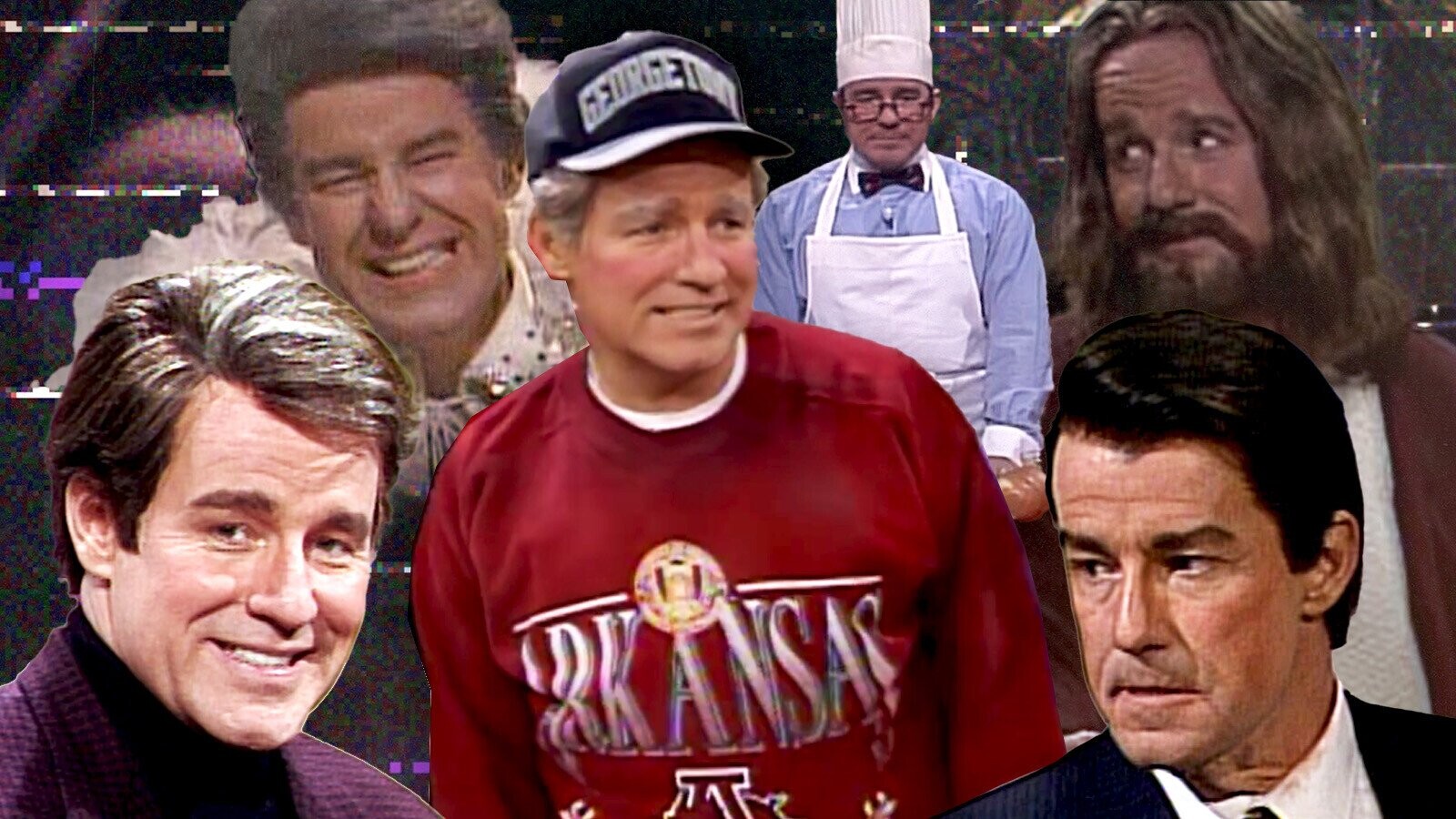
Some Saturday Night Live performers seize the spotlight. Phil Hartman could do that, naturally, but his rarer gift was making the entire stage work better. He could play a president, a prehistoric attorney, a cereal spokesman, an exasperated father or a barely competent authority figureand somehow make each one feel like a person who had existed long before dress rehearsal.
Hartman spent eight seasons on SNL, from 1986 to 1994. During that run, he became so reliable that colleagues called him “the Glue.” The nickname was not merely a compliment about professionalism. It described what audiences could see: Hartman controlled a sketch’s rhythm, established its reality and gave louder performers something sturdy to bounce against.
This collection draws on documented recollections from Hartman’s castmates, writers and collaborators, including Nora Dunn, Al Franken, Robert Smigel, Dana Carvey, Mike Myers, Jon Lovitz, Jack Handey, Tim Meadows, Jan Hooks and Tom Farley. The numbering is best treated as a 75-sketch viewing guide rather than a laboratory-certified comedy hierarchy. No scientists were injured while calculating the funny.
Why Phil Hartman Was the Ultimate “Glue” Performer
He could lead without swallowing the sketch
Hartman was perfectly capable of becoming the comic engine. His Frank Sinatra charged through a panel discussion like a bulldozer wearing cuff links, while his Bill Clinton could turn a casual restaurant visit into a master class in appetite, charm and political calculation. Yet Hartman never appeared to be begging the audience for approval. He trusted the character, the writing and that marvelous broadcaster’s voice.
He made absurd ideas feel suspiciously reasonable
Unfrozen Caveman Lawyer works because Hartman presents its ridiculous premise with complete confidence. Keyrock is not funny simply because he is a thawed prehistoric man. He is funny because he has become a polished, wealthy attorney who cynically uses his supposed confusion about modern life to manipulate juries. Hartman plays the contradiction as though it belongs on prime-time television between a courtroom drama and an ad for adjustable beds.
He understood ensemble comedy
Writers could place Hartman beside Dana Carvey, Chris Farley, Jan Hooks, Jon Lovitz or a nervous guest host and know the scene had an anchor. In Matt Foley: Van Down by the River, Hartman’s increasingly alarmed father gives Farley’s motivational speaker a believable household to destroy. In Chopping Broccoli, one enthusiastic reaction from Hartman’s record executive helps sell Carvey’s intentionally dreadful song.
The 75 Essential Phil Hartman SNL Sketches
75–61: Presidents, cavemen and beautifully controlled nonsense
- President Bill Clinton at McDonald’s: Hartman’s confident Clinton samples customers’ meals while explaining policy with unnerving fluency.
- Unfrozen Caveman Lawyer: A supposedly frightened caveman becomes a slick attorney who weaponizes false humility.
- Only in New York: Hartman and Nora Dunn affectionately spoof old-school gossip personalities with cheerful non-jokes.
- Hal Jerome: Hartman’s oily entertainer glides from professional banter into a musical account of marital collapse.
- Love Is a Dream: Hartman and Jan Hooks reveal unexpected tenderness in Tom Schiller’s romantic short film.
- Colon Blow: Hartman’s authoritative commercial performance makes an escalating mountain of fiber cereal seem almost medically sensible.
- Anal-Retentive Chef: Eugene obsesses over wrapping scraps and cleaning surfaces until cooking becomes a distant rumor.
- Robot Repair: Hartman brings human frustration to a mechanical dispute about grammar, logic and maddeningly unclear instructions.
- So Long Farewell: Hartman’s emotional departure with Chris Farley remains one of SNL’s most affecting goodbyes.
- Phil Hartman’s Real Views: The famously private chameleon plays “himself,” only to reveal yet another elaborate performance.
- Ronald Reagan: Mastermind: A grandfatherly public Reagan instantly becomes a ruthless, hyper-competent Iran-Contra strategist behind closed doors.
- Psychiatrist: A miserable therapy patient turns betrayal and self-pity into a full theatrical blues performance.
- Acting Workshop: Bobby Coldsman Teaches His Techniques: Hartman’s pompous coach offers celebrity anecdotes instead of useful instruction.
- Donahue: Exploited Women: His Phil Donahue impression captures the host’s earnest intensity, verbal habits and carefully managed concern.
- Teeny Cafe: A tiny nightclub, eccentric performers and Hartman’s elegant Halston create wonderfully unnecessary sophistication.
60–46: Sinatra, strange celebrities and masterful support
- Sassy’s Sassiest Boys: Hartman stretches one adjective into an entire comic vocabulary through rhythm, emphasis and attitude.
- The Sinatra Group: His combative Sinatra bullies a panel of contemporary musicians with unstoppable old-show-business swagger.
- One More Mission: Hartman and Jon Lovitz lovingly recreate the threats, loyalties and melodrama of 1940s war movies.
- Drill Sergeant: An intimidating instructor repeatedly fails to invent cutting nicknames for his unfortunate recruits.
- Peeping Tom: A longer character piece gives Hartman room to build discomfort through subtle reactions and dramatic commitment.
- Trump Divorce: Long before later SNL impersonations, Hartman captured Donald Trump’s tabloid-era confidence and vanity.
- Discover: His vacuous Peter Graves-style host investigates the ordinary with the excitement of an educational filmstrip.
- Joy Ride with Perot and Stockdale: Hartman’s Admiral Stockdale refuses to remain conveniently abandoned by Dana Carvey’s Ross Perot.
- Liberace in Heaven: Costume, posture and entrance earn laughs before Hartman needs to say anything at all.
- Church Chat: Jimmy Swaggart and Pat Robertson: Hartman’s scandal-plagued televangelist produces tears with industrial efficiency.
- Sexiest Man Alive: Peter Graves presides over an absurdly serious contest that treats Jon Lovitz as a plausible finalist.
- Matt Foley: Van Down by the River: Hartman’s worried father supplies the realism that lets Farley demolish the room.
- Lothar of the Hill People: Hartman thrives inside Mike Myers’ primitive society, combining ensemble discipline with cheerful foolishness.
- Cluckin’ Chicken: As the dependable suburban dad, Hartman reacts to grotesque food advertising with pitch-perfect unease.
- A Beastly Blind Date: Hartman and Hooks play Beauty and the Beast with romantic commitment and gloriously strange chemistry.
45–31: Jesus, Frankenstein, television hosts and political targets
- Thanksgiving Greetings from Tonto, Tarzan and Frankenstein: Hartman’s Frankenstein turns limited vocabulary into unlimited holiday confusion.
- Don’t Pray So Much: His weary Jesus asks an overenthusiastic believer to handle a few minor problems herself.
- Receptionist: Even Jesus becomes irritated when David Spade’s dismissive assistant refuses to recognize an important visitor.
- Larry King Live: Burt Reynolds and Loni Anderson: Hartman’s Reynolds brings macho vanity and celebrity-marriage tension to cable television.
- Steve Martin Cold Open: A song promises to reveal the real Hartmanuntil Martin wisely discourages the experiment.
- Carsenio Hall: Hartman’s Ed McMahon helps Dana Carvey merge Johnny Carson’s old format with Arsenio Hall’s energy.
- The Environmentally Sensitive One: Hartman nearly breaks Alec Baldwin with one desperately delivered request for rescue.
- Quiz Masters: His reassuring game-show host helped an early cast sketch feel composed, professional and pleasantly unpredictable.
- TV Lawyers: Hartman reportedly learned Andy Griffith quickly, then stole his brief appearance with economical precision.
- Chopping Broccoli: His delighted record executive provides exactly the wrong response to Carvey’s aggressively unpromising song.
- Soap Opera Digest: Hartman demonstrates that an intensely committed stare can outperform a page of punch lines.
- Sincere Guy Stu: His partnership with Hooks turns exaggerated sincerity into a surprisingly rich comic character study.
- Gossip Show with Julie Brown: Hartman’s Rex Reed radiates cultivated taste, polished insincerity and deluxe-grade show-business oiliness.
- MTV Spring Break: His Ted Kennedy impression drops political history into a noisy beach-party spectacle.
- Church Lady Meets Saddam Hussein: Hartman gives Carvey’s Church Lady a timely villain played with authoritative absurdity.
30–16: Commercial parodies, quiet gems and memorable authority figures
- Circle Mad Dog Food: A modest costume helps Hartman evoke Wilford Brimley without letting makeup become the joke.
- Wilson Countersink Flanges: Hartman rattles through meaningless technical specifications like a salesman defending civilization itself.
- Church Chat with Jim and Tammy Faye Bakker: Hartman and Hooks calm Carvey while creating televangelist chaos.
- Sentimental Value Pawn Shop: His understated pawnbroker values objects according to their emotional histories, giving silliness genuine warmth.
- Gonna Be a Better Cowboy: Hartman lends authentic heartbreak to an anthem about consistently underperforming cowboys.
- Phil Hartman’s Host Monologue: Returning as host, he jokes about his vast workload and elusive offstage identity.
- Bad Idea Jeans: Hartman joins a group of confident men casually advertising spectacularly foolish life decisions.
- Barbara and Nancy: His Barbara Bush is composed and recognizable without treating gender-swapped casting as the punch line.
- NFL Today: Black Pride: Hartman portrays Jimmy “the Greek” Snyder scrambling to disguise damaging racial ignorance.
- Tonight Show: As Ed McMahon, Hartman validates Carvey’s subtle Johnny Carson observations and triggers the audience’s response.
- Musicians for Free-Range Chickens: An all-star charity-song parody gives Hartman an early opportunity to channel Kenny Rogers.
- Whitewater Explained: Hartman’s Elton John joins a crowded celebrity singalong tasked with clarifying an already confusing scandal.
- Recurring Characters for Unity: Frankenstein becomes an unlikely musical superstar in a bizarre ensemble plea for togetherness.
- Thanksgiving with the Keisters: Hartman’s rare on-air break makes an overfed family gathering even more memorable.
- Ten Weeks in Jail: A wonderfully simple premise succeeds through Hartman’s posture, delivery and unshakable belief in it.
15–1: Deep cuts, ensemble victories and one haunted finale
- Taddli: Hartman avoids the obvious stoner caricature, playing an ordinary librarian who needs chemical relaxation.
- Adults Living at Home: His command of the format helps younger cast members navigate another crowded ensemble scene.
- Cutman’s Memorial: Hartman’s battered former boxer delivers a tear-soaked tribute with committed physical and emotional detail.
- The Hostage: His credible toughness gives a tense scenario structure while the comedy develops around him.
- Frank Sinatra Acceptance Speech: Hartman’s aggressive Chairman of the Board turns gratitude into intimidation.
- Yelling in the Kitchen: A public smile barely conceals the volcanic anger Hartman releases away from observers.
- Clinton Town Hall: His Clinton combines policy knowledge, persuasive charm and the unmistakable sense of a wandering appetite.
- Magic Fish Town Hall: Hartman’s dignified mayor maintains civic order while fairy-tale lunacy spreads around him.
- Lincoln High G.E.D. 10-Year Reunion: His resentful principal directs traffic through a reunion fueled by disappointment.
- Subway: Hartman’s chemistry with fellow Groundling Jon Lovitz demonstrates their shared command of character-based comedy.
- Jiffy Pop Airbag: His cheerful pitchman sells a popcorn-powered safety device with absolute advertising confidence.
- Apex Novelty: Hartman’s executive gives ridiculous inventions serious consideration, making Jeff Daniels’ foolish creator even funnier.
- New York Word Exchange: Hartman applies a smooth documentary voice to an urban service built on linguistic absurdity.
- Thugs: His calm, efficient performance illustrates why writers compared him to a dependable late-inning closer.
- Helmsley Spook House: Hartman and Hooks turn marital chemistry, irritation and theatrical horror into a fitting showcase.
What Castmates and Writers Saw in Hartman
Robert Smigel’s recollections repeatedly emphasize range. A writer did not need to build only one type of vehicle for Hartman; he could be assigned a politician, drill sergeant, television host, romantic lead or confused robot. Jack Handey likewise found that Hartman could take a surreal premise and supply the patient authority that made it playable.
Nora Dunn and Jan Hooks remembered something more intimate: Hartman was a genuine comic actor. With Hooks in particular, he could suggest that two characters had shared years of affection, arguments and disappointing vacations before the sketch began. Their scenes often contained emotional texture that sketch comedy rarely has time to unpack.
Dana Carvey, Mike Myers and younger performers valued Hartman as a stabilizing presence. That support is visible in his reactions. He listened instead of waiting impatiently for his next line. When another performer had the main comic idea, Hartman protected it. He could earn a laugh with a glance, but he never used that glance to mug the scene into submission.
The Phil Hartman Rewatch Experience
Start with the famous characters, then follow the supporting performances
A first Phil Hartman marathon should begin with Unfrozen Caveman Lawyer, The Sinatra Group, Ronald Reagan: Mastermind and President Bill Clinton at McDonald’s. Together, they establish his major strengths: vocal precision, character logic, political observation and the ability to sound completely reasonable while behaving like a deluxe lunatic.
The more revealing experience comes on a second pass. Instead of watching only the person delivering the obvious punch line, watch Hartman at the edge of the frame. In Van Down by the River, notice how the father’s discomfort keeps escalating as Matt Foley invades the family’s space. Hartman does not compete with Farley’s physical explosion. He creates the pressure gauge that tells viewers just how badly the meeting is going.
Listen to the voice before watching the face
Hartman’s voice was one of comedy’s finest multipurpose tools. Close your eyes during Colon Blow, Discover or Wilson Countersink Flanges, and the parodies remain clear. He understood the musical patterns of announcers, salesmen and television authorities: the strategic pause, the manufactured warmth and the sudden emphasis used to make nonsense sound essential.
Then watch the sketches again and study the physical details. His posture changes with status. Sinatra leans forward as if every room already belongs to him. Eugene, the Anal-Retentive Chef, moves with the cautious precision of a bomb technician assigned to a carrot. Clinton is loose, sociable and always ready to drift toward somebody else’s french fries.
Make room for the quieter pieces
A marathon built entirely around big impressions misses part of the experience. Love Is a Dream, Sentimental Value Pawn Shop, Soap Opera Digest and So Long Farewell reveal Hartman’s patience and emotional control. These pieces do not attack the audience with jokes every three seconds. They trust mood, performance and the strange intimacy of live television.
The farewell with Chris Farley is especially moving because the performers’ real affection is visible beneath the premise. Hartman’s reputation as “the Glue” stops being an industry nickname and becomes something human: he was a veteran whom younger cast members trusted.
Expect some material to show its age
Several sketches depend on politicians, scandals, celebrities and media conventions from the late 1980s or early 1990s. A quick refresher on Iran-Contra, Ross Perot’s presidential campaign, televangelist scandals or the tabloid lives of Donald Trump and Ivana Trump can sharpen the satire. Other pieces use attitudes or stereotypes that modern audiences may find dated. Context does not excuse every choice, but it helps distinguish the target of a joke from the assumptions surrounding it.
Finish by asking who Hartman helped
The best final question is not “How many laughs did Hartman get?” It is “How many laughs became possible because Hartman was there?” Follow that question through sketches led by Farley, Carvey, Hooks, Lovitz and visiting hosts. The answer explains why writers loved putting him into nearly everything. Phil Hartman did not simply occupy a role. He supplied architecture. Other performers could climb higher because the walls were not wobblingand because the man playing the wall was somehow hilarious.
Conclusion
The greatest Phil Hartman SNL sketches demonstrate more than a gift for impressions. They show a performer who understood comedy as a shared construction. He could dominate as Sinatra, deceive as Unfrozen Caveman Lawyer, humanize a romantic short with Jan Hooks or quietly make Chris Farley’s biggest character work.
That combination of authority and generosity remains unusual. Hartman could be the star, the straight man, the announcer, the father or the fellow standing silently in the cornerand viewers still sensed that the sketch was safer in his hands. Decades later, the Glue continues to hold.












