
A carefully planned Mother’s Day dinner can survive a spoiled surprise, a crowded restaurant, and possibly even a forgotten reservation. What it cannot easily survive is a child being told that his presence would ruin the occasion.
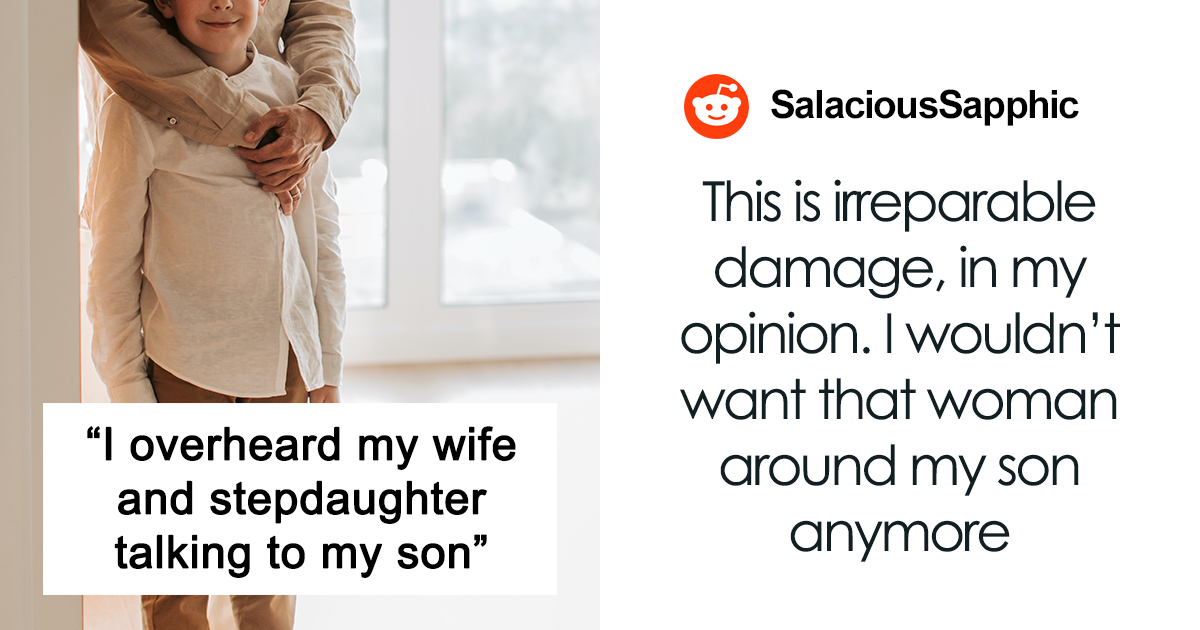
That was the conflict at the center of an anonymous Reddit post that sparked a fierce discussion about blended family relationships, introverted children, parental loyalty, and emotional boundaries. According to the father, he overheard his new wife and her teenage daughter pressuring his 13-year-old son to skip a Mother’s Day celebration. His response was immediate: The dinner was canceled.
The decision looked simple from the outsideprotect the child, cancel the partybut the deeper problem was not really about one meal. It was about whether every child in a blended family is treated as a genuine member of the household, including when that child is quiet, socially cautious, or inconveniently uninterested in becoming the life of the party.
What the Father Said He Overheard
In the original account, the 37-year-old father explained that he had been widowed and was raising a 13-year-old son when he met his current wife. She brought a 16-year-old daughter into the marriage. He described the household as generally peaceful, although its members had noticeably different personalities.
His son was quiet and liked having time to himself. His wife and stepdaughter were much more outgoing. They frequently encouraged the boy to participate in activities and extended-family gatherings, apparently believing that more social exposure would help him.
The son did not experience this encouragement as helpful. He told his father that he felt pushed beyond his comfort zone and that his need for space was being dismissed. The father then asked his wife and stepdaughter to stop forcing social interaction. They reportedly apologized and agreed to give the teenager more freedom.
A Mother’s Day Surprise Took an Ugly Turn
As Mother’s Day approached, the father arranged a restaurant celebration for his wife and invited members of her family. The surprise portion of the evening disappeared when his stepdaughter revealed the plan, but the dinner itself was still moving forward.
Then the father arrived home early and heard his wife talking to his son. She allegedly wanted the boy to persuade his father to let him stay home instead of attending the restaurant gathering.
When the son asked why, his stepmother reportedly described his introverted behavior as socially inept and claimed it could make her relatives uncomfortable or spoil the mood. The teenager promised to behave, interact, and make an effort. Rather than reassuring him, she allegedly told him that she was not technically his mother and questioned why he wanted to celebrate Mother’s Day with her at all.
That sentence changed the emotional temperature from “awkward family conversation” to “someone please remove the cake from the blast radius.”
The father revealed that he had heard the exchange, sent both teenagers to their rooms, and told his wife that the celebration was canceled. She argued that he had misunderstood the conversation and worried about what she would tell her relatives. The following morning, she reportedly left with her daughter to stay with her family.
Why the Conversation Was More Serious Than a Disagreement About Dinner
There is an enormous difference between discussing how to make a large gathering comfortable for a quiet teenager and telling that teenager that everyone would have a better time without him.
The first approach addresses practical needs. A parent might offer the child a quieter seat, permission to take breaks, advance notice about the guest list, or an agreed departure time. The second approach treats the child himself as the problem.
The Son Was Asking to Belong
The boy did not appear to be refusing the celebration. According to the post, he wanted to attend so much that he promised to socialize more. That matters because his stepmother’s rejection was not a response to disruptive behavior at the restaurant. It was preemptive exclusion based on what she expected his personality to do to the atmosphere.
In blended families, seemingly small moments can carry extra emotional weight. A biological child may already wonder whether a new marriage will reduce the time, affection, or protection available from a parent. A stepchild may also be unsure whether the new adult considers the relationship permanent and meaningful.
The American Academy of Pediatrics advises stepparents to listen to children’s feelings, respect their boundaries, and allow trust to develop gradually. Research summarized through the National Institutes of Health similarly links strong stepparent-child relationships with better adolescent adjustment and a greater sense of family belonging.
Telling a bereaved child, “I am not really your mother,” during an argument may strike directly at those fears. It transforms a family title from a flexible relationship into a weapon.
Introversion Is Not a Character Defect
Quiet children are often treated like malfunctioning extroverts who simply need someone to locate the correct reset button. That is not how personality works.
Guidance from the American Psychological Association and Cleveland Clinic distinguishes introversion from antisocial behavior and social anxiety. Introverts commonly prefer smaller groups, deeper conversations, quieter environments, and time alone to recover after social activity. They can enjoy relationships while needing less stimulation.
Social anxiety is different. It involves significant fear of judgment or humiliation that interferes with daily life. Nothing in one anonymous post allows readers to diagnose the son with anxiety, autism, depression, or any other condition. He may simply be reserved.
Calling him socially inept was therefore not a neutral description. It was a disparaging label delivered by an adult with authority in his home. The Centers for Disease Control and Prevention identifies repeated name-calling, shaming, and rejection as forms of behavior that can damage a child’s self-worth. One reported exchange cannot establish a complete pattern of emotional abuse, but it is serious enough to justify a careful investigation.
Was the Dad Right to Cancel the Mother’s Day Celebration?
The Strongest Argument for Canceling
The celebration had been organized to honor a woman in a maternal role. Continuing immediately after she rejected the child who wanted to recognize her would have created a painful contradiction.
The father’s decision also sent his son a clear message: You are not disposable, and adults do not earn a festive dinner by humiliating you. For a teenager who had already complained that his boundaries were being ignored, seeing his father act may have been more meaningful than hearing another promise that the problem would be handled later.
Canceling also prevented the son from entering a gathering where he would know the guest of honor did not want him. Nobody should have to eat celebratory cheesecake while wondering whether every quiet bite is lowering the family’s fun score.
Why Canceling Could Not Be the Entire Solution
A canceled reservation creates a consequence, but it does not repair a household. The father still needed to learn whether similar conversations had happened before, how his stepdaughter became involved, and why his wife believed exclusion was acceptable after promising to respect his son’s space.
He also needed to avoid turning the incident into a competition between “my child” and “your child.” His stepdaughter reportedly participated, and that behavior required accountability. However, she was still a teenager observing and possibly imitating an adult. The wife carried greater responsibility because she was the parental figure guiding the exchange.
The internet largely sided with the father, but an online verdict is not a treatment plan. Reddit can identify a blazing red flag with impressive speed; it is less effective at scheduling family therapy for Tuesday afternoon.
What a Healthy Response Would Look Like Next
1. Check In With the Son Privately
The father’s first priority should be a calm conversation with his son. He can ask whether this was an isolated incident, whether the teenager has felt excluded elsewhere, and what would help him feel safe at home.
The goal is not to interrogate him or demand an instant emotional report. Teenagers rarely produce a perfectly organized witness statement on command. Active listening, open-ended questions, and a nonjudgmental tone are more likely to reveal what has been happening.
The father should also apologize for anything he missed. That apology would not mean he knowingly allowed mistreatment. It would acknowledge that his son had previously reported feeling pressured and may have needed stronger follow-up.
2. Require Accountability From the Stepmother
A useful apology must identify the harm without hiding behind phrases such as “You misunderstood” or “I am sorry you were upset.” She would need to acknowledge that she labeled the boy, tried to exclude him, and used the status of his deceased mother to push him away.
She should not ask the son to comfort her, quickly forgive her, or restore the holiday mood. Repair belongs on the injured person’s timetable.
3. Establish Concrete Family Boundaries
The adults need explicit agreements rather than broad promises to “do better.” Reasonable boundaries could include:
- No insulting labels about personality, intelligence, or social ability.
- No adult recruits one child to pressure or isolate another.
- Concerns about a child are discussed privately between adults.
- Children receive choices about optional social events whenever practical.
- Every household member remains welcome at core family celebrations.
These rules should protect both teenagers. A blended family cannot become secure if belonging is distributed like a limited-edition party favor.
4. Consider Professional Family Support
Utah State University’s research-based stepfamily guidance emphasizes patience, communication, flexibility, and gradual relationship building. A licensed family therapist familiar with grief and blended households could help the adults negotiate parental roles while giving both children a protected place to speak.
Counseling would be particularly important if the son reports a longer pattern of humiliation, exclusion, threats, or pressure to conceal interactions from his father. The objective would not be to preserve the marriage at any cost. It would be to determine whether the household can become consistently safe and respectful.
What This Blended Family Conflict Teaches Other Parents
Family celebrations often expose tensions that ordinary routines keep hidden. Holidays come with expectations about gratitude, loyalty, photographs, relatives, and who is supposed to feel honored. Add a blended family to the guest list, and an innocent brunch can begin carrying the emotional weight of a constitutional convention.
Parents can reduce that pressure by asking what each person needs before plans are finalized. A quiet child may want to attend but need breaks. A stepchild may want to recognize a stepparent without using the word “Mom.” Another child may not be ready to celebrate a new parental figure at all. None of these reactions automatically signals disrespect.
The essential principle is that personality differences should be accommodated rather than mocked. Children can be encouraged to develop social skills without being told that their natural temperament embarrasses the family. Growth happens best when a child feels secure enough to experimentnot when acceptance is made conditional on performing extroversion.
Conclusion: Canceling Dinner Was the Beginning, Not the Ending
Based on the father’s account, canceling the Mother’s Day celebration was an understandable act of protection. His son had been labeled, rejected, and encouraged to disappear from an event he genuinely wanted to attend. Carrying on as though nothing had happened would have rewarded the wrong behavior and left the teenager alone with the humiliation.
Still, the decisive moment was not the cancellation itself. The real test would come afterward: whether the father listened carefully, investigated the broader pattern, established firm parenting boundaries, and required meaningful repair before restoring normal family life.
A blended family does not need everyone to share the same temperament, history, or idea of fun. It does need every child to know that a place at the table is not something an adult can withdraw merely because silence makes the room feel awkward.
Related Experiences: How Similar Family Moments Can Unfold
The following composite examples illustrate common stepfamily challenges. They are not additional claims about the anonymous family in the original post.
The Quiet Child at a Birthday Dinner
Imagine a 14-year-old girl entering a blended family in which her new stepfather’s relatives are enthusiastic storytellers. They interrupt affectionately, speak at roughly the volume of a regional airport, and consider three seconds of silence a medical emergency.
The girl enjoys them but becomes overwhelmed during long dinners. After one gathering, an uncle jokes that she must dislike the family because she hardly spoke. Her stepfather laughs, while the girl retreats to her room.
A damaging response would be to order her to “act friendly” next time. A healthier response would be for her mother to validate the embarrassment, for the stepfather to correct the uncle, and for the adults to offer practical options. She might sit beside someone she knows, take a short break after dinner, or agree to stay for two hours instead of four.
The family still encourages participation, but it stops measuring affection in spoken words per minute.
The Stepparent Who Repairs the Damage
Consider a stepmother who becomes frustrated when her stepson repeatedly declines weekend outings. During an argument, she says, “You never want to be part of this family.” She later realizes that the accusation attacked his belonging rather than addressing the scheduling problem.
A genuine repair might sound like this: “What I said was unfair. Declining an outing does not mean you reject us, and I should not have questioned your place in the family. I was disappointed, but managing that feeling was my responsibility.”
She then changes her behavior. Instead of demanding attendance, she invites him without pressure and looks for shared activities he actually enjoys. Trust returns slowly because the apology is supported by evidence. Words open the repair shop; consistent conduct keeps the lights on.
The Protective Parent Who Also Builds a Plan
Now picture a father learning that his partner has excluded his daughter from a family trip. He immediately stops the trip, which reassures the child that she matters. After everyone is calm, however, he does more than declare victory.
He speaks separately with his daughter, his partner, and the other children. He discovers that the exclusion followed months of resentment over rooms, chores, and different discipline standards. None of that excuses rejecting the girl, but it reveals problems that an angry confrontation alone would not solve.
The adults create common household rules, schedule regular check-ins, and work with a family counselor. The partner apologizes without qualifications, while the father accepts that he had overlooked growing tension.
This is the broader lesson behind the canceled Mother’s Day celebration: Protection and repair are related but different jobs. A parent may need to stop the immediate harm first. After that, the family must examine the conditions that allowed it to happen. Otherwise, the canceled dinner becomes merely a dramatic intermission before the same conflict returns wearing a different holiday hat.












