
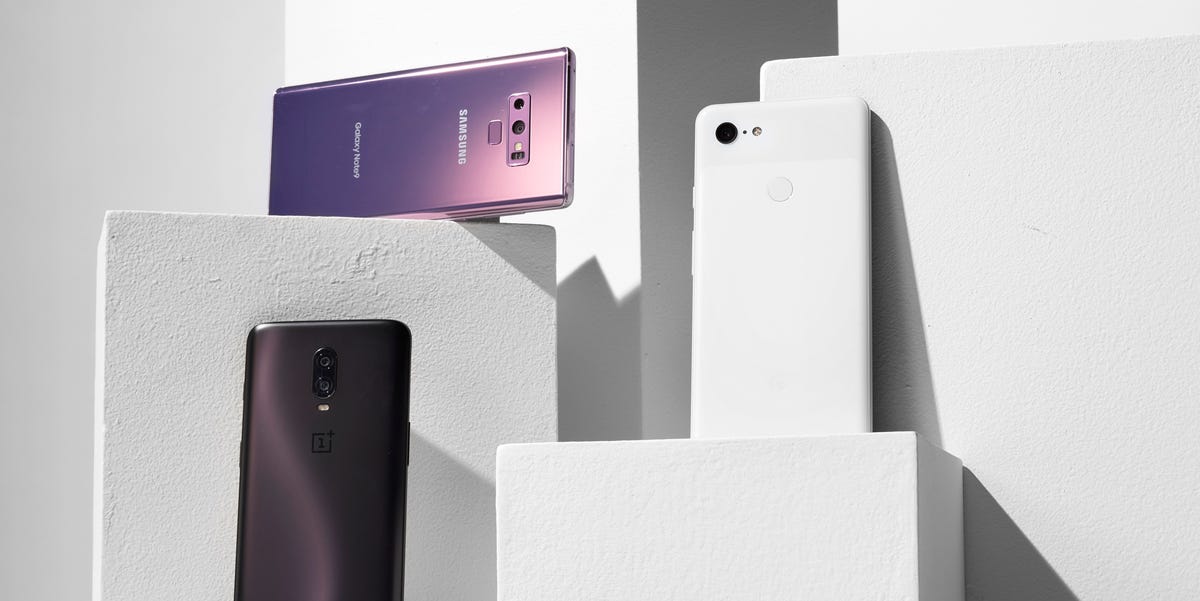
2018 was the year smartphones collectively looked in the mirror and said, “What if I were mostly screen, slightly more expensive, and came with a notch people would argue about for the next decade?” It was a wild, shiny, glass-backed year. Flagship phones became faster, cameras got smarter, batteries improved, and prices crept toward laptop territory with the quiet confidence of a cat knocking a mug off a table.
Choosing the best smartphones of 2018 was not as simple as picking the most expensive rectangle. The year gave us the iPhone XS and XS Max, Samsung Galaxy Note 9, Google Pixel 3, OnePlus 6T, iPhone XR, Galaxy S9, Huawei Mate 20 Pro, LG V40 ThinQ, and Moto G6. Each had a personality. Some were camera geniuses. Some were battery beasts. Some were value champions. A few seemed designed mainly to make your wallet whisper, “Please, no.”
This guide looks back at the best smartphones 2018 had to offer, based on real-world strengths: camera quality, performance, display, battery life, software, value, and long-term usefulness. Whether you were buying a phone in 2018 or looking back now for nostalgia, resale research, or tech-history curiosity, these were the devices that defined the year.
Why 2018 Was a Big Year for Smartphones
By 2018, the smartphone race had moved beyond “Can it open apps?” Almost every flagship could. The real competition shifted to computational photography, OLED displays, wireless charging, facial recognition, water resistance, edge-to-edge screens, and premium design. Phones were no longer just communication tools. They were pocket cameras, game consoles, workstations, payment devices, GPS units, and tiny social-media panic machines.
The biggest trend was the rise of smarter cameras. Google leaned hard into software with the Pixel 3. Apple pushed image processing with Smart HDR on the iPhone XS. Samsung refined dual-aperture photography on the Galaxy S9 and Note 9. Huawei packed in multiple lenses like it was preparing for a phone-camera arms race, which, frankly, it was.
Another major theme was price. The iPhone XS Max and Galaxy Note 9 proved that premium phones could comfortably cross the $1,000 line. Meanwhile, OnePlus reminded everyone that speed did not have to require selling a kidney, and the Moto G6 showed that affordable phones no longer had to feel like punishment.
The Best Smartphones of 2018, Ranked by Real-World Use
1. Google Pixel 3 and Pixel 3 XL: Best Camera Phone of 2018
The Google Pixel 3 was not the flashiest phone of 2018, especially next to curved Samsung displays and Apple’s polished hardware. But when it came to taking photos, the Pixel 3 was the tiny wizard in the room. Google proved that one rear camera, when powered by clever software, could embarrass phones with more lenses than a sunglasses store.
The Pixel 3’s biggest strength was consistency. It made ordinary people look like they had taken a photography course and remembered at least half of it. Colors were balanced, dynamic range was excellent, portraits looked natural, and low-light shots became far better once Night Sight arrived. The phone also had dual front-facing cameras, making it especially useful for group selfies, travel photos, and those “everyone squeeze in, no, closer, no, Dave, stop blinking” moments.
Performance was solid thanks to the Snapdragon 845 processor, and Android 9 Pie gave it a clean, modern software experience. The Pixel 3 also introduced useful AI-driven features such as Call Screen and included Google’s Titan M security chip. Its weaknesses were battery life that was good but not class-leading, limited storage choices, and the Pixel 3 XL’s giant notch, which looked like someone took a bite out of the display with office scissors.
Best for: camera lovers, Android purists, travelers, social media creators, and anyone who wanted excellent photos without manually adjusting settings.
2. iPhone XS and iPhone XS Max: Best Premium iPhone of 2018
The iPhone XS and XS Max were classic Apple: polished, powerful, expensive, and almost annoyingly good at the basics. The XS kept the 5.8-inch OLED style of the iPhone X, while the XS Max expanded the experience with a huge 6.5-inch OLED display. For people who wanted the biggest, most luxurious iPhone available in 2018, the XS Max was the obvious flex.
The A12 Bionic chip was a major advantage. It made the iPhone XS series feel incredibly fast, especially for gaming, video editing, augmented reality apps, and multitasking. Apple also improved the camera with Smart HDR, better portrait processing, and adjustable depth control. The result was a phone that rarely felt confused, even when dealing with tricky lighting.
The iPhone XS was not the best value of 2018. Starting prices were high, storage upgrades were costly, and Apple’s ecosystem could make accessories feel like tiny toll booths. But the XS and XS Max delivered excellent build quality, strong video recording, reliable Face ID, great speakers, water resistance, and years of software support. In 2018, they were the phones for people who wanted premium performance with minimal drama.
Best for: iOS users, mobile gamers, video creators, Apple ecosystem fans, and anyone who wanted a phone that felt expensive because it absolutely was.
3. Samsung Galaxy Note 9: Best Big-Screen Productivity Phone
The Samsung Galaxy Note 9 was the phone equivalent of a luxury SUV with a built-in office. It had a huge 6.4-inch Super AMOLED display, a large 4,000mAh battery, powerful internals, expandable storage, water resistance, a headphone jack, and the famous S Pen. In a year when many brands were removing features, Samsung showed up carrying a toolbox and said, “Actually, what if we kept everything?”
The Note 9’s S Pen gained Bluetooth support, meaning it could act as a remote shutter for photos, a presentation controller, or a tiny magic wand for productivity nerds. Storage was another major strength. With 128GB and 512GB models, plus microSD support, the Note 9 was ideal for power users who stored photos, videos, documents, games, and approximately 14,000 screenshots they swore they would organize someday.
The camera was excellent, though not always as magical as the Pixel 3 in still photography. Samsung’s display quality, however, was among the best in the business. The Note 9 was large, expensive, and not designed for tiny pockets, but it was one of the most complete smartphones of 2018.
Best for: productivity users, stylus fans, heavy media consumers, mobile workers, and people who wanted the biggest feature set possible.
4. OnePlus 6T: Best Value Flagship of 2018
The OnePlus 6T was the phone that walked into the flagship party wearing a reasonable price tag and made everyone uncomfortable. It offered a Snapdragon 845 processor, a 6.41-inch AMOLED display, up to 256GB of storage, fast charging, smooth OxygenOS software, and excellent everyday performance for hundreds less than many competitors.
Its in-display fingerprint sensor felt futuristic in 2018, even if it was not always as quick as traditional fingerprint readers. The teardrop notch was also more elegant than the chunky notches found on some rivals. Battery life was strong thanks to a 3,700mAh cell, and OnePlus’ fast charging was genuinely useful for people who remembered to charge their phone only when it hit 3% and their ride was outside.
The main compromise was the camera. It was good, but it did not consistently match the Pixel 3, iPhone XS, or Galaxy Note 9. The phone also lacked wireless charging and an official IP water-resistance rating. Still, for buyers focused on performance and value, the OnePlus 6T was one of the smartest buys of 2018.
Best for: value seekers, Android fans, gamers, students, and anyone who wanted flagship speed without flagship financial trauma.
5. iPhone XR: Best iPhone for Most People
The iPhone XR was Apple’s more affordable 2018 iPhone, but “more affordable” in Apple language still meant “please sit down before checking out.” Even so, it became one of the most practical iPhones of the year. It used the same A12 Bionic chip as the XS models, offered excellent battery life, came in fun colors, and delivered most of the modern iPhone experience at a lower starting price.
The XR used an LCD display instead of OLED and had a single rear camera instead of a dual-camera system. Yet Apple’s image processing helped it produce very good photos, and the performance gap between the XR and XS was much smaller than the price gap suggested. For most users, the XR was fast, reliable, attractive, and easier to recommend than the pricier XS models.
Best for: iPhone buyers who wanted modern performance, great battery life, Face ID, and a lower price than the XS series.
6. Samsung Galaxy S9 and S9 Plus: Best Mainstream Android Flagships
The Galaxy S9 and S9 Plus were refined rather than revolutionary. They improved on the Galaxy S8 formula with better cameras, stronger performance, stereo speakers, and Samsung’s beautiful curved OLED displays. The S9 Plus, in particular, stood out with its larger screen, dual cameras, and stronger battery life.
The dual-aperture camera was one of Samsung’s headline features, designed to adapt to bright and low-light scenes. In practice, the phones produced colorful, sharp, social-media-friendly images. Samsung also kept beloved features such as expandable storage, water resistance, wireless charging, and the headphone jack.
The downside was that the S9 series felt very familiar. If you already owned a Galaxy S8, the upgrade did not feel urgent. But for anyone coming from an older Android phone, the S9 and S9 Plus were polished, powerful, and easy to love.
Best for: Android users who wanted a premium screen, strong camera, wireless charging, and a familiar Samsung experience.
7. Huawei Mate 20 Pro: Most Innovative Flagship
The Huawei Mate 20 Pro was one of 2018’s most ambitious phones. It packed a large OLED display, a versatile triple-camera system, strong battery life, fast charging, wireless charging, reverse wireless charging, and an in-display fingerprint sensor. It felt like Huawei had opened a drawer labeled “future phone ideas” and installed nearly everything inside.
The camera system was especially impressive because it offered wide-angle, standard, and telephoto perspectives. That versatility made it a great travel phone. Battery life was also a major strength, and reverse wireless charging was a fun party trick, even if it was not always fast enough to save a dying device in a hurry.
Its software was less universally loved than stock Android or iOS, and availability in the United States was complicated compared with Apple, Samsung, and Google. Still, from a pure technology standpoint, the Mate 20 Pro was one of the most exciting smartphones of 2018.
Best for: tech enthusiasts, travelers, photography fans, and users who wanted cutting-edge hardware.
8. LG V40 ThinQ: Best for Camera Versatility
The LG V40 ThinQ arrived with five cameras: three on the back and two on the front. That sounded excessive, like ordering five forks for one salad, but the idea made sense. The rear setup gave users standard, wide-angle, and telephoto options, making the V40 one of the most flexible camera phones of 2018.
LG also delivered a large OLED screen, a headphone jack, strong audio features, water resistance, and a premium design. The V40 was especially appealing to people who cared about manual video controls and audio quality. However, battery life was not the best in its class, and LG’s software experience was not as clean as Google’s or OnePlus’.
Best for: mobile video shooters, audio fans, wide-angle photography lovers, and users who wanted camera flexibility.
9. Moto G6: Best Budget Smartphone of 2018
The Moto G6 proved that a good smartphone did not need to cost flagship money. It offered a clean Android experience, attractive glass design, decent performance, a capable camera for the price, and a display that looked better than budget phones had any right to offer.
No, it could not compete with the Pixel 3 or iPhone XS in photography, performance, or display quality. But that was not the point. The Moto G6 was for people who needed a reliable phone for messaging, browsing, photos, maps, calls, and apps without spending rent money. It was practical, friendly, and refreshingly unpretentious.
Best for: budget buyers, students, first-time smartphone users, and anyone who wanted solid basics at a fair price.
Best Smartphones 2018 by Category
Best Camera: Google Pixel 3
The Pixel 3 won because it made photography easy. You could point, shoot, and trust the result. Its computational photography helped it stand out in portraits, dynamic range, and low light.
Best Battery Life: Samsung Galaxy Note 9
The Note 9’s 4,000mAh battery made it one of the most dependable premium phones of the year. Heavy users could push it hard without constantly hunting for a charger.
Best Performance: iPhone XS and XS Max
Apple’s A12 Bionic chip gave the XS series outstanding speed and long-term performance. For games, video, and demanding apps, it was one of the strongest platforms of 2018.
Best Value Flagship: OnePlus 6T
The OnePlus 6T delivered premium-level speed and design at a much lower price than most flagships. It was not perfect, but it was smart money.
Best Budget Phone: Moto G6
The Moto G6 made everyday smartphone use affordable without feeling cheap. It was proof that budget phones had grown up.
What Made a Great Smartphone in 2018?
A great smartphone in 2018 needed more than a fast processor. The best phones combined strong battery life, reliable cameras, bright displays, durable designs, and smooth software. Buyers were also becoming more aware of storage, charging speed, water resistance, and software updates.
Camera quality became the biggest battleground. The Pixel 3 showed that software could matter as much as hardware. Apple showed the importance of video quality and processing power. Samsung emphasized display quality and versatility. Huawei pushed multi-lens creativity. OnePlus focused on performance per dollar.
The best phone depended on the buyer. A photographer might pick the Pixel 3. A business traveler might choose the Note 9. A student might love the OnePlus 6T or Moto G6. An Apple user would probably choose the iPhone XR or XS. The “best smartphone” was no longer one single device. It was the device that matched your habits without making your bank account dramatically sigh.
Buying Advice: Which 2018 Smartphone Was Right for You?
If you wanted the best photos, the Google Pixel 3 was the top recommendation. If you wanted the best iPhone experience, the iPhone XS or XS Max delivered the most premium package, while the iPhone XR was the smarter buy for most people. If you wanted maximum features, the Galaxy Note 9 was hard to beat. If you wanted Android speed for less money, the OnePlus 6T was the obvious choice.
For entertainment, Samsung’s Galaxy Note 9 and S9 Plus offered gorgeous displays and strong speakers. For productivity, the Note 9’s S Pen made it unique. For budget shoppers, the Moto G6 delivered the essentials. For gadget lovers, the Huawei Mate 20 Pro was the phone that felt most like a preview of the future.
The biggest lesson from 2018 was simple: flagship phones were getting better, but not everyone needed the most expensive one. The midrange and value categories were improving quickly, and buyers had more legitimate choices than ever before.
Real-World Experiences With the Best Smartphones 2018
Using the best smartphones of 2018 felt like living through a turning point. Phones were becoming mature enough that even small improvements mattered. The difference between a good phone and a great phone often appeared in everyday moments: taking a photo in a dim restaurant, checking maps during a long day, switching between apps, recording a birthday video, or trying to unlock the screen while holding coffee, keys, and a questionable gas-station sandwich.
The Pixel 3 experience was all about trust. You took the photo, and most of the time, it worked. That sounds simple, but in real life it was huge. Parents, travelers, food bloggers, students, and casual users did not want to fiddle with exposure sliders. They wanted the picture to look good before the moment disappeared. The Pixel 3 delivered that feeling better than almost any phone in 2018.
The iPhone XS experience was polished and predictable. Apps opened quickly, games ran smoothly, videos looked excellent, and the camera was reliable. It was not always the most adventurous phone, but it felt finished. The XS Max, especially, made watching videos and editing photos more enjoyable because of its large OLED screen. The only recurring pain point was price. Every time you added more storage, you could practically hear your credit card clearing its throat.
The Galaxy Note 9 felt like the phone for people who did everything on their device. Writing notes with the S Pen, editing documents, storing huge media libraries, watching movies, and lasting through a long day were all part of its charm. It was big, but the size felt justified. The Note 9 was not trying to be minimal. It was trying to be useful, and it succeeded.
The OnePlus 6T was satisfying in a different way. It felt fast, clean, and practical. It gave users that flagship thrill without the flagship price hangover. The camera reminded you where the savings came from, but for many people, that trade-off was perfectly acceptable. It was the kind of phone that made expensive rivals look a little dramatic.
The iPhone XR became a favorite because it understood normal users. Most people did not need an OLED display or a second rear lens. They needed battery life, speed, a good camera, fun colors, and access to the Apple ecosystem. The XR delivered those things with fewer sacrifices than expected.
Looking back, 2018 smartphones were exciting because they were still experimenting. Some ideas lasted. Some disappeared. Notches, in-display fingerprint sensors, computational photography, multi-camera systems, and ultra-premium pricing all shaped the years that followed. The best smartphones of 2018 were not just good phones for their time; they were previews of the modern smartphone era.
Conclusion
The best smartphones 2018 gave buyers more choice than ever. The Google Pixel 3 was the camera champion, the iPhone XS and XS Max were the premium performance kings, the Galaxy Note 9 was the productivity powerhouse, and the OnePlus 6T was the value flagship that made expensive phones sweat. The iPhone XR proved that Apple could make a more practical modern iPhone, while the Moto G6 showed how good budget phones had become.
If 2018 had one clear message, it was this: the best phone was no longer just the newest or priciest model. It was the phone that fit your life. Camera lover? Pixel 3. Power user? Note 9. iOS loyalist? iPhone XS or XR. Bargain hunter? OnePlus 6T or Moto G6. The smartphone world had grown up, put on a glass back, added a notch, and started charging more moneybut at least it gave us some truly excellent devices along the way.











