
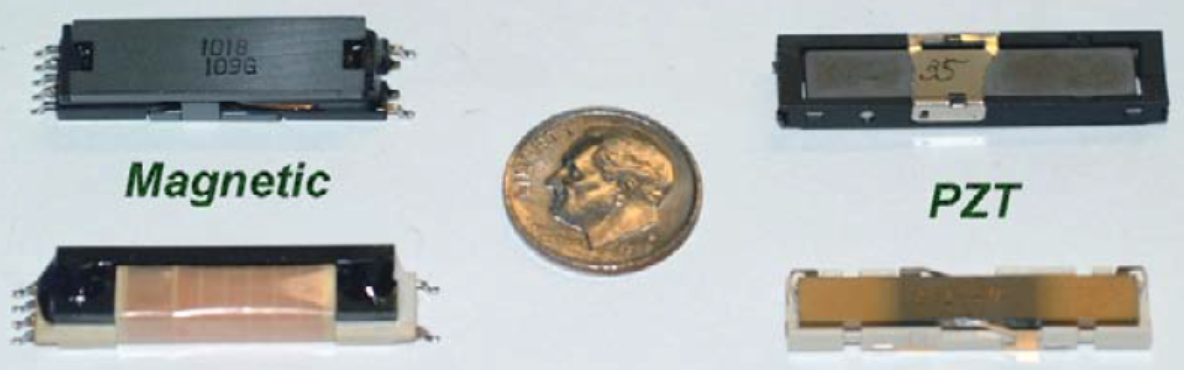
When most people hear the word “transformer,” they picture copper windings, a chunky magnetic core, and perhaps a faint electrical hum that suggests something important is happening in a basement. A piezoelectric transformer skips much of that familiar hardware. No traditional coil. No iron core. Instead, it uses a carefully engineered piece of ceramic that vibrates at high frequency and turns that mechanical motion back into electricity.
Yes, really. A transformer made of ceramic that sings silently in the ultrasonic range is not science fiction, wizardry, or a rejected prop from a tiny robot movie. It is a real power-electronics component with a long history in compact high-voltage applications and a renewed role in ultra-small, high-density power converters.
Piezoelectric transformers are not everywhere, but they are far more practical than their name suggests. They have appeared in display backlights, high-voltage power supplies, plasma systems, specialty electronics, and advanced research projects where ordinary magnetic parts are simply too large, too noisy, or too stubborn.
What Is a Piezoelectric Transformer?
A piezoelectric transformer, often called a PZT transformer or ceramic transformer, transfers electrical energy through mechanical vibration rather than through a magnetic field.
Traditional transformers use alternating current in one coil to create a changing magnetic field. That magnetic field induces voltage in another coil. Piezoelectric transformers take a stranger route. An electrical signal is applied to one section of a piezoelectric ceramic. The ceramic physically expands and contracts. That vibration travels through the material to another section, where the mechanical stress creates an electrical output.
In simple terms, the input side acts a little like a microscopic motor, while the output side acts a little like a generator. The energy takes a quick detour through motion before returning to the electrical world.
The ceramic is commonly based on piezoelectric materials such as lead zirconate titanate, usually shortened to PZT. Some newer designs explore materials such as lithium niobate, especially for compact power converters that need high power density and carefully controlled resonance behavior.
How Does a Piezoelectric Transformer Work?
Piezoelectric transformers rely on two related material behaviors. The first is the inverse piezoelectric effect: apply voltage to a piezoelectric material, and it changes shape slightly. The second is the direct piezoelectric effect: mechanically stress the material, and it generates electrical charge.
Inside a typical piezoelectric transformer, the input region receives an alternating voltage. That voltage makes the ceramic expand and contract at a specific frequency. When the electrical drive frequency matches the ceramic’s mechanical resonance, the device vibrates efficiently, much like a guitar string responding most strongly to the right note.
The output region experiences that vibration as mechanical stress. It then converts the stress into an output voltage. Depending on the device design, the output can be stepped up, stepped down, or used as part of a specialized resonant power converter.
That resonance is the big personality trait of a piezoelectric transformer. A regular magnetic transformer is often fairly forgiving. A piezoelectric transformer is more like a talented opera singer with a very particular warm-up routine. Drive it near the correct frequency, with the intended load and mounting arrangement, and it can perform beautifully. Drift too far away, and it becomes dramatically less cooperative.
Why It Cannot Run Directly From DC
A piezoelectric transformer needs changing voltage to create changing mechanical strain. Plain DC will not keep it vibrating, so a driver circuit is required. In most practical designs, a switching stage converts DC into high-frequency AC, the ceramic transformer processes that energy, and a rectifier or output circuit converts it into usable DC again.
This is why a piezoelectric transformer belongs in the broader world of resonant power electronics, not in the “plug a battery into it and hope for magic” category.
Why Use a Ceramic Transformer Instead of a Magnetic One?
The biggest advantage is size. Magnetic components can become bulky as designers demand isolation, high voltage, low loss, or enough power to do something more exciting than illuminate one lonely indicator LED. Piezoelectric transformers can be very thin and compact because they do not need a wound magnetic core.
They can also offer strong voltage transformation in a low-profile package. That made them especially attractive for thin display systems, including older cold-cathode fluorescent lamp backlights in laptops, monitors, and televisions.
- Compact form factor: Ceramic transformers can be flatter and lighter than conventional magnetic transformers.
- Low magnetic-field radiation: They do not rely on a magnetic core, which can help in designs sensitive to magnetic interference.
- Potentially high efficiency: When operated near their intended resonant point, well-designed systems can perform efficiently.
- High-voltage capability: Certain designs can generate substantial output voltages in compact packages.
- Useful electrical isolation: Many piezoelectric transformer designs provide isolation between electrical input and output sections, although system-level safety must always be verified.
There is also an aesthetic advantage, at least for engineers. A ceramic bar that replaces a coil-and-core assembly feels wonderfully elegant. It is the kind of component that makes a circuit board look like it has been quietly upgraded by a physics department.
The Catch: Piezoelectric Transformers Are Picky
Before you replace every transformer in your project with a vibrating ceramic strip, it is worth meeting the tradeoffs. Piezoelectric transformers are not universal replacements for magnetic transformers. They are specialized components that reward careful design and punish casual assumptions.
First, they are highly resonant. Their gain, efficiency, and operating frequency can change with load, temperature, mounting pressure, aging, and even nearby mechanical constraints. A design that works perfectly on a lab bench can become grumpy when placed in a tight enclosure with the wrong adhesive or mounting clip.
Second, their operating bandwidth is narrow. Many classic PZT transformer designs work around ultrasonic frequencies, often tens or hundreds of kilohertz and sometimes much higher. That makes frequency control important. The driver cannot simply wander around like it is looking for free parking.
Third, piezoelectric transformers are not automatically quiet from an EMI perspective. They reduce the magnetic-field issues associated with conventional magnetics, but the switching circuit, high-voltage edges, cables, rectifiers, and layout can still create electromagnetic interference. “No magnetic core” does not mean “no engineering homework.”
Finally, mechanical stress matters. Clamp the device at the wrong spot, mount it too rigidly, or subject it to unwanted vibration, and performance may drop. These components have vibration nodes and anti-nodes, which means their mounting strategy is part of the electrical design. That is a sentence that can make a PCB-only designer suddenly develop an interest in mechanical engineering.
Where Are Piezoelectric Transformers Used?
Historically, one of the best-known applications was the compact inverter used to power cold-cathode fluorescent lamps in LCD backlights. Those systems needed high voltage, limited space, good efficiency, and a low-profile form factor. Piezoelectric transformer-based drivers were a natural fit.
They also appear in specialized high-voltage power supplies, plasma-generation systems, ignition-related circuits, instrumentation, medical and scientific equipment, and research prototypes for lightweight aerospace electronics.
In modern power-electronics research, piezoelectric transformers and piezoelectric resonators are getting attention because they may help shrink DC-DC converters. Designers want smaller power supplies for compact electronics, advanced communication systems, electric vehicles, portable hardware, and equipment where every cubic millimeter seems to have been reserved for something else.
They are especially interesting in environments where magnetic materials are undesirable or where compactness matters more than broad operating flexibility. A magnetic transformer remains the practical champion for countless applications, but a piezoelectric transformer can be the better athlete in a very specific event.
How to Know Whether a Piezoelectric Transformer Fits Your Project
Start with the application, not the novelty. A piezoelectric transformer is worth considering when your project needs compact high-voltage conversion, a thin power stage, low magnetic-field emissions, or a specialized isolated DC-DC converter with relatively predictable operating conditions.
It is less attractive when you need a wide input-voltage range, large load swings, simple control, inexpensive off-the-shelf replacement parts, or effortless field repair. Conventional magnetics have been winning those arguments for decades, and they are not about to surrender because a ceramic component showed up looking stylish.
Questions to Ask Before Designing One In
- What voltage conversion ratio is required?
- How much output power is needed?
- Will the load vary dramatically during operation?
- Can the control circuit track or regulate the resonant frequency?
- How will temperature affect the operating point?
- Can the transformer be mounted without damping or distorting its vibration mode?
- What isolation and safety certifications are required for the finished product?
For hobbyists, the biggest challenge may be sourcing. Piezoelectric transformers are less common than standard flyback transformers, ferrite cores, and ready-made DC-DC modules. Datasheets can also be more demanding because the electrical behavior is tied closely to mechanical properties. You are not merely choosing inductance and turns ratio. You are choosing a tiny resonant mechanical system that happens to live on a circuit board.
Could Piezoelectric Transformers Become More Common?
Possibly, especially in highly miniaturized electronics. Research groups are developing improved piezoelectric materials, high-quality resonators, new control methods, and converter topologies designed to overcome the usual problems of narrow operating range and unwanted resonant modes.
The future is not likely to be a dramatic overnight replacement of every magnetic transformer on Earth. Your phone charger, microwave, and workshop power supply are probably safe from ceramic takeover for now. But piezoelectric transformers may become increasingly useful in applications where compactness, high-frequency operation, and power density matter more than design simplicity.
Conclusion: Tiny Ceramic, Big Electrical Personality
Piezoelectric transformers are real, useful, and delightfully weird. They replace coils and magnetic fields with a vibrating ceramic structure that converts electrical energy into motion and motion back into electricity. Their small size, thin profile, high-voltage potential, and low magnetic-field radiation make them valuable in specialized power systems.
They are not beginner-friendly drop-in replacements for ordinary transformers, though. Resonance, temperature, mounting, load behavior, and control strategy all matter. Treat them like simple components, and they may frustrate you. Treat them like precision acoustic devices hiding inside a power converter, and they start to make a lot more sense.
Note: This article is educational and intended for general electronics discussion. High-voltage circuits can store dangerous energy even after power is removed, so use appropriate isolation, measurement equipment, safety procedures, and professional review when designing or repairing power electronics.
Practical Experiences With Piezoelectric Transformers: Lessons From the Bench
Most engineers who spend time around piezoelectric transformers remember the first surprise: the component looks almost too simple to deserve respect. It may resemble a small ceramic bar, a flat rectangular chip, or an oddly elegant piece of industrial candy. Then the test setup begins, the output voltage rises, and everyone suddenly remembers that “small” and “harmless” are not synonyms in power electronics.
A common first lesson is that the frequency sweep matters more than expected. With a magnetic transformer, a rough switching frequency may still produce something useful. With a piezoelectric transformer, moving the drive frequency by a relatively small amount can noticeably change output voltage, current draw, efficiency, and heating. The response curve often feels less like a broad hill and more like a narrow mountain pass: beautiful when you are on it, inconvenient when you are one turn away.
Another practical lesson involves mounting. A piezoelectric transformer is not merely connected to the circuit; it is physically participating in the circuit. If adhesive, potting compound, clips, or enclosure pressure interfere with the device’s preferred vibration mode, performance can suffer. Designers learn to respect mounting nodes, clearances, and mechanical isolation. A perfect schematic can still lose an argument with an overenthusiastic cable tie.
Thermal behavior is another recurring theme. The ceramic itself may run efficiently near its intended operating point, but the overall system still includes MOSFETs, rectifiers, capacitors, control ICs, and high-voltage insulation requirements. When the load changes or resonance shifts, losses can move quickly. Watching only output voltage is not enough; input current, transformer temperature, switching waveforms, and fault behavior all deserve attention.
Engineers also learn not to confuse a piezoelectric transformer with an energy harvester or a piezo buzzer. All three use piezoelectric materials, but they serve different jobs. An energy harvester scavenges small amounts of mechanical energy from vibration. A buzzer turns electrical energy into sound. A piezoelectric transformer is a controlled power-transfer device designed to move energy through mechanical resonance. Similar family, very different dinner conversations.
One of the most useful habits is testing with realistic loads early. An output that appears stable with a resistor may behave differently with a nonlinear load, a rectifier-capacitor input, a lamp, a plasma source, or a downstream converter. The load affects the resonant system, and the resonant system affects the load. It is a relationship with boundaries, expectations, and a shared calendar.
Finally, the best practical experience is knowing when not to use one. Piezoelectric transformers are excellent when their strengths align with the project: compact size, high voltage, controlled operating conditions, and a well-designed resonant driver. They are a poor fit when flexibility, wide operating range, easy sourcing, and simple troubleshooting matter more. The goal is not to force ceramic transformers into every design. The goal is to recognize the rare moments when a little piece of vibrating ceramic is exactly the clever answer you needed.












