
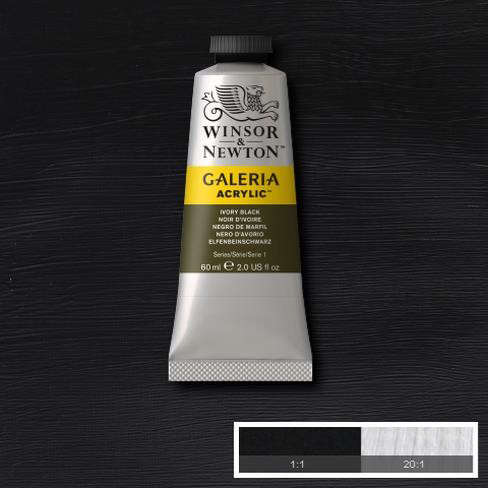
Some paint colors enter the studio wearing a tuxedo. Galeria Acrylic Ivory Black is one of them. It is dramatic without being obnoxious, serious without being stiff, and useful in so many situations that it can quietly become the tube you reach for even when you promised yourself you were “just organizing supplies today.” Artists know that black paint is never just black. It can lean warm, cool, smoky, earthy, transparent, dense, glossy, chalky, or mysteriously moody like a cat judging your composition from across the room.
Winsor & Newton’s Galeria Acrylic Ivory Black belongs to the popular Galeria acrylic range, a line built for artists who want dependable color, smooth handling, and a more accessible price point than many professional-grade acrylic paints. Ivory Black is especially appealing because it is not a harsh, flat void. It carries subtle brown undertones, strong tinting power, and a stable character that makes it useful for shadows, grayscale studies, underpainting, mixed media, design work, craft projects, and expressive acrylic painting.
This guide explores what Galeria Acrylic Ivory Black is, how it behaves, when to use it, how it compares with other black acrylic paints, and why a single tube can do far more than darken the corner of a canvas. Think of it as the little black dress of the acrylic box: classic, versatile, and always suspiciously good at saving a painting from chaos.
What Is Galeria Acrylic Ivory Black?
Galeria Acrylic Ivory Black is an acrylic paint color from Winsor & Newton’s Galeria range. The color number is commonly listed as 331, and the pigment is PBk9, traditionally associated with bone black or ivory black. In modern artist materials, the name “Ivory Black” refers to the historic color family rather than old ivory sourcing. The result is a deep black with a slightly warm, brownish undertone and a softer visual presence than some sharper, cooler blacks.
Galeria acrylics are designed to deliver reliable performance for students, hobbyists, illustrators, mural painters, and artists who need good color without treating every squeeze of paint like liquid gold. The range is known for a smooth satin finish, good permanence, strong coverage, and a consistency that is fluid enough to spread easily but still capable of holding visible brushwork when applied more thickly.
Key Product Characteristics
- Color name: Ivory Black
- Range: Winsor & Newton Galeria Acrylic
- Color number: 331
- Pigment code: PBk9
- Finish: Smooth satin
- Opacity: Semi-opaque
- Lightfastness: Excellent
- Best for: Shadows, tonal studies, mixing grays, muted greens, graphic contrast, and expressive dark passages
Why Ivory Black Matters in Acrylic Painting
Beginners often think black is simply the color used when something must be dark. Experienced painters know black is a personality test. Mars Black tends to be strong and opaque. Lamp Black can feel cooler and deeper. Ivory Black is often more subtle, making it excellent for artists who want control rather than instant visual thunder.
Galeria Acrylic Ivory Black is especially useful because it can create deep darks while still allowing nuanced mixing. Add a tiny amount to yellow and you can produce earthy olive greens. Mix it with Titanium White and you get a range of elegant grays, from pale fog to storm-cloud drama. Blend it with Burnt Sienna or Raw Umber and it becomes perfect for old wood, dark hair, aged leather, tree bark, and atmospheric backgrounds.
Because this color has brown undertones, it is less likely to look cold and artificial when used in natural subjects. That makes it practical for portraits, landscapes, wildlife art, still life painting, and decorative projects where a jet-black mark would look too graphic or severe.
Texture, Finish, and Handling
One of the strongest advantages of Galeria Acrylic Ivory Black is its approachable handling. It spreads smoothly from the tube, works well with brushes and palette knives, and can be diluted with water or acrylic mediums depending on the effect you want. Used straight, it offers confident coverage and a satin sheen. Thinned slightly, it becomes useful for sketching, blocking in shadows, or glazing over dried layers.
The satin finish is a sweet spot for many painters. Glossy black can sometimes look plasticky, while matte black may appear dusty or weak. A satin black gives depth without screaming for attention. On canvas, paper, wood panels, and prepared boards, Galeria Acrylic Ivory Black can create clean edges, soft blends, and strong contrast when paired with lighter colors.
Best Surfaces for Galeria Acrylic Ivory Black
This paint works well on traditional acrylic surfaces such as primed canvas, acrylic paper, illustration board, wood panels, and mixed media surfaces. For raw wood, cardboard, or highly absorbent paper, a layer of acrylic gesso improves the painting experience by reducing uneven soaking. On smooth panels, Ivory Black can produce sharp graphic lines. On textured canvas, it catches the weave beautifully, creating depth and movement.
If you are painting on slick or unusual surfaces, test first. Acrylic paint is wonderfully flexible, but it is not magic glue wearing a beret. Proper surface preparation helps the paint adhere, last, and look its best.
How to Mix With Galeria Acrylic Ivory Black
Ivory Black is powerful, so begin with small amounts. A little dab can shift an entire mixture. Add too much and your cheerful yellow suddenly becomes the color of overcooked broccoli with emotional baggage. The trick is to sneak up on darkness gradually.
Mixing Ivory Black With White
When mixed with Titanium White, Galeria Acrylic Ivory Black creates cool to neutral grays. These mixtures are excellent for value studies, monochrome portraits, cityscapes, cloudy skies, and underpaintings. Try creating a nine-step grayscale chart from pure white to pure black. This simple exercise teaches control, value relationships, and how quickly black affects a mixture.
Mixing Ivory Black With Yellow
Ivory Black and yellow can produce muted olive greens. This is helpful for landscapes, military-style color palettes, botanical shadows, and natural foliage that should not look neon. Lemon Yellow will create cooler, sharper greens, while Yellow Ochre creates earthy, mossy tones.
Mixing Ivory Black With Red and Brown
With Burnt Sienna, Raw Umber, or red oxide colors, Ivory Black becomes warm and organic. These mixtures are useful for dark skin tones, tree trunks, antique furniture, animal fur, coffee shadows, and rustic backgrounds. The color can also deepen crimson or burgundy without making the mixture look too blue.
Ivory Black vs. Mars Black vs. Lamp Black
Choosing a black acrylic paint depends on the mood and purpose of the work. Ivory Black is generally softer and more nuanced, with warm undertones and moderate transparency. Mars Black is usually stronger, more opaque, and more assertive. Lamp Black often feels cooler and can create deep, blue-leaning darks.
For bold graphic design, Mars Black may be the heavy-duty choice. For subtle shadows, portraits, tonal transitions, and naturalistic painting, Galeria Acrylic Ivory Black often feels more forgiving. It darkens without immediately flattening the mixture. That matters because paintings need shadow, not just black holes wearing paint.
Best Uses for Galeria Acrylic Ivory Black
1. Tonal Studies and Grayscale Practice
Ivory Black is excellent for learning value. Students can use it with white to practice light, midtone, and shadow without the distraction of hue. A simple still life painted only in Ivory Black and Titanium White can teach more about form than a rainbow palette used too soon.
2. Portrait Shadows
In portrait work, pure black can be dangerous when used carelessly. Galeria Acrylic Ivory Black is useful for dark hair, pupils, eyelashes, clothing folds, and deep cast shadows, especially when mixed with browns, blues, or reds. The brown undertone helps it feel more natural than a cold black straight from the tube.
3. Landscape Depth
For landscapes, Ivory Black helps create tree silhouettes, distant ridges, wet stones, shaded soil, and moody skies. Mixed with yellow, it produces muted greens that look more believable than overly bright tube greens. Mixed with Ultramarine or Prussian Blue Hue, it can create atmospheric night tones.
4. Abstract and Contemporary Art
In abstract painting, black is structure. It can anchor a composition, divide space, sharpen a focal point, or create contrast against bright acrylic colors. Galeria Acrylic Ivory Black performs well in bold marks, palette-knife strokes, dry brushing, splatter effects, and layered acrylic collage.
5. Craft, Decor, and Mixed Media
Because the Galeria range is accessible and versatile, Ivory Black works for decorative signs, painted boxes, journaling pages, handmade cards, model backgrounds, and DIY wall art. It can be used for lettering, distressing edges, stenciling, and adding aged effects to craft projects.
Application Tips for Better Results
Use a synthetic brush for smooth coverage and a bristle brush for expressive texture. For crisp lines, thin the paint slightly with water or acrylic medium and use a fine liner brush. For dry brushing, remove most of the paint from the bristles and drag lightly over textured surfaces. This creates smoky, broken marks that are perfect for weathered wood, fabric texture, stone, and atmospheric effects.
To create a transparent glaze, use acrylic glazing medium rather than too much water. Water can thin acrylic paint, but too much may weaken the binder and reduce adhesion. Medium keeps the paint film more stable while giving you controlled transparency. For heavy texture, combine Ivory Black with modeling paste or heavy gel. The result can be dramatic, especially when used for abstract ridges, night scenes, or expressive monochrome work.
Drying, Layering, and Varnishing
Acrylic paint dries quickly to the touch, but that does not always mean it is fully cured. Thin layers can often be painted over within a reasonable studio session, while thicker applications need more time. Galeria Acrylic Ivory Black can be layered effectively, but give each layer enough time to dry before adding the next. This avoids lifting, streaking, or accidental mud.
Before varnishing, patience is your friend. Winsor & Newton recommends allowing at least a week of drying before varnishing this color. For thick applications, humid studios, or paintings with heavy acrylic mediums, waiting longer is wise. Varnish protects the finished surface, evens out sheen, and gives the painting a more professional appearance.
Common Mistakes to Avoid
Using Too Much Black Too Soon
The most common mistake is adding a large amount of Ivory Black to a mixture and then wondering why the color looks dull. Black is strong. Use it like hot sauce: a little can transform the meal, but half a bottle may cause regret.
Relying on Black for Every Shadow
Not all shadows are black. Many shadows contain blue, violet, green, red, or brown. Instead of darkening every color with Ivory Black, experiment with complementary colors. For example, darken green with red, orange with blue, or yellow with violet. Then add Ivory Black only when you need extra depth.
Skipping Surface Preparation
Acrylic paint performs best on suitable surfaces. If the surface is dusty, greasy, too absorbent, or too slick, the result may be uneven. A quick coat of gesso can solve many problems before they start.
Who Should Buy Galeria Acrylic Ivory Black?
This paint is a strong choice for beginner and intermediate artists, art students, hobby painters, mural makers, crafters, and anyone building a practical acrylic palette. It is also useful for experienced painters who want a dependable black for studies, backgrounds, and larger projects where premium professional paint may not be necessary.
If you need the most intense, opaque black possible, Mars Black may be more suitable. If you want a softer black with natural mixing behavior and a classic artist-paint feel, Galeria Acrylic Ivory Black deserves a place in your paint box.
Practical Studio Experiences With Galeria Acrylic Ivory Black
In actual studio use, Galeria Acrylic Ivory Black feels like one of those quiet supplies that earns trust slowly. It does not need glitter, gimmicks, or dramatic packaging to prove itself. The value shows up when you are halfway through a painting and need a shadow that looks intentional rather than panicked. On a primed canvas, the paint lays down smoothly and dries with a restrained satin finish. That finish is important because black areas can easily become distracting if they are too shiny or too flat. Galeria Ivory Black sits comfortably in the middle, giving dark passages depth without turning them into tiny mirrors.
One useful experience is painting a simple black-and-white still life. Place a white mug, a dark bottle, and a folded cloth under a desk lamp. With only Galeria Acrylic Ivory Black and Titanium White, you can build a full range of values. The paint mixes cleanly into grays, and small changes in proportion are easy to see. This exercise reveals how much control the color offers. Pure black can define the deepest accents, while diluted or mixed versions create the soft half-tones that make objects look three-dimensional.
Another practical test is landscape mixing. Many beginners use bright green straight from the tube and end up with trees that look radioactive. Add a touch of Ivory Black to yellow or green, and suddenly the color feels calmer, older, and more natural. For pine trees, shaded grass, distant hills, and mossy stones, this is extremely helpful. The paint also works well for bare winter branches. Use a rigger brush, thin the black slightly, and pull quick uneven lines across a pale sky. The result has life because Ivory Black is not visually dead; it has a gentle warmth that keeps the marks from feeling mechanical.
For mixed media, Galeria Acrylic Ivory Black can be used to age edges, outline collage pieces, or add contrast over textured backgrounds. A dry brush loaded with a tiny amount of paint can skim across raised paper, fabric, modeling paste, or gesso texture. This creates an instant antique effect. It is also excellent for journal pages where you want dramatic contrast around handwritten text or pasted images. Just remember that black has a big personality. Give it one wall of the room, not the whole house.
In portrait practice, the paint is most successful when mixed rather than used straight. A tiny amount added to Burnt Umber can create convincing dark hair. Mixed with Ultramarine and a warm brown, it can produce deep clothing shadows. For pupils and eyelashes, use it carefully and keep edges varied. A perfectly hard black outline around every feature can make a portrait look like a sticker. Softer transitions make the face feel more alive.
Cleaning up is simple because it is acrylic: wash brushes with water before the paint dries. Do not leave a brush sitting in black paint while you “quickly check one message,” because that message may become twenty minutes of scrolling and one tragic brush funeral. Keep a water jar nearby, wipe excess paint from the ferrule, and reshape the bristles after cleaning.
Overall, the experience of using Galeria Acrylic Ivory Black is dependable, flexible, and surprisingly refined for an accessible acrylic paint. It is not only for darkness. It is for structure, mood, contrast, muted color, and visual rhythm. Whether you are painting a dramatic abstract canvas, a quiet grayscale study, a handmade sign, or a moody forest scene, this black earns its spot on the palette.
Conclusion
Galeria Acrylic Ivory Black is more than a basic black acrylic paint. It is a flexible studio workhorse with warm undertones, excellent lightfastness, a smooth satin finish, and enough tinting strength to handle serious mixing. It can support beginners learning value, students building affordable palettes, and experienced artists looking for a reliable black for shadows, design, and atmospheric effects.
Its best quality is balance. It is deep but not brutally harsh, strong but still controllable, practical but not boring. Used thoughtfully, it can bring harmony, contrast, and depth to acrylic paintings across many styles. Keep it nearby, treat it with respect, and it may become the quiet hero of your next canvas.












