
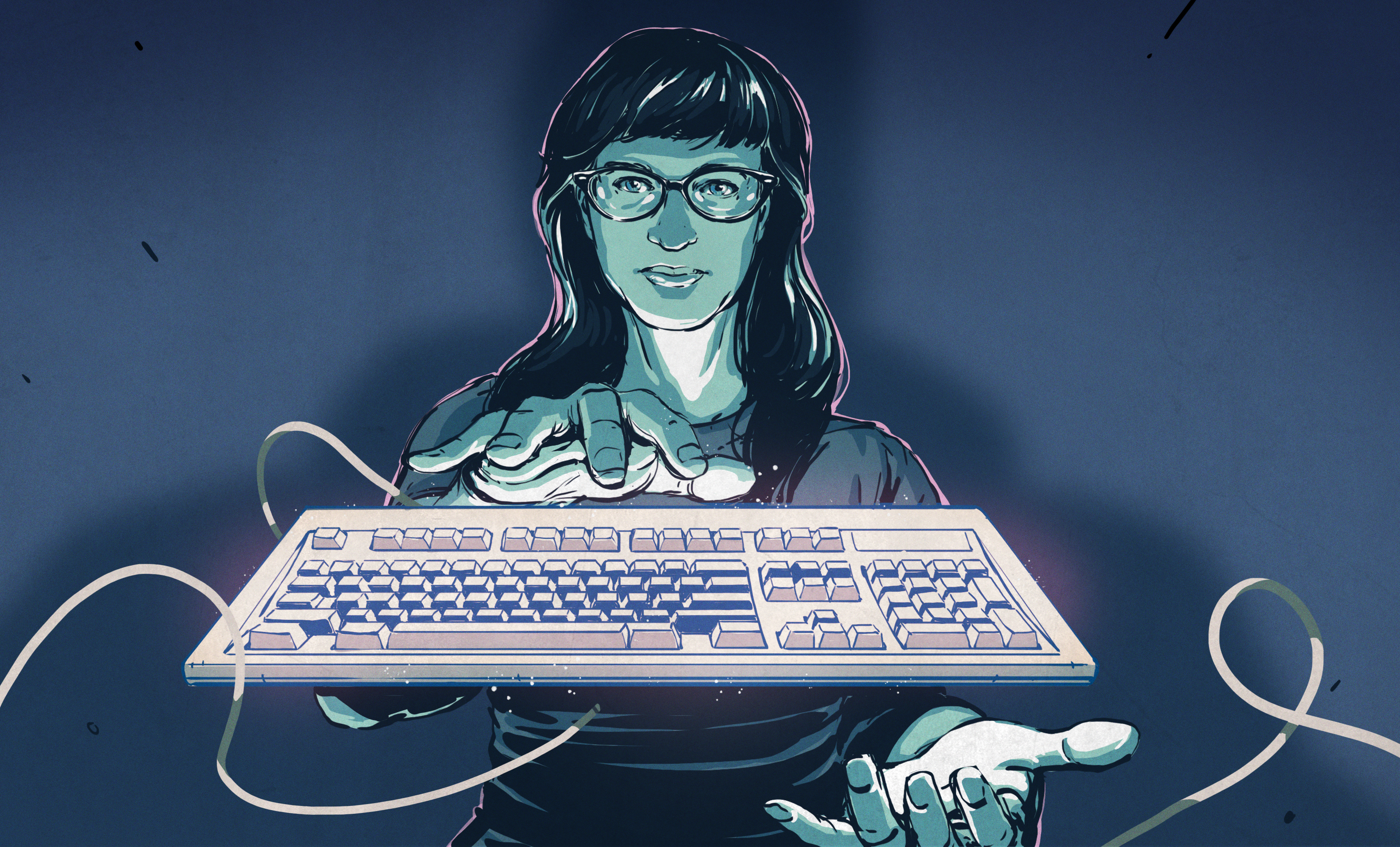
There are keyboard articles, and then there are keyboard articles that make you want to rearrange your desk, price out a 3D printer, and suddenly speak about “typing feel” like you’re discussing a fine espresso. “Keebin’ With Kristina: The One With The Cipher-Capable Typewriter” lands squarely in the second category. It is not merely about a machine. It is about a mood, a philosophy, and a very specific kind of nerd joy: the kind that appears when old-school writing tools collide with modern mechanical keyboard culture and produce something gloriously impractical-looking, yet surprisingly useful.
At the center of the fascination is the Typeframe PX-88, a retro-styled writer deck that looks like a typewriter wandered into a Raspberry Pi workshop and decided to stay. Add the wonderfully odd historical idea of a cipher-capable typewriter, sprinkle in the modern custom keyboard obsession with hot-swap switches, keycap profiles, macros, and portability, and you have a perfect recipe for a story that feels part history lesson, part product design love letter, and part “I absolutely do not need this, which is exactly why I want it.”
That is why this topic works so well. It is not just about pressing keys. It is about why people still care so much about how those keys feel, sound, and behave in a world full of slick glass screens and voice assistants trying very hard to make typing look old-fashioned. Spoiler alert: typing is not going quietly.
Why This Keebin’ Entry Hits So Hard
What makes this installment of Keebin’ With Kristina so memorable is that it understands the custom keyboard community’s favorite magic trick: turning a piece of hardware into a personality. The Typeframe PX-88 is not just a portable computer. It is a statement piece. It borrows the visual language of vintage portable machines, then sneaks in modern convenience like a flip-up touch display, a removable keyboard, and a build process that does not require you to earn an honorary electrical engineering degree before lunch.
That matters because one of the biggest reasons mechanical keyboard culture has grown beyond hardcore hobbyists is accessibility. Enthusiasts still adore deep customization, but more people now want the keyboard equivalent of a project car they can actually finish before retirement. Hot-swappable boards, modular parts, and preconfigured firmware have lowered the barrier to entry. In other words, the hobby still loves tinkerers, but it has stopped insisting every newcomer spend a weekend inhaling solder fumes before being allowed to have fun.
The PX-88 feels like an ideal ambassador for that shift. It is retro without being precious, customizable without being hostile, and nerdy without apologizing for it. Most importantly, it remembers that a writing device should make you want to write. That sounds obvious, but plenty of devices today are excellent at everything except getting out of your way. A purpose-built writer deck flips that logic. It says, “Here is a machine for making words. Please stop checking twelve tabs and go finish your paragraph.” Honestly, rude. Also helpful.
The Typeframe PX-88 Is Basically a Love Letter to Focused Typing
Let’s talk about the star of the show. The Typeframe PX-88 channels the spirit of classic portable computers while updating the concept for modern writers. Instead of trying to be a gaming beast, a corporate laptop, a media center, and a substitute for your entire personality, it narrows the mission. It is there to help you type, edit, and create with less friction. That focus is part of its charm.
The design choices are especially clever. A detachable 65% keyboard gives the whole machine a typewriter-adjacent silhouette while preserving modern ergonomics. The touch display reduces the need for a mouse, which is great because nothing ruins retro elegance faster than a random plastic mouse scooting around beside your carefully curated keyboard shrine. The Raspberry Pi guts keep the project rooted in maker culture, while the open-source approach makes it feel communal rather than locked down.
Then there is the keyboard itself, which is where the mechanical keyboard crowd starts nodding like they have just heard a secret password. A 65% layout strikes a sweet balance: compact enough to feel streamlined, but not so minimal that you need a treasure map to find your arrow keys. Hot-swap support also changes the conversation. It means the board is not frozen in one identity. Today it can be light and poppy. Tomorrow it can be deeper, firmer, quieter, louder, or generally more “I spent three hours comparing switch sound tests on the internet and regret nothing.”
This is also where the typewriter comparison gets interesting. Real typewriters had physical drama. Every keystroke felt consequential. Modern mechanical keyboards do not fully recreate that, but they do bring back intentionality. They restore a sense that writing is a physical act, not just a cloud service with autocorrect. That is a huge part of why these machines are catnip for writers, makers, and design nerds alike.
The “Cipher-Capable Typewriter” Angle Is More Than a Gimmick
Now for the phrase that steals the headline: cipher-capable typewriter. That wording is pure catnip because it combines two irresistible things: old machinery and secret messages. You could call that manipulative, but I prefer “extremely effective.”
The historical reference behind that phrase points to an earlier era when typewriters were not just office tools; they were part of a broader evolution of communication technology. The mythology of the keyboard has always included speed, secrecy, precision, and power. The typewriter was a writing tool, yes, but it was also a machine for standardized thought, formal correspondence, technical instruction, and coded communication. Once you add the idea of mechanical encryption, the keyboard stops being furniture and starts becoming theater.
That is one reason the title works so well. It frames the keyboard not as a disposable accessory but as an interface with history. The QWERTY layout itself still carries echoes of telegraph-era communication habits. The modern mechanical keyboard hobby, for all its RGB glow and artisan keycaps, often circles back to that same fascination: how input devices shape thinking. We do not just type on keyboards. We think through them.
The cipher angle also helps explain why the PX-88 and similar builds feel more romantic than a standard productivity laptop. A generic laptop says, “I can do spreadsheets.” A cipher-capable typewriter says, “I can do spreadsheets, but I might also contain a wartime secret, a sci-fi manifesto, or a weirdly elegant grocery list.” One of these is objectively more entertaining.
And because the custom keyboard world thrives on layers, macros, alternate layouts, and programmable behavior, the cipher metaphor feels oddly current. QMK-powered boards can make single keys do multiple jobs, trigger strings, change layers, and transform compact layouts into shape-shifting input systems. That is not literal cryptography, but it absolutely carries the same spirit of encoded intent. A keyboard becomes not just a board of letters, but a machine that translates rituals into output.
What This Says About Modern Keyboard Culture
The bigger story here is that keyboard culture is no longer niche in the way it once was. It is still wonderfully obsessive, of course. No civilization should ever need this many opinions about plate materials. But custom boards have moved into a broader conversation about comfort, focus, aesthetics, repairability, and identity.
Mechanical keyboards have benefited from a rare mix of practical and emotional appeal. Practically, people like tactile feedback, durability, and the ability to tailor a board to their preferences. Emotionally, these devices feel personal. They are visible, audible, and deeply interactive. Unlike a hidden processor or a sealed battery, a keyboard is a tool you physically engage with all day. If it feels bad, you know it immediately. If it feels great, you also know it immediately, and then you become the kind of person who says things like “thock” in public.
Cyberdeck culture sits next to that trend and adds another layer of personality. These builds combine retro-computing aesthetics, portable hardware, and DIY spirit into machines that look like props from a sci-fi film but function as real computers. That blend of old and new is the whole point. People are tired of machines that all look like variations of gray pancakes. A cyberdeck dares to have a face.
Writer-focused hardware is part of the same movement. Devices and keyboards aimed at writing are thriving because they promise intentional constraints. They are not trying to replace your workstation. They are trying to carve out a better experience for one specific task. In a culture where every app wants your attention and every device wants to multitask itself into exhaustion, a tool that says “just write” feels almost rebellious.
That is why this Keebin’ entry resonates beyond hobbyists. It taps into a wider hunger for tools that are not merely efficient, but meaningful. People do not only want faster hardware. They want hardware that makes the work feel better.
Is It Actually Useful, or Just Really Pretty Nerd Bait?
The honest answer is: both, and that is fine.
A machine like the Typeframe PX-88 is useful for people who value focused writing, portable tinkering, and a physical keyboard experience that feels distinct from standard laptops. It is probably not the universal answer for every user. If your workflow revolves around heavy multitasking, giant spreadsheets, or software that assumes a full-size desktop setup, a purpose-built writer deck may feel like bringing a fountain pen to a laser printer convention.
But usefulness is not the only measure that matters. Design has emotional utility too. A tool that makes you want to sit down and use it has already solved a real problem. Many people do not struggle because they lack a computer. They struggle because their computer is a distraction carnival. A machine that reduces friction, looks inviting, and encourages deliberate writing has earned its place.
There is also a sustainability angle hiding in plain sight. Open-source hardware, repairable components, modular keyboards, and hot-swap designs all push against disposable tech culture. They suggest a future where users can maintain and adapt their tools instead of replacing them the moment one part feels wrong. In that sense, the PX-88 is not only charming. It is quietly philosophical.
Experiences Related to “Keebin’ With Kristina: The One With The Cipher-Capable Typewriter”
What makes the whole cipher-capable typewriter idea stick in your head is the experience it promises. Not the benchmark score. Not the spec sheet. The experience. You can almost picture it before you touch it: the machine sitting on a desk like it has a backstory, the keyboard angled just enough to feel serious, the screen perched above like a tiny command center, and the entire setup practically daring you to write something more dramatic than “buy paper towels.”
That feeling matters. A lot of modern devices are powerful, but emotionally flat. They are excellent at opening apps and terrible at inspiring action. A machine like this flips the equation. The first experience is visual. It looks like a tool with intent. It has character. It suggests craft. Even before the first word is typed, it tells your brain that this is not casual doomscrolling territory. This is “sit down and make something” territory.
Then comes the tactile experience, which is where mechanical keyboard enthusiasts become poets whether they mean to or not. A good board changes your rhythm. You stop tapping absentmindedly and start pressing with purpose. The keys push back just enough to make each word feel chosen. That sounds dramatic, but anyone who has moved from a mushy laptop keyboard to a satisfying mechanical board knows the difference instantly. One feels like poking a damp sponge. The other feels like operating a machine.
The “cipher-capable” idea adds a layer of play that makes the experience even richer. It makes typing feel slightly ceremonial. Even if you are only drafting blog copy, the machine hints that you could be composing a coded dispatch for a resistance cell in a stylish alternate timeline where everyone has excellent desk taste. That kind of imaginative framing is not silly; it is motivating. Writers and makers often do better work when their tools create a little atmosphere.
There is also a deep pleasure in the contrast between old and new. You are using a machine that visually nods to the past while doing thoroughly modern things. You get the romance of typewriter culture without the practical misery of correction fluid, jammed mechanisms, and the unforgettable joy of discovering you made a typo in the first line of a full page. The experience is nostalgic, but not masochistic. That is a strong selling point.
Another experience tied to this topic is the sense of participation in a broader community. A project like the PX-88 does not exist in isolation. It belongs to a living culture of builders, keyboard modders, firmware tinkerers, and writers who like their hardware with a little swagger. When you explore a machine like this, you are also stepping into discussions about layouts, switch weights, keycap profiles, software shortcuts, ergonomics, portability, and repairability. You are not just buying or building a device. You are joining a conversation.
That community element is one reason these machines feel sticky in the best possible way. They reward curiosity. Maybe you start because you like the retro shape. Then you learn about 65% layouts. Then you learn what hot-swap means. Then you decide to experiment with switches. Then you discover firmware layers. Then, before you know it, you are reading about tap dance behavior at midnight like it is normal adult behavior. The experience grows with you.
There is also something wonderfully specific about writing on a machine designed around writing instead of around corporate compromise. The focused environment changes the emotional temperature of the work. Drafting on a general-purpose laptop can feel like trying to meditate in a food court. Drafting on a purpose-built writer deck feels calmer, cleaner, and a little more intentional. That does not magically make writing easy, of course. The blinking cursor still judges you. But it judges you with better aesthetics.
And finally, there is the simple, underrated delight of using a device that sparks conversation. Most laptops are invisible because they all look vaguely like each other. A cipher-capable typewriter-inspired build is not invisible. It invites curiosity. People ask what it is. They lean in. They smile. In a tech world overloaded with sterile sameness, that kind of delight counts for something.
So the real experience related to this topic is not just “using a keyboard.” It is the experience of using a machine that makes typing feel physical, thoughtful, playful, and just a little cinematic. It is writing with a stronger sense of place. It is tinkering with a tool that feels like it has a soul. And yes, it is also the experience of trying very hard to act cool while secretly thinking, “This is the most charmingly ridiculous thing I have seen all week, and I absolutely get it.”
Final Thoughts
“Keebin’ With Kristina: The One With The Cipher-Capable Typewriter” works because it is about far more than one unusual machine. It captures why keyboard culture still matters: tactile pleasure, historical continuity, customization, focused creativity, and the joy of tools that feel personal. The Typeframe PX-88 represents a sweet spot between retro fantasy and modern usability, while the cipher-typewriter framing reminds us that keyboards have always carried a little mystery, a little power, and a lot more personality than they get credit for.
In a time when technology keeps trying to disappear into voice, glass, and invisible automation, this kind of project makes a bold counterargument. Sometimes the future of writing is not less keyboard. Sometimes it is a better one.












