
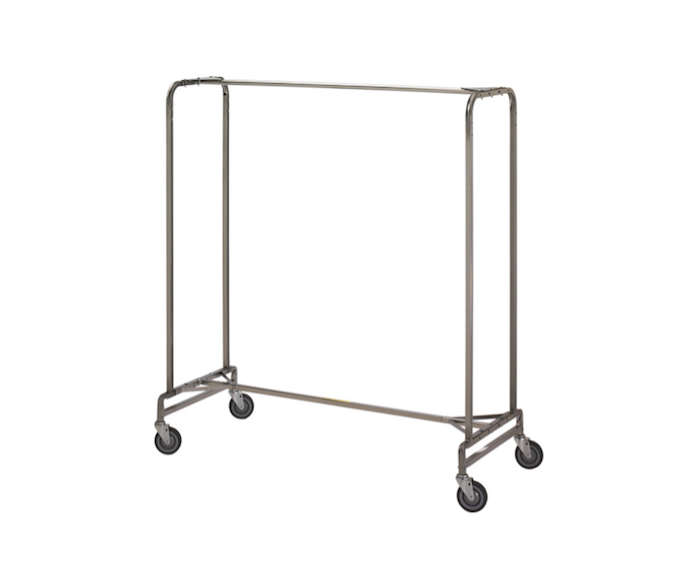
A 60-inch single garment rack occupies a useful middle ground between a tiny bedroom clothing stand and a rolling department-store behemoth. With approximately five feet of hanging space, it can organize a substantial wardrobe, support a temporary retail display, manage event costumes, or rescue the laundry room from its traditional role as a chair-based clothing ecosystem.
However, two racks with the same 60-inch width may perform very differently. Construction material, tubing diameter, caster quality, base design, height, and rated capacity matter far more than a shiny finish or an enthusiastic product description. This guide explains how to evaluate, assemble, organize, and maintain a 60-inch single garment rack for dependable everyday use.
What Is a 60-Inch Single Garment Rack?
A 60-inch single garment rack is a freestanding clothing storage or display fixture with one primary horizontal hanging rail measuring about 60 inches across. Unlike a double-rail rack, it provides one uninterrupted row for garments. That simple layout makes clothes easier to see, sort, retrieve, and display.
The term “single” generally refers to the number of main hanging levels rather than the number of physical components. Some models include pull-out extension rods, a bottom shelf, side hooks, or a top shelf while still being classified as single-rail garment racks.
Typical dimensions
Although the hanging width is approximately 60 inches, overall dimensions vary. Commercial models are commonly around 20 to 24 inches deep and 60 to 75 inches high. One aluminum model listed by Grainger measures 60 inches wide, 64 inches high, and 22 inches deep, while a commercial Z-rack example measures 60 inches wide, 20 inches deep, and 68 inches high.
Height-adjustable models may accommodate both shirts and longer garments. Before buying, measure the rack’s complete footprint rather than assuming that “60-inch” describes every dimension. Otherwise, your new organizer may arrive ready to organize everything except the room in which you planned to place it.
Why the 60-Inch Width Works So Well
A five-foot hanging rail is wide enough to hold a meaningful clothing collection without demanding an entire wall. It works particularly well for seasonal wardrobes, guest-room storage, laundry staging, theatrical costumes, uniforms, pop-up shops, photography studios, boutiques, coat checks, and resale businesses.
The width also helps preserve visibility. A longer rack may tempt users to pack clothes so tightly that finding one shirt becomes an archaeological expedition. A 60-inch rack encourages more intentional editing while still offering significantly more capacity than compact decorative clothing stands.
How many garments can it hold?
The answer depends on garment thickness and hanger spacing. Sixty inches of rail might accommodate dozens of lightweight shirts on slim hangers, but bulky winter coats consume considerably more room. Air space also matters. Garments packed shoulder-to-shoulder are harder to browse, more likely to wrinkle, and slower to dry after steaming or laundering.
For a functional everyday arrangement, leave enough space to slide hangers along the rail. A rack that technically accepts 70 items but behaves like a steel filing cabinet for sweaters is not truly organized.
Construction Materials and Durability
Steel
Heavy-duty steel is common in commercial single garment racks because it resists bending under substantial loads. One manufacturer’s 60-inch rack uses one-inch heavy-duty steel tubing with a commercial-grade metallic finish. Commercial collapsible models may also use one-inch round tubing, welded bases, and four-inch casters.
Steel is usually the best choice for coats, uniforms, inventory, costumes, or frequent transport. Powder-coated steel can provide a darker, more decorative appearance, while chrome or silver finishes suit laundries, showrooms, stockrooms, and commercial environments.
Aluminum
Aluminum racks can be lighter and easier to reposition while still providing a professional appearance. Their actual capacity depends on the tubing profile, joints, base, and engineering. Never assume that a wide aluminum rack automatically matches the strength of a welded steel model.
Stainless steel and chrome-plated systems
Specialized facilities may use stainless steel or chrome-plated modular systems because they are easy to wipe clean and can be configured with shelves. A stationary 60-inch commercial garment system designed for dry environments may include separate shelves, posts, and hanger rails rather than a simple rolling bar.
Wood and bamboo
Wood and bamboo racks can look warmer in bedrooms, boutiques, and entryways, but they are generally better suited to lighter wardrobes. Product testing and buying guidance consistently emphasize that size alone does not determine strength. A large rack may still flex or sag if its joints and materials are intended mainly for decorative use.
Load Capacity: Read the Rating Carefully
Weight capacity is one of the most misunderstood garment rack specifications. Current 60-inch models illustrate the range: one foldable steel rack is rated for up to 350 pounds, while a commercial collapsible rack with a welded frame is listed at 400 pounds.
Those numbers cannot be applied to every rack of the same width. Capacity depends on the complete structure, including the rail, uprights, fasteners, base, and wheels. A rack rated for 400 pounds does not mean you should hang 400 pounds on one end while the other end enjoys a peaceful afternoon.
Distribute the load evenly
Place heavier coats and dense garment bags near the center or distribute them across the rail. Avoid concentrating weight on extension rods unless their separate limits are clearly stated. On mobile racks, uneven loading can affect steering and increase the chance of tipping when crossing thresholds or uneven flooring.
Consider dynamic load
A stationary load and a moving load behave differently. Clothing shifts when a rack rolls, creating additional stress on joints and casters. For frequent transportation, choose a commercial rack with a meaningful safety margin rather than loading it to the maximum advertised capacity.
Common 60-Inch Garment Rack Designs
Standard H-frame rack
An H-frame uses two upright supports connected to a horizontal base. It is straightforward, familiar, and suitable for bedrooms, laundry rooms, showrooms, and storage spaces. Look for cross-bracing, strong connection points, and a base wide enough to resist wobbling.
Rolling Z-rack
A Z-rack uses a Z-shaped base that allows multiple empty racks to nest together. This design is popular in warehouses, apparel businesses, hotels, costume departments, and event operations. Commercial examples commonly feature welded steel bases, large swivel casters, and substantial round-tube hanging rails.
Nesting is extremely useful when several racks must be stored. Instead of creating a small chrome forest in the stockroom, the bases slide together and consume less floor space.
Collapsible salesman’s rack
A collapsible rolling rack breaks down or folds for transportation. Some models have a 48-inch central rail plus 12-inch pull-out rods at each end, allowing the total usable width to reach approximately 72 inches when fully extended. Height settings may include 55, 60, and 65 inches.
This design is useful for trade shows, sidewalk sales, mobile styling, conventions, and resale events. Check the folded dimensions before purchasing; “collapsible” does not always mean “fits behind every sofa.”
Stationary rack with shelving
Stationary systems may combine the hanging rail with shoe shelves, supply storage, baskets, or upper shelves. These are appropriate when organization matters more than mobility. Commercial modular designs can also separate long-garment space from accessory storage.
Adjustable rack
Adjustable height helps accommodate coats, dresses, pants, children’s clothing, or changing retail displays. Some models also adjust horizontally. Inspect the locking mechanism carefully, because a rack that slowly lowers itself under load adds suspense that no closet requires.
How to Choose the Best 60-Inch Single Garment Rack
| Feature | Why It Matters | What to Check |
|---|---|---|
| Weight capacity | Prevents rail bending and structural failure | A clearly stated rating for the complete rack |
| Overall height | Determines whether long garments hang freely | Measure from the rail to the floor or bottom shelf |
| Base depth | Affects stability and floor-space requirements | Usually about 20 to 24 inches on commercial models |
| Caster diameter | Larger wheels generally roll more easily | Commercial racks often use four-inch casters |
| Wheel locks | Helps keep a mobile rack stationary | Confirm how many casters lock |
| Rail stops | Prevent hangers from sliding off the ends | Raised ends, caps, hooks, or stop tabs |
| Assembly style | Influences portability and long-term rigidity | Welded, knock-down, tool-free, or collapsible |
| Finish | Affects appearance and corrosion resistance | Chrome, powder coating, stainless steel, or aluminum |
Match the rack to the job
For a bedroom capsule wardrobe, appearance and compact depth may matter most. For a boutique, choose a professional finish, easy garment access, and reliable wheels. For a coat check or theater, prioritize load capacity and maneuverability. For a warehouse, look for welded construction, nesting bases, replaceable casters, and readily available parts.
Commercial selection charts show that 60-inch lengths are offered across medium-duty, heavy-duty, one-tier, two-tier, shelving, and nesting configurations. In other words, width is only the opening question; the intended workload determines the correct rack.
Assembly and Setup Tips
- Inventory every component. Confirm that the rail, uprights, base pieces, casters, bolts, clips, and caps are present before beginning.
- Protect the floor. Assemble the rack on cardboard, a rug, or a moving blanket to prevent scratches.
- Install casters securely. Loose wheels can wobble, damage threads, or separate while the rack is moving.
- Keep uprights symmetrical. Adjustable posts should be set to matching heights before the rail is loaded.
- Tighten gradually. Start all fasteners loosely, square the frame, and then tighten them in stages.
- Test with a light load. Add several garments, roll the rack slowly, and check every joint before loading it fully.
Recheck fasteners after the first week of use. Newly assembled parts may settle slightly, especially after the rack has been rolled over door thresholds or loaded with heavy coats.
How to Organize a Five-Foot Clothing Rail
Group by category
Arrange garments in a simple sequence such as jackets, shirts, pants, dresses, and outerwear. In retail settings, organize by collection, size, color, or style. Choose one system and use it consistently; a rack categorized simultaneously by color, season, emotional significance, and fabric astrology will not save time.
Use matching hangers
Uniform hangers improve visual order and reduce wasted space. Slim hangers maximize capacity, while wider wooden or padded hangers better support structured jackets and delicate fabrics. Avoid weak wire hangers for heavy garments because they can deform and create shoulder marks.
Leave breathing room
Maintain enough space to move hangers without wrestling the entire wardrobe. This improves visibility and reduces wrinkles. It also lets air circulate around freshly steamed clothing.
Use garment covers selectively
Breathable covers are helpful for formalwear, costumes, and seasonal pieces. Avoid sealing damp clothing in plastic. Moisture trapped inside a garment bag can produce odors and fabric damage that no amount of organizational enthusiasm will fix.
Store accessories thoughtfully
If the rack includes a shelf, use bins or labeled baskets for shoes, belts, hats, garment clips, and folding boards. Keep heavier items low to improve stability. Decorative accessories can be displayed at eye level in a bedroom or boutique, creating a curated appearance while keeping frequently used pieces accessible.
Best Uses at Home and in Business
Bedroom overflow storage
A 60-inch rack can function as an open closet in an apartment, guest room, attic conversion, or home without sufficient built-in storage. It is especially practical for a seasonal rotation: coats in winter, lightweight clothing in summer, and the mysterious middle category known as “things I might wear when the weather makes up its mind.”
Laundry room staging
Use the rack for air-drying garments on hangers, holding freshly pressed shirts, or separating clothing by family member. A mobile model can be rolled near the washer and stored elsewhere when laundry is complete.
Retail displays
The uninterrupted rail offers clear product visibility and simple size organization. It can anchor a wall display, define an aisle, support clearance merchandise, or create a temporary collection for a promotion.
Photography and styling
Photographers, stylists, and content creators can arrange outfits in shooting order. Add labeled dividers for models, scenes, or days. Wheels are particularly valuable when the rack must move between a dressing area and a set.
Theaters and events
A sturdy rack can hold costumes, choir robes, uniforms, wedding attire, or guest coats. For crowded environments, use visible labels and lockable casters. Avoid placing a loaded rack where it narrows an exit or creates a trip hazard.
Resale and pop-up businesses
Collapsible racks suit flea markets, vintage fairs, conventions, and temporary sales. Sellers should practice assembly before the event. The parking lot at 7:00 a.m. is not the ideal classroom for discovering that two nearly identical poles serve completely different purposes.
Cleaning and Maintenance
Dust the rail and frame regularly with a soft microfiber cloth. Remove fingerprints and light residue with a mild cleaning solution appropriate for the finish, then dry the surface thoroughly. Avoid abrasive pads that may scratch chrome, powder coating, or polished aluminum.
Inspect casters for thread, hair, tags, and debris. These materials can wrap around axles and make a previously graceful rack move like a shopping cart with strong political opinions. Tighten loose wheel stems and replace casters that crack, flatten, or stop swiveling.
Check the rail for bending and examine welded joints, fasteners, height-adjustment pins, clips, and plastic caps. Address corrosion early. For racks used in damp basements, garages, or near laundry equipment, improve ventilation and avoid leaving wet garments in direct contact with the frame.
Common Buying and Usage Mistakes
- Buying by width alone: A 60-inch rack may still be too tall, too deep, or too weak for the intended space.
- Ignoring garment length: Dresses and coats may drag on a shelf or the floor if the hanging clearance is insufficient.
- Confusing shelf capacity with rail capacity: Modular systems may publish separate ratings for each component.
- Overloading extension rods: Pull-out ends may not support the same weight as the central rail.
- Rolling a rack too quickly: Sudden turns can shift clothing and stress the frame.
- Using tiny decorative casters commercially: Frequent movement requires wheels designed for repeated loads.
- Skipping measurements: Include base depth, doorways, elevators, thresholds, and storage space in the plan.
Real-World Experiences With a 60-Inch Single Garment Rack
The most noticeable benefit of a 60-inch single garment rack is not simply that it holds clothing. It makes clothing visible. In a traditional closet, pieces at the back can disappear for months, patiently waiting for rediscovery during the next move. An open single rail turns the wardrobe into a lineup. You immediately see which shirts you actually wear, which jackets duplicate one another, and which optimistic purchase still has its tag attached.
In a bedroom, five feet feels surprisingly generous. A rack can comfortably hold a weekly wardrobe, workwear rotation, or seasonal capsule collection without dominating the entire room. The best results come from resisting the urge to fill every inch. Leaving several inches open makes the rack look intentional rather than temporary, even when it is absolutely temporary and has been “temporary” since last spring.
Mobility changes the experience considerably. A rack with quality casters can move from a bedroom to a laundry area or from a boutique stockroom to the sales floor with little effort. Large wheels handle minor floor transitions better than small furniture casters. However, a fully loaded rack should be pushed slowly from the upright or base, not pulled sideways by the hanging rail. Sharp turns can cause garments to swing, hangers to collide, and one sleeve to hook itself onto a door handle with remarkable determination.
For laundry use, the single rail is particularly convenient. Freshly ironed shirts can be hung immediately instead of being draped over furniture. Delicate garments can finish air-drying with better spacing. When the rack is placed near a folding table, it creates a simple workflow: sort, hang, fold, and distribute. A lower shelf is useful for baskets, but even a basic rail improves the room because it gives clean clothes a destination other than “that chair.”
Retail users tend to appreciate the rack’s flexibility. A 60-inch display is broad enough to present a full color story or size run but compact enough to reposition during merchandising changes. A single rail also keeps products visible from both sides. When garments are arranged with consistent hanger direction and reasonable spacing, even affordable inventory appears more polished.
Pop-up sellers learn quickly that portability involves more than whether the rack collapses. Component weight, folded length, assembly time, caster removal, and vehicle space all matter. Practicing setup once at home can prevent delays at an event. Keeping bolts, clips, and a small tool kit in a labeled pouch is equally helpful. Garment rack hardware has a special talent for disappearing into car trunks moments before it is needed.
Heavy winter coats reveal the difference between decorative and commercial construction. Lightweight racks may feel stable when empty but flex after several dense garments are added. A stronger base, thicker tubing, welded connections, and evenly distributed weight produce a much calmer experience. The rack should not sway dramatically when one coat is removed.
Long-term satisfaction also depends on restraint. A garment rack works best as a defined zone rather than an invitation to store every textile in the building. Set a purpose for it: current-season clothing, event inventory, outgoing orders, costumes, or laundry. When the rack’s role is clear, maintaining it becomes easy. When its role is “anything with sleeves,” chaos usually wins.
Conclusion
A 60-inch single garment rack offers a practical balance of capacity, accessibility, and manageable size. The strongest choice is not automatically the rack with the highest number printed in its description. Look for construction that matches the workload, enough height for the garments, a stable base, reliable connection points, and suitable casters if the rack will move regularly.
For home use, a simple adjustable rack may provide all the extra closet space needed. Retailers, event operators, hotels, theaters, and resale businesses will generally benefit from commercial steel construction, large casters, replaceable parts, and a nesting or collapsible design. Measure carefully, distribute weight evenly, maintain the wheels and joints, and the rack should serve as a dependable clothing station rather than an expensive modern sculpture.
Note: Dimensions, component ratings, and load capacities vary by model. Confirm the manufacturer’s current instructions and rated capacity before assembling, loading, modifying, or moving any garment rack.












