
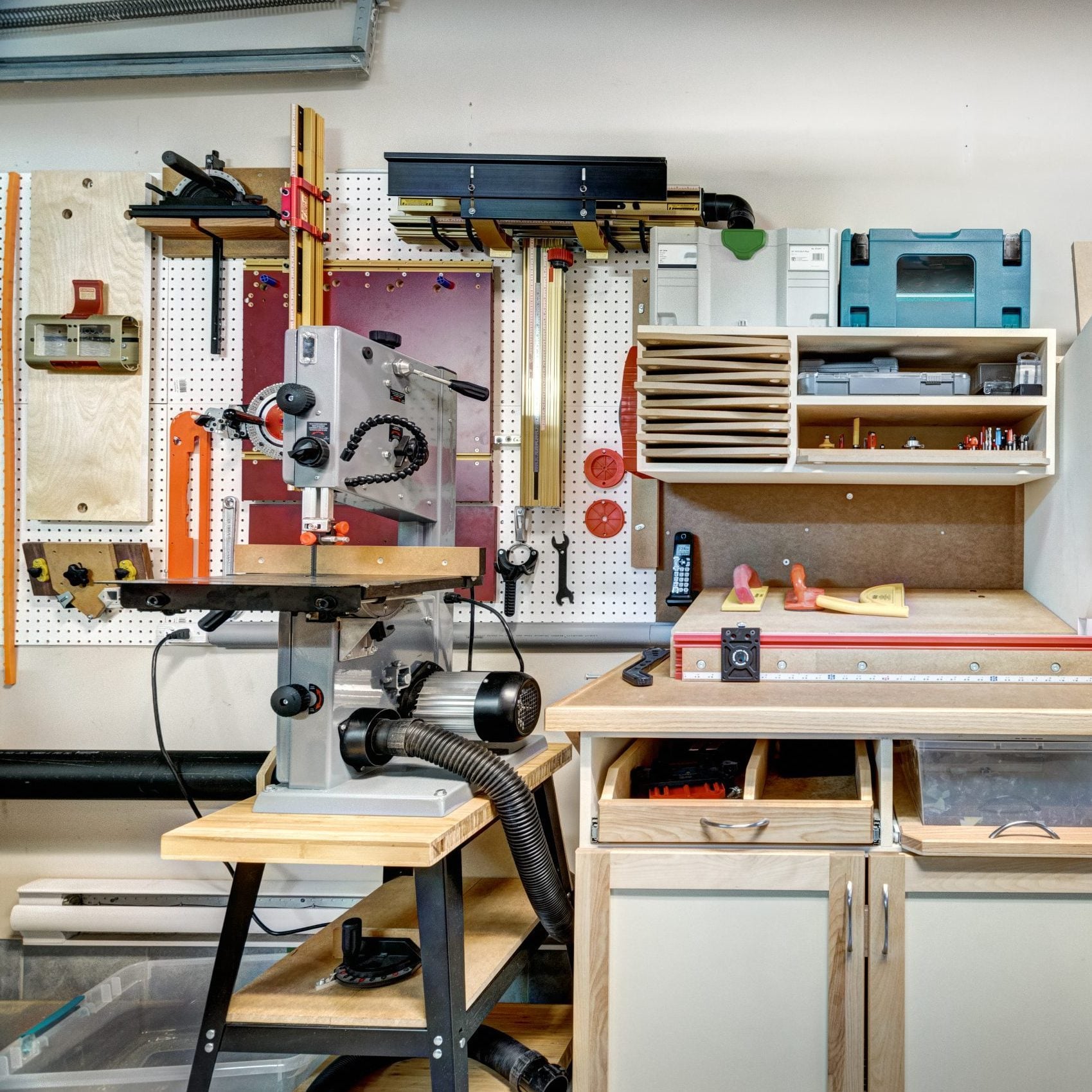
If woodworking shops had yearbooks, stationary power tools would win every superlative. The table saw would be “Most Likely to Command the Whole Room,” the drill press would snag “Most Reliable,” and the bandsaw would quietly take home “Most Talented but Somehow Still Underrated.” These machines are the heavy hitters of a serious shop, and while they do take up floor space, they also save time, improve accuracy, and help turn rough lumber into something that looks intentional instead of “rustic by accident.”
For beginners, the phrase woodworking stationary power tools can sound a little intimidating. It should not. “Stationary” simply means the machine stays put while you bring the wood to it. In most cases, that setup gives you better stability, more control, and cleaner, repeatable results than handheld tools alone. If you want straighter boards, smoother faces, more accurate cuts, and fewer moments of staring at a crooked project and blaming the tape measure, these are the tools that matter most.
This guide breaks down ten of the most important stationary tools found in woodworking shops, what each one does best, who really needs it, and how to think about building a smart machine lineup without buying half a factory on day one.
Why Stationary Power Tools Matter in a Wood Shop
A good stationary machine does more than speed things up. It improves consistency. That means cleaner joinery, flatter stock, safer feeding, and fewer do-overs. When you are milling rough lumber, building cabinets, making furniture, or even cranking out home projects on weekends, consistent setup is what separates a satisfying project from a “why is this drawer shaped like a trapezoid?” situation.
Stationary tools also help define workflow. In many shops, wood moves through a sequence: rough cutting, flattening, thicknessing, ripping, crosscutting, shaping, drilling, sanding, and final fitting. Once you understand that flow, these machines stop looking like random cast-iron monsters and start looking like a team.
1. Table Saw
The table saw is still the center of gravity in many woodworking shops. It excels at ripping boards to width, cutting sheet goods, making accurate crosscuts with a sled or gauge, and handling joinery like dados, rabbets, tenons, and grooves when properly equipped.
Why it matters
If you build cabinets, furniture, shelves, shop fixtures, or anything rectangular and civilized, the table saw earns its keep quickly. Its fence system allows repeatable cuts, and its flat table provides support that handheld saws simply cannot match.
Best uses
- Ripping hardwood and plywood
- Crosscutting with sleds and miter gauges
- Joinery cuts such as dadoes and rabbets
- Batch-cutting parts to consistent dimensions
Buying tip
Prioritize fence quality, table flatness, dust collection, and safety features like a riving knife. Horsepower matters, but a poor fence will annoy you every weekend until one of you moves out.
2. Bandsaw
The bandsaw is the graceful athlete of the woodworking world. It cuts curves, resaws thick boards into thinner pieces, roughs out shapes, and handles tasks that would be awkward or unsafe on a table saw. Many woodworkers consider it one of the most versatile tools in the shop.
Why it matters
A bandsaw removes material with a continuous loop blade, which generally means less kickback risk than a table saw. It is excellent for curved work, chair parts, templates, and slicing veneers or bookmatched panels from thicker stock.
Best uses
- Cutting curves and irregular shapes
- Resawing lumber into thinner boards or veneers
- Breaking down rough stock
- Making bandsawn boxes, cabriole legs, and turning blanks
Buying tip
Look at resaw capacity, frame stiffness, blade guide quality, and motor power. A flimsy bandsaw is basically a confidence problem with wheels.
3. Jointer
A jointer is the machine that makes lumber behave. Its main job is to flatten one face of a board and straighten one edge. That sounds humble until you realize every accurate project begins with flat, straight stock. Without that, measurements become optimistic suggestions.
Why it matters
Rough or twisted boards cause problems at every stage. A jointer creates a flat reference face and a square edge, which sets you up for accurate thicknessing, ripping, glue-ups, and assembly.
Best uses
- Flattening warped or cupped boards
- Straightening one edge before ripping on the table saw
- Preparing boards for panel glue-ups
- Improving fit and accuracy in furniture parts
Buying tip
Longer beds help with longer stock. Cutterhead style matters too. Helical or spiral cutterheads tend to run quieter and leave a cleaner surface on tricky grain.
4. Thickness Planer
The thickness planer works hand in hand with the jointer. Once one face is flat, the planer makes the opposite face parallel and brings the board to final thickness. This is the machine that turns rough lumber into usable stock and helps you stop paying premium prices for pre-milled boards.
Why it matters
A planer gives you consistent thickness across boards, which is essential for cabinetry, tabletops, face frames, and any project where parts need to line up cleanly.
Best uses
- Bringing boards to consistent thickness
- Smoothing rough stock after jointing
- Dimensioning lumber for furniture and cabinet parts
- Reducing waste by milling your own material
Buying tip
Pay attention to cutterhead type, feed quality, snipe control, and dust collection. Planers make shavings like they are being paid by the bag.
5. Drill Press
The drill press is the calm, dependable machine that never asks for applause. It drills holes straight, square, repeatable, and at controlled depths. Compared with a handheld drill, it feels almost unfair.
Why it matters
When precision matters, especially for dowels, hardware installation, mortises, stopped holes, or boring into small parts, a drill press gives you control that is hard to match by hand.
Best uses
- Drilling clean, vertical holes
- Repeated drilling at exact depths
- Using Forstner bits for flat-bottom holes
- Sanding, mortising, or shaping with the right accessories
Buying tip
Look for enough quill travel, a solid table, easy speed changes, and minimal runout. If the chuck wobbles, your project will too.
6. Miter Saw
The miter saw is built for quick, accurate crosscuts and angle cuts. While many furniture makers can survive without one, trim carpenters, cabinet installers, and woodworkers processing long boards often consider it essential.
Why it matters
It is fast, convenient, and excellent at cutting parts to length. With stop blocks on a dedicated station, it becomes a repeatability machine for face frames, stretchers, rails, and trim pieces.
Best uses
- Crosscutting long boards safely and quickly
- Cutting miters and bevels for trim and frames
- Breaking down material before final milling
- Batch cutting identical parts with stop systems
Buying tip
Choose based on capacity, accuracy, fence quality, and whether you need sliding capability. Just remember: larger saws are great, but they also demand shop real estate like tiny, noisy landlords.
7. Router Table
A router table turns a router into a more controlled shaping machine. Mounted upside down in a table, the router becomes ideal for edge profiles, grooves, pattern work, cope-and-stick doors, and small parts that are awkward to run with a handheld router.
Why it matters
With a stout fence and a stable surface, a router table expands what one router can do. For many home shops, it acts like a compact substitute for bigger shaping equipment.
Best uses
- Profiling edges
- Cutting grooves, dadoes, and rabbets
- Making frame-and-panel doors
- Pattern routing and trimming small parts
Buying tip
Invest in a flat top, a rigid fence, good dust collection, and reliable bit height adjustment. A shaky router table is basically a suggestion table.
8. Wood Lathe
The wood lathe is where woodworking gets a little theatrical. Instead of pushing wood through a cutter, the wood spins while you shape it with tools. The result can be bowls, spindles, pens, mallets, pepper mills, table legs, and the kind of projects that make visitors say, “Wait, you made that?”
Why it matters
A lathe opens a completely different lane in woodworking. If you enjoy making round parts, decorative details, or one-of-a-kind gift pieces, it is hard to beat.
Best uses
- Turning bowls and platters
- Making chair spindles and table legs
- Creating pens, handles, and small decorative objects
- Adding custom details to furniture projects
Buying tip
Consider swing, distance between centers, motor smoothness, and weight. A heavier lathe typically runs with less vibration, which is very nice when a block of wood is doing its best helicopter impression.
9. Stationary Sander
The category of stationary sanders includes belt/disc sanders and oscillating spindle sanders. These machines are the cleanup crew of the shop. They refine edges, fair curves, remove saw marks, and help parts fit better before final sanding by hand or with smaller power sanders.
Why it matters
Not every cut leaves a finish-ready surface. Stationary sanders help fine-tune shapes and erase machine marks efficiently, especially on curves and end grain.
Best uses
- Smoothing curved cuts from the bandsaw
- Refining miters and small parts
- Cleaning up end grain and edges
- Improving fit in joinery and templates
Buying tip
If you do curved work, a spindle sander is a gift. If you square up small parts often, a disc or belt/disc combo is incredibly useful. Either way, connect dust collection unless you enjoy wearing your project.
10. Shaper
The shaper is the big-league cousin of the router table. It uses larger cutters, a more powerful motor, and a spindle designed for serious stock removal and production work. In small hobby shops, it is not always the first purchase. In cabinet shops and advanced furniture shops, it can be a star performer.
Why it matters
For heavy edge profiles, cope-and-stick door work, raised panels, and repeated shaping operations, a shaper delivers power, stability, and efficiency that a router table may struggle to match.
Best uses
- Large edge profiles
- Raised panels and door components
- Production shaping with power feeders
- High-volume, repeatable stock preparation
Buying tip
If your work leans toward cabinetry or production runs, a shaper can be worth the space and cost. If not, a quality router table may cover most of your needs without making your budget cry into the sawdust.
How to Choose the Right Stationary Power Tools
If you are building a shop from scratch, do not assume you need all ten machines immediately. Choose based on the kind of work you actually do. Furniture makers often prioritize a table saw, jointer, planer, and bandsaw. Trim-focused builders may get more value from a miter saw and table saw. Turners obviously need a lathe before they need a shaper, unless they enjoy making square bowls and calling it innovation.
Also think about workflow, available floor space, dust collection, electrical service, and infeed/outfeed room. A machine can be technically compact yet practically enormous once you add a six-foot board to either side. Smart shop planning is not glamorous, but neither is trying to joint an eight-foot board into a closed garage door.
Safety and Dust Collection Deserve Their Own Spotlight
Stationary woodworking tools reward attention and punish carelessness. Good guards, push sticks, featherboards, proper stance, sharp blades, and dust collection are not optional extras. They are part of the machine. So is hearing protection, eye protection, and the simple habit of slowing down before a cut that feels sketchy.
Dust collection is especially important. Many stationary tools create enormous volumes of chips and fine dust, and the cleaner your shop air stays, the better your machines perform and the better you feel after a long day in the shop. Nobody starts woodworking because they dream of emptying dust bags, but here we are.
Real Shop Experience: What These Tools Feel Like Over Time
When woodworkers first start shopping for stationary machines, there is a temptation to think in extremes. Either every machine is absolutely essential, or only one miracle tool will solve everything. Real shop experience usually lands somewhere in the middle. Over time, most people discover that the “best” stationary power tool is often the one that removes the most friction from the type of work they actually do. That is not always the flashiest machine.
For example, many beginners fall in love with the table saw because it feels like the official badge of woodworking. That makes sense. It is accurate, capable, and central to a huge range of projects. But after a few months of building with rough lumber, many of those same woodworkers realize the jointer and planer are what really changed their lives. Suddenly, twisted boards stop bullying every glue-up. Lumber becomes predictable. Panels come together flatter. Projects feel less like negotiations and more like progress.
The bandsaw often becomes a surprise favorite too. At first it may look like the side character in the tool lineup, but then it starts doing all kinds of useful work: roughing out curves, trimming small parts safely, resawing boards, and handling odd shapes without complaint. It is one of those machines that quietly becomes indispensable while the table saw still hogs the compliments.
The drill press has a similar reputation in real shops. Nobody writes dramatic poetry about square holes drilled at a repeatable depth, but they probably should. The drill press earns trust slowly. It helps with jigs, hardware, dowels, mortising attachments, sanding drums, and accurate boring in small parts. It is the dependable friend of the shop: never flashy, always useful, never late.
Miter saws are another tool that reveal their value through repetition. The first time you process a stack of face-frame parts or cut dozens of identical trim pieces with a stop block, the appeal becomes obvious. They are not always the soul of a fine-furniture shop, but they are often the speed champion of a productive one.
Then there are the specialty loves. Router tables reward patience and setup skill. Lathes can turn a practical woodworker into a sawdust philosopher. Stationary sanders save projects from tiny fitting errors that would otherwise lead to muttering. And shapers, while not common in every garage shop, make perfect sense once your work moves into bigger profiles, heavier cuts, or repeated cabinet-door production.
Perhaps the biggest lesson experience teaches is that machines work best as a system, not as isolated trophies. A board might first hit the jointer, then the planer, then the table saw, then the miter saw, then the router table, then the sander. Each machine does one job well, and the quality of the final piece depends on how smoothly those steps connect. That is why seasoned woodworkers spend almost as much time thinking about layout, mobility, and dust collection as they do horsepower and fence rails.
In the end, stationary woodworking power tools are not really about owning impressive equipment. They are about making the work more accurate, more repeatable, safer, and frankly more fun. The right machine does not just cut wood. It removes hassle, builds confidence, and gives you a better chance of finishing a project with pride instead of creative excuses.
Conclusion
The best woodworking stationary power tools are the ones that match your workflow, your space, and the kind of projects you actually want to build. A table saw may be the headline act, but the jointer, planer, bandsaw, drill press, router table, miter saw, lathe, stationary sander, and shaper all bring distinct strengths to the shop. Build your lineup thoughtfully, buy for accuracy and safety first, and you will create a shop that works smarter, cuts cleaner, and wastes far less wood, time, and sanity.











