
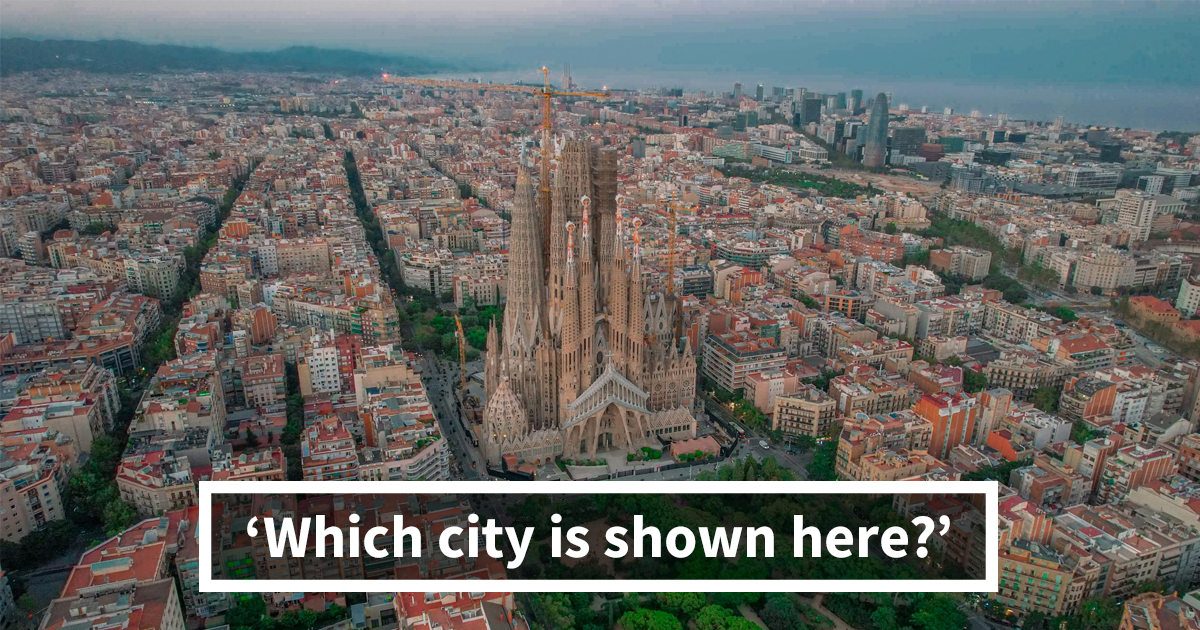
Some travelers can identify a city from one famous monument. Others need a skyline, a street sign, three local snacks, and a taxi driver patiently repeating the city’s name. This 27-city travel quiz is designed for both groups.
You will encounter architectural icons, public squares, bridges, towers, temples, waterfronts, and a few subtler visual clues. Some answers practically wave a giant souvenir flag. Others require you to notice details such as roof shapes, transit systems, surrounding geography, or the suspicious number of bicycles in the frame.
One important disclaimer: recognizing the Trevi Fountain does not scientifically prove that you are smarter than 90% of humanity. This is a travel quiz, not an intelligence examination administered by stern professors holding clipboards. Still, naming all 27 cities would demonstrate an impressive knowledge of world landmarksand earn you unlimited bragging rights at your next trivia night.
How to Play This World Cities Quiz
Read each clue and name the city before opening the answer. Give yourself one point for every correct city. Country names alone do not count, and “somewhere in Europe” will receive only emotional credit.
Look beyond the obvious landmark. Consider the city’s architectural style, natural setting, street layout, transportation, colors, and cultural symbols. A great city-recognition player does not merely see a building; that person notices what surrounds it.
Your Scorecard
- 24–27 points: Human atlas. Friends should let you plan every vacation.
- 19–23 points: Seasoned traveler energy, even when sitting on the couch.
- 13–18 points: Strong geographical instincts with a few blank spots.
- 7–12 points: Promising explorer who may occasionally confuse continents.
- 0–6 points: You came for the fountain and stayed for the snacks. Respect.
Round One: Famous Landmarks Almost Everyone Has Seen
-
A monumental Baroque fountain fills a compact square with sculpted rocks, rushing water, sea horses, and the central figure of Oceanus. Visitors traditionally throw coins over their shoulders and make wishes.
Reveal the city
Rome, Italy. The Trevi Fountain is one of Rome’s best-known landmarks. Its theatrical sculptures and turquoise basin make it difficult to mistake for an ordinary neighborhood water feature.
-
An iron lattice tower rises above formal lawns beside the Seine. It was built for a nineteenth-century world’s fair and was once criticized by prominent artists before becoming a national symbol.
Reveal the city
Paris, France. The Eiffel Tower dominates this clue. Add the Champ de Mars, elegant avenues, and river views, and Paris practically signs its name across the photograph.
-
A Gothic-style clock tower stands beside a riverside palace. Nearby clues may include red double-decker buses, black taxis, and pedestrians carrying umbrellas despite a weather forecast that promised “light clouds.”
Reveal the city
London, England. The tower is officially called Elizabeth Tower, while Big Ben is the nickname of its largest bell. Most travelers use Big Ben for the entire landmark, and London has learned to live with it.
-
A robed copper figure holds a torch above an island harbor. Behind it, one of the world’s most recognizable skylines rises from a dense grid of streets and skyscrapers.
Reveal the city
New York City, United States. The Statue of Liberty, New York Harbor, and the towers of Lower Manhattan form a combination found on approximately half the postcards ever printed.
-
A reddish-orange suspension bridge crosses a dramatic channel, often disappearing into fog. Steep streets, cable cars, painted Victorian houses, and a large bay provide additional evidence.
Reveal the city
San Francisco, United States. The Golden Gate Bridge is the main giveaway. Its official color is internationally known as International Orange, which sounds less like paint and more like a diplomatic fruit.
-
A white performing-arts complex appears to float beside a harbor. Its roof is made of overlapping shell-like forms, while a massive steel arch bridge stretches across the water nearby.
Reveal the city
Sydney, Australia. The Sydney Opera House and Sydney Harbour Bridge create one of the most recognizable waterfronts on Earth.
-
An enormous statue of Christ stands with outstretched arms on a forested mountain. Below it are beaches, densely packed neighborhoods, a curved bay, and steep granite peaks.
Reveal the city
Rio de Janeiro, Brazil. Christ the Redeemer overlooks Rio from Corcovado Mountain. Sugarloaf Mountain and the city’s famous coastline may also appear in wider views.
-
A needle-shaped tower with a flying-saucer-like top rises above a green city surrounded by water and mountains. It looks futuristic, although it was created for a world’s fair more than six decades ago.
Reveal the city
Seattle, United States. Built for the 1962 World’s Fair, the Space Needle remains the defining symbol of Seattle’s skyline.
-
The world’s tallest skyscraper shoots above artificial lakes, luxury hotels, and a skyline that seems to have been designed after someone said, “Make everything taller.”
Reveal the city
Dubai, United Arab Emirates. The Burj Khalifa is the unmistakable centerpiece, although Dubai’s futuristic towers and ambitious waterfront developments also offer strong clues.
Round Two: Can You Read a City’s Architectural Fingerprints?
-
A silver sculpture resembling a giant drop of liquid metal reflects skyscrapers, trees, clouds, and crowds taking distorted selfies. A lakefront skyline surrounds the park.
Reveal the city
Chicago, United States. The sculpture is Cloud Gate, better known as “The Bean.” It sits in Millennium Park near some of Chicago’s celebrated modern architecture.
-
A seated marble president faces a long reflecting pool, with a tall white obelisk visible in the distance. Broad ceremonial spaces and neoclassical government buildings fill the surrounding area.
Reveal the city
Washington, D.C., United States. The Lincoln Memorial, Reflecting Pool, and Washington Monument identify the American capital.
-
An unfinished basilica combines soaring towers, organic stonework, biblical sculptures, and an almost otherworldly collection of geometric forms. Construction cranes may be part of the view.
Reveal the city
Barcelona, Spain. Antoni Gaudí’s Sagrada Família is the main clue. Elsewhere in the city, colorful mosaics and curving modernist buildings reinforce the answer.
-
Ancient columns stand on a rocky hill above a dense white city. The most famous temple has a rectangular form surrounded by Doric columns and has watched civilizations come and go.
Reveal the city
Athens, Greece. The Acropolis and Parthenon dominate the historic center and provide the strongest visual shorthand for the Greek capital.
-
Domes and minarets rise beside a busy waterway connecting two continents. Ferries cross between shores while seagulls inspect passengers for unguarded bread.
Reveal the city
Istanbul, Türkiye. Hagia Sophia, the Blue Mosque, and the Bosphorus create a distinctive cityscape where Europe and Asia meet.
-
Tall, narrow houses lean slightly over canals crossed by small bridges. Bicycles appear on railings, sidewalks, streets, and possibly in places bicycles were never meant to exist.
Reveal the city
Amsterdam, Netherlands. The canal ring, gabled merchant houses, and bicycle culture make Amsterdam highly recognizable even without a major monument.
-
A medieval stone bridge lined with statues crosses a river beneath a hilltop castle. Red roofs, church spires, and an elaborate astronomical clock may appear in other views.
Reveal the city
Prague, Czech Republic. Charles Bridge, Prague Castle, and the Old Town’s historic skyline create the answer.
-
A Gothic cathedral rises from the historic center with a steep roof covered in colorful diamond patterns. Grand coffeehouses, imperial architecture, and yellow trams offer supporting clues.
Reveal the city
Vienna, Austria. St. Stephen’s Cathedral is one of the city’s clearest visual signatures, while Vienna’s former imperial buildings complete the picture.
-
A tall sandstone minaret overlooks a lively square filled with food stalls, performers, market activity, and a maze of reddish lanes leading into a historic medina.
Reveal the city
Marrakech, Morocco. The Koutoubia Mosque and Jemaa el-Fnaa square are central landmarks in the Red City.
-
A magnificent domed arts palace combines white stone, Art Nouveau decoration, and a glowing orange roof. Beyond it stretches one of North America’s largest and busiest urban areas.
Reveal the city
Mexico City, Mexico. The Palacio de Bellas Artes is the landmark. Its ornate design stands out against the modern buildings of the historic center.
Round Three: Skylines, Streets, and Sneakier City Clues
-
A concrete communications tower with a circular observation deck rises beside a vast lake. Modern high-rises and a domed stadium surround its narrow base.
Reveal the city
Toronto, Canada. The CN Tower remains the most recognizable feature of Toronto’s skyline beside Lake Ontario.
-
A slim white obelisk stands in the middle of an exceptionally wide avenue. European-style façades, grand theaters, and passionate crowds carrying blue-and-white flags may surround it.
Reveal the city
Buenos Aires, Argentina. The Obelisk on Avenida 9 de Julio is the key clue. Buenos Aires is also known for monumental architecture and neighborhoods shaped by European immigration.
-
Three connected towers support a long, boat-shaped rooftop structure. Nearby are an artificial bay, a white creature with a lion’s head, and gardens filled with enormous futuristic “trees.”
Reveal the city
Singapore. Marina Bay Sands, the Merlion, and the Supertrees at Gardens by the Bay make this compact city-state surprisingly easy to identify.
-
Thousands of pedestrians pour into a multi-directional intersection beneath giant video screens and glowing signs. Trains, compact restaurants, vending machines, and dense layers of urban activity surround them.
Reveal the city
Tokyo, Japan. Shibuya Crossing is the strongest clue, although Tokyo Tower, elevated railways, and the city’s vast neon landscape may also help.
-
A cathedral with three graceful spires faces a palm-filled public square. Wrought-iron balconies, jazz clubs, streetcars, and brightly painted houses suggest a city with a distinctive blend of cultures.
Reveal the city
New Orleans, United States. St. Louis Cathedral and Jackson Square anchor the French Quarter, while music, Creole architecture, and historic streetcars reveal the wider city.
-
Huge white letters stand on a dry hillside above an enormous metropolitan area. A nearby Art Deco observatory offers views of downtown, mountains, highways, and neighborhoods that seem to continue forever.
Reveal the city
Los Angeles, United States. The Hollywood Sign and Griffith Observatory are two of the clearest clues in a city that contains many centers rather than one traditional downtown.
-
Neon signs, enormous themed hotels, dancing fountains, and replicas of famous international monuments line a desert boulevard. Daylight reveals mountains in the distance and architecture best appreciated after dark.
Reveal the city
Las Vegas, United States. The Las Vegas Strip turns global landmarks into neighbors, allowing visitors to pass from Paris to Venice without finishing one bottle of water.
-
Ancient pyramids rise from a sandy plateau beside the edge of a sprawling modern metropolis. One pyramid is guarded by a monumental limestone figure with a human head and lion’s body.
Reveal the city
Greater Cairo, Egypt. The Pyramids of Giza and the Great Sphinx stand in Giza, within the enormous metropolitan region commonly associated with Cairo.
-
A bright-red suspension bridge crosses a narrow entrance to a broad baywait, that city already appeared. This time, notice the historic streetcars, steep hills, waterfront piers, and an island that once held a famous federal prison.
Reveal the city
San Francisco, United States. Yes, this is a deliberate attention check. A good travel quiz tests memory as well as geography. Since a repeated city would spoil the promised total, award yourself the point and continue to the real final clue below.
-
A monumental red gate leads into a palace complex surrounded by modern skyscrapers. Nearby, broad avenues, traditional tiled roofs, mountain views, and a highly efficient subway define a fast-moving capital.
Reveal the city
Seoul, South Korea. Gwanghwamun Gate and Gyeongbokgung Palace illustrate Seoul’s close visual relationship between royal history and contemporary urban life.
Quiz correction: The playful repeat was a trap rather than an official question. Count Seoul as city number 27 and do not count the second San Francisco clue. Anyone who noticed the duplication before opening the answer earns an unofficial bonus point and the right to look mildly superior.
Why Certain Cities Are Instantly Recognizable
Famous landmarks work like visual logos. The Eiffel Tower represents Paris not merely because it is tall, but because its silhouette has been reproduced in films, advertisements, books, souvenirs, and countless vacation photographs. The same principle applies to the Sydney Opera House, the Space Needle, and the Statue of Liberty.
Yet architecture is only part of city recognition. Geography creates equally powerful identities. Rio de Janeiro is defined by the dramatic relationship among mountains, beaches, forests, and dense neighborhoods. Istanbul’s ferries and minarets gain meaning from the Bosphorus. Chicago’s towers look different when placed against Lake Michigan, just as San Francisco’s bridges belong to a landscape of hills, fog, and water.
Smaller details can be even more useful when the obvious landmark is hidden. Red buses suggest London. Canal houses and bicycle-packed bridges indicate Amsterdam. Yellow taxis once served as a nearly automatic New York clue. Street signs, paving materials, traffic direction, plants, balcony styles, utility poles, and public transportation can all narrow the possibilities.
This is why experienced travelers sometimes recognize a destination without seeing its signature monument. They have learned to read cities as combinations of details rather than collections of individual attractions.
Travel Experiences That Make City Recognition More Meaningful
Recognizing a landmark on a screen is satisfying, but encountering it in person is a completely different experience. A photograph usually removes the traffic, weather, sounds, crowds, wrong turns, construction barriers, and person standing directly in front of your camera while examining a map. Real travel restores all of that glorious chaos.
Consider the Trevi Fountain. In a polished travel image, the water is luminous, the sculptures are unobstructed, and the square appears almost serene. A visitor may instead arrive through a narrow Roman lane and suddenly hear rushing water before seeing the fountain. The square can be crowded, voices echo from the surrounding buildings, and everyone is attempting the same over-the-shoulder coin toss. The settingnot merely the monumentbecomes part of the memory.
The same transformation occurs in other cities. The Eiffel Tower may be familiar from thousands of images, but its scale becomes clearer while walking beneath its iron structure. Shibuya Crossing looks like organized confusion from above; at street level, it feels like briefly joining a human tide. Sydney Harbour cannot be reduced to the Opera House alone because ferries, sea air, gulls, bridges, and changing light shape the experience.
Travel quizzes can improve those encounters by teaching people to observe. A traveler who knows that Istanbul spans the Bosphorus may pay more attention while taking a ferry between shores. Someone familiar with Chicago’s architectural history may look upward instead of moving from restaurant to restaurant with total commitment. A visitor who recognizes Marrakech’s Koutoubia minaret can use it as a visual reference while navigating the medinaalthough confidently announcing “I know exactly where we are” remains risky.
These games also reveal the limitations of landmark-based travel. A city is never only its postcard view. Paris continues beyond the Eiffel Tower, New York beyond Times Square, and Rome beyond the Trevi Fountain. Residential streets, neighborhood markets, public parks, small museums, transit stations, and ordinary cafés often provide a more complete understanding of local life.
A useful travel habit is to identify the landmark, appreciate it, and then turn around. The reverse view may reveal apartment windows, vendors preparing food, commuters hurrying to work, children playing, or old buildings adapted for modern life. Those scenes explain how a famous monument fits into a functioning city.
City-recognition skills can even make trip planning more rewarding. Instead of assembling an itinerary from disconnected attractions, travelers can study how neighborhoods relate to waterways, hills, transit lines, and public spaces. This reduces unnecessary backtracking and creates opportunities for walking routes that connect major sights with lesser-known places.
Most importantly, recognizing cities should inspire curiosity rather than checklist tourism. Correctly naming all 27 destinations is impressive, but asking thoughtful questions is better. Why was the landmark built? Who designed or constructed it? How do local residents feel about the crowds it attracts? What existed in that place before it became famous? How has the surrounding neighborhood changed?
The best outcome of this world cities quiz is not a perfect score. It is the sudden desire to learn more about a place, examine a map, understand its history, or eventually stand there in person. A landmark may begin as a clue, but it can become an invitation to see an entire city more carefully.
Final Results: Did You Beat the Travel Quiz?
If you scored above 20, your visual knowledge of global cities is excellent. A perfect score means you are either exceptionally well traveled, unusually attentive, or the owner of a suspiciously large collection of skyline calendars.
Lower scores are not a reason to surrender your passport. Every missed answer is simply a new destination to explore. Review the clues, notice which architectural and geographical details you overlooked, and try again later. City recognition improves quickly once you stop looking only for famous monuments and begin reading the full urban landscape.
The next time someone asks, “Where’s the Trevi Fountain?” you can confidently answer “Rome”then casually explain the difference between Oceanus and Neptune while everyone else quietly regrets starting the conversation.












