
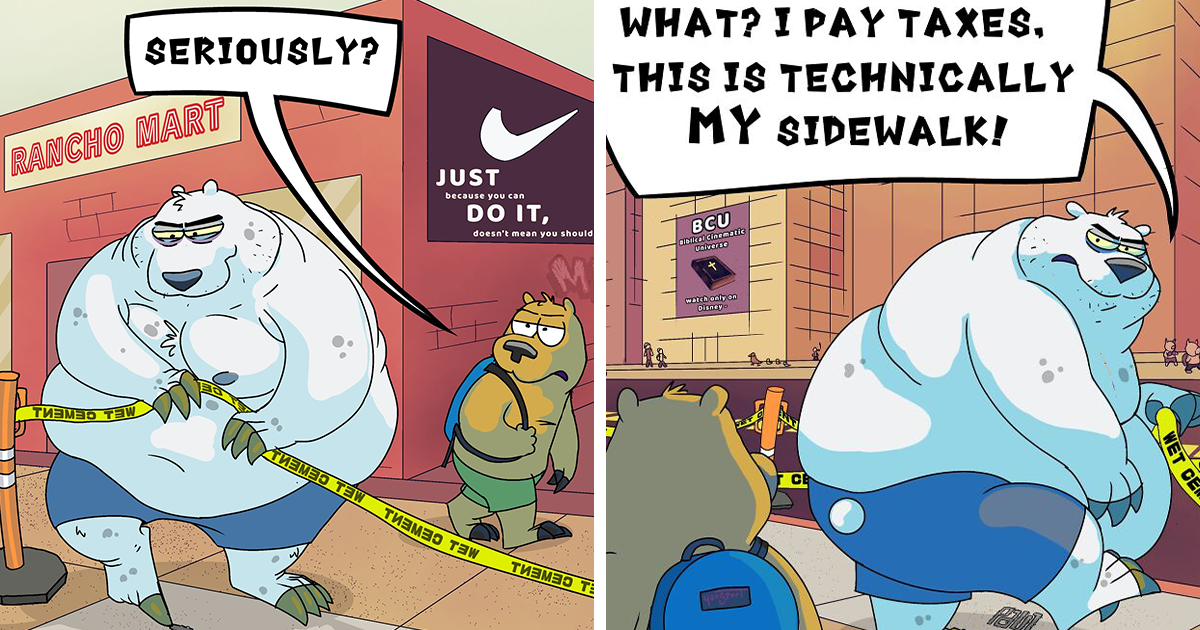
Note: This article is an original, fully rewritten feature based on real information about Mike Lewis’s comic series The Bear Trap, plus broader research on humor, visual storytelling, anthropomorphic characters, stress, and why relatable comics spread so well online.
Some comics make you laugh because the joke is clever. Others make you laugh because they catch you spiritually eating cereal over the sink at 11:47 p.m. while wondering whether adulthood came with a return policy. Mike Lewis’s The Bear Trap belongs firmly in the second camp. The series uses animal charactersespecially bears Paul and Robto poke fun at the weird, exhausting, often ridiculous business of being alive.
On the surface, these are hilarious animal comics. Underneath, they are tiny, sharp observations about money stress, awkward conversations, family tension, social expectations, low-grade panic, and the universal desire to lie down for “five minutes” and wake up in a different tax bracket. That blend of cute characters and painfully recognizable problems is exactly why the series has found an audience online.
The Bear Trap has been described as a satirical, philosophical, slice-of-life comic world where animals stand in for people. The main family dynamic includes a bear father and son, Paul and Rob, along with a hippo stepmother, all navigating a society that feels suspiciously like ours: messy, unequal, funny, frustrating, and occasionally held together with duct tape and sarcasm.
Meet “The Bear Trap”: Animal Comics With Human Problems
The beauty of The Bear Trap is that it does not need superheroes, multiverses, glowing swords, or a villain named “Dr. Doom But Legally Different.” Its power comes from ordinary situations pushed just far enough into absurdity. A bear dealing with social pressure is funny. A bear quietly collapsing under economic anxiety? Still funnybut now the laugh has a little emotional seasoning.
Lewis’s world works because the characters are animals, but their problems are aggressively human. The comics often explore work, family, aging, money, identity, relationships, and the strange public theater of pretending everything is fine. A polar bear’s blank stare can communicate what a thousand motivational posters cannot: sometimes life is not “a journey,” it is a shopping cart with one broken wheel.
The series also benefits from contrast. Bears are visually large, strong, and imposing. In The Bear Trap, however, they are often confused, irritated, insecure, broke, or emotionally cornered by ordinary life. That contrast creates comedy instantly. It is hard not to laugh when a character built like a wilderness survival documentary is defeated by social etiquette, bills, tipping culture, or family drama.
Why Animals Make Real-Life Struggles Funnier
Animal characters have always been useful in comedy and storytelling because they give readers a little distance from uncomfortable truths. A comic about a tired worker complaining about modern life may feel too direct. Put the same complaint in the mouth of a bear, pig, dog, hippo, or bird, and suddenly the reader can laugh before realizing, “Oh no, that’s me.”
Anthropomorphic animalsanimals with human behaviors, clothing, speech, and social roleshave long appeared in mythology, children’s literature, animation, cartoons, and comic books. They can be playful, symbolic, satirical, or emotionally disarming. In comics like The Bear Trap, animal characters make serious subjects easier to approach without turning the strip into a lecture with speech bubbles.
That distance matters. When a character looks exactly like us, we may get defensive. When a cartoon bear has the same problem, we relax. We are not being accused; we are being invited. The joke becomes a tiny emotional bridge between the artist and the reader. It says, “You have struggled with this too, right?” And the reader replies, “Yes, unfortunately, I have met my own brain.”
The Comedy of Everyday Frustration
One reason these animal comics feel so relatable is that they are not built around enormous disasters. They are built around the small, constant frictions of daily life: awkward advice, household chaos, public embarrassment, emotional exhaustion, generational misunderstanding, and the kind of internal monologue that would get you banned from most family dinners if spoken aloud.
The jokes often come from recognition. Readers do not need a complicated setup to understand the humor. A bear stuck in an absurd social situation, a character overreacting to a minor inconvenience, or an animal trying to make sense of modern behavior can land instantly because the emotional truth is familiar. We may not be cartoon bears, but many of us have absolutely felt like one: large, tired, hungry, and not emotionally prepared for another email.
Lewis has also discussed a creative process rooted in real situations: noticing a moment, choosing which character would react best, shaping the dialogue, and then drawing the scene with readability in mind. That practical approach explains why the comics feel conversational rather than over-engineered. The punchlines grow out of character, not just wordplay.
Paul and Rob: A Bear-Sized Family Dynamic
At the center of the series are Paul and Rob, two bears whose personalities often clash in funny and revealing ways. The father-son setup gives the comic room to explore generational differences, responsibility, disappointment, pride, confusion, and affection. Family is already a comedy engine. Add bears and a slightly unhinged social world, and suddenly Thanksgiving dinner has claws.
The lower-class family framing is important because it adds more than background detail. It gives the humor weight. These characters are not floating through life in a consequence-free cartoon universe. They are dealing with systems, expectations, and pressures that feel recognizable. That makes the jokes sharper. A silly exchange can also point toward deeper issues such as class anxiety, social mobility, and the exhaustion of trying to “keep up” in a world that keeps moving the finish line.
What keeps the series from becoming heavy-handed is tone. The Bear Trap rarely feels like it is grabbing the reader by the collar to deliver a lesson. Instead, it lets the ridiculousness speak. The animals are expressive. The dialogue is plainspoken. The situations are strange but grounded. The result is social commentary wearing a fuzzy disguise.
Why These Comics Work So Well Online
Online comics need to land quickly. Readers are scrolling between breaking news, dinner ideas, celebrity chaos, and a video of a raccoon stealing cat food with the confidence of a bank robber. A comic has only a few seconds to earn attention. The Bear Trap does that with recognizable characters, clean visual storytelling, and jokes that do not require a manual.
Digital comics also thrive when they are easy to share. A funny panel about stress, relationships, work, or social awkwardness becomes a tiny personality test. People share it because it says something they already feel. In that sense, a comic strip becomes more than entertainment; it becomes a social signal. Posting it says, “This is my emotional support bear.”
Visual storytelling helps, too. Research and educational commentary on graphic novels often point to the way images and text work together to support engagement, comprehension, and emotional connection. A facial expression, posture, or pause can carry meaning that a paragraph would have to explain. Comics compress story, mood, and punchline into a highly efficient format.
Humor as a Coping Mechanism
The best relatable comics do not erase stress; they make stress feel less lonely. That matters because humor can be a useful coping tool. Health and psychology sources have long noted that laughter may help reduce tension, improve mood, and make difficult situations easier to handle. It is not a substitute for real support, therapy, fair wages, or a functioning printerbut it can help people breathe for a moment.
That is where The Bear Trap shines. It does not pretend life is easy. It says life is hard, but also deeply silly. Bills are scary. Social rules are weird. Families are complicated. Everyone is improvising. Sometimes the healthiest available response is to laughnot because everything is fine, but because laughing gives you a second of control over the absurdity.
Humor also creates community. When readers see their own struggles reflected in a comic, they feel seen. When they share it, others join the recognition loop. Suddenly, a private frustration becomes a public joke. That shift can be surprisingly comforting. It turns “I am failing at life” into “Apparently many of us are being personally attacked by basic errands.”
The Art Style: Simple, Expressive, and Built for the Joke
Relatable comics do not need hyper-detailed backgrounds or cinematic lighting to work. In fact, too much polish can sometimes slow the joke down. The Bear Trap uses expressive animal designs and clear compositions that keep attention on the characters and dialogue. The art supports the comedy instead of competing with it.
That does not mean the drawing is simple in the lazy sense. Good cartooning requires choices. What details matter? What expression sells the punchline? How much body language is enough? Where should the reader’s eye move first? Lewis’s focus on readability, mentioned in interviews and reposted features, is part of why the comics translate well to social platforms. If readers need to pinch-zoom a joke, the joke is already wearing ankle weights.
The animal designs also help with tone. A bear can look intimidating, bored, wounded, clueless, tender, or furious with only a few changes in posture and expression. That flexibility lets the comics swing from goofy to pointed without changing worlds. One panel can feel like a workplace complaint; the next can feel like a miniature fable about dignity.
Real-Life Struggles Hidden Inside the Laughs
The phrase “real-life struggles” is doing a lot of work here. In The Bear Trap, struggle does not always mean tragedy. Often, it means the ordinary grind: not having enough money, misunderstanding people you love, trying to look confident, dealing with pointless rules, feeling out of place, or being forced to participate in systems that clearly were not designed by anyone who has ever been tired.
That is why these comics resonate with adult readers. The animals make the material approachable, but the emotional content is mature. The comedy understands that adulthood is not one big crisis; it is a subscription service of tiny crises billed monthly. The humor comes from seeing those moments exaggerated just enough to become funny without becoming fake.
Some strips lean into absurdist premises. Others feel like slice-of-life comedy. Some seem satirical, especially when they touch on class, labor, social norms, or modern habits. That range keeps the series fresh. Readers may come for the animal jokes, but they stay for the feeling that the comic understands the strange moral injury of opening your fridge, seeing ingredients, and still having “nothing to eat.”
Why Relatable Animal Comics Feel Personal
Relatability is not just about copying everyday life. It is about selecting the right details. A good relatable comic does not say, “People get stressed.” It shows a character reacting to one small stressor in a way that feels hilariously specific. The more precise the moment, the more universal it becomes.
That is the trick The Bear Trap repeatedly pulls off. The comic world is fictional, but the emotional math is real. A character may be a bear, but his reaction to embarrassment, pressure, or confusion feels painfully human. The reader laughs because the situation is silly, then laughs again because the character’s response is embarrassingly familiar.
This is also why animal comics can avoid becoming too preachy. Instead of declaring a theme, the comic dramatizes it. Instead of saying “modern life is absurd,” it lets a bear prove the point through a conversation, a look, or one perfectly defeated line. That is comedy doing analysis in a costume.
What Artists Can Learn From “The Bear Trap”
For aspiring comic creators, Lewis’s work offers several useful lessons. First, character matters more than complexity. A simple setup can produce endless material if the characters have clear personalities and emotional patterns. Second, jokes work best when they grow from truth. A punchline about stress lands harder when the stress feels recognizable.
Third, visual clarity is not optional. Online readers move fast. Strong silhouettes, readable lettering, expressive faces, and clean panel flow make a comic easier to enjoy and share. Fourth, a specific world can still feel universal. The Bear Trap is about animal characters in a strange society, but its emotional targets are familiar to anyone who has ever had a job, a family, a bill, a bad day, or a conversation they replayed in their head until their soul filed a complaint.
Finally, the series shows that humor and sincerity can coexist. A comic can be funny without being empty. It can be thoughtful without becoming homework. The sweet spot is a joke that makes the reader laugh first and think second, preferably before they send it to a friend with the message, “Why is this literally us?”
Reader Experience: Why These 32 Pics Feel Like a Group Therapy Session With Bears
Reading a batch of The Bear Trap comics can feel oddly therapeutic. Not in the clinical senseno cartoon bear should replace a licensed professional, unless the bear has surprisingly good credentialsbut in the everyday sense of feeling understood. The comics give shape to small frustrations that people often dismiss because they are not dramatic enough to complain about.
That is part of their charm. They validate the micro-struggles: the awkwardness, the tiredness, the financial pressure, the quiet resentment of modern convenience fees, the social performance of pretending to have a five-year plan. By turning these moments into animal comedy, Lewis gives readers permission to laugh at what usually just annoys them.
The “32 pics” format also matters. A single comic is a snack. A collection is a buffet of emotional recognition. Readers can move from one situation to another and find different shades of themselves: the overthinker, the exhausted parent, the broke optimist, the confused worker, the person who wants to be productive but is currently losing a staring contest with laundry.
Extra Reflections: Personal Experiences Connected to Relatable Animal Comics
Anyone who has spent time with funny animal comics knows the experience: you start reading because the drawings look cute, and five minutes later you are staring into the middle distance because a cartoon bear has accurately diagnosed your lifestyle. That is the magic of comics like The Bear Trap. They sneak past your defenses by being funny first. Then, when you are relaxed, they gently drop a truth on your lap like a cat bringing you something unfortunate from the yard.
One of the most relatable experiences connected to these comics is the way they capture emotional exhaustion without making it melodramatic. Many people are not walking around in full crisis mode. They are simply tired in a thousand tiny ways. They are tired from work, bills, family expectations, news cycles, decision fatigue, and the endless need to reply “Sounds good!” to things that do not sound good. A comic about an animal character facing a ridiculous everyday problem can feel like a release valve.
There is also a shared social experience in sending these comics to friends. You do not need to write an essay about why you are stressed. You can send one panel and say, “Me today.” That small act can open a conversation. A friend might reply, “Same,” and suddenly both of you are less alone. The comic becomes a shortcut for honesty. It lets people admit frustration without sounding dramatic or needy. Humor makes vulnerability easier to pass around.
Animal comics are especially good at this because they soften the emotional impact. If a human character says something painfully accurate about money, work, or loneliness, it may hit too hard. If a bear says it, the reader gets a cushion. The truth is still there, but it has paws. That makes the experience easier to enjoy, especially for readers who use humor as a shield, a bridge, or both.
Another familiar experience is recognizing family dynamics in characters that are not human at all. A bear father and bear son can reflect the push-and-pull of real families: advice given badly, love expressed awkwardly, generational confusion, and the strange way relatives can irritate you more than anyone else while still being your emotional emergency contact. The comedy lands because family life often feels like a sitcom where nobody received the script.
For artists and readers alike, comics like The Bear Trap also prove that small observations matter. You do not need a grand epic to make meaningful art. A funny exchange about a minor inconvenience can reveal class stress, insecurity, pride, affection, or disappointment. Real life is mostly made of small scenes. The dishes. The drive home. The awkward pause. The bill you forgot. The sandwich that becomes the emotional highlight of the day. Comics are perfect for catching those moments before they vanish.
That may be why these hilarious animal comics feel so satisfying. They do not solve real-life struggles, but they make them visible. They say the quiet part in a way that is safe to laugh at. They remind readers that being overwhelmed, confused, broke, awkward, hopeful, and slightly ridiculous is not a personal failure. It is just the human condition, temporarily performed by bears.
Conclusion
This Artist’s Hilarious Animal Comics Tackle Real-Life Struggles (32 Pics) is more than a catchy title. It describes why Mike Lewis’s The Bear Trap works so well: the comics are funny because they are honest, and they are honest because they understand that everyday life is already absurd. By using animal characters to explore human problems, Lewis creates a comic world that is playful, socially aware, emotionally recognizable, and easy to share.
These comics remind us that laughter does not have to ignore hardship. Sometimes it helps us look directly at hardship without flinching. Whether the subject is family, money, class, work, awkwardness, or the general nonsense of being alive, The Bear Trap turns frustration into something lighter. Not painless, exactlybut funny enough to keep going.












