
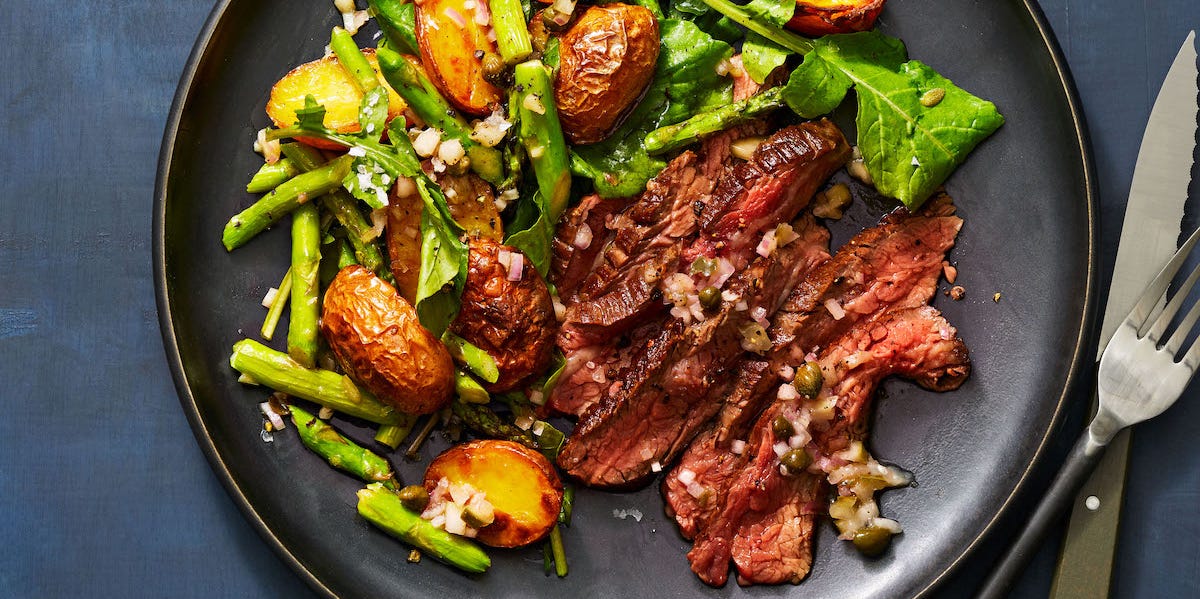
If dinner had a “reliable best friend” category, flank steak with roasted asparagus and potatoes would win the group chat. It is hearty without being heavy, elegant without requiring a culinary degree, and fast enough for a weeknight when everyone is hungry enough to start negotiating with the snack cabinet. The steak brings bold, beefy flavor. The potatoes get golden and crisp around the edges. The asparagus roasts into tender, slightly sweet spears with just enough snap to keep dinner from feeling like a nap in casserole form.
This recipe is built around smart timing: start the potatoes first because they need more oven time, add the asparagus later so it does not turn sad and limp, then sear or grill the flank steak quickly over high heat. Finish everything with a bright garlic-herb sauce or a simple pan drizzle, and suddenly you have a complete steak dinner that looks restaurant-worthy but does not require a sink full of dishes.
The secret to the best flank steak recipe is not complicated. Marinate the meat, cook it hot and fast, let it rest, and slice it thinly against the grain. That last step matters more than people think. Flank steak is lean and full of long muscle fibers, so slicing it the wrong way can turn a beautiful dinner into a jaw workout. Slice it correctly, though, and you get tender, juicy strips perfect for pairing with crispy potatoes and roasted asparagus.
Why This Flank Steak Dinner Works
This meal works because every ingredient has a clear job. Flank steak provides rich, savory flavor. Potatoes bring comfort and crisp texture. Asparagus adds freshness, color, and a little spring-like swagger, even if you are making it in the middle of a Tuesday. The marinade uses olive oil, garlic, lemon juice, Dijon mustard, Worcestershire sauce, and herbs to tenderize and season the steak without overpowering it.
Roasting the potatoes and asparagus on a sheet pan also keeps the recipe practical. Potatoes need a head start because they are denser. Asparagus cooks quickly, so it joins later. This prevents the classic sheet-pan tragedy: potatoes that are still firm while the asparagus has given up on life. A hot oven, usually around 425°F, helps the vegetables brown instead of steam.
Ingredients for Flank Steak with Roasted Asparagus and Potatoes
For the Steak
- 1 1/2 pounds flank steak
- 3 tablespoons olive oil
- 2 tablespoons low-sodium soy sauce
- 1 tablespoon Worcestershire sauce
- 1 tablespoon fresh lemon juice or red wine vinegar
- 2 teaspoons Dijon mustard
- 3 garlic cloves, minced
- 1 teaspoon honey or brown sugar
- 1 teaspoon smoked paprika
- 1 teaspoon kosher salt
- 1/2 teaspoon black pepper
- 1 tablespoon chopped fresh parsley, rosemary, or thyme
For the Roasted Potatoes and Asparagus
- 1 1/2 pounds baby potatoes, halved
- 1 pound asparagus, woody ends trimmed
- 3 tablespoons olive oil, divided
- 1 teaspoon garlic powder
- 1 teaspoon kosher salt, divided
- 1/2 teaspoon black pepper
- 1/2 teaspoon dried rosemary or Italian seasoning
- Zest of 1 lemon
- 2 tablespoons grated Parmesan, optional
Optional Finishing Sauce
- 2 tablespoons olive oil
- 1 tablespoon lemon juice
- 1 teaspoon Dijon mustard
- 1 small shallot, finely minced
- 1 tablespoon chopped parsley
- Pinch of salt and pepper
How To Make Flank Steak with Roasted Asparagus and Potatoes
Step 1: Marinate the Flank Steak
Place the flank steak in a shallow dish or zip-top bag. In a bowl, whisk together olive oil, soy sauce, Worcestershire sauce, lemon juice, Dijon mustard, garlic, honey, smoked paprika, salt, pepper, and herbs. Pour the marinade over the steak and turn it to coat both sides.
Marinate for at least 30 minutes, or up to 8 hours in the refrigerator. If your marinade is heavy on acid, avoid leaving the steak overnight, because too much acid can make the texture mushy instead of tender. Nobody wants steak that feels like it attended a spa retreat for too long.
Step 2: Start the Potatoes
Preheat the oven to 425°F. Line a large baking sheet with parchment paper or lightly oil it. Add the halved baby potatoes to the pan. Toss with 2 tablespoons olive oil, garlic powder, rosemary or Italian seasoning, 1/2 teaspoon salt, and black pepper.
Spread the potatoes cut-side down in a single layer. This small detail makes a big difference. The cut side gets direct contact with the hot pan, creating a golden, crispy surface. Roast for 20 to 25 minutes, flipping once halfway through.
Step 3: Add the Asparagus
While the potatoes roast, trim the asparagus. The easiest method is to cut off the tough bottom inch or two. If the stalks are thick, slice them on a bias into shorter pieces. Thin asparagus can be left whole.
After the potatoes have roasted for about 20 minutes, remove the pan from the oven. Add the asparagus, drizzle with the remaining tablespoon of olive oil, season with the remaining salt, and toss gently. Return the pan to the oven and roast for another 8 to 12 minutes, until the asparagus is tender and the potatoes are crisp.
Step 4: Cook the Flank Steak
Remove the steak from the marinade and pat it dry with paper towels. This helps it sear instead of steam. Heat a cast iron skillet over medium-high to high heat until very hot, or preheat a grill to high heat.
Cook the flank steak for about 4 to 6 minutes per side, depending on thickness and preferred doneness. Use an instant-read thermometer for the most accurate results. For food safety, whole cuts of beef should reach 145°F followed by a 3-minute rest. Many cooks prefer flank steak around medium-rare to medium for tenderness, but the safest guideline is to follow the USDA temperature recommendation.
Step 5: Rest and Slice
Transfer the steak to a cutting board and let it rest for 5 to 10 minutes. Resting gives the juices time to redistribute, which keeps the steak from flooding the cutting board the moment you slice it.
Look closely at the steak and identify the direction of the grain, which looks like long lines running through the meat. Slice thinly across those lines, not with them. For extra tenderness, hold the knife at a slight angle and cut thin slices on the bias.
Step 6: Finish and Serve
Sprinkle the roasted potatoes and asparagus with lemon zest and Parmesan, if using. Arrange the sliced flank steak beside the vegetables. Drizzle with the optional lemon-Dijon herb sauce or spoon any resting juices over the meat. Serve immediately while the potatoes are crisp and the steak is still warm.
Recipe Timing at a Glance
- Prep time: 15 minutes
- Marinating time: 30 minutes to 8 hours
- Cook time: 35 to 40 minutes
- Total active time: About 45 minutes
- Servings: 4
Best Tips for Tender Flank Steak
Do Not Skip the Marinade
Flank steak is lean, flavorful, and affordable compared with many premium steakhouse cuts. However, because it comes from a well-used muscle, it benefits from a marinade. A good marinade adds flavor and helps the surface stay juicy during high-heat cooking. You do not need anything fancy. Acid, oil, salt, garlic, and a little sweetness are enough to make the steak sing without needing a backup band.
Use High Heat
Flank steak is best cooked quickly. Whether you use a grill, broiler, or cast iron skillet, high heat creates a browned crust while keeping the inside tender. Low heat can dry the steak out before it develops flavor. Think of it like a fast handshake, not a long awkward hug.
Always Slice Against the Grain
This is the golden rule of flank steak. The grain is easy to see, and cutting across it shortens the muscle fibers. Shorter fibers mean a more tender bite. If your steak tastes chewy even though you cooked it properly, slicing may be the culprit.
How To Get Crispy Roasted Potatoes
The potatoes are not just a side dish here; they are co-stars. For the best roasted potatoes, use baby gold or baby red potatoes. Cut them in half so they cook faster and develop crisp edges. Toss them well with oil and seasoning, then place them cut-side down on the pan.
Give the potatoes room. Crowding the pan traps steam, and steam is the enemy of crispiness. If your baking sheet looks like a potato traffic jam, use two pans. Roast at a high temperature and resist the urge to stir constantly. The potatoes need quiet contact with the pan to form that golden crust.
How To Roast Asparagus Without Overcooking It
Asparagus cooks much faster than potatoes, which is why it goes on the pan later. Thin asparagus may need only 6 to 8 minutes, while thicker stalks may need 10 to 12 minutes. The goal is tender asparagus with lightly browned tips, not dull green strings that look like they have been through a weather event.
For extra flavor, add lemon zest after roasting. Fresh lemon brightens the whole dish and balances the richness of the steak. Parmesan is optional, but it adds a salty, savory finish that works beautifully with the potatoes and asparagus.
Flavor Variations
Garlic Butter Version
After slicing the steak, melt 2 tablespoons butter with minced garlic and chopped parsley. Spoon it over the steak and vegetables. This version is rich, comforting, and perfect when you want steakhouse energy without steakhouse prices.
Chimichurri Version
Top the steak with chimichurri made from parsley, cilantro, garlic, red wine vinegar, olive oil, oregano, and red pepper flakes. The herby sauce cuts through the beef beautifully and makes the whole plate taste fresh.
Balsamic Dijon Version
Add 1 tablespoon balsamic vinegar to the marinade and use rosemary as the main herb. This creates a slightly sweet, tangy flavor that pairs especially well with roasted potatoes.
What To Serve with Flank Steak, Asparagus, and Potatoes
This recipe is already a complete meal, but you can add a simple arugula salad, crusty bread, or roasted mushrooms if you want to stretch it for guests. A light cucumber salad also works well because it adds crunch and freshness. For drinks, iced tea, sparkling water with lemon, or a bold red wine all make sense.
Storage and Reheating Tips
Store leftover steak, asparagus, and potatoes in separate airtight containers if possible. The steak will keep for 3 to 4 days in the refrigerator. Reheat it gently in a skillet over low heat or enjoy it cold in salads, wraps, or steak sandwiches. Avoid microwaving the steak too long, because lean flank steak can turn tough quickly.
Potatoes reheat best in an oven or air fryer at 375°F until warm and crisp again. Asparagus is best reheated quickly or eaten cold with a squeeze of lemon. Leftovers can become a next-day lunch bowl with greens, a soft-boiled egg, and a little extra sauce.
Common Mistakes To Avoid
Cooking the Steak Straight from the Fridge
Let the steak sit at room temperature for about 20 to 30 minutes before cooking. This helps it cook more evenly. Do not leave it out for hours, but a short rest before cooking is helpful.
Putting Asparagus in Too Early
If asparagus roasts as long as potatoes, it will likely overcook. Add it later so it stays bright and tender.
Skipping the Resting Time
Cutting steak immediately after cooking is tempting, especially when it smells amazing. Be strong. Resting helps keep the juices in the meat instead of on the board.
Slicing Too Thick
Flank steak is best in thin slices. Thick slices can taste chewy even if the meat is cooked well.
Personal Cooking Experience: What Makes This Dinner a Keeper
The first time I made flank steak with roasted asparagus and potatoes, I treated it like a “clean out the fridge but make it look intentional” dinner. There was a bundle of asparagus waiting patiently in the drawer, a bag of baby potatoes that had not yet started plotting rebellion, and a flank steak that needed a plan. The result was so good that it immediately moved from “random dinner” to “repeat this before everyone forgets how impressed they were.”
What I love most about this recipe is the rhythm. The potatoes go in first, giving you time to prep the asparagus and heat the skillet. While the vegetables roast, the kitchen starts smelling like garlic and herbs. Then the steak hits the hot pan, and suddenly everyone within sniffing distance becomes suspiciously available to “help.” By help, of course, they mean stand near the stove and ask when dinner is ready.
One useful lesson from making this dish several times is that the pan matters. A crowded sheet pan gives you soft potatoes, while a roomy pan gives you crisp, golden potatoes that taste like you put in more effort than you did. I also learned that asparagus thickness changes everything. Pencil-thin asparagus cooks fast, so it needs only a short roast. Thicker asparagus is more forgiving and works well if you like a meatier bite.
The steak is where confidence grows with practice. At first, flank steak can seem intimidating because it is thinner than classic steaks and easy to overcook. But once you understand the method, it becomes one of the easiest cuts to manage. A hot skillet, a quick sear, a thermometer, and a proper rest do most of the work. The real magic happens when you slice it thinly against the grain. It is the difference between “Wow, this is tender” and “Why am I still chewing?”
This recipe is also flexible in a very practical way. If you are cooking for kids, keep the seasoning simple and serve the sauce on the side. If you are cooking for guests, add chimichurri or garlic butter and suddenly the whole meal feels dinner-party ready. If you want meal prep, slice the leftover steak and pack it with potatoes, asparagus, and greens for a lunch that makes sad desk salads look even sadder.
Another reason this meal works so well is balance. Steak alone can feel heavy. Potatoes alone can feel too cozy. Asparagus brings brightness and color, while lemon or vinegar in the sauce wakes everything up. The plate feels complete: savory, crisp, fresh, juicy, and just a little fancy. It is the kind of dinner that looks like you planned ahead, even if your actual plan was “please let the refrigerator contain something useful.”
For the best experience, serve it right away. Let the steak rest, slice it at the last minute, and keep the potatoes hot. Add lemon zest just before serving so the aroma stays fresh. And if a few crispy potato pieces disappear from the pan before dinner reaches the table, consider it chef’s tax. Every kitchen has rules.
Conclusion
Flank steak with roasted asparagus and potatoes is the kind of recipe that proves a great dinner does not have to be complicated. With a flavorful marinade, a hot pan, smart roasting times, and the all-important against-the-grain slice, you can turn a lean cut of beef into a tender, satisfying meal. The roasted potatoes add comfort, the asparagus brings freshness, and the optional sauce ties everything together with a bright finish.
Whether you are cooking for a weeknight family dinner, a casual date night, or guests who deserve something better than emergency pasta, this recipe delivers. It is simple, flexible, and full of flavor. Best of all, it gives you that steakhouse feeling without requiring a reservation, a valet, or a tiny side dish that costs as much as a sweater.
Note: This article is original, written in standard American English, and based on widely accepted cooking methods, recipe testing principles, and food-safety guidance for preparing flank steak, roasted asparagus, and potatoes.













