
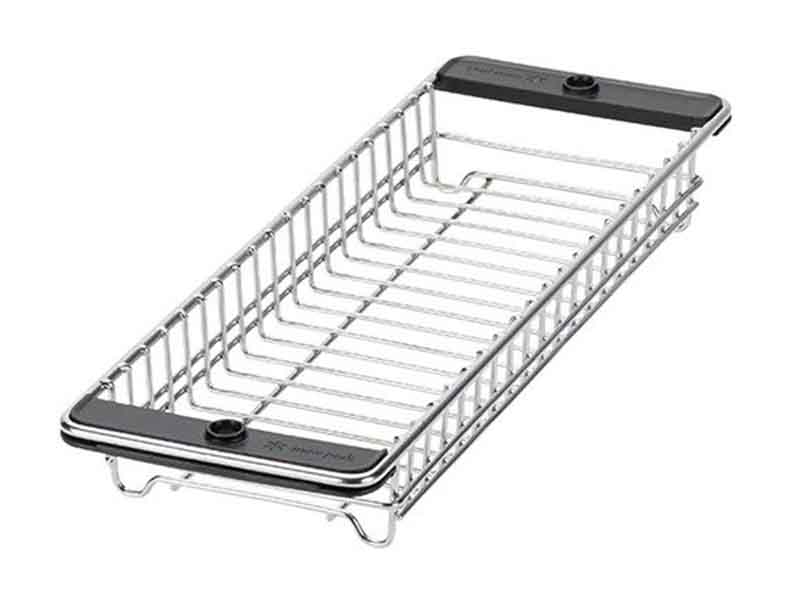
A well-organized camp kitchen can make breakfast feel delightfully civilized. A disorganized one can turn a simple cup of coffee into an archaeological dig through three storage bins, two tote bags, and one suspiciously sticky grocery sack. The Shallow Mesh Tray Half Unit is designed to prevent that second scenario.
Made by Snow Peak for its modular Iron Grill Table and Tabletop Architect systems, this compact stainless steel tray creates an accessible home for the small tools and ingredients that tend to wander around a campsite. It is not a cooler, pantry, utensil drawer, or magic portal to unlimited counter space. Instead, it does one modest job remarkably well: keeping frequently used items visible, contained, and close to the cooking area.
This guide explains the tray’s dimensions, compatibility, installation, practical uses, limitations, maintenance requirements, and real-world value. It also compares the shallow model with deeper storage options so you can decide whether this half-unit accessory deserves a place in your outdoor kitchen.
What Is the Shallow Mesh Tray Half Unit?
The Shallow Mesh Tray Half Unit is a modular camp kitchen organizer identified by Snow Peak as model CK-251. It fits into compatible Iron Grill Table frames and can also be mounted on a Tabletop Architect Unit Frame.
The term “half unit” refers to its width within Snow Peak’s standardized IGT layout. It occupies approximately half the width of a conventional one-unit insert, allowing campers to combine it with burners, work surfaces, storage boxes, and other components without surrendering an excessive amount of table space.
The tray is long and narrow rather than square. Its official measurements are 14 inches long, 4.7 inches wide, and 1.9 inches high. It weighs approximately 1 pound and is constructed from stainless steel with polypropylene components. The package contains the tray and two mounting brackets.
| Feature | Specification |
|---|---|
| Model | CK-251 |
| Dimensions | 14 x 4.7 x 1.9 inches |
| Metric dimensions | 356 x 120 x 48 millimeters |
| Weight | 1 pound, or approximately 450 grams |
| Materials | Stainless steel and polypropylene |
| Included components | One tray and two brackets |
| Compatible systems | Snow Peak IGT frames and TTA Unit Frame |
| Maximum load in an IGT frame | 2.2 pounds, or 1 kilogram |
Product specifications verified through Snow Peak’s official U.S. listing, manual, and established U.S. outdoor retailers.
Why the Shallow Design Is More Useful Than It Looks
At only 1.9 inches high, this is not the tray for a bag of potatoes, a tall bottle of oil, or your cast-iron skillet collection. That shallow profile is intentional. It favors immediate access over bulk storage.
Small items remain visible
Deep containers are excellent until a teaspoon, lighter, or thermometer falls to the bottom. Then the container becomes a tiny steel cave, and you become the person rummaging through it while the pancakes begin developing their own smoke signal.
A shallow tray keeps its contents in sight. It works particularly well for objects used repeatedly during meal preparation, such as seasoning containers, folded kitchen cloths, bottle openers, coffee tools, serving utensils, and packaged condiments.
The mesh construction reduces trapped debris
The open stainless steel mesh allows loose crumbs, sand, and small amounts of moisture to pass through instead of collecting in a solid-bottomed compartment. This does not eliminate cleaning, but it makes dirt easier to spot and discourages the creation of that mysterious camp-kitchen sludge nobody wants to discuss.
The trade-off is equally obvious: very small objects can slip through the openings. Loose toothpicks, tiny packets, narrow stirring sticks, and individual coffee beans may need a small pouch or container before being placed in the tray.
Half-unit sizing preserves workspace
A compact organizer is valuable because every inch of a portable kitchen must earn its ride. The half-unit format offers useful storage without dominating an IGT frame. Campers can place the tray beside a work surface, integrate it into a larger modular configuration, or mount it vertically through the TTA system.
This flexibility reflects the broader design of the Snow Peak Iron Grill Table, which is built around interchangeable cooking, storage, and work-surface components. The goal is not to purchase every accessory ever forged from stainless steel. The goal is to assemble only the components that match the way you cook.
Snow Peak describes IGT as a modular outdoor kitchen with interchangeable frame sizes, worktops, cookers, storage inserts, and accessories.
How It Works With the Snow Peak IGT System
When used with a compatible Iron Grill Table frame, the Shallow Mesh Tray Half Unit can be inserted directly into the modular opening. This creates a recessed storage area within the cooking station.
The tray’s best position depends on the rest of the layout. Placing it near a preparation surface keeps spices and tools within reach. Positioning it near a dining section makes it useful for chopsticks, napkins, coasters, and serving accessories.
However, Snow Peak specifically warns against installing the tray next to a combustor or heat-producing insert. Stainless steel conducts heat, and nearby polypropylene components may also be affected. Convenient storage is lovely; accidentally preheating your pepper grinder is less charming.
The official IGT load limit for the shallow tray is 2.2 pounds. That is enough for lightweight kitchen tools and small supplies, but it is not intended to support heavy cookware, fuel canisters, water-filled kettles, or dense food containers.
Using the Tray With Tabletop Architect Accessories
The Tabletop Architect system turns the tray into elevated or under-table storage. In this configuration, the tray attaches to the TTA Unit Frame, which is supported by two TTA Clamp Tools.
The required components are sold separately. A complete TTA installation generally needs:
- The Shallow Mesh Tray Half Unit
- One TTA Unit Frame, model CK-303
- Two TTA Unit Clamp Tools, model CK-300
- A stable table with a compatible edge thickness
The clamp is designed for table edges approximately 0.03 to 1.37 inches thick. After the two clamps and frame are installed, the included tray brackets attach to the frame’s shafts at matching heights. The tray then slides into the brackets and should be pushed down until no gap remains.
Snow Peak permits multiple shallow or deep mesh trays on a TTA Unit Frame, but the combined load must not exceed 6.6 pounds. Trays should be installed either above or below the clamp positionnot on both sides at oncebecause an unbalanced arrangement can tip the system.
Check all joints, brackets, screws, and clamp bolts before loading the tray. You should not move the assembled system, change its mounting position while loaded, or transport the table with the TTA structure still attached.
TTA requirements, assembly steps, load limits, and safety restrictions come from the official CK-251 instruction manual and TTA product specifications.
What Can You Store in a Shallow Mesh Tray?
The tray performs best as a quick-access station rather than long-term food storage. Good candidates include:
- Spatulas, tongs, serving spoons, and compact whisks
- Salt, pepper, seasoning jars, and sauce containers
- Coffee filters, a hand grinder, scoops, and stirring spoons
- Napkins, folded dishcloths, and heat-resistant gloves
- Food thermometers and bottle openers
- Chopsticks, flatware, and compact cooking tools
- Small plates or lids that fit securely within the tray
Items that are tall, round, top-heavy, or likely to roll should be stored elsewhere. The tray is also not a secure wildlife-resistant container. Food, scented products, trash, and dirty utensils must still be placed in the storage system required by the campground or park.
In bear country, that may mean transferring all scented items to an approved food locker, hard-sided vehicle during permitted hours, or certified bear-resistant container. A stylish mesh tray is many things, but a determined bear views it mainly as decorative plating.
REI and National Park Service guidance emphasizes organized camp storage while requiring food and scented items to be secured appropriately in wildlife areas.
Shallow Mesh Tray vs. Deep Mesh Tray
Snow Peak also offers a Deep Mesh Tray Half Unit. Both models are 14 inches long and 4.7 inches wide, but the deep model is 5.5 inches high and weighs about 1.4 pounds.
| Consideration | Shallow tray | Deep tray |
|---|---|---|
| Height | 1.9 inches | 5.5 inches |
| Weight | 1 pound | 1.4 pounds |
| Best use | Visible, frequently used tools | Taller or bulkier supplies |
| Access | Fast and unobstructed | More capacity but more rummaging |
| Containment | Limited for tall objects | Better side support |
Choose the shallow model when speed, visibility, and a low profile matter most. Choose the deep model when you need greater containment for bottles, stacked dishes, food packages, or larger utensils.
A particularly efficient TTA arrangement uses one shallow tray for active tools and one deep tray for backup supplies. The shallow level becomes the working zone, while the deeper level holds items that are needed less frequently. It is essentially the campsite version of a top desk drawerexcept with more trees and fewer overdue bills.
Official deep-tray dimensions and materials were compared with CK-251 specifications.
Planning a Better Camp Kitchen Workflow
The value of a modular tray depends on where it is placed. Before assembling your kitchen, imagine the meal-preparation sequence: retrieve ingredients, wash hands, prepare food, cook, serve, and clean. Place frequently used tools near the point where they enter that sequence.
Create zones instead of one crowded surface
A practical outdoor kitchen usually benefits from separate areas for preparation, cooking, serving, and cleanup. The Shallow Mesh Tray Half Unit belongs beside the preparation or serving area, not directly beside flames or splattering grease.
Keep raw-food tools separate from items used for cooked food. USDA guidance recommends avoiding cross-contamination by using different utensils, cutting boards, and platters for raw and ready-to-eat foods. A tray can support that system, but only when its contents are assigned deliberately.
Pack by task
Instead of filling the tray with every object that physically fits, choose items required for one repeated activity. A coffee tray might hold filters, a scoop, a towel, and stirring spoons. A grill tray could contain a thermometer, tongs, seasoning, and heat-resistant gloves.
Outdoor organizations frequently recommend packing kitchen equipment together and using labeled bins or dedicated camp boxes. The mesh tray works as the final stage of that system: bulk supplies travel in a container, while the items needed during cooking move into the accessible tray.
Camp-kitchen workflow and organization principles were synthesized from REI, USDA, Outdoor Life, and KOA guidance.
Cleaning and Maintenance
Stainless steel is durable, but “stainless” does not mean “immune to every careless thing a camper can do before going home.” Moisture, salt, seasonings, rain, and coastal air can contribute to discoloration or corrosion if left on the tray.
Snow Peak recommends disassembling the product after use and wiping it with a dry cloth. When it becomes wet, wipe it thoroughly and let every component dry before storage. Salt and seasoning residue should be removed with a tightly wrung cloth, followed by complete drying.
Beach campers should be especially attentive because sea breezes can deposit salt on metal surfaces. Do not leave the tray exposed to rain for extended periods, and store it in a dry, well-ventilated place.
Before each trip, inspect the mesh, brackets, fasteners, and polypropylene parts. A worn bracket may no longer secure the tray properly. Do not substitute improvised clips or third-party hardware for a damaged or missing bracket.
Advantages and Limitations
Primary advantages
- Compact half-unit footprint
- Excellent visibility and quick access
- Durable stainless steel construction
- Compatible with both IGT and TTA configurations
- Easy to remove and wipe clean
- Useful at campsites, patios, and home cooking stations
Important limitations
- Low sides provide limited support for tall objects
- The 2.2-pound IGT load limit rules out heavy cookware
- Small items may fall through the mesh
- A complete TTA setup requires several separately sold components
- The tray must be kept away from burners and grills
- It is most valuable to people already using Snow Peak’s modular ecosystem
Who Should Buy the Shallow Mesh Tray Half Unit?
This accessory makes the most sense for established IGT owners who regularly lose usable table space to scattered utensils, seasonings, and coffee equipment. It is also attractive to TTA users who want vertical storage without installing a bulky freestanding cabinet.
Car campers, overlanders, patio cooks, and home users can all benefit from its modular format. Backpackers, minimalist tent campers, and anyone without compatible Snow Peak equipment will probably find a simple pouch or lightweight utensil roll more practical.
It is a premium system accessory rather than an independent storage solution. Buying the tray by itself and hoping it will organize an entire kitchen is like buying one excellent sock and expecting warmer feet. Context matters.
Practical Experience: What a Weekend Setup Reveals
The following experience-based scenario illustrates how the Shallow Mesh Tray Half Unit typically performs during a two-night car-camping trip. It is a practical workflow analysis rather than a claim of personal laboratory testing.
Friday: setup and first impressions
During initial setup, the tray’s small size is easy to underestimate. It does not create a dramatic new cabinet or a giant shelf. Once the cooking tools come out, however, its purpose becomes clearer. Tongs, a lighter, a small seasoning container, and a folded towel can move off the main work surface without disappearing into a sealed box.
Installation in an IGT frame is straightforward, provided the correct opening is available. The tray feels most natural near the preparation insert and away from the burner. Loading it lightly is important. Because it is shallow, several compact objects work better than one tall bottle that spends the evening threatening to tip over.
For a quick dinner, the tray reduces repeated trips to the main kitchen bin. The cook can season food, turn it, check the temperature, and return each tool to a visible location. That sounds like a minor improvement until darkness arrives and every black-handled utensil attempts to camouflage itself against the campsite.
Saturday morning: the coffee test
Breakfast is where this Snow Peak IGT storage accessory earns its keep. A hand grinder, filters, measuring scoop, stirring spoon, and clean towel fit the shallow format better than bulky food packages. Nothing is buried, and the low sides make it easy to grab a tool with one hand while holding a kettle with the other.
The mesh bottom also makes stray coffee grounds easy to identify. Some may fall through, so the ground beneath the tray or the surface below it still needs attention. A small washable liner can help with tiny ingredients, although any added liner should remain well away from heat.
After coffee, the tray can be reassigned to breakfast tools. This reveals one of its better qualities: it encourages editing. There is not enough room for twenty “just in case” gadgets, so only the objects needed for the current meal remain at hand.
Saturday dinner: capacity limits become obvious
A more elaborate dinner exposes the tray’s boundaries. Sauce bottles, stacked bowls, and large cooking tools quickly overwhelm it. The shallow walls cannot safely restrain tall containers, especially if the table is bumped. A deep tray or separate gear box is more appropriate for those items.
The best arrangement is to treat the shallow tray as an active-tool station. Place only the thermometer, serving spoon, clean tongs, seasoning, and heat gloves inside it. Raw-meat utensils should remain separate, and the tray should not become a landing zone for everything covered in barbecue sauce.
The load limit also matters. A few lightweight tools are fine; a small cast-iron pan is not. The tray never pretends to be a structural shelf, and users should resist asking it to audition for the role.
Sunday: cleanup and packing
At the end of the trip, the open mesh is easier to inspect than a closed drawer. Crumbs and residue are visible, allowing the tray to be wiped before packing. The brackets deserve attention because grease, salt, or dampness can hide around connection points.
The tray should be removed before transporting the table. Drying it completely before placing it in a carrying case reduces the chance of corrosion and unpleasant odors. Its flat profile packs efficiently beside other IGT inserts, although the brackets should be stored where they will not become lost or bent.
By the end of a realistic weekend, the main lesson is simple: the Shallow Mesh Tray Half Unit does not add massive capacity. It adds order. For campers who value an intentional workstation, that can be more useful than another large container filled with objects they cannot find.
Final Verdict
The Shallow Mesh Tray Half Unit is a thoughtfully proportioned organizer for Snow Peak’s IGT and Tabletop Architect systems. Its stainless steel construction, compact half-unit footprint, and low-profile design make it especially effective for utensils, spices, coffee accessories, cloths, and other lightweight essentials.
It is less suitable for heavy cookware, tall bottles, loose miniature objects, or campers who do not already own compatible equipment. The additional cost of TTA clamps and a Unit Frame should also be considered when planning a vertical storage system.
Used correctly, the tray creates a cleaner cooking surface and a more predictable workflow. You spend less time searching for the thermometer, fewer moments wondering where the tongs went, and more time enjoying food outdoors. That is a respectable achievement for one pound of mesh and brackets.












