
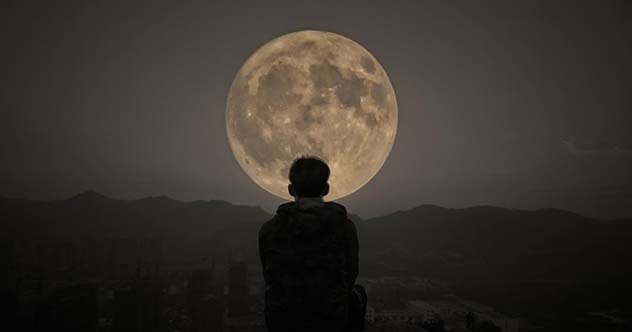
The Moon has been Earth’s favorite night-light, calendar, ocean-stirrer, poetry machine, and convenient scapegoat for thousands of years. When the dog acts weird, the baby will not sleep, the emergency room feels like a circus, or someone says something truly unhinged in a group chat, someone eventually whispers, “Must be a full moon.” The Moon, meanwhile, keeps orbiting silently, possibly wondering why it keeps getting dragged into our drama.
To be fair, the Moon does affect Earth in real, measurable ways. Its gravity helps create ocean tides. Its reflected sunlight changes the brightness of night. Its roughly 29.5-day cycle has shaped calendars, rituals, farming traditions, fishing habits, and folklore across cultures. But humans are pattern-hunting creatures. Give us a glowing orb, a strange Tuesday, and one neighbor mowing the lawn at midnight, and we will connect dots that may not belong in the same coloring book.
This article explores ten things people have blamed on the Moon, separating proven lunar influence from charming superstition, shaky correlation, and full-blown “my cousin swears it happened” mythology. Bring your telescope, your skepticism, and maybe a silver bulletpurely for literary flair.
Why the Moon Gets Blamed for Everything
The Moon is visible, predictable, and dramatic. Unlike invisible germs, atmospheric pressure, stress hormones, or poor life choices, the Moon hangs right there in the sky looking guilty. A full Moon feels special because it lights up the night, alters visibility, and arrives on a repeating cycle that is easy to remember. That makes it a perfect mental bookmark for unusual events.
There is also a psychological trick at work: confirmation bias. If a hospital shift is calm during a full Moon, nobody writes a folk song about it. If three strange things happen under a glowing lunar spotlight, the story gets retold for years. The Moon becomes less an astronomical body and more a cosmic refrigerator magnet holding up our weirdest memories.
1. Ocean Tides
The verdict: Absolutely true
If the Moon had a résumé, “moves oceans” would be near the top, right under “looks excellent in haiku.” The Moon’s gravity pulls on Earth, creating tidal bulges in the oceans. As Earth rotates through these bulges, many coastlines experience high and low tides. The Sun also contributes to tides, but the Moon plays the starring role because it is much closer to Earth.
During new Moons and full Moons, the Sun, Earth, and Moon line up. Their combined gravitational effects create spring tides, which are higher high tides and lower low tides. During quarter Moons, the Sun and Moon pull at right angles, producing neap tides, which are generally weaker. This is science, not superstition. Fishermen, sailors, surfers, coastal engineers, and anyone who has parked too close to the shoreline ignore lunar tides at their own soggy peril.
So yes, blame the Moon for tides. It has earned that accusation. Just do not blame it for the fact that you wore suede shoes to the beach.
2. Sleepless Nights
The verdict: Possibly, but not as dramatically as folklore claims
People have long said they sleep poorly around the full Moon. Modern research is more complicated than a simple yes or no. Some studies suggest that people may fall asleep later or sleep for a shorter time in the nights leading up to a full Moon, especially in places with less artificial lighting. Moonlight may delay bedtime, reduce darkness, and nudge the body’s internal clock.
Other studies, however, find little or no consistent lunar effect on sleep. Why the disagreement? Sleep is affected by caffeine, stress, screens, work schedules, temperature, noise, alcohol, health conditions, and the ancient curse known as “just one more episode.” Compared with those heavy hitters, the Moon is probably a subtle influence at most.
The most reasonable conclusion is that the Moon may affect sleep indirectly through nighttime brightness and human behavior. If a full Moon makes your bedroom brighter or inspires late-night skywatching, then yes, it may steal a little rest. But if you scroll through your phone until 1:47 a.m., the Moon deserves a written apology.
3. Madness and “Lunacy”
The verdict: Historically powerful, scientifically weak
The word “lunacy” comes from old beliefs linking the Moon to mental disturbance. The Latin root “luna” means Moon, and for centuries people believed lunar phases could influence the mind. Ancient philosophers, medieval physicians, and later folklore all fed the idea that the full Moon made people unstable, emotional, or “moon-struck.”
It is easy to understand why. Before electric lighting, a full Moon changed the night dramatically. People could travel, gather, drink, hunt, work, or cause trouble after dark more easily. More activity could mean more conflict, more accidents, and more stories. The Moon may not have changed minds directly, but it changed the stage on which people behaved.
Modern reviews generally do not support a strong connection between the full Moon and mental illness, psychiatric crises, or bizarre behavior. Still, the phrase “must be a full Moon” survives because it is compact, funny, and socially safer than saying, “Everyone around me has made a series of questionable decisions.”
4. Crime and Bad Behavior
The verdict: Mostly myth, with a few visibility-related exceptions
Police officers, bartenders, nurses, teachers, and customer-service workers have all been known to blame the full Moon for chaotic nights. The idea is simple: full Moon equals more crime, more fights, more reckless behavior, and more people attempting things that begin with “watch this.”
Large-scale research has not found consistent evidence that lunar phases cause spikes in crime. Some older studies claimed a connection, but many were later criticized for weak methods, small samples, or statistical cherry-picking. When researchers look at bigger datasets, the full Moon usually loses its reputation as a criminal mastermind.
There is one practical wrinkle: brighter nights can change outdoor behavior. More moonlight may make it easier for people to stay outside, travel, or see targets and surroundings. In that sense, moonlight might influence opportunity in certain outdoor settings. But that is very different from saying the Moon turns peaceful citizens into were-raccoons with court dates.
5. Emergency Room Chaos
The verdict: A beloved workplace legend, not a reliable pattern
Ask enough emergency room workers about full Moons and you will hear stories. Strange injuries. Unusual complaints. Packed waiting rooms. Patients arriving with objects in places objects should not be. The full Moon has become part of hospital folklore, right alongside broken coffee machines and the printer jamming at the worst possible moment.
But when researchers examine hospital admissions, trauma cases, psychiatric visits, and emergency patterns, the lunar effect is usually weak or absent. One reason the myth persists is that stressful nights are memorable. A quiet full Moon fades into the background, while a chaotic full Moon becomes legend by sunrise.
Another factor is expectation. If staff already believe full Moons are wild, they may notice every unusual event more sharply. That does not mean medical workers are imagining their hard shifts. It means the Moon may be getting credit for problems caused by staffing shortages, weekends, alcohol, weather, holidays, local events, and the universal truth that humans are fragile bags of ambition.
6. More Babies Being Born
The verdict: Mostly unsupported
One of the most persistent lunar beliefs is that maternity wards fill up during the full Moon. The idea has a lovely poetic logic: ocean tides rise, amniotic fluid exists, therefore babies launch. Unfortunately, biology is not a beach.
Many studies have examined birth rates and lunar phases, and most do not find a meaningful connection. Large birth datasets tend to show that babies arrive according to complex factors such as gestational age, maternal health, medical interventions, scheduled inductions, cesarean deliveries, and plain old timing. The Moon may be beautiful, but it is not standing outside labor and delivery with a clipboard.
Why does the belief survive? Birth is emotional and memorable. If a busy delivery night happens under a full Moon, everyone remembers it. If a dozen babies arrive on a Tuesday with an ordinary waning crescent, no one blames the crescent. Poor crescent: never invited to the superstition party.
7. Menstrual Cycles and Fertility
The verdict: Fascinating timing, mixed evidence
The average lunar cycle is about 29.5 days, which is close to the length of many menstrual cycles. That similarity has inspired centuries of symbolism connecting the Moon with fertility, femininity, renewal, and the body’s rhythms. In art, myth, religion, and traditional medicine, lunar imagery often appears alongside themes of birth and transformation.
Scientifically, the relationship is much less tidy. Some studies have suggested possible weak or intermittent links between lunar phases, menstrual timing, sleep, and reproductive hormones. Other research finds no consistent synchronization. Modern life also complicates the question. Artificial lighting, irregular sleep, hormonal contraception, stress, travel, and health conditions can all affect cycles far more directly than moonlight.
The safest conclusion is that lunar symbolism remains culturally powerful, while biological evidence is mixed. The Moon may inspire reflection on cycles and health, but it should not be used as a medical calendar, fertility plan, or excuse for ignoring actual symptoms. If your body is sending signals, listen to your bodynot only to the sky.
8. Animal Bites and Wildlife Weirdness
The verdict: Some real patterns, but not magic
Unlike many human lunar myths, animal behavior can show clearer links to moonlight. Some animals hunt, feed, mate, migrate, or avoid predators based partly on nighttime illumination. A brighter night can help predators see preyor help prey see predators. Either way, the Moon becomes part of the ecological chessboard.
Research on animal bites has produced mixed results. One famous study reported more animal bites around the full Moon, while other analyses found no strong increase for dog bites specifically. That suggests the story is not simple. More bites could reflect animal activity, human outdoor activity, seasonal patterns, weekends, or people interacting with pets and wildlife in different ways.
Wildlife-vehicle collisions offer a more practical example. Recent transportation research has found that collisions involving wildlife can rise on full Moon nights, especially in rural areas. The likely explanation is not lunar madness. It is visibility, animal movement, road design, driver behavior, and the fact that deer do not wear reflective vests despite years of missed opportunities.
9. Crop Growth and Gardening Success
The verdict: Traditional, meaningful, but not strongly proven
Planting by the Moon is an old agricultural practice. Traditional moon gardening suggests planting above-ground crops during waxing phases, root crops during waning phases, and using lunar timing for pruning, harvesting, or soil work. Almanacs still publish lunar planting calendars, and many gardeners swear by them.
The theory often points to moonlight and gravitational pull, arguing that the Moon influences soil moisture and plant sap the way it influences tides. The challenge is scale. Oceans respond visibly to tidal forces because they are enormous bodies of water. A carrot bed is not the Atlantic, even if your zucchini has imperial ambitions.
Scientific support for moon gardening remains limited. Still, the practice may help gardeners in indirect ways. It encourages observation, planning, patience, and regular attention to seasonal cycles. If following the Moon gets someone outside, keeps them organized, and makes gardening feel more connected to nature, that has value. Just remember that compost, sunlight, water, soil health, and pest control will outperform moonbeams in most backyard trials.
10. Natural Disasters and Supermoon Panic
The verdict: Overblown and usually wrong
Every so often, headlines warn that a “supermoon” might trigger earthquakes, volcanic eruptions, floods, or extreme weather. A supermoon happens when a full Moon occurs near perigee, the Moon’s closest point to Earth in its elliptical orbit. It can appear slightly larger and brighter than usual, which makes it excellent for photographers and irresistible to headline writers.
The Moon does contribute to tides, including slightly stronger tides during some alignments. However, that does not mean it has enough extra power during a supermoon to start major earthquakes or volcanic eruptions. Earth’s geology is driven by plate tectonics, internal heat, fault stress, magma movement, and other forces far greater than small lunar variations.
Why does the disaster myth keep returning? Because Earth has many earthquakes, storms, and floods every year. Some will inevitably happen near a full Moon or supermoon simply by chance. Humans notice the coincidence and build a story. The Moon gets blamed because it is visible, dramatic, and unavailable for comment.
What the Moon Really Does Influence
The Moon’s real influence is impressive enough without adding fake crimes to its record. It stabilizes Earth’s axial tilt, helps regulate tides, reflects sunlight at night, affects some animal behavior, shapes coastal ecosystems, and has guided human calendars for millennia. Its phases helped people track time long before digital reminders began nagging us to drink water.
The key is separating direct physical influence from cultural influence. The Moon directly affects tides. It indirectly affects some nighttime behavior by changing light levels. It strongly affects human imagination, which may be its most dramatic power of all. We write songs about it, plan festivals around it, name missions after it, blame moods on it, and take blurry phone photos of it even though the result always looks like a tortilla chip in a dark room.
Experience-Based Reflections: Living Under the Moon’s Reputation
Anyone who has spent time around night-shift workers, new parents, farmers, fishermen, campers, or emergency responders has probably heard a Moon story. A nurse says the waiting room always gets strange when the full Moon rises. A teacher says students are louder. A parent says the baby slept like a tiny angry landlord. A dog owner says the family beagle stared out the window and growled at absolutely nothing, which is either lunar energy or simply standard beagle administration.
These experiences matter because folklore often begins with observation. People notice patterns, compare stories, and create explanations. Before modern science, the Moon was one of the most reliable clocks in the sky. It told people when nights would be bright, when tides might change, when certain fishing or gathering practices might work, and when communities could travel after sunset. Even when a belief was scientifically incomplete, it often came from real attempts to make sense of the world.
For example, a coastal resident may genuinely experience the Moon as powerful because local tides reshape daily routines. A fisherman planning around tide tables is not being superstitious; he is being practical. A camper may sleep worse under a full Moon because the tent glows all night. A rural driver may be wiser to slow down during bright nights when wildlife is active near roads. In those cases, the Moon is not mysticalit is environmental context.
But experience can also exaggerate. A bartender may remember the wild full-Moon Friday and forget three equally wild Fridays with no full Moon. A maternity nurse may remember the night every room was full under a glowing sky, but not the boring full Moon when everyone ate vending-machine pretzels in peace. Our memories love drama. The Moon adds a spotlight, and suddenly the story has better lighting.
The best approach is not to mock lunar folklore or swallow it whole. A smarter response is curiosity. Ask what mechanism could explain the claim. Is it gravity? Light? tides? human scheduling? animal movement? coincidence? tradition? If there is a measurable pathway, investigate it. If there is no evidence, enjoy the story as culture rather than fact.
In everyday life, the Moon can still be useful even when it is innocent. It can remind us to look up, slow down, notice cycles, and admit that humans are wonderfully strange pattern-making creatures. Maybe the full Moon does not cause your neighbor to practice drums at midnight. But it does make the scene feel more cinematic, and sometimes that is enough to keep a legend alive.
Conclusion
The Moon has been blamed for madness, crime, births, bad sleep, animal bites, gardening success, natural disasters, and nearly every odd human moment that needed a dramatic explanation. Some accusations are fair. The Moon really does help create ocean tides and influence nighttime brightness. Some animal patterns may shift with lunar illumination. But many famous claimsespecially about crime, hospital chaos, childbirth, and full-Moon madnessare far weaker than folklore suggests.
Still, the Moon remains one of humanity’s favorite storytellers. It gives us a rhythm, a symbol, and a glowing excuse when life gets weird. The trick is to appreciate the mystery without abandoning the evidence. Blame the Moon for tides. Thank it for beauty. But when someone acts strange at dinner, consider other causes firstlow blood sugar, family politics, or the dangerous phrase “I saw a video about this.”
Note: This article synthesizes established astronomy, ocean science, sleep research, medical literature, wildlife studies, agricultural tradition, and cultural history. Claims are framed as proven, mixed, traditional, or unsupported according to the strength of available evidence.











