
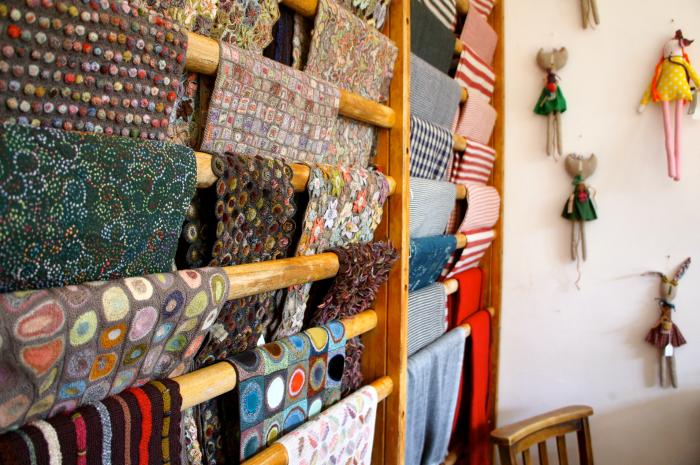
There are shops where you buy things, and then there are shops where you suddenly become the sort of person who believes a hand-painted linen cushion could improve your entire personality. Selvedge Dry Goods in London belonged firmly to the second category.
For textile lovers, decorators, collectors, makers, and people with a suspiciously strong opinion about ribbon, the former Selvedge Dry Goods shop was more than a retail stop. It was a tiny museum of useful beauty. The shelves held handmade objects, haberdashery supplies, scarves, linens, toys, trims, and small domestic treasures with enough texture to make a minimalist briefly consider owning seventeen baskets.
The shop was connected to Selvedge, the influential textile magazine founded by Polly Leonard. Its purpose was never simply to sell fabric-related objects. Instead, it created a world around cloth: how it is made, who makes it, how it ages, and why a small stitch or faded print can carry more feeling than a warehouse full of shiny, anonymous products.
A London Shop for People Who Notice the Details
Selvedge Dry Goods operated from North London and quickly became a destination for people who thought of textiles as part of everyday life rather than background scenery. In a world filled with disposable décor and fast-fashion impulse buys, the store encouraged slower looking.
You did not rush through Selvedge Dry Goods with a coffee in one hand and a shopping list in the other. Well, you could have tried, but the shelves would have defeated you. There were too many objects asking to be touched: woven scarves, printed bias tape, soft linen tablecloths, handmade creatures, vintage-style storage pieces, and practical sewing tools that somehow made repairing a button feel like an act of cultural preservation.
The shop’s appeal came from its mix of craftsmanship and curiosity. One shelf might feature a useful domestic item, while another displayed a handmade textile artwork that looked as though it had escaped from a very stylish attic. The effect was warm, layered, and unapologetically tactile.
In other words, this was not the kind of place where every object looked like it had been designed by a committee in a conference room with no windows.
What “Selvedge” Means Beyond Denim
The word selvedge is often associated with premium denim, especially the visible finished edge that appears when a pair of jeans is cuffed. But selvedge is not just a denim term. It comes from “self-edge,” referring to fabric that has a naturally finished edge created during weaving.
That idea makes the name especially fitting for a textile-centered shop. A selvedge edge helps keep cloth from fraying, but it also represents something bigger: care at the margins. It suggests that even the part of the fabric people might overlook deserves thoughtful construction.
That same philosophy appeared throughout Selvedge Dry Goods. The merchandise was not selected only for appearance. It was chosen for texture, material, story, and usefulness. A linen napkin was not merely a napkin. A ribbon was not merely ribbon. A handmade birdhouse was not merely proof that birds have better real estate options than most renters.
The Art of Buying Less, But Buying Better
One reason the Selvedge Dry Goods approach still feels relevant is that it made a case for deliberate shopping. Instead of offering hundreds of nearly identical products in slightly different shades of beige, the store favored pieces with personality.
This is an important lesson for anyone interested in slow living, sustainable design, handmade gifts, or thoughtful interiors. A well-made object can serve more than one purpose. It can be functional, decorative, sentimental, and durable all at once.
A handwoven scarf, for example, can be worn for years, folded over the back of a chair, displayed on a wall, or passed on to someone who understands why “it is just a scarf” is never an acceptable sentence. A linen tablecloth can be used for dinner, picnics, holiday gatherings, and the occasional emergency attempt to make takeout look elegant.
That is the magic of buying objects with material integrity. They do not become obsolete when the season changes. They simply become more familiar.
Textile Treasures That Defined the Shop
Scarves With a Story
Scarves were among the memorable textile pieces associated with the store. The selection included work connected with makers such as Sophie Digard and Khadi & Co., both known for a strong relationship with handmade textile traditions.
A scarf in this context was not treated as a last-minute accessory grabbed near a checkout counter. It was a portable piece of textile art. The stitches, fibers, colors, and irregularities mattered. Slight variations were not flaws; they were evidence that a human hand had been involved somewhere along the journey.
Khadi textiles, in particular, carry a long connection to hand spinning and hand weaving. Their appeal often comes from softness, irregularity, and a certain quiet depth that factory-perfect cloth can struggle to imitate. They feel lived-in even before they become part of your life.
Hand-Painted Linen and Domestic Color
The shop also featured linen cushions and tote bags by German textile designer Margaret Häusler. Her work was notable for gradient color effects painted onto linen with natural dyes, turning simple household objects into small fields of shifting color.
This is a good reminder that home textiles do not have to shout to make an impact. A cushion does not need neon lettering or a motivational slogan about wine to feel special. Sometimes a subtle wash of color, a beautiful weave, and an honest material are enough.
For interior design enthusiasts, this kind of textile is particularly useful because it can soften a room without making it feel overdecorated. Linen cushions, runners, and bags bring texture to clean-lined interiors, traditional rooms, modern apartments, and spaces that are still deciding whether they are “rustic” or simply “full of furniture from three different decades.”
Bias Binding, Ribbons, and the Joy of Haberdashery
One of the most charming elements of Selvedge Dry Goods was its haberdashery selection. In American English, people might call these sewing notions: ribbons, tapes, trims, buttons, needles, and other small practical tools. In British English, haberdashery has the added benefit of sounding like something you should purchase while wearing sensible shoes and carrying a basket.
Liberty print bias binding was among the textile details associated with the shop. Bias binding is fabric cut on the diagonal grain, which gives it flexibility and makes it useful for finishing curved edges on garments, quilts, accessories, and home sewing projects.
It is a small material with outsized powers. A plain apron can become charming with floral binding. A homemade quilt can look polished. A worn neckline can get another life. Even a simple storage basket can be upgraded from “laundry situation” to “handmade domestic triumph.”
Merchant & Mills sewing essentials also fit naturally into the shop’s world. Their tools and notions reflect the idea that sewing supplies should be practical, durable, and pleasant to use. There is something deeply satisfying about a pair of scissors that feels balanced in the hand, especially when you are trying to cut fabric in a straight line and not create a new map of Europe.
Objects That Made Everyday Life Feel More Considered
Selvedge Dry Goods was not limited to fabric by the yard or fashion accessories. Its range extended into the home, with table linens, kitchen items, handmade decorations, and display pieces that made domestic life feel less routine.
Fog Linen Work table linens and kitchen goods were part of that atmosphere. Linen is especially suited to this kind of store because it is both humble and elegant. It wrinkles, softens, absorbs, and becomes more relaxed with use. Unlike a glossy synthetic placemat, linen does not seem offended when you actually eat near it.
The shop also showed how utilitarian objects can become decorative when arranged with care. Vintage wooden display cases, old school chairs, painted tambourines, and colorful ribbons helped create a layered visual language. The message was clear: storage can be beautiful, tools can be displayed, and a kitchen utensil does not have to hide in a drawer simply because it has chosen a life of service.
Why Handmade Creatures Belonged in a Textile Shop
Selvedge Dry Goods also carried whimsical handmade works, including textile creatures and bird-related pieces by makers such as Tamar Mogendorff. These objects added an important ingredient to the shop: surprise.
A room filled only with tasteful linen and polished scissors can become a little too serious. Add a handmade birdhouse, a stitched animal, or an odd little creature with embroidered eyes, and suddenly the room has a pulse.
Handmade decorative objects are valuable because they remind us that homes should not look like catalog pages frozen in time. A home should contain evidence of humor, memory, travel, repair, inheritance, and occasional questionable decisions made at flea markets.
The best handmade objects tend to become conversation starters because they resist easy categorization. Is it a toy? Is it sculpture? Is it a decorative bird? Yes. That is the point.
How Selvedge Dry Goods Curated a Shopping Experience
What made the shop memorable was not only what it sold but how the objects were brought together. The store created visual conversations between unrelated items: a linen cloth near wooden utensils, a handmade doll near a roll of ribbon, a scarf beside a stack of magazines, or a practical sewing tool next to a delicate textile artwork.
This approach is useful for anyone styling a home, organizing a boutique, or building an online shop. Products become more compelling when customers can imagine them in a real environment. A ribbon is more interesting when it is wrapped around a gift. A linen napkin is more appealing when it is shown beside a ceramic bowl. A textile magazine becomes more tempting when it sits near objects made by the kinds of artists it features.
Good merchandising tells a story before a salesperson says a word.
Lessons for Modern Textile and Home Décor Shoppers
The Selvedge Dry Goods approach offers several practical shopping lessons for today’s consumers.
- Choose materials you want to touch repeatedly, not just photograph once.
- Look for objects with useful lives beyond one season or one room.
- Pay attention to construction, stitching, weave, weight, and finish.
- Support makers when possible, especially when their work reflects skilled craft traditions.
- Mix practical items with playful ones so your home does not become a showroom for extremely well-behaved adults.
- Buy fewer decorative objects, but choose pieces that carry a story.
This does not mean every purchase must be handmade, antique, artisanal, ethically sourced, hand-dyed, hand-sewn, spiritually transformative, and blessed by a retired textile professor. That would make buying a dish towel feel like applying for a grant.
It simply means slowing down enough to ask whether an object will earn its place in your life.
Exploring London Through Textiles
London remains one of the world’s great cities for people who love cloth, craft, antiques, and design. Textile-focused shopping can lead you through neighborhoods, markets, museum districts, independent shops, and historic department stores in ways that standard sightseeing rarely does.
A textile-minded London itinerary might include fabric departments, antique markets, small independent makers, museum collections, bookshops, and design stores. The joy is not in ticking off every destination. It is in noticing how different places interpret material culture.
At one stop, you may see Liberty floral prints. At another, handwoven wool, vintage quilts, Japanese ceramics, British-made scissors, or hand-printed stationery. Somewhere nearby, there will probably be a café where you can sit down, inspect your purchases, and wonder whether carrying a twelve-foot length of fabric through central London was a good idea.
It was. Probably.
A Final Thought on the Selvedge Dry Goods Spirit
Selvedge Dry Goods in London represented a kind of shopping that feels increasingly rare: shopping guided by material knowledge, curiosity, and care. It celebrated things made slowly enough to have texture, history, and a slightly imperfect charm.
The real legacy of a shop like this is not limited to the objects that once filled its shelves. It lives on in the way it teaches us to look. Look at the edge of the cloth. Look at the stitch. Look at the hand behind the object. Look at the ordinary item that becomes extraordinary when someone makes it well.
And perhaps, after all that looking, take home one small thing that you genuinely love. Just one. Unless it is ribbon. Ribbon has a way of multiplying when nobody is watching.
Additional Shopper’s Diary Experiences: Finding the Selvedge Mindset in London
The most memorable textile-shopping experiences in London often begin before you buy anything. They begin with the pause. You notice a bolt of cloth folded on a shelf, a faded wooden drawer filled with buttons, or a basket of linen napkins that looks far too elegant to be near a kitchen sink. You slow down because the object asks you to.
That is the Selvedge Dry Goods mindset: not shopping for the fastest possible solution, but shopping with enough attention to understand why something is beautiful. A handmade object can be modest in scale and still feel significant. A tiny piece of printed bias tape can make a sewing project feel personal. A handwoven scarf can become part of a winter ritual. A tea towel can become the one you refuse to let guests use because it is “for display,” despite being, objectively, a tea towel.
Walking through London with this perspective changes the city. You begin to notice shop windows differently. A row of ceramics is no longer just pottery; it is a study in glaze, shape, and shadow. A market stall filled with old linens becomes a tiny archive of domestic life. A vintage coat gains interest because of its lining, buttons, seams, and years of wear.
Textile shopping also teaches patience. Not every beautiful object belongs in your home, and not every handmade item needs to be purchased simply because it makes you feel like the main character in a European art film. Sometimes it is enough to admire the work, remember the maker’s name, and carry the inspiration into your own creative projects.
When you do buy something, choose with intention. Think about where it will live. Will the scarf be worn? Will the cushion be used? Will the ribbon finish a project that has been sitting in a drawer since 2019? Will the linen cloth make weekday dinners feel slightly less like a negotiation between leftovers and exhaustion?
The best textile purchases become part of daily life. They soften with washing, collect memories, and gain character instead of losing value. They may not always stay pristine, but that is often the point. A faded napkin, repaired tote, or worn scarf can become more meaningful than an untouched object kept away from life.
That is why the Selvedge Dry Goods spirit still matters. It encourages shoppers to choose objects that age alongside them. It reminds us that craft is not only about perfection. It is about touch, use, repair, and the pleasure of living with things that were made with care.












