
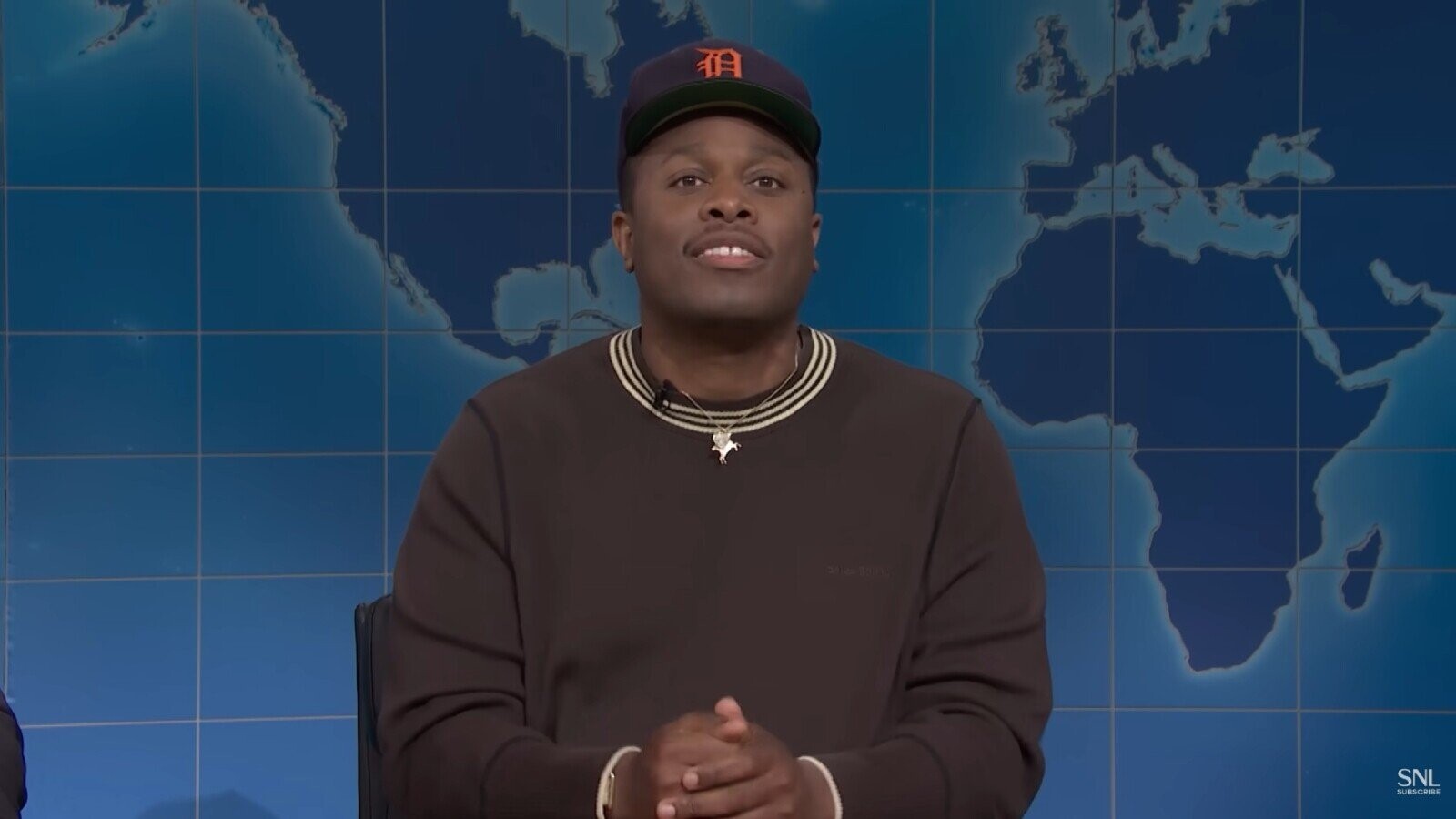
Devon Walker managed to squeeze three giant pieces of comedy history into one compact punchline: Saturday Night Live, Chris Rock, and the Will Smith Oscars slap. That is the joke-writing equivalent of carrying fireworks onto an airplane and asking whether anyone has a match.
In his 2025 Hulu stand-up special, LOL Live with Devon Walker, Walker described the uncomfortable experience of getting close enough to a hero to discover the person behind the legend. He never formally named Chris Rock in the setup, but the destination was unmistakable. Walker capped the bit by saying, “Man, I see why Will Smith hit you.” The line was intentionally risky, sharply economical, and almost guaranteed to make entertainment headlines.
It is also easy to misunderstand. Walker was not delivering a legal defense of Smith’s actions or inviting comedians to settle disputes with open hands. He was using one of the most recognizable pop-culture incidents of the decade as a comic shortcut for disappointment. The real subject of the joke was not violence. It was the dangerous gap between admiring a celebrity from afar and spending enough time with that celebrity to notice the software bugs.
The Devon Walker Chris Rock Joke, Explained
Walker’s bit begins with a familiar warning: never meet your heroes. From a distance, a famous comedian can look like a flawless monument built from classic specials, iconic sketches, and perfectly timed interviews. Up close, the monument may interrupt lunch, complain to the waiter, or radiate the sort of energy that makes a fan quietly reconsider the framed poster at home.
That is where the Will Smith reference enters. Rather than explain every detail of an awkward encounter, Walker borrows a shared cultural memory. Millions of viewers remember Smith walking onto the Academy Awards stage on March 27, 2022, and striking Rock after Rock joked about Jada Pinkett Smith’s shaved head. Because the image is so deeply embedded in popular culture, Walker needs only a few words to transform ordinary disappointment into a huge, outrageous conclusion.
The exaggeration is the engine. A reasonable response to meeting a difficult hero might be, “Well, that was disappointing.” A stand-up comedian’s response is to connect lunch-table irritation to the most infamous live-television confrontation in recent memory. The leap is absurd, and the audience’s recognition closes the circuit.
Why the Punchline Feels So Risky
Walker Aimed Upward, Not Downward
In an interview about the special, Walker acknowledged that the joke could bother people in the comedy business. He defended the choice by arguing that comedians should be willing to make fun of wealthy, powerful, famous people rather than repeatedly targeting groups already dealing with discrimination or hardship. In other words, his preferred direction is up the celebrity ladder, where the targets have publicists, residual checks, and probably a much nicer lunch reservation.
That philosophy matters because Chris Rock is not merely another comedian. He is one of modern stand-up’s defining stars and a major SNL alumnus. For a younger performer with ties to the same institution, joking about Rock is not random celebrity commentary. It is closer to roasting a senior member of the family at a reunion while the family patriarch is seated beside the dessert table.
The Joke Questions a Hero Without Erasing His Work
Walker’s line does not require listeners to decide that Rock is untalented or undeserving of his career. The humor depends on the opposite: Rock’s status is what makes the lunch meaningful. A disappointing meeting with a stranger is merely a bad afternoon. A disappointing meeting with an idol becomes a story about shattered expectations.
That tension gives the joke more depth than a simple insult. Walker can respect Rock’s influence and still suggest that the personal “vibe” did not match the legend. Fans do this constantly with actors, athletes, musicians, and writers. We build a complete personality from edited performances, then act surprised when the actual human being arrives without background music.
The SNL Connection Makes the Joke Even Sharper
Walker joined Saturday Night Live as a featured player for Season 48 in 2022 and was promoted to the repertory cast for the show’s 50th season. Before Studio 8H, he had spent years developing his stand-up voice and had writing credits connected to television comedy. On SNL, he appeared in sketches, performed at the Weekend Update desk, and impersonated public figures including New York City Mayor Eric Adams.
Rock’s relationship with the program is far more historic. He was an SNL cast member in the early 1990s before becoming a stand-up heavyweight, movie star, writer, director, and frequent host. That shared institutional DNA adds an extra layer to Walker’s punchline. He was not taking a swing at a distant celebrity universe; he was teasing a celebrated graduate of the same famously stressful comedy school.
Where the Joke Appeared: Walker’s Hulu Stand-Up Special
The line appeared in LOL Live with Devon Walker, a 30-minute Hulu special from a stand-up series associated with Kevin Hart’s comedy company. Walker used the showcase to present a voice less constrained than network sketch television.
Stand-up lets Walker control the frame. Instead of depending on pitches, casting decisions, and what survives dress rehearsal, he chooses the premise, rhythm, and consequences. The Chris Rock line therefore doubled as a statement of independence: Walker’s room, Walker’s story, Walker’s risk.
The timing also gave the joke extra electricity. When the special arrived in August 2025, Walker’s future at SNL was already a subject of entertainment-industry speculation. Later that month, he announced that he was leaving after three seasons. He described the experience as rewarding at times and “toxic as hell” at others, while still expressing affection for colleagues and gratitude for the opportunity. The departure made the special feel less like a side project and more like a bridge toward the next stage of his career.
Why the Will Smith–Chris Rock Slap Still Works as Comedy Material
The Oscars incident has endured because it was chaotic inside Hollywood’s most controlled ceremony. It involved two global stars, yet felt startlingly personal. It first looked like a sketch, then became unmistakably real. Smith’s Best Actor win later that evening made the broadcast even more surreal.
Smith apologized afterward, resigned from the Academy of Motion Picture Arts and Sciences, and was barred from attending Academy events for 10 years. The Academy later acknowledged that its immediate response had been inadequate. Rock, meanwhile, largely avoided a conventional sit-down media tour about the event and eventually addressed it at length in his 2023 Netflix special, Selective Outrage.
By the time Walker used the incident in 2025, the slap had become more than news. It was a cultural reference with a built-in setup, conflict, image, and aftermath. Comedians love this kind of material because the audience already knows the backstory. No one needs a PowerPoint presentation titled “Why This Palm Matters.” The reference arrives preloaded.
Still, using it is not automatically clever. Thousands of jokes were made within hours of the Oscars broadcast, many of them aging like shrimp on a dashboard. Walker found a fresher angle by making the incident the payoff to a story about hero worship. Instead of simply replaying the slap, he repurposed it as a metaphor for what happens when admiration collides with personality.
Does the Joke Endorse What Will Smith Did?
No reasonable reading of the routine requires that conclusion. Stand-up comedy often uses exaggerated identification: “Now I understand why someone did something outrageous” usually means “I encountered a smaller frustration that comically reminded me of the larger event.” It does not mean the performer has drafted a moral philosophy endorsing the larger event.
Context is everything. Walker’s subject is an unpleasant or deflating celebrity encounter. The laugh comes from how wildly disproportionate the comparison is. If the audience believed he were sincerely recommending physical retaliation, the line would stop functioning as a joke and start sounding like testimony.
That distinction does not prevent criticism. Some listeners may feel any joke that appears to rationalize the slap minimizes a real act of violence. Others may think Rock has already been targeted enough. Comedy does not come with universal approval, and risky jokes are called risky because applause is not guaranteed. The strongest defense of Walker’s line is not that everyone must like it. It is that its comic construction and target are clear.
What the Moment Reveals About Devon Walker’s Comedy
Walker favors relaxed delivery paired with sharp turns. The calmness is camouflage: he seems to be describing an odd lunch, then pulls one of the most explosive celebrity references from the cultural toolbox.
He has said stand-up works best near the performer’s honest feelings, while acknowledging that stories include embellishment. Audiences should not treat every line as a notarized transcript. The emotional truth may be “meeting this person disappointed me”; craft turns that disappointment into a headline. The special consequently defines Walker beyond SNL as a comic willing to question status and risk awkward conversations at industry parties.
Related Experiences: What Risky Celebrity Comedy Feels Like in Real Life
Meeting a Hero Can Be Emotionally Expensive
Many people have experienced a smaller version of Walker’s premise. A favorite author gives a distracted answer at a signing. A beloved musician seems bored during a paid meet-and-greet. A respected boss finally invites an employee to lunch and spends the entire meal checking messages. Nothing criminal happens, and no dramatic music plays, but the admirer leaves with a strange sense of loss.
The disappointment comes from an invisible investment. A special may have helped a fan through a difficult period, or a show may be tied to family memories. The celebrity knows none of this. To the fan, the meeting is a chapter finale; to the celebrity, it may be Tuesday before a dentist appointment.
That imbalance is fertile ground for humor. The safest lesson is not that heroes are secretly terrible. It is that admiration built from public work should not be confused with personal knowledge. Art can be meaningful even when its creator is tired, awkward, arrogant, or simply having a bad day. Sometimes the pedestal is the problem; humans were not designed for marble flooring.
A Comedy Room Magnifies Every Reaction
Risky jokes also create a distinctive audience experience. In a club or theater, listeners often react in stages. First comes recognition: everyone understands the Will Smith and Chris Rock reference. Next comes shock: did an active SNL cast member really say that about an SNL legend? Finally comes permission: once enough people laugh, the rest of the room decides whether to join, groan, or make the face of someone reading a restaurant bill with an unexplained service charge.
Timing determines whether the line feels daring or hostile. Walker must establish exaggeration before the audience gets trapped in literal interpretation. His understated style helps: he does not need to shout because the cultural memory supplies the volume.
Workplace Humor Has a Similar Hierarchy Problem
There is a recognizable workplace version, too. Joking about a peer is one thing; joking about a revered former executive whose portrait hangs in the lobby is another. The content may be mild, but the hierarchy creates tension. People laugh partly because someone has violated an unwritten rule: important names are supposed to be discussed in polished language, preferably near a plaque.
Walker’s situation carries that energy. Rock is a comedy icon and SNL alumnus tied to a famously debated moment. Referencing him from within the broader SNL family feels professionally dangerous, and that perceived danger adds adrenaline to the laugh.
The Best Takeaway Is About Honesty, Not Hostility
The most useful experience behind the bit is the moment when private disappointment becomes an honest story. People often sanitize encounters with famous or powerful figures because they fear sounding ungrateful. Comedians do the opposite: they inspect the discomfort, exaggerate it, and ask whether the truth can survive under stage lights.
Walker’s punchline succeeds because it converts a complicated feeling into a clean comic image. He admired someone, met the person behind the reputation, and came away with a less polished impression. The Will Smith reference is the outrageous wrapper, not the moral center. Underneath it is a common experience: discovering that a hero is human and realizing the souvenir nobody sells is perspective.
Conclusion
Devon Walker’s Chris Rock joke works because it is compact, recognizable, and loaded with professional tension. It draws on the Will Smith Oscars slap without merely repeating old memes, using the incident as shorthand for the letdown of meeting a hero whose personality does not match the legend.
The line also captures Walker at an important career transition. His Hulu special gave him room to establish a more personal stand-up identity, and his subsequent departure from Saturday Night Live made that independence even more significant. Whether the joke makes listeners laugh, wince, or quietly inspect their own celebrity idols, it does what effective stand-up often does: turns an awkward truth into a sentence people cannot resist discussing.












