
Editor’s note: This article discusses public reporting on Jeffrey Epstein-related records, including redacted images and allegations of exploitation. It avoids identifying private individuals, does not reproduce explicit material, and does not imply wrongdoing by anyone merely photographed with Epstein.
Introduction: Another Epstein File Drop, Another Wave of Questions
The latest Epstein files have landed with the kind of unsettling thud that makes the internet go quiet for half a second before everyone starts refreshing, screenshotting, arguing, and pretending they are suddenly archival investigators. The new release, drawn from Jeffrey Epstein’s estate and made public by Democrats on the House Oversight Committee, includes photos that reportedly show women or young women with disturbing handwritten messages on their bodies, redacted passports and identification cards, images of Epstein with public figures, and a text thread that appears to discuss sending “girls” to someone identified only as “J.”
The phrase “Epstein files” has become shorthand for a sprawling public demand: Who enabled Jeffrey Epstein? Who knew what? Who looked away? And why did it take so long for records connected to one of America’s most infamous sex-trafficking cases to become public? The newly released images do not answer every question. In fact, they add several more to the pile, which by now is less a pile and more a badly managed warehouse.
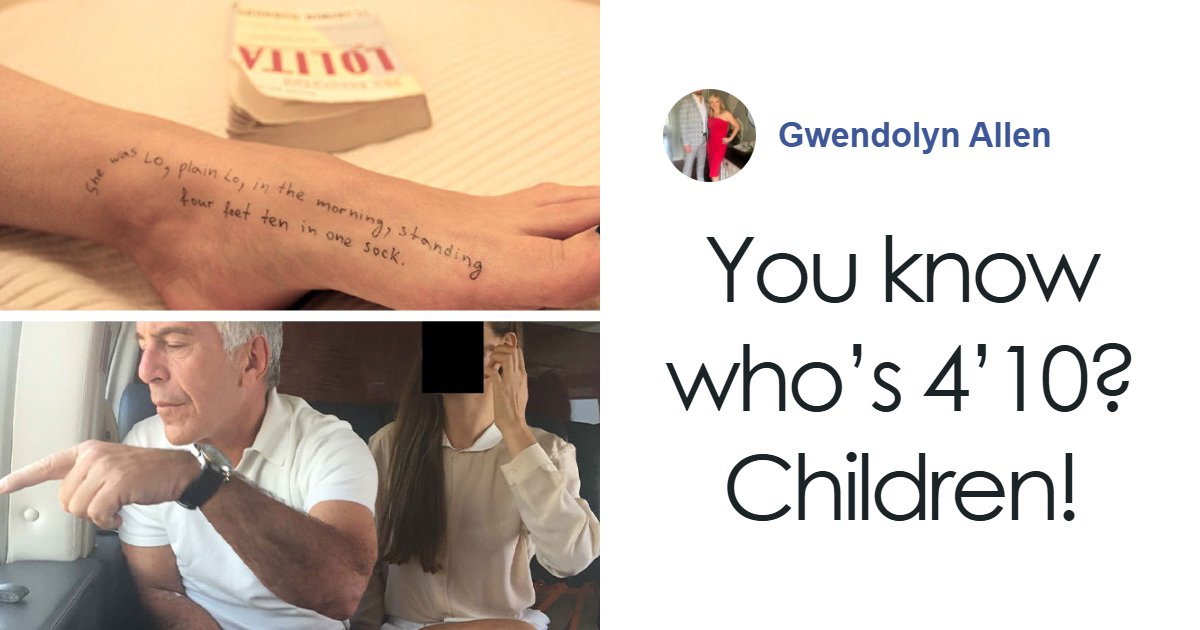
What makes this release especially disturbing is not just the presence of famous names or elite social settings. It is the collision of wealth, access, redacted identities, and visual evidence that appears to point toward a culture of dehumanization. The images reportedly include quotes from Vladimir Nabokov’s Lolita written on a person’s skin. That literary reference is not subtle, cute, or clever. In the context of Epstein’s history, it reads less like edgy art and more like a neon sign flashing “something is deeply wrong here.”
What Was Released In The New Epstein Files?
The December 2025 release included 68 images from Epstein’s estate, according to multiple reports. These images were part of a much larger collection of roughly 95,000 photos obtained by the House Oversight Committee from the Epstein estate. The committee has said the materials include both graphic and mundane images, which is a bleak but important detail. Cases like this are often built not only on shocking evidence but also on boring evidence: passports, maps, property photos, travel records, screenshots, calendars, and other scraps that become meaningful when arranged correctly.
Among the most troubling items were photos showing handwritten passages from Lolita on parts of a woman’s body, including a foot and neck, with the book reportedly visible nearby in at least one image. The identities of the people shown were redacted or obscured, which matters. Responsible reporting must protect potential victims and avoid turning evidence into spectacle.
Other images reportedly showed redacted identification cards and passports connected to women from countries including Russia, Ukraine, Lithuania, Italy, the Czech Republic, South Africa, and Morocco. There were also images connected to Epstein’s properties, including maps or architectural plans, plus photos of Epstein with women whose faces were blacked out.
The release also included a screenshot of a text exchange that appeared to discuss scouting or sending girls. One reported message referenced sending girls “now,” while another suggested someone might be “good for J.” Another line reportedly discussed a payment amount per girl. Because the participants and full context were redacted, the texts should be handled carefully. Still, when viewed alongside Epstein’s criminal history, they are deeply alarming and central to why lawmakers and survivors have demanded more transparency.
Why The “Lolita” References Matter
For anyone lucky enough to have skipped this particular corner of literary discourse, Lolita is a 1955 novel by Vladimir Nabokov narrated by a manipulative adult man who sexually abuses a young girl. The book is often misunderstood, misquoted, or misused as shorthand for seduction, when the actual subject is predation, obsession, control, and self-serving deception.
That context matters because the reported photos do not simply show random writing. They show a reference associated with adult sexual fixation on a child. In connection with Epstein, a convicted sex offender who was charged in 2019 with sex trafficking minors before his death in custody, the symbolism is impossible to ignore.
The disturbing nature of the images is not only about what is written. It is about what the writing seems to represent: a person reduced to a surface, a body turned into a prop, a literary reference used as a wink in a setting already haunted by allegations of abuse. If the goal was humor, it failed. If the goal was provocation, it succeeded in the worst possible way. If the goal was documentation, it may now serve as part of a larger public record that lawmakers, investigators, journalists, and survivors’ advocates are trying to understand.
The Text Messages Raise A Different Kind Of Alarm
The text thread included in the release may be one of the most consequential parts of the new Epstein files. Images can show proximity, environment, and social networks. Texts can show intent, coordination, or at minimum the language people used when discussing others. In the reported exchange, the participants appear to discuss sending girls and whether one might be suitable for “J.” Additional redacted details reportedly included age, physical measurements, and travel information.
That is the kind of detail that makes even seasoned readers pause. Not because it is surprising in the abstractEpstein’s case has long involved allegations of recruitment and traffickingbut because it appears in the cold, transactional language of logistics. There is no cinematic villain monologue. There is no dramatic confession. Just the plain ugliness of people being discussed like products on a menu.
Still, the public should be careful. A screenshot is not a full case file. Redactions can remove context. Names can be hidden for legitimate reasons, including victim protection. But careful does not mean indifferent. The text thread deserves scrutiny precisely because it appears consistent with broader allegations about Epstein’s operation: recruitment, travel, money, secrecy, and powerful protection.
Public Figures In The Epstein Photos: What It Does And Does Not Mean
The new release and earlier photo drops included images of Epstein near or with well-known figures from politics, technology, media, academia, and entertainment. Reported names across the broader releases include Bill Gates, Noam Chomsky, Steve Bannon, Woody Allen, Sergey Brin, David Brooks, Bill Clinton, Donald Trump, and others.
This is where responsible language matters. Being photographed with Jeffrey Epstein does not automatically mean a person committed a crime, knew about his abuse, or participated in misconduct. Epstein intentionally moved through elite circles. He collected proximity the way other people collect watches, except somehow with worse taste and more private jets. Many people met him socially, professionally, or casually. Some have denied wrongdoing. Some have said their contact was limited. Some have said they did not know the extent of Epstein’s criminal behavior at the time.
But the photos still matter. They show the social environment that allowed Epstein to remain close to influential people long after warning signs and legal trouble were public. Epstein pleaded guilty in 2008 to Florida state charges involving prostitution, including a minor. Yet documents released in recent years show that he continued cultivating relationships with powerful people afterward. That is one reason the public keeps asking uncomfortable questions: not only “Who abused?” but also “Who normalized him?”
Why Redactions Are Necessary But Frustrating
The Epstein files are filled with redactions, and that makes many readers suspicious. Some suspicion is understandable. The public has been promised transparency for years, then handed black boxes, missing context, delayed releases, and legal explanations that often sound like they were assembled by a committee of printers with low toner.
But redactions are not automatically evidence of a cover-up. In a case involving sexual abuse, trafficking allegations, minors, and survivors, redactions are often legally and ethically required. Victims’ identities must be protected. Images involving minors or abuse cannot be released publicly. Personal details such as addresses, financial information, passport numbers, and medical information should not be sprayed across the internet for strangers to dissect.
The real challenge is trust. When agencies redact too little, survivors can be harmed. When agencies redact too much, the public suspects powerful people are being protected. When agencies miss deadlines or release inconsistent batches, the suspicion gets louder. The Justice Department later said it had published millions of responsive pages under the Epstein Files Transparency Act, but lawmakers, journalists, and watchdogs continued raising questions about delays, missing materials, and redaction standards.
The Epstein Files Transparency Act And The Push For Disclosure
The Epstein Files Transparency Act required the Justice Department to release documents and records in its possession related to Jeffrey Epstein. The law was signed in November 2025, after bipartisan pressure from lawmakers and intense public demand. The basic idea was simple: stop letting the Epstein case live in the fog. Release what can legally be released. Protect victims. Explain what is withheld. Let the public see the record.
Simple idea, complicated execution. The records include law enforcement files, evidence photos, flight logs, internal communications, videos, images, and other investigative materials. Some materials are duplicates. Some are sensitive. Some may relate to ongoing investigations. Some may include victim-identifying information. Some may be legally restricted. And some may be exactly the kind of material the public has waited years to see.
The House Oversight Committee has separately released records and images obtained from Epstein’s estate, including documents provided after subpoenas. These congressional releases are distinct from the Justice Department’s own production, but together they form a larger picture of how Epstein operated, who entered his orbit, and how much remains unresolved.
What The New Photos Reveal About Epstein’s World
The most revealing thing about the new Epstein photos may be the atmosphere they suggest. Epstein’s world appears to have operated at the intersection of luxury, access, secrecy, and casual entitlement. Private planes. Island properties. Dinner tables with famous guests. Passports. Young women with redacted faces. Screenshots that read like logistics. The aesthetic is not glamorous when viewed through the lens of exploitation. It is creepy with expensive lighting.
That is why the marked-body images hit so hard. They are not isolated oddities. They appear within a broader archive connected to a man whose criminal history involved the recruitment and abuse of girls and young women. The messages written on bodies may not prove a specific crime by themselves, but they are powerful cultural evidence of objectification. They show how abuse can hide in plain sight behind wealth, irony, art references, and elite social access.
For search engines and readers alike, the central question is not simply “Which famous person appeared in which photo?” That is the clickbait version, and it has the nutritional value of wet cardboard. The deeper question is how Epstein created an ecosystem where proximity to power helped shield him from accountability for so long.
Why Survivors Must Stay At The Center
Every Epstein file release creates a predictable cycle: people hunt for famous names, social media explodes, political teams spin, conspiracy theories breed like rabbits in a basement, and survivors risk being pushed to the margins again. That is exactly backward.
The core of the Epstein case is not celebrity gossip. It is the abuse of girls and young women, many of whom spent years trying to be believed. Survivors have repeatedly asked for transparency, accountability, and protection from further harm. That means public records should be released responsibly, but it also means the public should resist turning redacted victims into internet mysteries.
No one should attempt to identify women in the photos. No one should share unredacted material if it appears online. No one should treat potential victims as clues in a game. The internet is very good at finding things and very bad at asking whether finding them helps anyone. In this case, restraint is not weakness. It is basic human decency wearing shoes.
Political Spin Is Inevitable, But It Should Not Be The Whole Story
The Epstein files have become a political weapon because Epstein knew people across ideological lines. That makes selective outrage easy. One side points to one famous figure. The other side points to another. Everyone pretends their preferred team is pure as a snowflake, which is adorable in the way a raccoon in a trash can is adorable: chaotic, not credible.
The truth is less convenient. Epstein’s network touched Democrats, Republicans, business leaders, academics, entertainers, journalists, royalty, scientists, and financiers. That does not mean everyone in his orbit committed crimes. It does mean the accountability conversation should not be reduced to partisan bingo.
If the files show wrongdoing, it should be investigated regardless of party, wealth, title, or donor status. If the files show negligence, access, or social laundering, that should be examined too. A justice system that only becomes curious when the accused belongs to the other political tribe is not justice. It is marketing with subpoenas.
How Readers Should Interpret The New Epstein Files
Do Not Confuse Proximity With Proof
A photograph can show that two people were in the same room. It cannot automatically prove knowledge, participation, or guilt. Public discussion should separate documented facts from speculation.
Do Not Ignore Patterns
At the same time, repeated appearances, travel records, communications, and other documents can become meaningful when viewed together. Investigators look for patterns, not just single snapshots.
Protect Potential Victims
Redacted faces are redacted for a reason. Attempts to identify women in the images can create real harm, especially if they are survivors or were minors at the time.
Expect More Releases
The Epstein archive is massive. Additional releases may include more documents, images, videos, logs, emails, and law enforcement material. Some will be explosive. Some will be boring. Both categories can matter.
Experience-Based Reflections: What This Story Teaches Readers, Newsrooms, And The Public
Following the Epstein files is an exhausting experience because it asks readers to live in two emotional states at once: outrage and caution. Outrage is natural. The reported photos of women with disturbing messages written on their bodies are hard to process without feeling disgust. The text messages that appear to discuss sending girls are even worse. But caution is equally necessary because the files involve redactions, potential victims, incomplete context, and people whose mere appearance in a photo does not equal guilt.
For readers, the best experience is not doom-scrolling until 2 a.m. and emerging convinced that every blurry image contains the key to modern evil. A healthier approach is slower: read from credible outlets, compare official statements with independent reporting, and pay attention to what is confirmed versus what is inferred. If a claim depends on “someone on X noticed,” put it in the mental junk drawer until better evidence appears.
For journalists and editors, the Epstein files are a stress test of ethics. The temptation to chase famous names is enormous. Celebrity proximity drives traffic. But the story is not just about celebrity proximity. It is about institutional failure, survivor testimony, delayed justice, wealth insulation, and the mechanics of exploitation. Responsible coverage should explain the evidence without publishing material that re-traumatizes survivors or encourages online vigilantism.
For lawmakers, the experience should be humbling. Transparency cannot be treated like a campaign prop. If officials demand disclosure, they must also support the careful redaction processes required to protect victims. If agencies withhold material, they should explain why in plain English. “Trust us” is not enough, especially in a case where public trust has already been flattened like a pancake under a filing cabinet.
For survivors and advocates, each release can bring both validation and pain. Public records may confirm patterns they have described for years, but they can also reopen wounds and expose private details. That is why the public must resist treating the files as entertainment. This is not a true-crime puzzle box. It is a record of alleged and proven harm involving real people.
The most useful lesson from this release is that accountability is rarely dramatic at first. It often begins with documents, boring dates, redacted forms, image captions, subpoenas, and people willing to keep asking questions after the headline cycle moves on. The new Epstein files may not provide every answer, but they reinforce one uncomfortable truth: systems that protect powerful predators are usually built from many small acts of permission. Someone invites. Someone ignores. Someone profits. Someone laughs. Someone says, “That’s just how things work.” And then, years later, the public is left reading the archive and wondering why no one stopped it sooner.
Conclusion: The Photos Are Disturbing, But The Bigger Question Is Accountability
The new Epstein files reveal more than disturbing photos. They reveal the unresolved weight of a case that continues to expose uncomfortable connections among power, wealth, secrecy, and exploitation. The images of women marked with handwritten messages are upsetting, especially because of their reported Lolita references. The redacted IDs and text messages raise serious questions about recruitment, travel, and the possible treatment of young women as commodities. The photos of public figures remind readers how effectively Epstein moved through elite circles.
But the real story is not only who appears in the frame. It is who was harmed outside the frame. It is why survivors had to fight so hard to be heard. It is why institutions delayed, minimized, redacted, negotiated, and stumbled for years. And it is why every new release should be handled with seriousness, not just outrage.
The public deserves transparency. Survivors deserve protection. Investigators deserve access to complete records. And anyone who enabled or participated in abuse deserves scrutiny, no matter how famous, wealthy, or politically convenient they may be. The Epstein files are not just a scandal archive. They are a test of whether power can still be forced to answer questions it would rather bury.












