
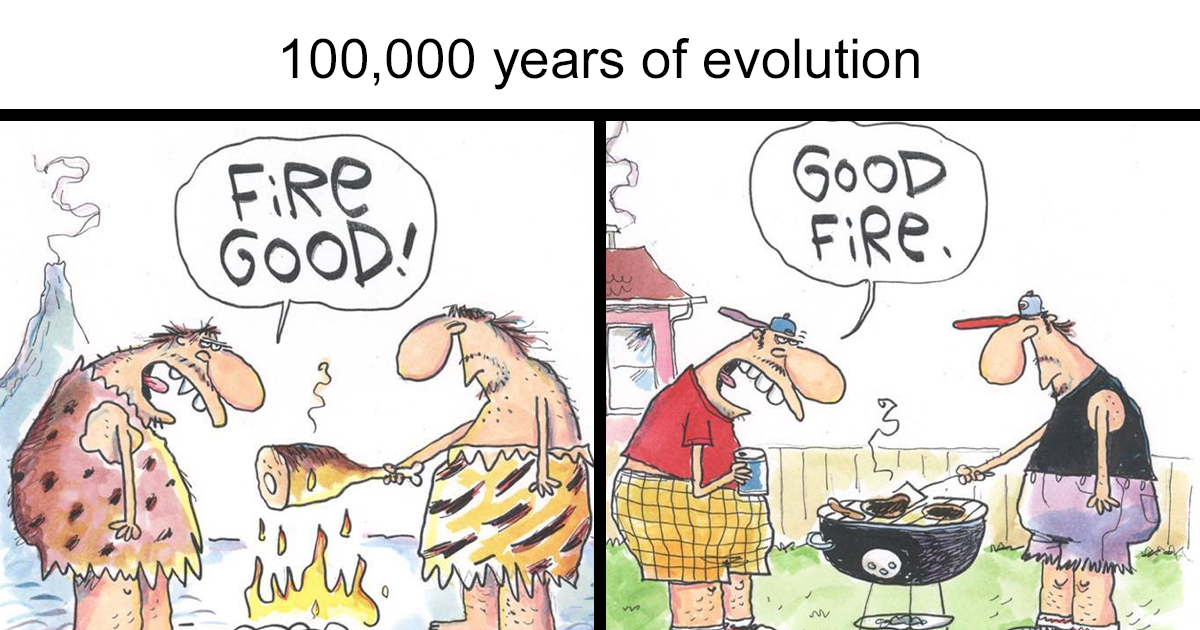
Note: This original article is based on publicly available information about Glenn McCoy’s career, including his syndicated comics, awards, animation work, and the broader context of the online collection of absurd life-humor comics.
Life is strange. Not “a raccoon in a tuxedo offering tax advice” strangealthough, honestly, that sounds like something a cartoonist could make workbut strange in the small, daily ways we almost stop noticing. A dog judges us from the carpet. A coworker says “circle back” like a medieval curse. A piece of technology breaks only when we need it most. These are the peculiarities that Glenn McCoy turns into comic gold: the tiny glitches in ordinary living that make us laugh because, deep down, we recognize the malfunction.
The collection titled 17 Brilliantly Absurd Comics By Glenn McCoy That Poke Fun At Life’s Peculiarities celebrates exactly that talent. McCoy’s cartoons don’t just chase jokes; they corner everyday reality, put a funny hat on it, and ask why we all agreed to behave this way. His absurd comics are quick, visual, and accessible, but they also have a sharp observational engine humming underneath. A good Glenn McCoy comic can make the reader laugh first and think secondwhich is basically the ideal order. Nobody wants to be lectured by a punchline wearing elbow patches.
Who Is Glenn McCoy?
Glenn McCoy is an American cartoonist, illustrator, animator, and children’s book author known for a remarkably broad career. He created the syndicated comic strip The Duplex, a long-running feature centered on neighborly friction, pets, romance, and the comic chaos of shared walls. He also works with his brother Gary McCoy on The Flying McCoys, a single-panel comic that leans into surreal gags, cultural observations, office humor, relationships, superheroes, animals, and anything else that can be pushed delightfully off balance.
McCoy’s background helps explain his range. He began drawing as a child, studied fine art and graphic design, worked as an editorial cartoonist, produced gag cartoons, created syndicated strips, illustrated books, and contributed to animation. That mix matters. Editorial cartooning trains an artist to make a point quickly. Gag cartooning teaches economy. Comic strips build character rhythm. Animation rewards visual timing. Put all of that together and you get a cartoonist who understands both the snap of a one-panel joke and the slow-burn absurdity of human behavior.
His professional recognition is also significant. McCoy has received multiple honors from the National Cartoonists Society across categories such as gag cartoons, greeting cards, newspaper comic strips, newspaper panels, and editorial cartooning. That kind of cross-category success is rare because each format demands a slightly different comic muscle. A greeting card joke needs instant warmth. A political cartoon needs bite. A daily strip needs consistency. A one-panel absurd comic needs the precision of a mousetrap, preferably one baited with existential dread and a tiny wedge of cheese.
Why Glenn McCoy’s Absurd Comics Work So Well
The best absurd comics are not random. They only look random from a distance, the way a junk drawer looks chaotic until you realize it contains exactly what civilization needs: batteries, mystery keys, a tape measure, and one pen that still works if you threaten it. McCoy’s humor often starts with a recognizable situation, then nudges it into a comic universe where logic behaves like it has had too much coffee.
1. He Begins With the Ordinary
One reason Glenn McCoy comics feel so relatable is that they usually begin in familiar territory. A home. An office. A pet-owner relationship. A neighborhood. A conversation between two people who are technically communicating but spiritually trapped in separate elevators. The setup is easy to enter because the reader already knows the world. Then McCoy bends one piece of it just far enough to create laughter.
This is classic absurd humor: take the normal and expose how weird it already is. A dog is not just a dog; it is a silent roommate with fur, legal immunity, and strong opinions about snacks. Office culture is not just work; it is a ritual system involving meetings, jargon, coffee, and the illusion that a spreadsheet can heal the soul. McCoy’s cartoons remind us that modern life does not need much exaggeration to become ridiculous. It is already standing there holding a clipboard.
2. He Uses One-Panel Efficiency
Many of McCoy’s funniest pieces work because they waste no space. A one-panel comic has to do several jobs at once: establish the setting, define the characters, create surprise, and land the punchline. There is no room for a long warm-up act. The drawing and caption must cooperate like two getaway drivers who remembered the map.
McCoy’s experience with syndicated panels and gag cartoons shows in that efficiency. The reader understands the scene quickly, then the twist arrives. Sometimes the joke comes from a caption that reverses the image. Sometimes it comes from a visual contradiction. Sometimes it comes from a character reacting with total seriousness to something completely ridiculous. That calm treatment of nonsense is one of the secret ingredients. Absurdity becomes funnier when the characters act as if it is perfectly normal.
3. He Lets Animals, Objects, and Monsters Behave Like People
Absurd comics often thrive when nonhuman characters adopt very human habits. Animals become sarcastic. Monsters become insecure. Superheroes become inconvenienced. Household objects seem to have agendas. This is not just silliness for silliness’ sake. By giving human logic to animals or fantasy characters, McCoy can make our own behavior look freshly bizarre.
For example, a pet with human-level judgment can reveal the ridiculous power dynamic of pet ownership: we buy the food, pay the bills, and still somehow serve as unpaid staff. A monster dealing with a normal inconvenience can make ordinary frustration feel mythic. A superhero placed in a mundane setting can shrink heroic drama down to the size of everyday irritation. The result is comedy that feels both silly and strangely accurate.
What the “17 Brilliantly Absurd Comics” Reveal About Life
A collection of 17 Glenn McCoy comics is not just a quick scroll of jokes. Read together, these kinds of cartoons form a miniature field guide to human oddness. They point at daily life and say, “Are we all seeing this, or has the printer jam finally broken our collective mind?”
Everyday Life Is Already a Cartoon
McCoy’s work often suggests that the distance between real life and cartoon life is thinner than we think. Consider how people behave around minor inconvenience. A slow internet connection can turn a peaceful adult into a tragic Shakespearean figure. A missing TV remote can cause a full archaeological expedition between couch cushions. A neighbor’s tiny habit can become the central conflict of suburban existence. These are not dramatic events, yet they feel enormous in the moment. Comics capture that emotional mismatch beautifully.
Human Logic Is Frequently Suspicious
Another recurring pleasure in absurd comics is watching human reasoning collapse under gentle pressure. We make rules, then immediately invent exceptions. We chase convenience until it becomes complicated. We buy devices to save time, then spend the saved time updating the devices. McCoy’s humor fits neatly into this territory because it does not have to attack modern life directly. It simply stages a situation where the logic reveals its own loose screws.
Relationships Are Funny Because Everyone Is Interpreting a Different Manual
Whether the relationship is romantic, neighborly, professional, or pet-based, McCoy’s comic world often turns on mismatched expectations. One character believes the conversation is about love. Another thinks it is about dinner. A dog believes it is about ownership of the couch. Someone is always operating with a private rulebook, and that is where the joke lives.
This is why his comics resonate beyond a single gag. Readers recognize the social pattern. We have all been in conversations where the words were clear but the meaning required a detective, a therapist, and possibly a referee. Humor gives us a safe way to admit that communication is difficult, people are weird, and pets may be winning.
The Craft Behind the Peculiar Punchline
Glenn McCoy’s style works because the absurdity is supported by craftsmanship. The drawings are readable. The characters are expressive. The situations are staged so the eye knows where to go. In strong cartooning, clarity is not boring; it is the runway that lets the joke take off without hitting a baggage cart.
His visual language also benefits from exaggeration. Faces, gestures, posture, and props do a lot of comedic work. A raised eyebrow can become a punchline’s assistant manager. A slumped shoulder can say, “I have seen too much,” without using a single word. A tiny background detail can turn a simple gag into a second joke for readers who linger. This layered approach rewards both quick scrolling and closer reading.
Another key element is restraint. Absurd comics can easily become overloaded, but McCoy often keeps the joke focused. One twist. One strong idea. One comic contradiction. That discipline makes the humor feel polished instead of noisy. It also makes the cartoons highly shareable, which matters in the modern web environment. A good absurd comic is snackable, but not empty. It gives the reader a laugh, a little recognition, and perhaps the unsettling feeling that their toaster has been judging them for years.
Why Readers Love Absurd Comics in the First Place
Absurd comics are popular because they offer relief without requiring denial. They do not say life is simple. They say life is complicated, strange, and occasionally shaped like a penguin in a business meetingbut at least we can laugh about it. In that sense, McCoy’s comics function like tiny pressure valves. They let readers release frustration by seeing familiar problems transformed into playful nonsense.
This is especially true online, where people encounter comics in the middle of busy days. A single panel can interrupt a spiral of emails, errands, headlines, and responsibilities. It asks for only a few seconds and pays back with a laugh. That is a generous exchange rate. In a digital world stuffed with long arguments and suspicious wellness advice, a cleanly delivered cartoon can feel almost medicinal. Not FDA-approved, perhaps, but emotionally useful.
There is also comfort in absurdity. When a comic exaggerates life’s peculiarities, it confirms that other people have noticed them too. The reader is not alone in thinking the world is odd. Someone else has seen the same weirdness and drawn it with better linework. That shared recognition creates a small community around the joke.
How Glenn McCoy Fits Into the Tradition of American Cartoon Humor
American cartoon humor has long enjoyed turning ordinary life into a stage for exaggeration. Newspaper strips, magazine gag cartoons, editorial cartoons, greeting cards, and animated shorts all rely on the same basic magic: compress an idea until it becomes instantly understandable and funny. McCoy’s career crosses many of those forms, which gives his absurd comics a broad comic vocabulary.
In The Duplex, he can explore ongoing character dynamics. In The Flying McCoys, he can leap from one strange premise to the next. In illustration and animation, he can emphasize motion, timing, and visual design. The result is a body of work that feels adaptable. One joke might be rooted in domestic life. Another might involve fantasy or pop-culture logic. Another might poke fun at the rituals of work, consumerism, or social behavior. The through-line is McCoy’s eye for the little contradiction that makes a scene funny.
Experience: Reading Glenn McCoy’s Comics After a Very Normal, Very Ridiculous Day
There is a particular kind of day that makes absurd comics feel essential. Nothing catastrophic happens. The roof does not collapse. No one challenges you to a duel in the grocery store. But everything is just slightly wrong. The coffee tastes like it was brewed in a committee meeting. Your phone battery drops from 38 percent to 4 percent as if it has received bad news. Someone sends an email that says “friendly reminder,” which is never friendly and always a reminder. By the time you sit down, your brain feels like a browser with 47 tabs open and one of them is playing music.
That is exactly when a Glenn McCoy comic lands best. You see a familiar setupan office, a pet, a conversation, a strange little collision between common sense and nonsenseand suddenly the day has a frame around it. The frustration becomes funny because the comic translates it. It takes that vague feeling of “Why is everything like this?” and turns it into a clean visual joke. The laugh is small, but it resets something. It says, “Yes, life is odd. No, you are not the only one who noticed.”
What makes these comics especially satisfying is that they do not require the reader to be in a perfect mood. In fact, they may work better when you are mildly annoyed. Absurd humor does not demand optimism. It simply asks you to admit that reality has been behaving suspiciously. A pet acting like a tiny landlord, a workplace conversation spiraling into nonsense, or a fantasy character facing a mundane inconvenience can all make ordinary irritation feel less personal. The joke absorbs the stress and hands it back wearing a rubber nose.
There is also a quiet pleasure in the speed of the experience. A comic does not ask for a half-hour commitment. It does not require a password reset, a subscription onboarding sequence, or a twelve-step journey toward inner peace. You look, you read, you laugh, and you move on slightly lighter. That simplicity is underrated. In a world where entertainment often arrives as homework with better graphics, the one-panel comic remains beautifully efficient.
The best experience of reading McCoy’s absurd comics is the aftereffect. Later, real life starts to look more cartoonish. A dog staring at an empty food bowl becomes a courtroom drama. A printer jam becomes a mechanical protest. A neighbor’s leaf blower becomes a mythological beast. The comics train you to notice the punchlines hiding in plain sight. That does not make life less peculiar, but it does make the peculiarities easier to enjoy. And honestly, if we have to live in a world full of traffic cones, password rules, and microwaves that beep with emotional urgency, we might as well bring a cartoonist’s eye with us.
Conclusion
17 Brilliantly Absurd Comics By Glenn McCoy That Poke Fun At Life’s Peculiarities is more than a catchy title for a funny collection. It points to the heart of McCoy’s appeal: his ability to turn daily weirdness into crisp, surprising, highly relatable cartoon humor. His work succeeds because it is clear, disciplined, expressive, and rooted in recognizable human behavioreven when the scene itself wanders cheerfully into the absurd.
Glenn McCoy’s comics remind us that life does not have to be grand to be hilarious. Sometimes the funniest material is right there in the living room, the office, the grocery aisle, the neighbor’s yard, or the suspicious silence of a pet who definitely did something. His cartoons poke fun at life’s peculiarities because those peculiarities are everywhere. We just need the right artist to point at them and say, with perfect timing, “See? That is weird.”












