
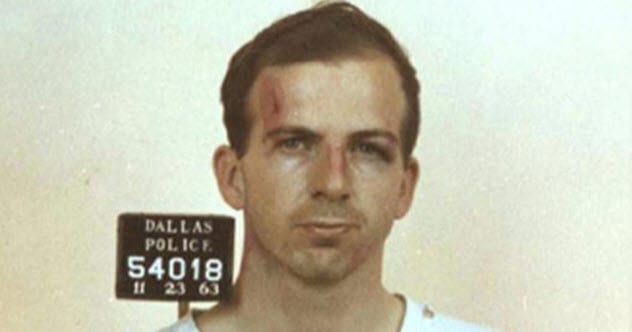
Few criminal cases have inspired more books, documentaries, arguments, diagrams, suspicious arrows, and late-night television specials than the assassination of President John F. Kennedy. More than six decades after the shots rang out in Dealey Plaza, the central question still attracts fierce debate: Did Lee Harvey Oswald kill JFK?
Oswald never stood trial. Two days after the assassination, Dallas nightclub owner Jack Ruby shot him inside police headquarters. That extraordinary interruption deprived the public of an adversarial courtroom examination in which prosecutors would have presented evidence and defense lawyers would have challenged it. Instead, history inherited government investigations, witness statements, photographs, laboratory reports, and enough controversy to keep several forests employed as book paper.
The Warren Commission concluded in 1964 that Oswald fired the shots that killed Kennedy and wounded Texas Governor John Connally. The House Select Committee on Assassinations later agreed that Oswald fired three shots from the Texas School Book Depository, although it controversially suggested that a conspiracy was probable. A subsequent scientific review rejected the acoustic analysis behind the committee’s second-gunman theory.
The distinction matters. Evidence identifying Oswald as a gunman does not automatically settle every question about whether anyone encouraged, assisted, or knew about his actions. With that important caveat, here are 10 major pieces of evidence pointing to Lee Harvey Oswald as JFK’s killer.
1. The Assassination Rifle Was Traced to Oswald
The most direct starting point is the 6.5-millimeter Mannlicher-Carcano rifle found on the sixth floor of the Texas School Book Depository. Its serial number was C2766, allowing investigators to follow a documentary trail from the distributor to Klein’s Sporting Goods in Chicago.
Klein’s records showed that the rifle had been ordered by someone using the name “A. Hidell” and sent to Post Office Box 2915 in Dallas. That box was rented by Lee Harvey Oswald. Handwriting specialists compared the order coupon, envelope, and postal money order with known examples of Oswald’s writing and concluded that he had completed them.
The alias was not an unrelated coincidence. When officers arrested Oswald, he possessed identification bearing the name Alek James Hidell. In other words, the rifle was mailed to Oswald’s post office box under an alias he personally used. That paper trail is about as subtle as ordering a suspicious package under your secret name and then carrying an ID card announcing the same secret name.
2. Ballistics Connected the Rifle to the Crime Scene
Ownership alone would not establish that the Carcano was fired at Kennedy. The ballistics evidence supplied the next link.
Investigators found three spent cartridge cases near the southeast-corner window on the Depository’s sixth floor. Firearms examiners concluded that all three had been fired in rifle C2766. A nearly intact bullet discovered at Parkland Memorial Hospital and two substantial bullet fragments recovered from the presidential limousine were also identified as having been fired through that rifle’s barrel.
The precise history of the nearly intact hospital bullet has generated decades of argument, particularly because the employee who found it could not say with certainty which of two nearby stretchers it had fallen from. Nevertheless, the microscopic identification of that bullet and the limousine fragments with the Depository rifle remains a central element of the case.
Later experts working for the House Select Committee reexamined the firearms evidence and again concluded that the rifle found in the building had fired the recovered cartridge cases and identifiable bullet material.
3. Oswald’s Palmprint Was Found on the Rifle
A palmprint identified as Oswald’s was lifted from the underside of the rifle barrel. Its location was important because that section was normally covered by the wooden stock when the weapon was assembled.
The print therefore indicated that Oswald had handled the Carcano while it was disassembled. Multiple fingerprint specialists reviewed the print and identified it as his right palm. Investigators could not determine exactly when he left it, so the print does not function like a timestamp reading “12:29 p.m., November 22.” It does, however, reinforce the documentary evidence that the rifle belonged to him and had been physically handled by him.
Fibers caught in a crevice near the rifle’s butt plate were also consistent with fibers from the shirt Oswald was wearing when arrested. Fiber analysis could not establish that the material came exclusively from that particular shirt, making it supporting evidence rather than a forensic mic drop.
4. Photographs Showed Oswald Holding the Rifle
Several photographs taken in Oswald’s backyard show him holding a rifle, carrying a pistol, and displaying political newspapers. Oswald claimed that the images were fake composites, with his head placed on another man’s body.
The photographs were subjected to repeated analysis. The House Select Committee’s photographic specialists examined original materials, camera characteristics, shadows, body proportions, and identifying marks on the weapon. They reported finding no evidence that the images had been fabricated.
The rifle depicted in the photographs was found to be the same weapon recovered from the Depository. Investigators also discovered a copy given to Oswald’s friend George de Mohrenschildt. It contained an inscription signed “Lee Harvey Oswald,” and handwriting specialists attributed the writing to Oswald.
The photographs do not prove that he pulled the trigger in Dealey Plaza, but they seriously weaken any claim that the rifle was an unknown weapon planted in the building without a prior connection to him.
5. A Long Package and the “Curtain Rods” Story
On the evening before the assassination, Oswald made an unusual Thursday visit to the Irving home where his wife was staying. He normally visited on weekends. Coworker Buell Wesley Frazier drove him there and brought him back to work the next morning.
Oswald reportedly explained that he wanted to collect curtain rods for his Dallas room. On Friday morning, witnesses saw him carrying a long brown-paper package to the Depository. He again said it contained curtain rods.
No curtain rods were discovered in the building, his rented room already had them, and the rods stored in the Irving garage remained there. Meanwhile, the blanket in which Marina Oswald said the rifle had been stored was empty after the assassination.
A long handmade paper bag was found close to the sniper’s window. Oswald’s fingerprint and palmprint were developed on it, and its paper and tape matched materials available in the Depository’s shipping area.
Witness estimates of the package’s length were shorter than the disassembled rifle’s largest component, a discrepancy critics rightly discuss. Yet the combination of the unexplained package, false curtain-rod explanation, empty rifle blanket, paper bag, and Oswald’s prints formed a substantial circumstantial chain.
6. His Prints Were in the Sixth-Floor Sniper’s Nest
Boxes had been arranged around the southeast-corner window to create a concealed firing position and a possible rifle rest. Investigators identified Oswald’s prints on two cartons associated with that area, as well as on the nearby paper bag.
Because Oswald worked in the building and regularly handled boxes, a print on an ordinary carton was not automatically sinister. Context gives the evidence its weight. The cartons had been moved and positioned at the window from which witnesses reported seeing a rifle. One palmprint was located in a position consistent with someone steadying himself while seated beside the firing point.
The House Select Committee acknowledged the innocent explanation that Oswald’s job gave him access to the materials. Even so, it concluded that the arrangement of the cartons and proximity of the bag made his prints relevant to the preparation of the sniper’s nest.
7. Oswald Had Access, Opportunity, and No Confirmed Alibi
Oswald worked mainly on the first and sixth floors, retrieving schoolbooks and taking them downstairs. Coworkers placed him on or near the sixth floor during the morning of November 22. He therefore had legitimate access to the exact area from which the shots were traced.
No reliable witness placed him somewhere else at 12:30 p.m. Employees who ate lunch or watched the motorcade offered accounts that helped reconstruct the building’s movements, but none supplied Oswald with a firm alibi during the shooting.
Approximately two minutes afterward, Dallas motorcycle officer Marrion Baker and building superintendent Roy Truly encountered Oswald in the second-floor lunchroom. Tests indicated that a person could travel from the sixth-floor window to that location within the available time.
That lunchroom encounter is sometimes presented as proof of innocence because Oswald did not appear obviously breathless or panicked. At most, it shows that he looked composed during a brief encounter. It does not make the stairway physically disappear.
8. Witnesses and Physical Evidence Pointed to the Depository Window
Several witnesses reported seeing either a man, a rifle, or both at the southeast sixth-floor window. Depository employees directly below the sniper’s nest heard shots and the sounds of cartridge cases falling on the floor above them.
Howard Brennan, positioned across from the building, described a slender white man firing from the window. His identification of Oswald was not perfectly consistent: on the day of the assassination, he selected Oswald as the person who most resembled the gunman but initially stopped short of a positive identification. He later said he was sure.
That hesitation means Brennan’s testimony should not be treated as flawless eyewitness proof. Human memory is not a security camera with excellent customer support. Still, his immediate description generally resembled Oswald, and it aligned with the physical evidence locating the rifle, cartridge cases, and firing position on the sixth floor.
9. Oswald Left Work and Became the Missing Employee
Within minutes of the shooting, Oswald left the Depository without obtaining permission and without waiting for the normal end of his shift. He traveled by bus and taxi to his rented room in Oak Cliff, changed or added clothing, collected his revolver, and departed again.
His disappearance became noteworthy when building superintendent Roy Truly noticed that Oswald was missing while employees were being identified and questioned. Leaving the building was not illegal, and panic could explain unusual behavior after a presidential shooting. In context, however, his rapid departure fits the prosecution-style interpretation of a gunman escaping before police sealed the exits.
Investigators also reported that Oswald gave false or conflicting statements about the rifle, the alias Hidell, the long package, and his movements. Lies do not independently prove murder, but knowingly false explanations about evidence tied to a murder can demonstrate consciousness of guilt.
10. The Tippit Murder and Oswald’s Arrest Strengthened the Case
About 45 minutes after Kennedy was shot, Dallas police officer J. D. Tippit stopped a pedestrian in Oak Cliff. Witnesses said the man shot Tippit and fled while discarding cartridge cases.
Multiple witnesses identified Oswald as either the shooter or the fleeing armed man. Four cartridge cases recovered near the scene were matched to the revolver taken from Oswald during his arrest at the Texas Theatre. The bullets removed from Tippit’s body were too damaged for equally conclusive identification, although their general rifling characteristics were compatible with the weapon.
Oswald entered the theater without purchasing a ticket and appeared to be avoiding nearby police activity. When officers approached him, he resisted arrest and drew his loaded revolver. Witnesses described an attempt to fire it during the struggle, although the weapon did not discharge.
The Tippit killing was a separate crime, but both the Warren Commission and the House Select Committee considered it consistent with the behavior of someone fleeing the presidential assassination. It placed Oswald in possession of a recently used murder weapon while actively resisting police less than 90 minutes after Kennedy was shot.
How the Evidence Works as a Cumulative Case
No single item answers every question. A rifle purchase proves ownership, not use. A print proves handling, not the moment it was handled. A suspicious departure can have an innocent explanation. An eyewitness can be mistaken.
The force of the case comes from convergence. The rifle was purchased by Oswald under his alias. Bullets and cartridge cases were tied to that rifle. His palmprint was on the weapon. Photographs showed him holding it. A package linked to him appeared at work on the morning of the assassination. His prints were found around the firing position. He had access to the sixth floor, lacked a confirmed alibi, left the building, and was soon connected by physical and eyewitness evidence to the murder of Officer Tippit.
A skeptic may challenge individual links, and responsible historical analysis should examine those challenges. Explaining the entire chain away, however, requires a much larger series of coincidences, errors, fabrications, or evidence-planting events than rejecting any single piece in isolation.
Experiences That Help Readers Understand the Oswald Evidence
Experience the Geography of Dealey Plaza
Standing in Dealey Plazaor studying a detailed three-dimensional mapchanges the case from an abstract collection of names into a physical event. The Depository window, Elm Street, the grassy knoll, the railroad area, and the triple underpass occupy a surprisingly compact space. Seeing the angles helps explain why witnesses disagreed about the direction of the shots. Hard surfaces, buildings, and the underpass produced echoes that made a sharp rifle report difficult to locate.
The visit also demonstrates that Kennedy’s limousine was traveling away from the southeast window. The target was moving, but the distances were not extraordinary for a shooter using a telescopic sight. Geography does not identify the shooter by itself, yet it makes the trajectory evidence easier to evaluate without relying on dramatic movie recreations.
Walk Through the Former Depository
The Sixth Floor Museum occupies the former Texas School Book Depository and preserves the historical setting around the sniper’s perch. Experiencing the building highlights how an employee could move between floors, how boxes obstructed sightlines, and how the southeast corner offered concealment from much of the open warehouse.
It also makes clear why Oswald’s employment mattered. He did not need to break into a secured military installation or sneak past laser beams. He had ordinary workplace access. Sometimes history turns not on an elaborate supervillain headquarters but on a familiar stairway, stacked cartons, and an employee whom nobody had reason to stop.
Read the Original Testimony Instead of Only Summaries
Reading witness testimony can be both illuminating and frustrating. People misremember times, change estimates, use uncertain language, and occasionally contradict themselves. That experience is valuable because it reveals why cherry-picking one sentence can distort the record.
Brennan’s identification, Frazier’s package estimate, Marina Oswald’s statements, and the lunchroom timeline all become more complicated when read in context. The original record rarely behaves like a polished television script. It is repetitive, imperfect, and human. Strong conclusions should therefore depend on corroboration between witnesses, documents, photographs, and physical evidence rather than on one unusually confident quotation.
Reconstruct the Timeline
Creating a simple timeline is one of the most useful research experiences. Begin with the shooting at approximately 12:30 p.m., then place the lunchroom encounter, Oswald’s exit, bus and taxi travel, rooming-house visit, Tippit shooting, theater entry, and arrest in sequence.
This exercise shows that the official account requires fast movement but not teleportation. It also exposes the importance of estimates. A difference of two or three minutes can affect whether a proposed route appears comfortable or nearly impossible. Researchers should mark uncertain times as ranges instead of forcing every event into a precise minute merely because precision looks impressive in a spreadsheet.
Compare Official Findings With Serious Criticism
A balanced experience involves reading both the evidence against Oswald and the strongest objections to it. Critics question evidence handling, witness reliability, the paper bag, the hospital bullet’s chain of custody, intelligence-agency disclosures, and whether government investigators adequately explored conspiracy.
Those concerns deserve examination. The House Select Committee itself said the original investigation of a possible conspiracy was inadequate even while affirming the evidence of Oswald’s responsibility. Later document releases have revealed more about what intelligence agencies knew of Oswald before the assassination, but they have not erased the rifle, ballistics, prints, photographs, or Tippit evidence.
The most productive lesson is that two propositions can coexist: government agencies may have withheld information or performed poorly, and the physical case identifying Oswald as a shooter may still be strong. History is rude that way. It refuses to arrange every fact into two tidy boxes labeled “official story” and “grand conspiracy.”
Conclusion
Lee Harvey Oswald’s death prevented a trial that might have tested the evidence in public and produced a legal verdict. Consequently, discussions of his guilt must distinguish between an official historical conclusion and a conviction reached by a jury.
Even with that limitation, the evidence pointing to Oswald is substantial. The assassination rifle was purchased through his alias and delivered to his post office box. His print was on the weapon. Photographs showed him holding it. Ballistics linked the rifle to cartridge cases and bullet evidence from the shooting. His prints and a paper bag connected him to the sixth-floor firing area. He had access and opportunity, left the building, gave questionable explanations, and was arrested with a revolver linked to Officer Tippit’s murder.
Reasonable people continue to debate whether Oswald acted entirely alone, whether agencies concealed embarrassing information, and whether every conclusion of the Warren Commission was justified. Those unresolved arguments should not obscure the narrower point: the cumulative physical, documentary, photographic, and behavioral evidence strongly identifies Lee Harvey Oswald as the man who fired at President Kennedy from the Texas School Book Depository.











