
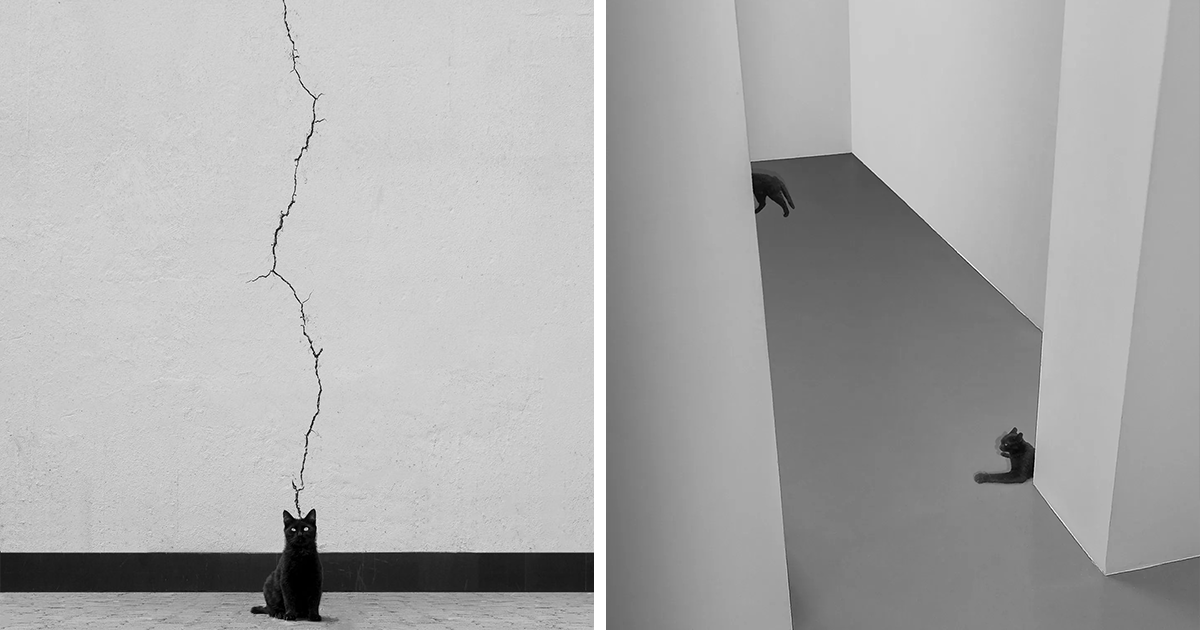
Minimalist photography is the visual equivalent of saying a lot with one raised eyebrow. No clutter, no frantic decoration, no “let’s add twelve more things just in case.” Instead, it relies on space, silence, geometry, light, and the occasional tiny human figure who looks as if they wandered into a dream designed by an architect with excellent taste.
That is exactly why the work of Ali Zolghadri feels so striking. Known for minimalist fine art photography and black-and-white conceptual images, Zolghadri builds scenes where emptiness is not empty at all. A wall becomes a stage. A shadow becomes a sentence. A single person standing under a vast structure suddenly feels like the main character in a quiet film about existence, architecture, and possibly whether they remembered to turn off the stove.
The collection suggested by the title “49 Striking Images By The Photographer Who Turns Minimalism Into Art” is more than a gallery of beautiful photographs. It is a lesson in how restraint can create drama. In an internet world stuffed with bright colors, loud thumbnails, and captions that shout like they have had six coffees, these images whisperand somehow win the room.
Who Is Ali Zolghadri?
Ali Zolghadri is an Iranian-born fine art photographer associated with minimalist, conceptual, and black-and-white photography. His work often explores solitude, silence, form, emptiness, and the emotional relationship between human figures and built environments. Many of his images use architectural surfaces, clean lines, stairs, walls, roads, windows, and open spaces to create compositions that feel both simple and deeply poetic.
What makes his photography memorable is not just technical control. Plenty of photographers can compose a clean image. Zolghadri’s gift is turning ordinary urban elements into visual metaphors. A person walking beside a massive wall is not merely “a person walking beside a wall.” It becomes a study of scale, vulnerability, direction, and mood. A repetitive building pattern becomes a rhythm. A tiny figure in a wide frame becomes a question mark with shoes.
His images have the polished calm of fine art photography, but they also contain the emotional pull of street photography. They are structured, but not cold. They are quiet, but not boring. They remove almost everything, then make what remains feel unavoidable.
Why Minimalist Photography Works So Well
Minimalism has a long relationship with modern art, design, architecture, and photography. In visual art, the minimalist tradition often emphasizes simple forms, repetition, clean surfaces, industrial materials, and direct experience. In photography, the same spirit appears through negative space, limited subject matter, strong geometry, controlled contrast, and careful framing.
The magic is subtraction. A minimalist photographer does not ask, “What else can I include?” The better question is, “What can I remove without weakening the image?” When the answer is “nearly everything,” the photograph starts breathing.
Negative Space Becomes the Main Character
Negative space is the open area around the subject. It might be a blank wall, a pale sky, a sheet of concrete, a shadowed street, a smooth building facade, or a quiet patch of water. In weak photographs, empty space can look accidental. In strong minimalist photography, empty space creates tension, scale, and emotional focus.
Zolghadri uses negative space like a composer uses silence. It gives the subject room to matter. A lone figure placed against a massive blank surface feels small, but not insignificant. The emptiness around them becomes psychological. It says: look closer, slow down, there is more happening here than noise would allow.
Black and White Removes Distraction
Many of Zolghadri’s most recognizable photographs are black and white. This choice is not just stylish, although yes, it does make everything look as if it belongs in a gallery with very calm lighting and suspiciously expensive chairs. Black and white photography strips away the emotional noise of color and pushes the viewer toward shape, light, shadow, texture, and composition.
Without color, the eye studies contrast. Lines become stronger. Human figures become silhouettes. Concrete, glass, sky, and shadow turn into design elements. The image feels timeless because it is no longer tied to the color trends of a specific moment. Nobody looks at a strong black-and-white minimalist image and says, “Ah yes, that photo is clearly from the avocado-toast filter era.”
The Art of Turning Ordinary Spaces Into Visual Poetry
One of the best things about Zolghadri’s minimalist photography is that it does not depend on obviously spectacular locations. There are no exploding volcanoes, no glowing castles, no dramatic wildlife battles, and no influencer holding a hat on a cliff. Instead, he finds visual power in walls, streets, building patterns, shadows, and lonely corners of the city.
That is the great promise of minimalist photography: the world is already full of compositions. The photographer simply has to notice them before everyone else walks past while checking their phone.
Architecture as a Stage
Architecture plays a central role in these images. Large buildings provide geometry, scale, texture, and repetition. A staircase can become a diagonal line of tension. A row of windows can become a pattern. A curved road can guide the eye like a visual sentence. A single balcony detail can disrupt repetition just enough to become funny, strange, or quietly human.
In one type of image, a lone person appears beside a huge wall with a bare tree above. The composition feels almost theatrical: the wall is the backdrop, the tree is the prop, the person is the actor, and the open space is the pause before the monologue. In another, a small figure runs near a large geometric building, making the structure seem monumental and the person seem both fragile and wonderfully alive.
Small Humans, Big Spaces
Zolghadri often uses human figures as scale markers and emotional anchors. The people in his images are usually small within the frame. They rarely dominate the scene physically, but they dominate it emotionally. The eye finds them immediately because the composition has been cleared of clutter.
This tiny-person-big-world approach gives the work a philosophical quality. It suggests solitude without melodrama. It makes the viewer think about movement, time, urban life, and the relationship between individuals and the spaces they pass through every day. Basically, it turns “someone walking near a building” into “a visual essay on modern existence,” which is quite a promotion for someone who may simply be late for lunch.
49 Images, One Consistent Visual Language
A collection of 49 minimalist images can easily become repetitive if the photographer has only one trick. Zolghadri avoids that by varying rhythm, scale, angle, shadow, and concept. Some images feel architectural. Others feel surreal. Some rely on strong lines; others on large quiet surfaces. Some are almost humorous, while others feel meditative.
For example, a crosswalk image with a bent line and a small cloud-like form beneath it turns a familiar street marking into a visual joke with poetic timing. A photograph of repetitive balconies disrupted by one hanging towel transforms a building facade into a study of pattern and individuality. A lone figure between towering modern buildings creates a sense of cinematic mystery, as if the city itself has become a canyon.
These photographs do not need many objects because each element has a job. The subject, the shadow, the line, the void, and the frame all cooperate. Nothing feels decorative for decoration’s sake. Minimalist photography is not about having less because the photographer forgot to include more. It is about creating enough.
What Makes These Images “Striking”?
The word “striking” matters. Minimalist images can be calm, but calm does not mean weak. The best minimalist photos hit quickly because their structure is clear. You do not need five minutes to understand where to look. The composition points you there with the confidence of a museum guard who knows exactly which door you are supposed to use.
Strong Composition
Every successful minimalist image depends on composition. Placement is everything. Move the subject slightly too far left, and the balance collapses. Add one distracting object, and the spell breaks. Crop too tightly, and the negative space loses its emotional power. Crop too loosely, and the image may feel empty instead of intentional.
Zolghadri’s work shows careful attention to balance. Lines guide the eye. Empty areas support the subject. Shadows create depth. Human figures often appear at precise points in the frame, giving the photograph a sense of inevitability. It feels as if the image could not be arranged any other way.
Emotional Restraint
Another reason these photographs work is emotional restraint. They do not explain too much. They leave room for interpretation. A lone person may suggest solitude, freedom, uncertainty, patience, or hope. A wall may feel protective or oppressive depending on the light. A shadow may feel elegant, mysterious, or slightly suspicious.
This openness invites viewers to participate. The image does not tell you exactly what to feel; it creates a space where feeling can happen. That is one reason minimalist fine art photography has such lasting appeal. It respects the viewer’s imagination.
Lessons Photographers Can Learn From This Style
You do not need a giant studio, rare equipment, or a secret tunnel to the Museum of Modern Art to learn from Zolghadri’s minimalist approach. What you need is patience, observation, and the courage to take things out of the frame.
Start With One Subject
Minimalist photography often begins with one subject: a person, a window, a tree, a chair, a staircase, a car, a shadow, or a bright shape against a plain background. The subject does not need to be dramatic. It needs to be clear. Ask yourself whether the viewer can understand the visual idea quickly.
Look for Clean Backgrounds
Walls, skies, empty streets, fog, water, snow, concrete, and simple building facades can all become useful negative space. The cleaner the background, the more powerful a small subject can become. The trick is to make the empty area feel intentional rather than leftover.
Use Lines Like Arrows
Architecture is full of lines: railings, windows, stairs, roof edges, road markings, shadows, and corridors. Lines can lead the eye toward the subject or create visual rhythm. In minimalist photography, one strong line can do the work of ten decorative details. Lines are the introverts of composition: quiet, useful, and secretly running the whole event.
Wait for the Human Moment
A clean architectural scene can be beautiful, but a small human gesture often gives it life. Wait for someone to enter the frame, walk into the light, pause near a wall, climb stairs, or cross a geometric space. The person does not need to pose. In fact, the image may feel stronger when the gesture is natural.
Why Minimalism Feels So Modern Right Now
Minimalist photography feels especially relevant because modern life is visually crowded. Screens compete for attention. Social media rewards speed. Advertising fills every available surface. Even our refrigerators now seem to have opinions. Against that background, minimalist images offer relief.
They give the eye a place to rest. They make attention feel possible again. They remind viewers that beauty does not always arrive wearing fireworks. Sometimes it shows up as a person crossing a quiet space, a shadow falling across concrete, or a single irregular detail interrupting a perfect pattern.
This is why Zolghadri’s work connects so strongly with contemporary audiences. His photographs feel both ancient and modern. They echo old artistic ideas about form, silence, and balance, while also speaking directly to the overstimulated digital viewer. They are calm enough to breathe with and sharp enough to remember.
Experience: Spending Time With 49 Minimalist Images
Viewing a large collection of minimalist photographs is a different experience from scrolling through ordinary image galleries. At first, the eye expects more. More color, more action, more subjects, more captions, more “wow.” But after a few images, something changes. The pace slows. You begin noticing the smallest details: the angle of a shadow, the curve of a road, the way a person’s dark silhouette balances a pale wall, the single object that breaks a repeating pattern.
That shift is part of the pleasure. Minimalist photography trains the viewer to become more sensitive. It is almost like visual meditation, except you do not have to sit cross-legged or pretend your knees are fine. The images reward patience. The longer you look, the more they reveal.
One experience that stands out with Zolghadri’s style is the feeling of scale. Many images make the human figure look small, but not meaningless. Instead, the person becomes essential precisely because the surrounding space is so vast. The emptiness magnifies the figure. A tiny person in a huge composition can feel more emotionally powerful than a close-up portrait because the viewer senses the relationship between the person and the world around them.
Another strong experience is the quiet humor hidden in some minimalist scenes. Minimalism is often treated as very serious, as if every white wall must be accompanied by a graduate thesis and a tiny cup of espresso. But Zolghadri’s visual world can also be playful. A strange line, a perfectly placed figure, or an unexpected object can make the image feel witty without becoming loud. The humor is dry, elegant, and wonderfully understated.
There is also a practical lesson in these photographs: better seeing often matters more than better gear. The camera records the frame, but the photographer creates the order. Looking at these images, you start imagining similar possibilities in everyday places. A parking garage becomes a study in lines. A blank wall becomes a backdrop. A person waiting at a bus stop becomes a silhouette. The city stops looking ordinary and starts looking like an unfinished gallery.
After spending time with 49 striking minimalist images, the viewer may walk away with a quieter eye. That is a real gift. Instead of chasing visual noise, you begin looking for balance. Instead of filling every frame, you start respecting space. Instead of assuming art must be complicated, you remember that simplicity can be bold, emotional, and unforgettable.
Ali Zolghadri’s photography proves that minimalism is not about emptiness. It is about attention. It is about knowing what belongs in the frame and having the discipline to leave the rest outside. In a world that constantly asks for more, these images make a convincing case for lessand somehow, less feels enormous.
Conclusion
“49 Striking Images By The Photographer Who Turns Minimalism Into Art” is more than a catchy title. It describes a visual philosophy. Through black-and-white tones, architectural geometry, negative space, and carefully placed human figures, Ali Zolghadri transforms everyday scenes into quiet works of fine art.
His minimalist photography reminds us that an image does not need to shout to be powerful. Sometimes the most memorable photograph is the one that removes the clutter, clears the air, and leaves us alone with a shape, a shadow, a person, and a feeling we cannot quite name. That is the beauty of minimalism: it says less, but it stays longer.
Note: This article is written as original, publication-ready content based on publicly available information about Ali Zolghadri, minimalist photography, negative space, black-and-white composition, and modern minimalist art principles. No source links or citation placeholders are included in the article body.












