
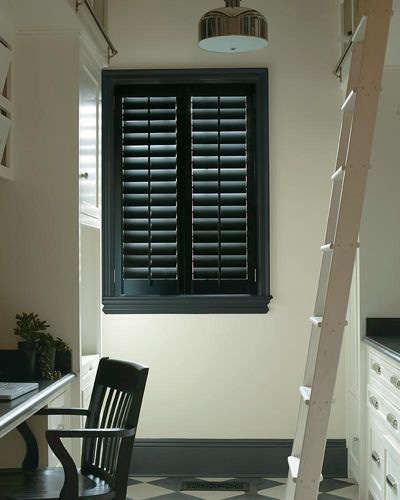
Some window treatments politely blend into the background. 2 1/2-inch louver wood shutters do something more ambitious: they become part of the architecture. Their narrow, neatly spaced louvers create a tailored appearance that feels equally comfortable in a Colonial home, a Craftsman bungalow, a cottage kitchen, or a traditional living room where the furniture has actual names instead of model numbers.
The 2 1/2-inch louver is considered a classic shutter size. It provides precise control over sunlight and privacy while giving windows more visual detail than wider 3 1/2-inch or 4 1/2-inch louvers. It is especially attractive on smaller windows, café-style installations, and interiors where a historically inspired appearance matters more than following the latest oversized-everything design trend.
However, choosing wood shutters involves more than pointing at a sample and saying, “That one looks nice.” Louver size, wood species, finish, mounting depth, panel configuration, humidity, window hardware, and cleaning habits all affect the final result. This guide explains how 2 1/2-inch wood shutters perform, where they work best, and what to check before placing a custom order.
What Are 2 1/2-Inch Louver Wood Shutters?
A wood shutter consists of a rigid frame containing horizontal slats called louvers. The louvers rotate together, allowing the homeowner to admit light, redirect glare, improve privacy, or close the opening almost completely. In this case, each louver measures approximately 2 1/2 inches from its front edge to its back edge.
That measurement describes the depth of the louver, not the visible gap between louvers. When the shutters are closed, the slats overlap to form a mostly solid barrier. When they are tilted open, daylight passes between them and the room gains a view through the window.
The Main Parts of a Wood Shutter
The vertical sides of each shutter panel are called stiles, while the horizontal structural pieces are known as rails. The louvers sit between the stiles and are connected by either a visible front tilt rod or a concealed rear control system. Hinges attach the panels to a surrounding frame or hanging strip.
Some shutters also include a divider rail. This fixed horizontal rail separates the upper and lower louver sections, allowing them to operate independently. You can close the lower section for privacy while leaving the upper section open for daylightan excellent arrangement for street-facing rooms where waving at every passing dog walker is not on the daily schedule.
Why Choose a 2 1/2-Inch Louver?
A Traditional, Detailed Appearance
The strongest argument for 2 1/2-inch louver shutters is their classic scale. Narrow louvers create more horizontal lines across the window, producing a detailed and structured appearance. This proportion works particularly well with traditional trim, divided-light windows, decorative molding, and rooms furnished with antiques or natural materials.
They can also help a new interior feel more established. Painted white shutters add crisp architectural definition, while stained wood shutters introduce warmth and visible grain. The effect is closer to custom millwork than a temporary window covering.
Excellent Privacy Control
Smaller louvers offer fine control over the angle of incoming light. A slight tilt can brighten the ceiling while limiting direct views from outside. Close them further, and the room becomes more private without requiring curtains to be pulled across the entire window.
This makes 2 1/2-inch shutters practical for bedrooms, home offices, dining rooms, and ground-floor spaces facing sidewalks or neighboring homes. They are also well suited to café-style shutters, which cover only the lower portion of a window and leave the top open.
A Proportion That Flatters Small Windows
Large louvers can overwhelm a compact opening. On a narrow bathroom window, short kitchen window, or smaller double-hung sash, 2 1/2-inch louvers often look more balanced. Their scale complements the glass rather than making the shutter resemble a tiny fence that has wandered indoors.
The smaller louver size can also require less clearance than a wider louver, although exact depth requirements depend on the manufacturer, frame profile, tilt mechanism, and mounting method. Never assume that “smaller” automatically means “it will fit.” Measure first; celebrate later.
How 2 1/2-Inch Louvers Compare With Wider Sizes
| Louver Size | Typical Appearance | Best Applications | View When Open |
|---|---|---|---|
| 2 1/2 inches | Traditional and detailed | Small windows, café shutters, historic or classic interiors | More interrupted by horizontal lines |
| 3 1/2 inches | Versatile and transitional | Average-size windows and many contemporary homes | Broader than 2 1/2-inch louvers |
| 4 1/2 inches | Bold, open, and modern | Large windows and rooms emphasizing outdoor views | Widest view between louvers |
The 2 1/2-inch option creates more louver rows within the same panel height. That means more visual texture, more individual surfaces to dust, and a narrower view through the open shutter. Wider louvers create fewer lines and reveal more of the outdoors.
Neither choice is automatically better. A homeowner restoring a traditional bungalow may find 2 1/2-inch louvers perfectly proportioned, while someone covering a wall of oversized windows may prefer wider louvers. The right decision depends on the window, the architecture, and whether the view outside is a beautiful garden or the side of a neighbor’s garage.
Choosing the Right Wood and Finish
Basswood
Basswood is widely used for interior shutters because it is relatively lightweight, stable, and easy to shape. Its fine grain accepts paint and stain well, making it suitable for both crisp white finishes and natural wood tones. A lighter shutter panel also places less stress on hinges, which can be useful for tall or wide installations.
Poplar
Poplar is another common choice, particularly for painted shutters. It is generally smooth, workable, and strong enough for shutter components. Because its natural coloration can vary, it is more frequently painted than finished with a transparent stain.
Paulownia and Other Hardwoods
Some manufacturers offer lightweight paulownia, oak, mahogany, cypress, or other wood species. Each option produces a different grain pattern, weight, color, and price. Stain-grade shutters should be selected with special attention to grain consistency because the natural wood remains visible after finishing.
Painted or Stained?
Painted shutters can coordinate with window trim and create a built-in appearance. Whites and soft neutrals are popular because they reflect light and blend easily with changing décor. Dark painted shutters make a stronger statement and can frame a view dramatically.
Stained shutters showcase the wood itself. They work beautifully in libraries, studies, rustic bedrooms, Craftsman interiors, and rooms containing wood cabinetry or furniture. Request physical samples whenever possible. Screen colors are helpful, but screens have never met a wood grain they could not misrepresent slightly.
Where Wood Shutters Work Best
Real wood shutters perform best in dry, climate-controlled rooms. Living rooms, dining rooms, bedrooms, offices, libraries, and formal entry spaces are usually strong candidates. Their natural warmth is particularly effective in rooms where the shutter will be viewed as a permanent architectural feature.
High-humidity locations require more caution. Frequent exposure to steam, condensation, or splashing can damage finishes and contribute to swelling, staining, or warping. Composite shutters are often the more practical choice for heavily used bathrooms, laundry areas, or humid kitchens.
A well-ventilated powder room may still be suitable for wood, but the decision should be based on actual moisture conditions rather than optimism. Wood is charming, but it does not become waterproof merely because the paint color is called “Coastal Mist.”
Measuring for 2 1/2-Inch Wood Shutters
Custom shutters depend on accurate measurements. Unlike curtains, they cannot be persuaded to hide a half-inch mistake by gathering more fabric on one side.
Check Whether the Window Is Square
Measure diagonally from corner to corner in both directions. A significant difference between the two diagonal measurements indicates that the opening is out of square. Depending on the product and degree of variation, an outside mount may provide a cleaner fit than an inside mount.
Measure Width and Height in Several Places
Use a steel tape measure and record dimensions to the precision required by the manufacturer, commonly the nearest 1/8 inch. Measure the width near the top, middle, and bottom. Measure the height at the left, center, and right. Follow the manufacturer’s instructions for selecting the smallest or largest value because deduction rules vary by mount and frame style.
Confirm Recess Depth
Measure from the front edge of the window opening to the first obstruction. Obstructions may include locks, crank handles, alarm sensors, screens, molding, or a projecting sash. The louvers must rotate without striking any of these components.
The required depth is not determined by louver size alone. Frame shape and installation system matter too. Some inside-mount frames sit farther forward, while outside-mount frames can provide additional clearance by positioning the panel beyond the recess.
Inspect the Surrounding Surface
Confirm that enough flat trim or wall surface exists to support the selected frame. Uneven molding, decorative corner blocks, tile, shallow returns, and projecting window sills can influence which frame profile will work.
Inside Mount Versus Outside Mount
An inside mount places the shutter frame within the window opening. It creates a clean, recessed look and allows decorative casing to remain visible. It generally works best when the opening is reasonably square and deep enough for the louvers and hardware.
An outside mount attaches to the wall or trim around the opening. It can conceal uneven edges, improve clearance around window hardware, and visually enlarge a small window. Outside mounts are also useful when the recess is too shallow for an inside installation.
Neither mounting style should be selected on appearance alone. A beautiful inside mount is less beautiful when the louvers repeatedly hit a crank handle and stop halfway open.
Popular Panel and Operating Configurations
Full-Height Shutters
Full-height panels cover the entire window and provide the most complete, built-in look. They are effective for bedrooms, living rooms, and windows where privacy is required from top to bottom.
Café-Style Shutters
Café shutters cover only the lower section. They preserve privacy at eye level while leaving the upper glass uncovered for abundant daylight. The traditional proportion of a 2 1/2-inch louver makes it especially appropriate for this style.
Double-Hung or Tier-on-Tier Shutters
This arrangement uses separate upper and lower panels. Either tier can be opened independently. It offers exceptional flexibility but introduces additional rails and framing, giving the window a busier appearance.
Divider Rails and Split Tilt
A divider rail physically separates two louver sections. Split tilt provides separate upper and lower operation without a prominent fixed rail on some products. Both options allow homeowners to combine daylight above with privacy below.
Front Tilt and Hidden Tilt
A front tilt rod reinforces the traditional appearance and makes operation obvious. Hidden or rear tilt systems create a cleaner view across the louvers and can simplify dusting. Homeowners seeking historically familiar detailing may prefer the visible rod, while those wanting less hardware usually choose a concealed mechanism.
Light Control, Room Darkening, and Energy Performance
Wood shutters are excellent light-management tools, but they should not be confused with true blackout systems. Small light lines may remain around panels, between louvers, or near frames even when the shutters are fully closed. A bedroom requiring near-total darkness may need a blackout shade or curtain installed behind or alongside the shutters.
When closed, shutters add another layer between the room and window glass. Window coverings can reduce unwanted solar gain, improve comfort, and limit heat movement, although actual energy performance depends on the window, installation fit, climate, season, and how consistently the covering is used.
During hot weather, closing louvers against strong sunlight can reduce glare and help keep rooms more comfortable. In cooler conditions, closing the panels at night may reduce the uncomfortable sensation of radiant cold near the glass. Shutters are useful helpers, not tiny wooden replacements for proper insulation or energy-efficient windows.
Cleaning and Maintaining Real Wood Shutters
Regular dry cleaning is the safest maintenance method. Close the louvers in one direction and dust them with a microfiber cloth, feather duster, or vacuum upholstery attachment. Reverse the louvers and repeat on the opposite side.
Because 2 1/2-inch shutters contain more louver rows than wider styles, cleaning takes slightly longer. The difference is not dramatic on one small window, but it becomes noticeable across an entire home. This is the price of traditional detail: elegance occasionally sends an invoice payable in dusting.
For spot cleaning, use a barely damp cloth only when permitted by the manufacturer. Apply minimal moisture and dry the area promptly. Avoid soaking the wood, spraying cleaner directly onto it, or using abrasive chemicals that could dull the finish.
Inspect hinges, magnets, catches, and tilt mechanisms periodically. Loose screws should be addressed before a panel begins to sag. Operate the louvers by the designated control system rather than forcing individual slats, which can stress connectors or staples.
Common Mistakes to Avoid
- Ordering before checking depth: The frame may fit while the louvers collide with locks or handles.
- Choosing by trend alone: Wider louvers may be fashionable, but they are not automatically right for a small traditional window.
- Ignoring humidity: Real wood should not be treated like a waterproof composite.
- Matching colors from a screen: Order physical finish samples before committing to an entire room.
- Assuming shutters are blackout products: Expect room darkening, not complete elimination of light.
- Skipping panel planning: Panel widths and hinge locations affect both appearance and access to the window.
- Forgetting nearby obstacles: Faucets, backsplashes, furniture, shelves, and door handles can prevent panels from swinging open.
Are 2 1/2-Inch Louver Wood Shutters Still in Style?
They are less dominant than wider louvers in contemporary design, but “less trendy” and “outdated” are not the same thing. The 2 1/2-inch louver remains a legitimate architectural choice, particularly for traditional homes, smaller windows, café installations, and projects matching existing shutters.
Interior trends tend to favor fewer visual lines and larger proportions, which explains the popularity of 3 1/2-inch and 4 1/2-inch louvers. Yet a historically styled room can look awkward when fitted with oversized slats simply because they appeared in a recent design feed.
Good design is based on proportion and context. A narrow louver that complements the window, trim, and architecture will age more gracefully than a fashionable size selected without considering the room.
Buying Checklist
Before ordering, confirm the following details:
- The exact louver size is 2 1/2 inches.
- The product is genuine wood rather than composite or vinyl with a wood-look finish.
- The wood species is appropriate for the desired paint or stain.
- The room does not expose the shutters to excessive moisture.
- The opening is square enough for the selected mount.
- The recess provides adequate louver and frame clearance.
- Window locks, cranks, sensors, and screens will remain accessible.
- The panel layout allows the window to open and be cleaned.
- The finish coordinates with trim under both daylight and artificial light.
- Warranty coverage, lead time, installation responsibility, and replacement-part availability are understood.
Ownership Experience: Living With 2 1/2-Inch Wood Shutters
The first thing most homeowners notice after installation is not the louver size itself. It is how finished the window suddenly looks. An ordinary opening that previously held a plastic blind can begin to resemble intentional millwork. The frame defines the window, the panels add depth, and the repeated narrow louvers create a sense of craftsmanship that fabric treatments rarely duplicate.
Morning use becomes pleasantly simple. Instead of raising an entire shade, the homeowner can rotate the louvers just enough to send daylight toward the ceiling. In a street-facing dining room, the lower louvers can remain nearly closed while the upper section stays open. Breakfast receives sunlight; passersby do not receive a live broadcast of breakfast.
The smaller louvers make tiny adjustments effective. Moving the tilt rod a short distance changes the direction and intensity of light without exposing the whole room. This is particularly useful in a home office, where glare may need to be redirected away from a monitor while natural light remains welcome.
The visual effect depends heavily on window size. On a compact double-hung window, 2 1/2-inch louvers tend to look orderly and proportional. On a very tall or wide opening, the same narrow slats create many horizontal lines. Some homeowners love that detailed rhythm; others decide the window looks too busy. Viewing a full-size sample against the actual glass is far more useful than judging a two-inch corner sample in a showroom.
Cleaning is the most predictable ownership complaint. Narrow louvers mean more rows, and more rows mean more surfaces waiting patiently for dust. A quick microfiber pass every few weeks prevents buildup, but neglect turns the job into a louver-by-louver negotiation. Hidden tilt systems can make cleaning easier because there is no front control rod interrupting the center of the panel.
Real wood also changes the way owners think about moisture. A composite shutter can tolerate a damp cleaning routine that would be unwise for stained hardwood. In kitchens, homeowners soon learn to wipe off splashes promptly and keep steam under control. In bathrooms, proper ventilation becomes essential. The shutters are not fragile, but neither are they enthusiastic swimmers.
Panel operation brings another practical lesson. Shutters are designed to provide everyday light control through the louvers, while the panels themselves are usually opened for window access, cleaning, or an unobstructed view. Furniture placed directly in front of the window may prevent panels from swinging fully. Planning this clearance before installation avoids rearranging a desk, lamp, and increasingly offended houseplant afterward.
Over time, the greatest benefit is consistency. Curtains may be replaced as colors change, and inexpensive blinds may bend or discolor, but well-made wood shutters can remain visually relevant through multiple decorating cycles. A white shutter can work with farmhouse, coastal, traditional, or transitional furnishings. A stained shutter can continue to complement wood floors and cabinetry even as upholstery and wall colors evolve.
The experience is therefore a combination of beauty, control, and modest responsibility. Owners gain architectural character, reliable privacy, and precise daylight management. In return, the shutters ask for accurate installation, dry cleaning, occasional hardware checks, and protection from excessive moisture. It is a fair arrangementand considerably less demanding than owning anything with paws.
Final Thoughts
2 1/2-inch louver wood shutters remain one of the strongest choices for homeowners who prefer traditional proportions, detailed craftsmanship, and precise privacy control. They are especially effective on small and medium windows, café-style installations, historic interiors, and rooms where custom woodwork contributes to the overall design.
The narrower louvers create more visual lines and slightly restrict the open view compared with wider alternatives. They also take a little longer to clean. Those tradeoffs are worthwhile when the scale suits the architecture and the goal is a classic, tailored finish.
Measure carefully, verify operating clearance, select wood only for an appropriate environment, and compare physical finish samples in the room. Done correctly, these shutters do more than cover glass. They make the entire window look as though someone planned it that way from the beginning.
Note: Frame dimensions, mounting clearances, panel limits, finishes, warranties, and installation requirements vary among manufacturers. Always verify the current product specification sheet before ordering custom shutters.












