
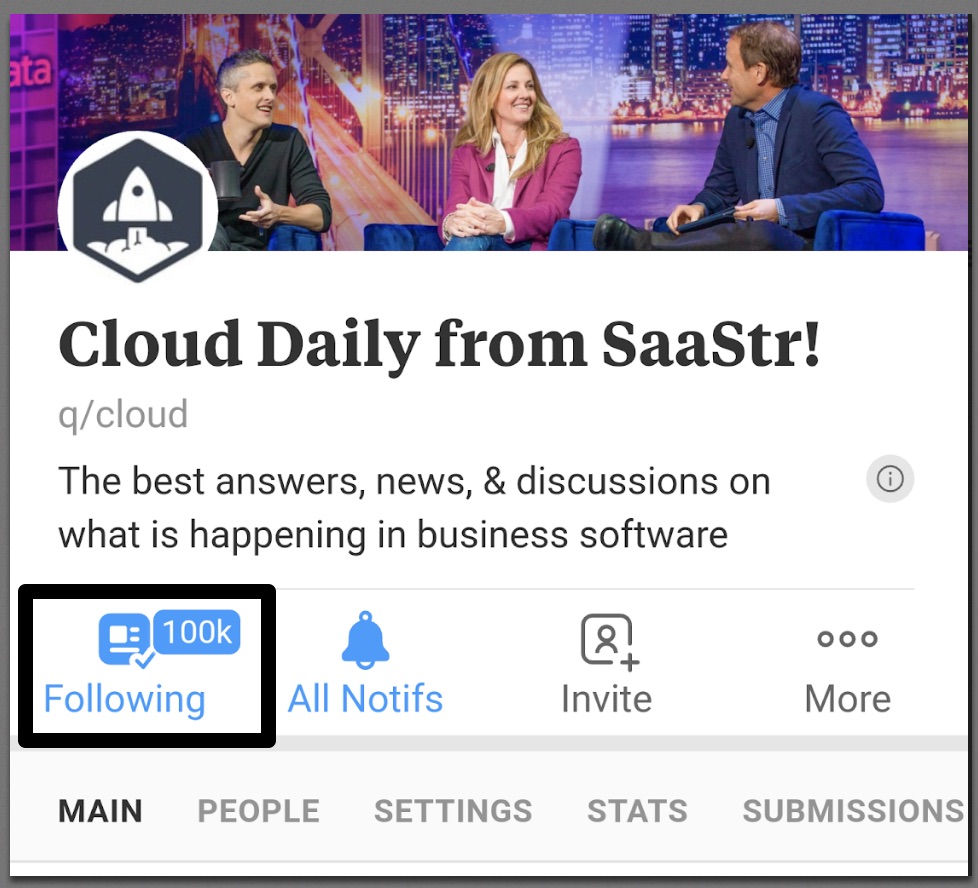
When a niche B2B content channel crosses 100,000 followers, it is tempting to call it a “viral success.” But in the case of Cloud Daily from SaaStr, the more useful word is not viral. It is useful.
Cloud Daily did not grow because it chased every shiny trend, posted motivational confetti, or shouted “SaaS!” into the internet until someone surrendered. It grew because it solved a real problem for a very specific audience: founders, operators, investors, sales leaders, marketers, and cloud software professionals who wanted sharp, timely, curated SaaS and cloud news without digging through the entire internet before breakfast.
That is the quiet magic of great B2B media. It does not always look glamorous from the outside. There may be no celebrity dance challenge. No dramatic product unboxing. No golden retriever wearing a headset and explaining net revenue retention, although frankly, that would probably work. Instead, strong B2B content wins by becoming a habit. It earns a small place in someone’s day and keeps showing up with value.
Cloud Daily crossing 100,000 followers is more than a follower milestone. It is a case study in distribution, platform fit, audience trust, and the power of focused content. For SaaS founders and marketers, the lesson is clear: the right content, on the right platform, for the right audience, can outperform far flashier campaigns.
What Is Cloud Daily from SaaStr?
Cloud Daily is a SaaStr content property built around curated cloud, SaaS, startup, and B2B software stories. SaaStr itself is one of the best-known communities in the software-as-a-service world, founded by Jason Lemkin and known for its SaaStr Annual events, founder interviews, tactical blog posts, podcasts, newsletters, and operator-focused advice.
The core idea behind Cloud Daily is simple: gather the most relevant cloud and SaaS stories of the day and deliver them in a format that busy readers can actually consume. That simplicity matters. In B2B, people are not usually looking for “more content.” They are looking for less noise.
For years, SaaStr experimented with distributing similar content across different channels, including platforms like Flipboard, Twitter, Quora Spaces, LinkedIn, newsletters, and its own website. One of the most interesting lessons from Cloud Daily’s growth is that the same content can perform wildly differently depending on the platform. A feed that struggles in one environment can explode in another. The content is not always the problem. Sometimes the room is wrong.
Why 100,000 Followers Matters in B2B
In consumer media, 100,000 followers can sound modest compared with influencers who get millions of views for reviewing coffee, shoes, or mysterious kitchen gadgets that promise to “change your life” but mostly take up drawer space. In B2B SaaS, however, 100,000 relevant followers is a serious asset.
A broad audience is nice. A targeted audience is powerful. Cloud Daily’s followers are not random internet passersby. They are likely to include founders, SaaS executives, product leaders, venture capitalists, go-to-market teams, and cloud software professionals. That makes the audience commercially meaningful.
For SaaS companies, attention is expensive. Paid acquisition costs rise. Organic social reach is unpredictable. Search rankings take time. Email deliverability can be tricky. Communities require constant care. So when a trusted media channel earns repeated attention from a qualified audience, it becomes more than a publication. It becomes distribution infrastructure.
The Biggest Lesson: Platform Fit Beats Content Ego
One of the strongest takeaways from Cloud Daily’s rise is that different platforms reward different behaviors. A content format that performs beautifully on one platform may flop spectacularly on another. This is not necessarily because the content is bad. It may be because the audience is not in the right mindset there.
For example, a curated SaaS news feed may be ideal for a platform where users actively follow professional topics, subscribe to newsletters, or engage with industry Q&A. The same feed may feel invisible on a platform optimized for fast reactions, entertainment, or personality-driven commentary.
This is where many brands make a classic mistake. They create one piece of content and blast it everywhere with the subtlety of a leaf blower. Then they wonder why it works in one place and dies quietly in another. Cloud Daily shows a smarter path: test platforms, respect platform behavior, and follow the evidence.
Content Distribution Is Not Copy and Paste
Distribution is not simply taking the same headline, same image, and same link and posting it across every channel. That is syndication. Real distribution is adapting the message to the audience’s habits.
On LinkedIn, professional credibility and useful insight often matter. On X, speed and commentary can dominate. In newsletters, consistency and trust matter most. On community platforms, helpfulness and relevance win. On search, structure and intent are everything.
Cloud Daily’s success reminds marketers that the platform is part of the product. The container changes how the content is experienced.
Consistency Is a Growth Strategy
The word “daily” in Cloud Daily is not decoration. It is a promise. That promise is important because regularity builds habit. When readers know that useful information will arrive consistently, they are more likely to return, subscribe, share, and trust the source.
Consistency also compounds. One post may not change much. Ten posts may start a rhythm. A hundred posts create a library. A thousand posts create authority. In content marketing, people often underestimate the value of simply staying in the game longer than everyone else.
Many companies start content programs with enthusiasm, publish intensely for six weeks, then disappear like a sales rep after being asked for a custom security questionnaire. Cloud Daily’s growth reflects the opposite approach: keep publishing, keep testing, keep learning, and let small wins stack up.
Curation Can Be as Valuable as Original Reporting
There is a common belief that only original content matters. Original reporting, interviews, essays, and research are extremely valuable, of course. But curation has its own power, especially in information-heavy industries like SaaS and cloud computing.
Busy professionals do not always need another 3,000-word think piece explaining that artificial intelligence is important. They may need a fast, trustworthy filter that tells them which funding announcement, product launch, cloud infrastructure shift, security issue, or SaaS growth lesson is worth their attention today.
Good curation is not lazy aggregation. It requires judgment. It asks: What matters? Why now? Who should care? What pattern does this reveal? A strong curator becomes a guide through the fog, and in B2B, that guide can become indispensable.
The Audience Was Specific, Not Generic
Another lesson from Cloud Daily is the power of audience clarity. The channel was not trying to be everything to everyone. It was not chasing general tech news, celebrity entrepreneurship, or vague business inspiration. It focused on cloud and SaaS.
That focus makes the content easier to understand and easier to recommend. A founder can tell another founder, “Follow this for SaaS and cloud updates.” A marketer can share it with a revenue team. An investor can use it to track market themes. The clearer the promise, the easier the growth loop.
Many content programs fail because they are too broad. They publish about product updates on Monday, leadership quotes on Tuesday, office culture on Wednesday, and a random post about “innovation” on Thursday. The result is a content smoothie with too many ingredients. Cloud Daily’s narrower focus gave it a stronger identity.
Trust Is Built Through Relevance
Trust in B2B media does not come from fancy design alone. It comes from repeated relevance. Every useful post is a tiny deposit in the trust bank. Every irrelevant post is a small withdrawal. Publish enough useful material and readers begin to assume the next post will be worth their time.
That is a powerful shift. Once an audience trusts a source, the source no longer has to fight as hard for attention. Readers open, click, follow, and share because the brand has already proven itself.
For SaaStr, this trust was supported by years of founder-focused SaaS education. Cloud Daily did not appear in a vacuum. It benefited from the broader SaaStr ecosystem: events, podcasts, blog posts, founder Q&A, tactical playbooks, and a recognizable voice in the SaaS community.
What SaaS Marketers Can Learn from Cloud Daily
1. Build Around a Real Audience Pain Point
Cloud Daily succeeded because it addressed a practical problem: people in SaaS and cloud want to stay informed, but they do not have unlimited time. The best content products often begin with this kind of simple utility.
Before launching a newsletter, blog, podcast, or social channel, ask what burden you are removing. Are you saving time? Clarifying complexity? Offering tactical advice? Tracking a market? Helping buyers make decisions? If the answer is vague, the content will probably be vague too.
2. Choose the Platform That Matches the Behavior
Do not assume that every channel deserves the same investment. Some platforms are better for discovery. Some are better for loyalty. Some are better for conversation. Some are better for search visibility. A strong content strategy identifies the role of each channel instead of pretending they are interchangeable.
Cloud Daily’s performance compared with other similar feeds shows that platform selection can dramatically change outcomes. The lesson is not “use this one platform forever.” The lesson is “test until you find where your audience naturally engages.”
3. Make the Content Easy to Consume
Busy B2B readers reward clarity. They want headlines that explain the value, summaries that get to the point, and links or insights that help them act. If the content requires too much effort, people leave.
Cloud Daily’s format works because it respects attention. That is a lesson every SaaS brand can use. Whether you are writing a blog post, investor update, product announcement, or newsletter, make it easy for the reader to understand why it matters.
4. Let Data Humble Your Assumptions
Marketers often fall in love with the channel they personally enjoy. But personal preference is not a strategy. If your audience is clearly responding somewhere else, follow the data.
One of the funniest and most useful lessons from SaaStr’s distribution experiments is that similar content can look like a failure in one channel and a breakout success in another. That should make every marketer a little more humble. Sometimes your idea is not bad. Sometimes your packaging, timing, or platform is bad.
5. Build a Media Asset, Not Just a Campaign
A campaign has a start and end date. A media asset compounds. Cloud Daily is valuable because it is not merely a one-time promotion. It is an ongoing channel with an audience, a promise, and a repeatable publishing rhythm.
For SaaS companies, this is an important mindset shift. Instead of asking, “What campaign can we run this quarter?” also ask, “What audience asset can we build over the next three years?” The second question is harder. It is also where durable advantage lives.
Why SaaS Companies Should Take Owned and Earned Audiences Seriously
Cloud Daily also highlights a broader truth about modern SaaS marketing: rented attention is fragile. Algorithms change. Ad costs rise. Social platforms shift priorities. Search results evolve. Communities migrate. If your company depends entirely on one external channel, you are building on someone else’s land.
That does not mean brands should avoid social platforms. Quite the opposite. Social platforms can be excellent discovery engines. But the smartest companies use social attention to build deeper relationships through newsletters, communities, events, courses, and owned content hubs.
SaaStr has long understood this ecosystem approach. Its audience is spread across blog content, events, newsletters, podcasts, video, social platforms, and educational products like SaaStr University. Cloud Daily fits into that larger machine by serving a daily attention habit.
The Hidden Advantage: Editorial Taste
Anyone can post links. Not everyone can build a trusted editorial filter. Cloud Daily’s growth suggests that editorial taste matters. Taste means knowing which stories matter, which trends are overhyped, which lessons are practical, and which updates are worth a founder’s limited time.
In the SaaS world, where everyone seems to have a hot take on artificial intelligence, pricing, sales efficiency, net revenue retention, customer success, and “doing more with less,” taste is a competitive advantage. Readers do not just want more information. They want better judgment.
Common Mistakes Cloud Daily Helps Marketers Avoid
The first mistake is chasing follower count without relevance. A large but random audience rarely helps a B2B company. The second mistake is giving up on content too early. Many channels need time, testing, and repetition before they find their shape.
The third mistake is treating curation as filler. Done well, curation is a service. The fourth mistake is ignoring distribution. Great content with poor distribution is like hosting a brilliant conference in a locked basement. Technically impressive, but attendance may be limited.
The fifth mistake is confusing activity with strategy. Posting constantly is not the same as building an audience. Cloud Daily worked because it had a clear audience, clear topic, clear cadence, and clear utility.
What This Means for Founders
For founders, the Cloud Daily milestone is a reminder that audience-building can become a moat. A strong audience lowers dependence on paid acquisition, improves brand recognition, creates partnership opportunities, and gives the company a direct line to the market.
Founders do not need to copy Cloud Daily exactly. A vertical SaaS company might build a weekly regulatory update. A cybersecurity startup might curate breach analysis. A fintech platform might publish a daily payments briefing. A sales software company might create a tactical revenue operations digest.
The format matters less than the promise. Pick a painful information gap and fill it consistently.
Additional Experiences and Practical Lessons from the Cloud Daily Milestone
Looking at Cloud Daily from a practical content marketing perspective, one of the most useful experiences is this: momentum often starts quietly. A media property rarely feels like a rocket ship on day one. It feels like work. You publish, check the numbers, adjust the format, and wonder if anyone besides your most supportive coworker is reading. Then, over time, the audience begins to recognize the pattern.
This is especially true in SaaS, where buying cycles are long and trust takes time. A founder may follow a content channel for months before sharing it. A VP of Sales may read quietly before forwarding one issue to a team. A venture investor may scan headlines for market signals without ever commenting publicly. In B2B, silent consumption is still consumption. Not every valuable reader leaves a like.
Another experience worth noting is that consistency creates operational discipline. When a team commits to a daily or frequent publishing rhythm, it develops sharper instincts. The team gets better at spotting patterns, writing headlines, summarizing information, and understanding what the audience values. The first 50 posts teach one set of lessons. The next 500 teach something much deeper.
Cloud Daily also shows that content can serve multiple jobs at once. It can inform readers, strengthen SaaStr’s brand, support event awareness, reinforce founder authority, and keep the community engaged between major conferences or announcements. That is the beauty of a well-designed content engine. It does not live in a marketing silo. It supports the whole ecosystem.
For companies trying to build a similar asset, the practical advice is to start narrower than feels comfortable. Instead of launching “The Ultimate Business Newsletter,” launch “The Weekly Usage-Based Pricing Brief” or “The Daily AI Sales Tools Digest.” Specificity helps readers understand why they should subscribe. It also helps the editorial team decide what belongs and what does not.
Another lesson is to measure the right things. Follower count is useful, but it is not the only metric. Engagement quality, repeat readership, referral traffic, newsletter signups, event registrations, customer conversations, and sales influence can matter more. A smaller audience of qualified SaaS buyers may be more valuable than a huge general audience that loves inspirational quotes but has no buying intent.
There is also a human lesson here: personality helps. SaaStr content often works because it feels like it was created by people with opinions, scars, and actual operating experience. That matters in a world full of generic content. Readers can sense when advice comes from the spreadsheet factory. They can also sense when it comes from someone who has lived through board meetings, missed quarters, pricing debates, hiring mistakes, and customer escalations.
Finally, Cloud Daily’s 100,000-follower milestone proves that B2B content does not have to be boring. It can be practical, sharp, fast, opinionated, and even fun. The trick is not to add jokes like sprinkles on a dry cupcake. The trick is to write with clarity, usefulness, and a little human energy. SaaS may be full of acronyms, but the people reading about ARR, CAC, NRR, AI, PLG, and enterprise sales are still people. They appreciate content that respects their time and does not sound like it was assembled by a committee trapped in a beige conference room.
Conclusion
Cloud Daily from SaaStr crossing 100,000 followers is not just a nice round number. It is proof that focused, useful, consistent B2B content can build a serious audience. The biggest lessons are refreshingly practical: know your audience, respect the platform, publish consistently, curate with judgment, and build media assets that compound over time.
For SaaS founders, marketers, and operators, the message is simple. You do not need to win the whole internet. You need to become highly valuable to the right corner of it. Cloud Daily did that by serving the SaaS and cloud community with regular, relevant information. That is not a gimmick. That is a strategy.
And in a world where everyone is fighting for attention, being genuinely useful may still be the most underrated growth hack of all.
Note: This article is written in original standard American English for web publishing and is based on publicly available information about SaaStr, Cloud Daily, SaaS media growth, and B2B content marketing best practices.











