
Note: This original article is written in standard American English and synthesizes real historical, travel, architectural, and cultural information about Soviet-era spas in Georgia, especially Tskaltubo and Abastumani.
There are places that look abandoned, and then there are places that look as if history simply stepped out for a smoke break and forgot to come back. The Soviet-era spas of Georgia belong firmly in the second category. Tucked among subtropical greenery, mountain air, mineral springs, cracked marble, and colonnades that still stand like very dramatic theater actors, these old sanatoriums are not just ruins. They are architectural memoirs.
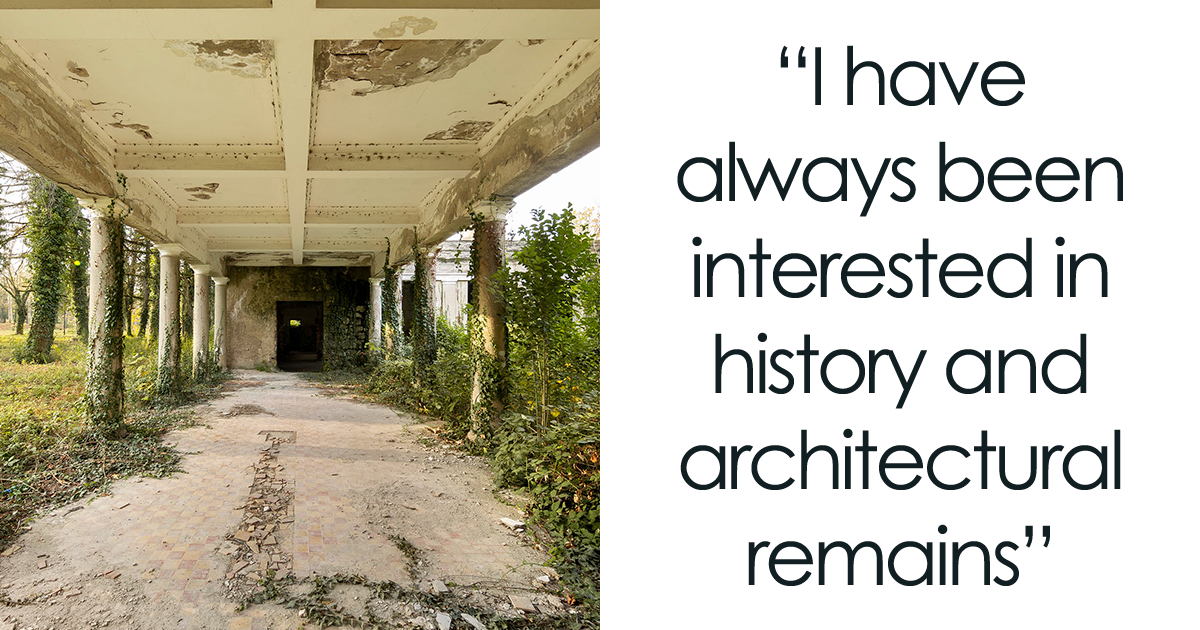
My visit to Georgia’s Soviet-era spa towns, especially Tskaltubo, felt less like sightseeing and more like walking through a half-remembered dream. The buildings were solemn, monumental, and strangely tender. Arched windows stared out at the trees. Grand staircases led to empty halls. Decorative ceilings still performed their best impression of elegance, even while plaster peeled from the walls like tired wallpaper after a long political argument.
The title promises 11 pics, but the real subject is bigger than photographs. Each image is a doorway into a chapter of Georgian history: wellness tourism, Soviet ideology, forced displacement, architectural ambition, decay, and the slow question of what should be restored, remembered, or left alone.
Georgia’s Spa Culture Didn’t Begin With the Soviets
Before Soviet planners arrived with their master plans, slogans, and enthusiasm for enormous public buildings, Georgia already had a deep relationship with mineral water. The country’s landscape is dotted with springs, mountain resorts, bath towns, and healing waters. From Tbilisi’s sulfur baths to the mineral-rich valleys of western Georgia, bathing has long been part of the culture, not simply as hygiene but as ritual, medicine, social hour, and occasionally an excuse to sit quietly and avoid emails.
What the Soviet period added was scale. Wellness became organized, scheduled, and wrapped in ideology. In the Soviet imagination, rest was not a luxury item sold with cucumber water and whale sounds. It was framed as a right of workers, a medically supervised pause designed to restore the body for the collective future. A vacation could include mineral baths, massages, diet plans, prescribed walks, sun exposure, and a calendar so structured that even relaxation had paperwork.
Tskaltubo: The Grand Spa Town That Time Could Not Quite Erase
Tskaltubo, located near Kutaisi in western Georgia’s Imereti region, is the best-known symbol of Georgia’s Soviet spa legacy. The town became famous for its naturally warm mineral waters, often described as radon-carbonate waters with temperatures around 33–35°C. Because the water emerges warm enough for bathing, it did not require major heating, which made it both medically attractive and logistically convenient.
During the Soviet era, Tskaltubo developed into one of the USSR’s major balneological resorts. Sanatoriums, hotels, bathhouses, parks, and ceremonial public spaces were built around the springs. The architecture was not shy. It favored columns, arches, symmetry, sweeping staircases, decorative ceilings, and facades that seemed designed to make every arriving worker feel like they had accidentally been upgraded to aristocracy.
There is a reason photographers keep returning to Tskaltubo. The place has visual drama in industrial quantities. Some buildings look like palaces overtaken by vines. Others resemble film sets where the actors left in 1991 and the props department never came back. But calling them merely “abandoned Soviet spas” misses the point. They are also reminders of a system that built health resorts as public infrastructure, then left behind architecture too beautiful to ignore and too complicated to romanticize.
The Beauty Is Real, But So Is the Weight of History
It is tempting to view the Soviet-era sanatoriums only through the lens of “ruin porn,” that internet-friendly genre where broken windows become mood boards. But these buildings are not empty symbols. After the collapse of the Soviet Union and the conflicts of the early 1990s, many displaced families from Abkhazia found shelter in Tskaltubo’s former hotels and sanatoriums. For some, these grand halls became long-term homes, not artistic backdrops.
That reality changes how you walk through the town. A corridor may look deserted until you notice laundry drying in a doorway. A former lobby may contain traces of daily life. A cracked balcony may be someone’s view. The solemn beauty of these places is not only architectural; it is human. Visitors should approach them with respect, caution, and the understanding that a building can be both historic monument and lived-in space.
What the 11 Pictures Reveal
1. The Grand Entrance
The first image usually catches the eye with a facade of columns and arches. It looks imperial, theatrical, almost too elegant for a health resort. This was part of the point. Soviet sanatoriums often borrowed the language of classical architecture to communicate dignity, order, and collective achievement. In Tskaltubo, even decay has posture.
2. Staircases Built for Ceremony
The staircases are not merely functional. They sweep, curve, and ascend as if expecting a brass band at any moment. Walking up them today, you may hear only birds, distant traffic, or your own shoes crunching on grit. Still, the architecture insists on ceremony. It refuses to become ordinary.
3. Empty Bath Chambers
The bath chambers are among the most fascinating spaces. Once, people came here for mineral-water treatments prescribed with clinical confidence. Today, the tubs and tiled rooms can feel ghostly, but not frightening. They are quiet in the way old libraries are quiet: full of stored voices.
4. Decorative Ceilings That Survived the Silence
Look up, and suddenly the ruin becomes a museum. Ceiling details, faded paint, medallions, and ornamental plaster reveal how much care went into places meant for rest and healing. The contrast is almost unfair. The floor may be cracked, but the ceiling is still wearing formal attire.
5. Nature Reclaiming the Edges
Vines, moss, grass, and trees have softened the monumental geometry of the buildings. Georgia’s subtropical greenery does not attack the architecture so much as negotiate with it. A palm beside a Soviet colonnade sounds like an odd pairing until you see it. Then it feels inevitable.
6. Long Corridors
The corridors are cinematic. They stretch into shadow, repeating doorways like visual echoes. In a functioning sanatorium, these halls would have carried guests to treatments, dining rooms, sleeping quarters, and social spaces. Now they invite slower movement. You do not rush through a corridor like that unless you are being chased by either a ghost or poor footwear.
7. Broken Windows With Mountain Light
Some of the most beautiful views come through damaged frames. The broken windows turn the outside landscape into fragments: trees, sky, stone, sunlight. It is impossible not to think about what these rooms once promisedfresh air, recovery, improvement, maybe even a better version of oneself after two weeks of baths and state-approved optimism.
8. Ballrooms and Social Halls
Soviet sanatoriums were not only medical facilities. They were social worlds. Guests ate together, walked together, attended events, and participated in a carefully managed culture of rest. The empty halls still carry that communal ambition. Even stripped of furniture, they seem built for voices.
9. Signs of Everyday Life
Where displaced families have lived, the photographs often become more complicated. A curtain, a chair, a potted plant, or a child’s drawing can say more than a grand facade. These traces remind us that history is not only what governments build or abandon. It is also what ordinary people adapt, endure, and make livable.
10. Bathhouses That Still Hint at Ritual
Some bathhouses in Tskaltubo remain part of the town’s wellness identity, while others are closed, damaged, or awaiting uncertain futures. The bathing ritual, however, still defines the place. Even in silence, you can sense the choreography: arrival, consultation, treatment, rest, repeat.
11. The Final Wide Shot
The last image often feels like a farewell: a building framed by trees, its facade both proud and wounded. This is the picture that stays with you. Not because it is the most technically perfect, but because it asks the hardest question: what do we owe beautiful places that carry painful histories?
Abastumani: Mountain Air, Hot Springs, and a Different Kind of Quiet
While Tskaltubo is the famous star of Georgia’s Soviet spa story, Abastumani offers another chapter. Located in southern Georgia in the Samtskhe-Javakheti region, Abastumani is known as a climatic and spa resort set high in the mountains, surrounded by coniferous forest. Its air has long been valued for respiratory health, and its hot mineral springs were historically associated with treatment and recovery.
Abastumani’s atmosphere is different from Tskaltubo’s subtropical grandeur. It feels more alpine, more hushed, more like a place where pine trees are in charge and humans are temporary guests. The town also has links to imperial Russian history, including the Romanovs, and later developed under Soviet influence. Its bathhouses, old villas, observatory, and mountain setting create a layered destination where spa culture, science, architecture, and natural beauty overlap.
If Tskaltubo feels like a fallen palace of collective wellness, Abastumani feels like a mountain retreat where the air itself is part of the treatment. Both places show how Georgia’s landscape shaped the Soviet health-resort map. The planners may have brought the bureaucracy, but the mountains and springs were already doing the important work.
The Architecture: A Strange Marriage of Power and Healing
Soviet spa architecture in Georgia can feel contradictory. On one hand, it was created for health, leisure, and recovery. On the other, it often used visual language associated with state power: scale, symmetry, monumental entrances, and heroic public space. The result is an architecture of command that tells you to relax immediately.
That tension is part of what makes the buildings so mesmerizing. A sanatorium might contain delicate decorative details, airy balconies, and garden-facing rooms, yet still present itself with the authority of a courthouse. The body was meant to be healed, but the citizen was also meant to be shaped. In every archway and promenade, you can read a larger social idea: rest was personal, but it was never merely private.
Why These Places Photograph So Well
Photographers love these sites because they offer contrast on every surface. Light and shadow. Marble and moss. Grandeur and neglect. Human presence and absence. The buildings are symmetrical enough to be visually satisfying, but damaged enough to feel alive. A polished modern spa might be comfortable, but it rarely gives you a ceiling fresco, a cracked staircase, and a philosophical crisis before lunch.
The solemn beauty comes from restraint. These are not colorful amusement-park ruins. They are pale, dignified, and often quiet. Their beauty does not shout. It stands in a doorway and waits for you to notice.
Ethical Travel: Don’t Be the Tourist the Ruins Warned Us About
Visiting Soviet-era spas in Georgia requires more than a camera and comfortable shoes. Many structures are unstable, privately owned, under redevelopment, or connected to communities that deserve privacy. Some former sanatoriums have housed displaced families for decades. Others may be unsafe because of falling plaster, broken glass, weak floors, or unsecured staircases.
The best approach is simple: ask locally, respect signs, avoid entering occupied spaces, do not move objects, do not take souvenirs, and never treat someone’s hardship as scenery. Take photos with humility. If a place feels like it is telling you not to enter, believe it. Buildings, like grandmothers, sometimes communicate clearly without raising their voices.
Restoration, Redevelopment, and the Future of Georgia’s Spa Towns
Today, Tskaltubo is no longer just a forgotten spa town. It is a place of renewed interest. Travelers, photographers, historians, investors, and local authorities all see different futures for it. Some buildings may be restored into hotels or wellness resorts. Others may remain ruins. Some may disappear before anyone decides what they mean.
The challenge is balance. Restoration can save architecture, create jobs, and bring visitors. But careless redevelopment can erase the very atmosphere that makes the town meaningful. The most responsible future would recognize Tskaltubo not only as a tourism asset but as a layered cultural landscapeone that includes Soviet history, Georgian identity, displaced communities, and the fragile poetry of decay.
A 500-Word Travel Experience: Walking Through Solemn Beauty
The strongest memory from my imagined walk through Georgia’s Soviet-era spas is not one dramatic room, but the feeling of crossing thresholds. Every doorway seemed to change the temperature of the story. Outside, there was green life: trees pushing into courtyards, birds conducting business as usual, sunlight falling across cracked steps. Inside, the air became cooler and more still, as if the building had been holding its breath since the last guest checked out.
At first, I looked for the obvious photographs: the grand staircase, the perfect arch, the cinematic corridor. I wanted the kind of shot that makes people stop scrolling and whisper, “Wait, where is that?” But after a while, the smaller details became more powerful. A faded patch of paint. A tile pattern interrupted by dust. A doorway that framed nothing but leaves. These details made the place feel less like a ruin and more like a memory with architecture attached.
What surprised me most was the dignity. Many abandoned places feel chaotic, but the spas of Georgia carry themselves with solemn grace. Even damaged, they remain composed. The columns still know their job. The staircases still understand drama. The windows still invite light as if guests might return next week with towels, medical forms, and very strong opinions about soup.
There was also a constant sense of caution, and not only physical caution. Yes, the floors could be uneven, and yes, gravity remains undefeated. But the deeper caution was emotional. It is easy to turn abandoned architecture into a fantasy of lost glamour. It is harder, and more honest, to remember that these places are tied to real political histories and real human lives. Some people came here to heal. Some came because the state sent them. Some later lived here because war left them nowhere else to go.
That complexity made the beauty stronger, not weaker. A perfectly restored resort can impress you, but a half-ruined sanatorium can trouble you in productive ways. It asks what societies choose to build, what they abandon, and what later generations decide to preserve. It asks whether beauty can survive ideology. It asks whether a cracked wall is still a wall or already a document.
By the end of the visit, I understood why these Georgian spa towns have become magnets for photographers and curious travelers. They offer more than aesthetic decay. They offer atmosphere, history, and a rare kind of silence. Not empty silence, but listening silence. The kind that follows you after you leave.
And yes, I took photos. Of course I did. I am only human, and those arches were practically flirting with the camera. But the real souvenir was not an image. It was the feeling of standing inside a place that had once promised recovery and realizing that the building itself was now waiting, patiently and beautifully, for some form of healing.
Conclusion: A Haunting Kind of Wellness
Georgia’s Soviet-era spas are not ordinary travel attractions. They are beautiful, wounded, and layered with meaning. Tskaltubo’s abandoned sanatoriums and bathhouses reveal the grand ambitions of Soviet wellness culture, while Abastumani’s mountain-air retreat shows another side of Georgia’s long relationship with healing landscapes. Together, they form one of the most fascinating architectural journeys in the Caucasus.
To visit them is to encounter more than photogenic decay. It is to see how architecture can hold ideology, hope, displacement, elegance, and silence all at once. The solemn beauty of these places does not come from nostalgia alone. It comes from their refusal to become simple. They are ruins, homes, monuments, warnings, and works of artsometimes in the same hallway.











