
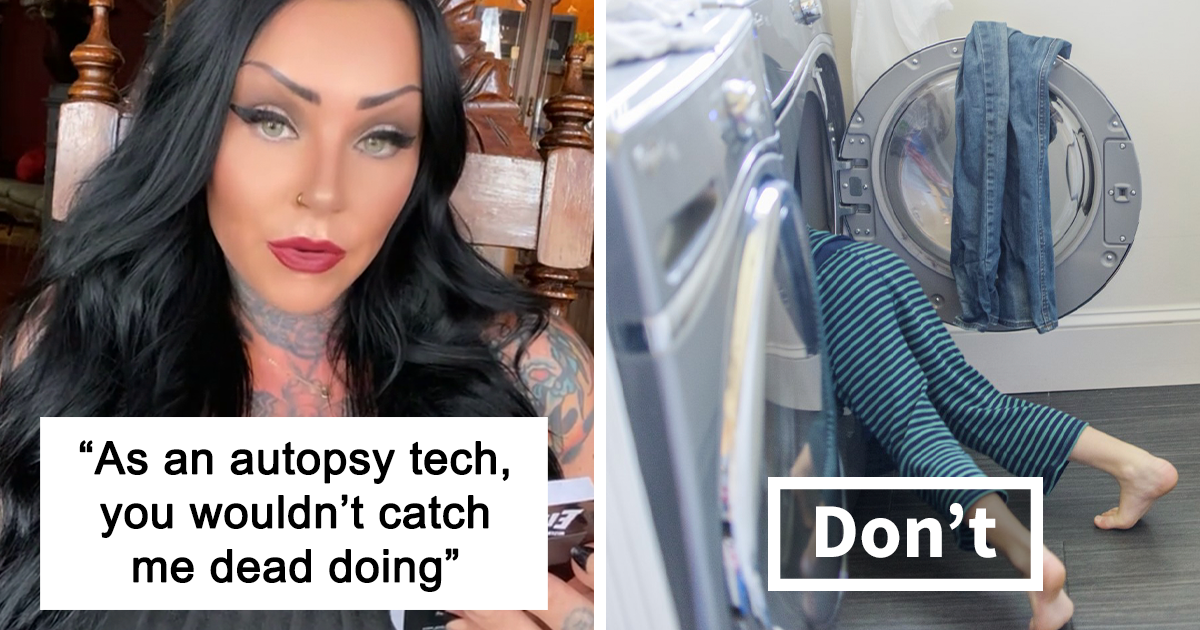
There are safety lectures, and then there are morgue lectures. The difference is simple: one is trying to keep your day on track, and the other is trying to keep you from becoming a cautionary tale with a toe tag.
That is why this autopsy-tech perspective lands like a slap of ice water. It is blunt, graphic, occasionally darkly funny, and about as subtle as a fire alarm at 3 a.m. But once you strip away the viral-video drama, the message is surprisingly solid: a shocking number of deaths begin with ordinary shortcuts, silly bravado, or one tiny decision that felt harmless five minutes earlier.
Not every item on this list is a universal medical rule. Some are hyper-specific, almost absurdly specific, because death is weird like that. But the broader lesson holds up. The people who work closest to the end of the story tend to notice patterns the rest of us ignore. They see what happens when a joke escalates, when a staircase wins, when a cheap tool fails, when a wound gets brushed off, or when somebody decides that “close enough” is the same thing as “safe.” Spoiler: it is not.
So here is the real takeaway behind the sensational title. These are not just 15 bizarre things an autopsy tech refuses to do. They are 15 reminders that preventable death rarely arrives with spooky music. More often, it shows up dressed as confidence, convenience, or one very bad idea.
Why this advice hits harder than the average safety speech
An autopsy tech sees the final version of a mistake. That changes how ordinary risks look. Where most people see a top-loading washer, a motorcycle ride, a cheap jack, or a jar of home-canned beans, someone in a morgue sees the worst-case scenario already fully developed. It is not paranoia. It is pattern recognition with terrible lighting.
Public-health guidance backs up a lot of these warnings. Falls remain a major injury threat, especially for older adults. Seat belts still save lives. Loose clothing and moving machinery are a famously awful combo. Home-canning errors can turn dinner into a toxicology case. Untreated bleeding and rapidly spreading infections are not things to “wait and see” about. In other words, the autopsy tech is not just being dramatic. She is being dramatic with receipts, even if the receipts are the kind nobody wants filed under “personal experience.”
The 15 warnings behind the headline
1. Never turn a threat into a punchline
The most famous warning on the list is also the simplest: do not say, “What are you gonna do, stab me?” or “What are you gonna do, shoot me?” in the middle of a real confrontation. It sounds like movie dialogue. In real life, it is a terrible bet.
This is not superstition. It is a lesson about escalation. A huge share of homicides begin with arguments or conflicts, and firearms remain the most common method in many homicide cases. The smart move is not to sound fearless. The smart move is to get distance, lower the temperature, and leave with your dignity slightly bruised instead of your torso catastrophically ventilated.
2. Respect choking risk as you age
The autopsy-tech warning about elderly people and steak is not really anti-steak propaganda. It is anti-choking reality. Swallowing changes with age. Chewing can get harder. Dentures may not fit perfectly. Neurologic disease can make swallowing less reliable. A food that once felt normal can suddenly become dangerous.
The broader lesson is to stop treating choking like a toddler-only problem. Older adults face real choking risk too. Cut food smaller, chew slowly, avoid rushing meals, and take swallowing problems seriously. Yes, this means your inner cowboy may need to retire from inhaling giant bites of ribeye. The alternative is much worse.
3. Do not lean so far into a washer that you trap yourself
Some warnings are so odd that people laugh first and think later. This is one of them. But positional asphyxia is real: when the body gets stuck in a position that interferes with breathing, the outcome can turn fatal fast. That means an awkward angle is not always just awkward.
The washer example sounds ridiculous until you remember how many injuries happen during ordinary household tasks. If you are reaching deep into a machine, use a grabber, a stool, or ask for help. The laundry can wait. Oxygen is still the premium subscription.
4. Do not treat motorcycles like fashion accessories
The autopsy-tech line about the road being the cheese grater and your skin being the cheese is horrifying, yes, but unfortunately vivid for a reason. Riders are exposed. Protective gear matters. Helmets matter. Jackets, gloves, boots, and abrasion-resistant clothing matter.
This is where aesthetics and physics stop being friends. A breezy outfit may look great in the parking lot. It does not negotiate well with asphalt. If you ride, dress for the crash, not the selfie.
5. Never trust bargain-bin car jacks with your entire existence
Working under a vehicle is not the time to become a philosopher about value. Your life is worth more than the cheapest thing on the shelf. Use proper support, follow instructions, and do not confuse “holding for a second” with “safe enough to crawl under.”
This warning is not about brand snobbery. It is about collapse. Vehicle support failures can be sudden, unforgiving, and final. If you are under a car, redundancy is your best friend. A sturdy setup is cheaper than a funeral and significantly less awkward for everyone involved.
6. Keep loose clothing, untied laces, and wandering hands away from machinery
Heavy machinery has no patience for carelessness. Loose sleeves, untied shoelaces, dangling strings, jewelry, and hands that get a little too curious can all become part of a very bad accident. The word “degloving” alone should be enough to make most people sit up straighter and tie their shoes immediately.
If something spins, cuts, pulls, compresses, or chews through brush, treat it like it is actively looking for bad decisions. Because in a way, it is.
7. Do not underestimate stairs
Stairs have a boring reputation, which is exactly how they get people. They are familiar, daily, and weirdly unforgiving. A missed step, poor lighting, socks on slick wood, carrying too much, or trying to multitask on the way down can turn an ordinary staircase into an orthopedic plot twist.
The autopsy-tech framing is brutal, but the core point is dead on: stairs deserve attention. Use the handrail. Turn on the light. Slow down. And if you are carrying something bulky, maybe do not also answer a text, sip coffee, and audition for your own slapstick reboot.
8. Wear your seat belt every single time
Seat belts are not uncool. Seat belts are the reason people sometimes get to complain about a crash instead of becoming its headline. Ejection, rollover trauma, impact with the roofline, and catastrophic body movement inside the vehicle are all far more likely when you are unrestrained.
This is not subtle science. Buckling up is still one of the simplest life-saving habits in existence. If your car is moving, the seat belt goes on. No exceptions for short trips, nice weather, a quiet neighborhood, or misplaced confidence.
9. Be suspicious of improperly canned food
Botulism is one of those words people vaguely know and seriously underestimate. It is rare, but when it shows up, it can be devastating. Improperly canned food can create the perfect conditions for a toxin that attacks the nervous system and can lead to paralysis, breathing failure, and death.
This does not mean all home canning is reckless. It means food preservation is science, not vibes. If a jar is bulging, leaking, spurting, foaming, or otherwise acting like it has a dark secret, do not turn dinner into a gamble.
10. Do not assume bizarre crash geometry is too bizarre to happen
The warning about crashing into the junction of a hollow metal fence sounds almost cartoonishly specific. That is exactly why it matters. A lot of fatal trauma is weird. Not impossible. Weird. The lesson is not simply “avoid fences”; it is that high-speed crashes create bizarre forces and freak outcomes that no driver is built to out-argue.
Drive defensively. Slow down. Stay sober. Stay focused. Once a vehicle leaves the realm of ordinary control, the environment starts writing the script, and the environment is not known for gentle edits.
11. Do not ignore cuts, burns, or scrapes that look “small”
One of the nastiest warnings on the list involves necrotizing soft tissue infection, the kind of fast-moving, tissue-destroying emergency that makes “I thought it was nothing” sound especially tragic in hindsight. Most minor wounds heal normally. Some do not. The problem is that the dangerous ones often start small.
If a wound becomes intensely painful, red, swollen, warm, rapidly worse, foul-smelling, or tied to fever and illness, do not wait around hoping your immune system feels heroic. Get medical help. Toughing it out is not a personality trait. It is sometimes just delayed regret.
12. Do not play with high-voltage “fractal burning”
Lichtenberg wood burning has the sort of internet aesthetic that makes people think, “That looks cool.” Unfortunately, electricity also thinks things look cool right before it ruins them forever. Using hacked-together high-voltage setups, including microwave transformers, is an outstanding way to get electrocuted.
DIY should not stand for “die it yourself.” Some crafts are better left uncrafted. If a project requires the sentence “then the current passes through the wood,” maybe let that hobby go live with your other bad ideas in a locked basement of the mind.
13. Do not carry breakable enclosures on stairs if you can avoid it
This warning sounds random until you unpack it: stairs plus glass plus awkward weight plus a living creature inside is a chaos recipe. A terrarium, aquarium, or other fragile enclosure can turn one misstep into lacerations, blunt-force injury, panic, and a very confusing emergency scene.
The broader point is that breakable loads change your risk profile. Use two people, smaller containers, proper carriers, or a different route. If the object can shatter into knives, maybe do not take it on a staircase solo like you are competing on a reality show called Bad Choices Live.
14. Never shrug off gastrointestinal bleeding
GI bleeding is not just “a stomach issue.” It can present as vomiting blood, black tarry stool, bright red blood, dizziness, weakness, or fainting. It can be sudden, dramatic, and life-threatening, or slower and sneakier than people expect.
The autopsy-tech description is intentionally graphic because the reality often is. Blood loss is not something to monitor with crossed fingers and herbal tea. If you think you are bleeding internally or through the digestive tract, get evaluated quickly. Your bathroom should not look like a crime scene, full stop.
15. Do not assume “natural” means safe, especially with kratom
The last warning may be the most controversial. Kratom has defenders, and people use it for different reasons, including pain relief or self-managed withdrawal support. But “natural” is not the same as harmless. Regulators have repeatedly warned about serious adverse events, product inconsistency, contamination concerns, and combinations with other substances.
The mature takeaway is nuance, not panic. Do not treat kratom like candy, a wellness hack, or something risk-free because it came from a plant. Plants also gave us poison ivy. Nature has range.
What all 15 warnings really have in common
At first glance, this list looks chaotic. Steak, seat belts, washers, stairs, jacks, kratom, canned beans, and a pet snake in a breakable enclosure do not exactly scream “single unified life philosophy.” But there is one, and it is surprisingly elegant: avoid preventable chaos.
Every item here falls into one of a few categories. Do not escalate conflict. Do not ignore how fragile the human body can be. Do not cut corners around machines, vehicles, speed, electricity, or blood. Do not assume a rare outcome is impossible just because it sounds ridiculous. And above all, do not confuse familiarity with safety. People die doing normal things in normal places because normal is where most risk actually lives.
That may be the most chilling lesson of all. You do not need to skydive into a volcano while juggling chainsaws to make a fatal mistake. Sometimes all it takes is one missed stair, one unbuckled ride, one infected scrape, one bad jar seal, or one sentence said to the wrong person at the worst possible moment.
Conclusion
The dark genius of this autopsy-tech advice is that it refuses to romanticize preventable death. It does not tell you to fear everything. It tells you to stop being weirdly casual about the things that routinely injure, disable, or kill people. That is a useful distinction.
If the headline feels dramatic, good. A little drama is fine if it gets people to wear the helmet, use the handrail, buckle the seat belt, clean the wound, skip the sketchy DIY electricity experiment, or walk away from a heated confrontation. The best version of this story is the one where you read it, laugh nervously, and then make a few smarter choices before dinner.
Because that is really what an autopsy-tech warning is: not doom, but translation. It takes tragedy and turns it into plain English before somebody else repeats it.
Extra Section: Real-World Experiences Related to This Topic
What makes warnings like these stick is not just the science behind them. It is the human pattern behind them. People who work around sudden death, trauma, or emergency medicine often describe the same maddening theme: the final disaster usually starts with something so ordinary that nobody involved thinks, “This is the moment my life goes off the rails.” It starts with a quick errand, a shortcut, a familiar staircase, a tiny wound, a harmless-seeming joke, or a task someone has done a hundred times before.
That is why the autopsy-tech perspective feels so unnerving. She is not describing distant, cinematic danger. She is describing the kind of risk that lives in garages, kitchens, driveways, laundry rooms, porches, and passenger seats. In real-world experience, these scenes often share a common emotional tone: nobody expected the ending. Families are stunned because the person did not leave for a high-risk adventure. They were cleaning, eating, carrying, driving, fixing, stepping, or arguing. It was Tuesday. The weather was normal. They planned to be back in ten minutes.
Another experience that comes up again and again is embarrassment mixed with urgency. People delay care because the problem feels awkward, gross, or overdramatic. They do not want to be the person who goes to urgent care for a scrape, the person who admits they swallowed badly, the person who says a wound smells wrong, or the person who shows up to the ER because the stool turned black or the vomit looked bloody. But medicine does not grade on coolness. A delayed reaction to a bad symptom is still delayed, even if it felt emotionally convenient at the time.
There is also the recurring experience of overconfidence. Drivers assume the crash will happen to someone else. Riders assume a short trip does not require full gear. DIYers assume they can eyeball safety. People around machinery assume one loose lace is not a big deal. Somebody under a vehicle assumes the jack will hold for one more minute. Overconfidence is rarely loud. Usually it sounds like, “I’ll be fine.” Four of the most expensive words in the English language.
And then there is the experience professionals talk about most quietly: how avoidable some of it feels in retrospect. Not all death is preventable, of course. Not even close. But some cases carry that especially painful quality of near-ease, the feeling that one tiny decision would have changed everything. One hand on the rail. One click of a seat belt. One medical visit sooner. One calmer sentence. One safer tool. One choice not to treat a body like it cannot break.
That is why these stories resonate. They are not just morbid entertainment. They are uncomfortable reminders that life is durable right up until it is suddenly not. The point is not to become fearful. The point is to become less casual. Respect the machine. Respect the road. Respect the wound. Respect the symptom. Respect the argument. Respect the staircase. In the end, that is what the autopsy-tech experience keeps saying in fifteen different ways: survival is often less about grand heroics and more about refusing to be recklessly dismissive in ordinary moments.












