
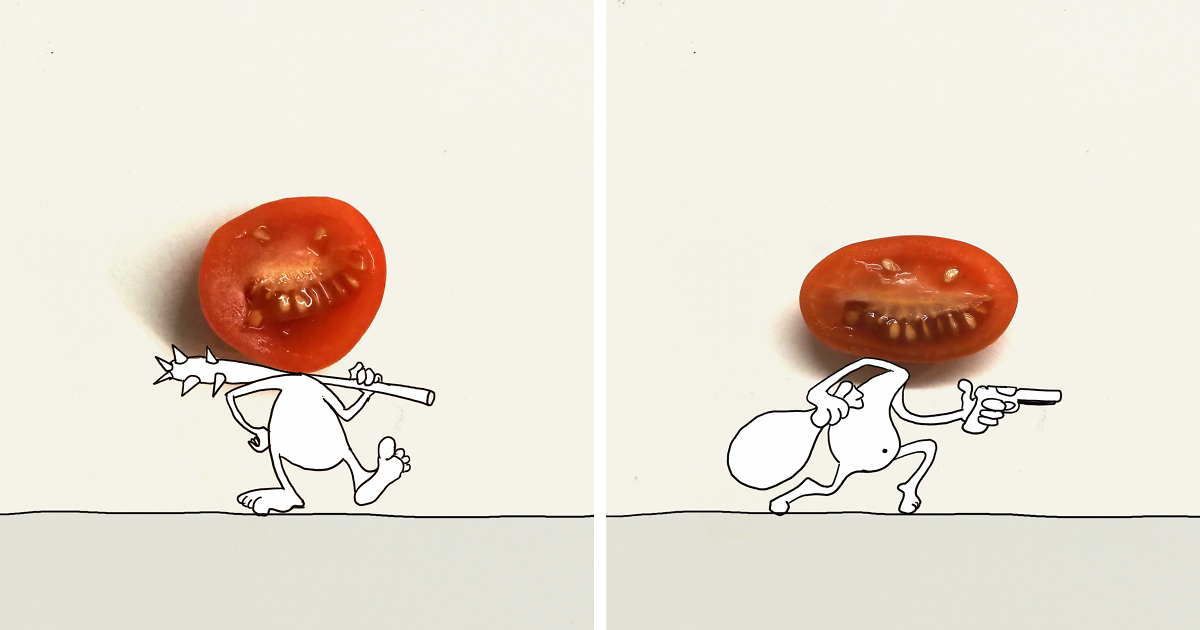
Some kitchen disasters involve smoke alarms, melted spatulas, or the tragic discovery that you are out of garlic. Mine began with a tomato that looked like it had a faceand, judging by its expression, it had plans.
There I was, chopping vegetables for dinner, minding my own business and pretending I had the knife skills of a television chef. Then I cut into a ripe tomato and noticed something unsettling in the seeds, pulp, and uneven slices: a tiny tomato face. Not a friendly face. Not a “please put me in a salad” face. This was the face of a produce aisle villain who had seen too many crime dramas and was ready to avenge every BLT ever made.
That oddly expressive slice inspired a funny visual idea: what if the tomato were not simply dinner, but the main character in a tiny kitchen thriller? The result is a playful world of killer tomato illustrations, where a harmless red fruit becomes a dramatic detective, a suspicious suspect, a revenge-driven sauce boss, and occasionally the worst roommate in the refrigerator.
Note: This is an original editorial interpretation inspired by the “killer tomato” creative premise. It does not reproduce or describe any individual artwork from the original illustrator’s gallery.
How a Tomato Slice Became a Tiny Horror Star
The original creative spark is wonderfully ordinary: an illustrator noticed a face-like pattern in a tomato while preparing food, photographed it, and turned that accidental moment into a collection of playful drawings. That is the kind of idea that makes visual storytelling feel magical. One minute, you are making dinner. The next minute, you are apparently negotiating with a tomato that has a suspiciously detailed escape plan.
The tomato does not need superhero muscles, laser eyes, or a dramatic cape made from basil leaves. Its power comes from familiarity. Tomatoes are already colorful, squishy, shiny, and full of personality. Add a few ink lines, cartoon hands, or a tiny knife-shaped shadow, and suddenly the humble ingredient becomes a character with motives. Important motives. Like revenge, marinara, and possibly world domination through bruschetta.
It also helps that tomatoes have always carried a little drama. They are technically fruits, though most people use them like vegetables. In the United States, the Supreme Court even treated tomatoes as vegetables for tariff purposes in the late nineteenth century. Before tomatoes became everyday kitchen heroes, they were also misunderstood and sometimes feared because of their relationship to the nightshade family. So, in a very small way, the “killer tomato” joke has historical seasoning.
Why We See Faces in Food in the First Place
Seeing a face in a tomato is not a sign that dinner has become too exciting. It is a common perceptual phenomenon called pareidolia, which happens when the brain recognizes familiar patterns in random shapes. People see faces in clouds, electrical outlets, tree bark, toast, house windows, and apparently vegetables that are one bad day away from starring in a low-budget thriller.
Our brains are very good at spotting faces quickly. Two dark seeds can become eyes. A curved line can become a mouth. A patch of tomato pulp can become a suspicious eyebrow. Once the brain decides a face is there, it becomes hard to unsee it. That is why a tomato slice can suddenly look angry, shocked, sleepy, smug, or deeply offended that you picked it instead of the bell pepper.
This is also why food-based illustration works so well. The artist does not need to create a character from nothing. The shape, texture, color, and accidental “expression” are already doing half the work. A few drawn details simply invite the viewer to finish the joke. The best visual humor often works that way: it gives the audience a tiny nudge, then lets their imagination sprint directly into the pantry.
20 Killer Tomato Illustration Ideas From a Very Suspicious Cutting Board
1. The Tomato Who Heard the Knife Drawer Open
This tomato is frozen in place, wide-eyed and dramatically horrified. The knife is not even touching it yet, but it has already begun writing its memoir: “I Was Ripe, I Was Beautiful, and Then Everything Changed.”
2. The Red Sauce Crime Scene
A splash of tomato juice becomes an exaggerated crime scene, complete with a tiny detective tomato studying the evidence. The twist is obvious: the detective is also the sauce, the witness, and the main suspect.
3. The Tomato With a Tiny Revenge Board
Using thread, pushpins, and a suspiciously serious expression, this tomato has connected every human in the kitchen to a single alarming conclusion: someone is making salsa tonight.
4. The Cherry Tomato Getaway Car
A cherry tomato rolls across the counter in a miniature shopping cart, yelling for its friends to jump in. It is not fast, but it is determined, glossy, and probably fueled by pure panic.
5. The Basil Leaf Disguise
One tomato wears a basil leaf as a fake mustache and insists it is “definitely not a tomato.” Unfortunately, it is bright red, round, shiny, and sitting beside mozzarella. The disguise has room for improvement.
6. The Refrigerator Prison Break
Cold, lonely, and slightly wrinkled, a tomato sketches an escape route from the crisper drawer. Its fellow inmates include a tired cucumber, a bag of spinach, and an avocado who refuses to discuss its emotional state.
7. The Tomato Mob Boss
Wearing a tiny fedora, this tomato sits in a pool of marinara and tells the pasta, “Nice shape you have there. It would be a shame if somebody covered it in parmesan.”
8. The Salad Bowl Interrogation
A cucumber is questioned under a bright kitchen lamp while the tomato detective demands answers. “Where were you when the vinaigrette disappeared?” The cucumber says nothing. It is, after all, a cucumber.
9. The Tomato Who Refused to Be Diced
This one has a tiny protest sign that reads, “SLICES HAVE RIGHTS.” It is not making a legal argument so much as trying to delay dinner until everyone loses interest and orders pizza.
10. The Pasta Sauce Portal
A bubbling pot of sauce turns into a dramatic red vortex. Several tomatoes stare into it, wondering whether it leads to another dimension or simply to Tuesday night spaghetti.
11. The Heirloom Tomato With Main-Character Energy
Large, colorful, and covered in strange natural ridges, this heirloom tomato looks like it has already won three awards and is waiting for someone to ask about its creative process.
12. The BLT Betrayal
A tomato finds out it has been paired with bacon and lettuce again. It takes the news personally, as though the sandwich industry has repeatedly ignored its emotional complexity.
13. The Tomato Who Joined a Cooking Competition
With a little chef hat and an enormous amount of confidence, the tomato announces that it will create “a deconstructed essence of summer.” The dish is mostly tomato juice on a plate.
14. The Salsa Surveillance Team
A tomato, onion, jalapeño, and cilantro leaf operate a tiny surveillance van behind the cutting board. Their mission is unclear, but somebody is definitely being watched before taco night.
15. The Tomato Ghost Story
A pale, overripe tomato tells ghost stories about the terrifying place called “the compost bin.” The younger cherry tomatoes listen in horrified silence and promise never to develop soft spots.
16. The Caprese Love Triangle
A tomato, mozzarella ball, and basil leaf become trapped in a melodramatic romantic storyline. There are tears, olive oil, and a final reveal that everyone was simply arranged on a serving platter.
17. The Tomato Who Became a Weather Reporter
Standing in front of a kitchen-map forecast, the tomato predicts scattered salt showers, heavy olive-oil drizzle, and a seventy percent chance of ending up in a sandwich.
18. The Sauce Jar Witness Protection Program
After seeing too much in the kitchen, a tomato gets placed in a jar with a new identity. From now on, it is not a tomato. It is “Traditional Chunky Garden Style,” and it cannot discuss the past.
19. The Tomato That Outsmarted the Cutting Board
This tomato does not run. It negotiates. It offers fresh flavor, potassium, vitamin C, and an excellent excuse to make pasta instead of whatever responsible meal you originally planned.
20. The Final Slice
In the last scene, the killer tomato stares bravely at the chef’s knife, then accepts its delicious fate. The ending is bittersweet, heavily seasoned, and served with a sprinkle of salt.
The Real Tomato: Less Dangerous, More Delicious
For all its cartoon menace, the tomato is a kitchen workhorse. Fresh tomatoes can be sliced for sandwiches, chopped into salads, roasted for pasta, simmered into sauce, blended into soup, or transformed into salsa with a few supporting actors. Roma and plum tomatoes are especially useful for sauces because they tend to be meatier and less watery, while cherry and grape tomatoes are ideal for quick roasting, snacking, and dramatic countertop escape scenes.
When choosing tomatoes, look for smooth skin, no major cracks or bruises, and a weight that feels substantial for the tomato’s size. A ripe tomato should have some give but should not feel mushy or look like it has already emotionally left the group chat. Different tomato varieties can have different colors, shapes, and textures, so perfect bright red color is not the only sign of ripeness.
Food safety matters even when the vegetable is plotting cinematic revenge. Wash whole tomatoes under clean running water before cutting them. Do not wash them with soap or detergent. Use clean hands, utensils, and cutting boards, and keep produce separate from raw meat, poultry, and seafood. Once tomatoes are cut, refrigerate leftovers promptly rather than allowing them to sit on the counter through an entire murder-mystery marathon.
Tomatoes also bring useful nutrients to the table, including fiber, potassium, vitamin C, vitamin A, and lycopene. That does not mean they are magical health grenades disguised as salad ingredients. It simply means the ingredient earning all this comic attention is also a genuinely practical addition to everyday meals.
Why Food Illustration Makes Everyday Cooking More Fun
Cooking can become repetitive when every meal feels like a checklist: wash, chop, stir, taste, clean, repeat. A funny illustration interrupts that routine. Suddenly, the onion is not just an onion. It is a weeping stage actor. The mushroom is not just a mushroom. It is a tiny umbrella that knows secrets. And the tomato is absolutely plotting something near the cutting board.
This kind of humor is especially appealing because it does not require expensive materials or complicated tools. A phone photo, a curious eye, and a few drawn lines can turn an ordinary ingredient into a visual joke. It encourages people to notice textures, shapes, colors, and accidents that would usually disappear into the background of daily life.
That is the real charm of killer tomato illustrations: they make creativity feel accessible. You do not need to wait for a dramatic landscape, a museum visit, or a major life event. Sometimes a strange tomato slice is enough. Sometimes a potato looks worried. Sometimes a pepper has a face that appears to be questioning your recipe choices. The kitchen is full of accidental characters; most of them are just waiting for someone to notice.
Extended Kitchen Experience: What a Killer Tomato Teaches Us About Creativity
The funniest part of a killer tomato concept is that it begins with something deeply unglamorous. Nobody wakes up expecting to have a life-changing encounter with produce. You wake up hungry. You open the refrigerator. You discover that one tomato is approaching the point where it must either become dinner or become a science experiment. Then you start cutting vegetables, and suddenly the ordinary becomes strange.
That moment is worth paying attention to because creativity often begins there: in the pause between seeing an object and really noticing it. A tomato is normally just a tomato. It is red, soft, useful, and mildly dangerous only when launched at someone during a food fight. But when its seeds form two “eyes” and a little crease becomes an annoyed mouth, your brain gives it a personality. It stops being an ingredient for a second and becomes a character.
I have had similar moments with other foods. A bell pepper cut in half can look like it is screaming. A potato with two eyes can look like a sleepy grandfather who has been waiting since 1978 for someone to make mashed potatoes. A mushroom cap can resemble a tiny umbrella left behind by a very small commuter. Even a pancake can look judgmental when one side browns into an accidental frown.
These little accidents make cooking more enjoyable because they replace pressure with curiosity. Instead of worrying whether every slice is restaurant-perfect, you start noticing the weirdness of the ingredients. You laugh when a cucumber looks startled. You take a picture when a strawberry appears to have eyebrows. You become less focused on perfection and more interested in play.
That is a useful lesson beyond the kitchen. Creativity is not always about inventing something enormous from a blank page. Sometimes it is about seeing possibility in something that already exists. A strange shadow becomes a character. A stain becomes a map. A tomato slice becomes the star of a kitchen thriller with a budget of approximately zero dollars and a cast made entirely of vegetables.
The best part is that the tomato does not need to survive the story. It can become salsa, sauce, soup, or a sandwich. The image can be funny for one minute, then dinner can happen. That temporary nature makes the joke even better. The killer tomato had its dramatic entrance, its suspicious stare, and its brief artistic career. Then it was eaten with pasta.
In the end, that is the beauty of food illustration. It turns an everyday task into a tiny creative event. It reminds us that humor can appear between the chopping, the stirring, and the washing up. It also proves that the most dangerous thing about a tomato is not the knife. It is how quickly it can convince you that it has a personality.
Final note: Keep your knife sharp, your cutting board clean, your leftover tomatoes refrigerated, and your imagination open. The next ingredient may already be preparing its close-up.
Editorial research verified against original post context, FDA/USDA food-safety guidance, USDA nutrition resources, Smithsonian tomato history, and kitchen guidance sources.












