
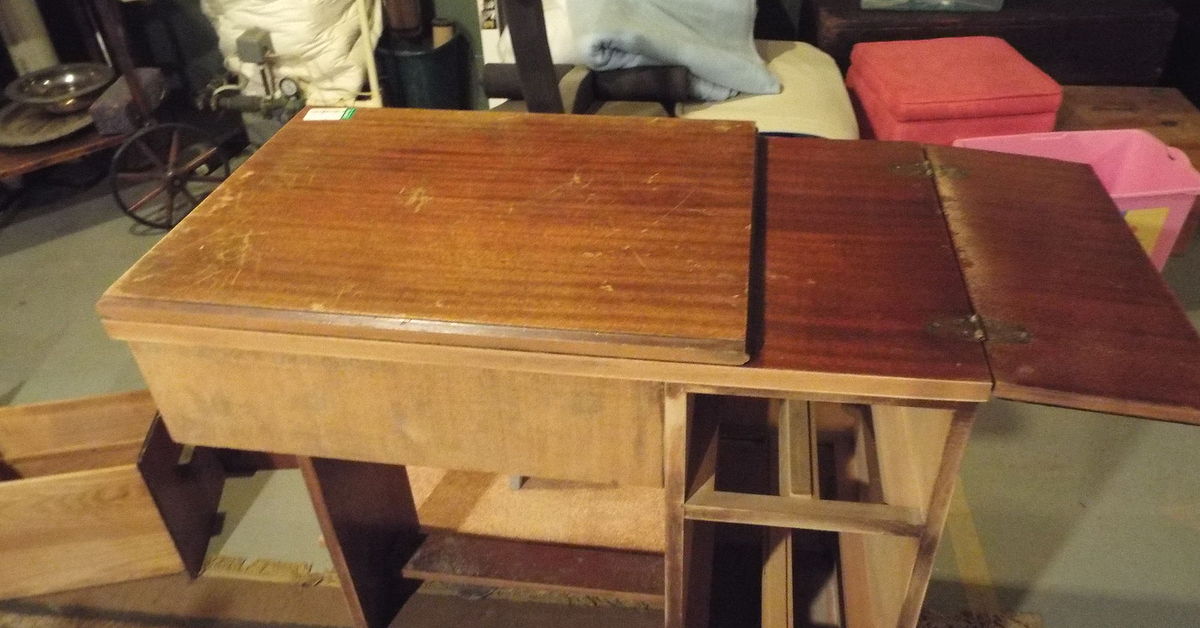
Every parent knows the strange magic of Christmas shopping: one minute you are looking for a sensible gift, and the next minute you are standing in Goodwill, staring at an old sewing table like it just whispered, “I could be something fabulous.” That is exactly the kind of holiday treasure hunt that turns a forgotten piece of furniture into a memory your kids may talk about long after the wrapping paper has been recycled.
A repurposed sewing table is more than a budget-friendly Christmas gift. It is a creative project, a lesson in sustainability, a small home makeover, andif everything goes wella proud “I made that” moment. Vintage sewing tables and cabinets often have solid bones, charming details, drawers for storage, and just enough personality to beat a flat-packed desk that arrives with 43 screws and an instruction booklet written by chaos itself.
This article explores how a Goodwill sewing table can become a thoughtful Christmas surprise for kids, what to look for before buying, how to refinish it safely, and how to turn it into something practical: a homework desk, art station, LEGO table, reading nook, pretend shop counter, or craft headquarters. The best part? You do not need to be a master woodworker. You just need a good eye, a little patience, and the courage to believe that a scuffed old table can still have a second act.
Why a Goodwill Sewing Table Makes a Great Christmas Gift
Goodwill finds have a special kind of charm because they come with mystery. Who owned this sewing table before? What projects were made on it? Was it used to hem school uniforms, stitch Halloween costumes, or repair pants after someone’s “watch this” moment ended badly? That history gives the piece warmth before you even touch a paintbrush.
For kids, a repurposed sewing table can feel custom-made. Unlike a store-bought desk, it can be sized, colored, and decorated around their personality. One child may want soft pastel paint and gold knobs. Another may prefer bold green, dinosaur decals, and a drawer labeled “Top Secret Snacks.” The furniture becomes part of their world rather than just another object in the room.
The Budget Advantage
One of the biggest reasons parents love thrifted furniture projects is cost. A new kids’ desk, vanity, or craft table can quickly become expensive, especially during the Christmas season when the family budget is already doing gymnastics. A Goodwill sewing table often costs far less than buying something new, leaving room for paint, hardware, baskets, art supplies, or a small chair.
The real “score” is not just the price tag. It is value. If the table is sturdy, well-built, and easy to refresh, you may end up with a piece that looks boutique without paying boutique prices. That is the sweet spot of thrift shopping: low cost, high character, and just enough bragging rights to casually mention it at least three times during holiday dinner.
The Sustainability Bonus
Repurposing furniture keeps usable items out of the waste stream and reduces the need to buy newly manufactured products. That matters even more during the holidays, when packaging, shipping, returns, and impulse purchases can pile up quickly. Giving an old sewing table a new purpose is a practical way to celebrate without adding more clutter to the planet.
Kids also learn from the process. A thrift flip teaches them that “old” does not mean useless, and “used” does not mean undesirable. It shows creativity, resourcefulness, and care. Those are pretty good Christmas lessons, especially in a season when children are often surrounded by shiny new things that lose their sparkle by New Year’s.
How to Choose the Right Sewing Table at Goodwill
Not every thrifted sewing table is a winner. Some are hidden gems; others are basically firewood wearing drawers. Before you celebrate your Goodwill score, take a few minutes to inspect the piece carefully.
Check the Structure First
Start by giving the table a gentle shake. It should not wobble like a newborn deer. Look at the legs, joints, hinges, drawer slides, and tabletop. If the frame feels solid, you have a strong starting point. Loose screws and minor wobbling can often be fixed, but cracked legs, major water damage, or warped wood may turn your cheerful Christmas project into a long-running family drama.
Open and close every drawer. Check whether the tabletop has a hole where the sewing machine once sat. Many vintage sewing cabinets have a fold-down or lift-up section, and that can either be a feature or a challenge depending on your plan. If you want a smooth desk surface, you may need to fill the opening with plywood, a wood panel, or a removable insert.
Look for Real Wood or Quality Veneer
Solid wood is usually easier to repair and refinish than particle board. That said, many vintage sewing tables include veneer, and veneer can still look beautiful when handled gently. Avoid aggressive sanding on thin veneer because you can burn right through it faster than a kid can find hidden Christmas cookies.
If the piece has original hardware, decorative legs, dovetail drawers, or a well-made cabinet frame, those details can add charm. Even if the finish is ugly, scratched, or stuck in a color best described as “grandma’s basement brown,” paint and stain can work wonders.
Smell Matters
This may sound funny, but smell the furniture. Musty, smoky, or pet-heavy odors can be stubborn. A little dust is fine. A full haunted-attic aroma is not ideal for a child’s bedroom or playroom. If the smell is strong at the store, it may remain strong at home unless you are willing to clean, deodorize, and seal the piece properly.
Safety Comes Before Style
A kids’ Christmas furniture project must be safe before it is cute. A repurposed sewing table should be stable, smooth, and appropriate for how your child will use it. This is especially important if the table has fold-out leaves, heavy drawers, sharp corners, or old hardware.
Sand Rough Areas
Run your hand along the edges, underside, drawer pulls, and tabletop. Splinters are not festive. Sand rough patches until the surface feels smooth. If the table has chipped veneer, glue it down or remove loose pieces before painting. For young children, rounded edges are safer than sharp corners.
Use Child-Safe Finishes
Choose low-odor, low-VOC paint and sealers when possible, especially if the table will go in a bedroom or craft area. Let paint cure fully before wrapping the gift or placing supplies in the drawers. Dry-to-the-touch does not always mean fully cured, and nobody wants a Christmas morning desk that smells like a hardware aisle.
Check for Tip-Over Risk
Most sewing tables are lower than tall dressers, but stability still matters. If the table has a heavy top, narrow base, or drawers that could tempt a climbing child, consider using an anti-tip restraint appropriate for the furniture and wall type. Also place heavier items low and avoid storing tempting toys in upper compartments if the piece has vertical storage.
Creative Ways to Repurpose a Sewing Table for Kids
The best part of a Goodwill sewing table makeover is deciding what it should become. A sewing cabinet already has a work surface and storage, which makes it surprisingly flexible. Here are several kid-friendly ideas.
1. Homework Desk
A repurposed sewing table can become a compact homework station. Fill the old machine opening with a smooth insert, paint the frame, and add a comfortable chair. Use drawers for pencils, flashcards, headphones, notebooks, and emergency erasers. Add a small lamp and you have a study spot that feels personal without taking over the room.
2. Art and Craft Station
If your child loves markers, paint, stickers, beads, or anything that somehow ends up glued to the dog, turn the sewing table into an art station. Line drawers with removable organizers. Add a roll of craft paper under the tabletop or attach cups for crayons. A washable topcoat can help protect the surface from creative “oops” moments.
3. LEGO or Building Table
A sewing table with drawers is perfect for small building pieces. Attach a building baseplate to the top or create a removable tray. Store bricks by color, size, or whatever system your child swears makes sense even though it looks like a tiny plastic tornado. The table gives kids a dedicated space to build without spreading pieces across the entire house.
4. Pretend Play Counter
With paint, knobs, hooks, and imagination, a sewing table can become a pretend bakery, vet clinic, post office, flower shop, or Santa’s workshop. The drawers can hold play money, menus, toy tools, stamps, or stuffed animal bandages. This type of makeover works beautifully as a Christmas gift because it feels like a play set but is sturdier and more personal than many plastic versions.
5. Vanity or Hair Station
For older kids, a sewing table can become a small vanity. Add a mirror, soft lighting, and drawer dividers for brushes, clips, lip balm, and accessories. Keep it age-appropriate and practical. The goal is not to create a beauty salon; it is to give a child a tidy place for morning routines and self-expression.
6. Reading and Writing Nook
Pair the table with a cozy chair, a basket of books, and a small lamp. Add a drawer for bookmarks, journals, and stationery. A vintage sewing table has a quiet, storybook quality that fits perfectly with a reading corner. It says, “Come sit here and write something magical,” which is much better than, “Please stop drawing on the wall.”
Step-by-Step Makeover Plan
A sewing table Christmas makeover does not have to be complicated. Keep the process simple, especially if you are working during the busy holiday season.
Step 1: Clean Thoroughly
Remove dust, grime, stickers, and mystery residue. Use a gentle cleaner suitable for the material. Take out drawers and clean inside them. If the table smells musty, let it air out, use baking soda in the drawers, and consider sealing unfinished interior wood.
Step 2: Repair and Tighten
Tighten loose screws, glue weak joints, replace missing hardware, and fill holes or dents with wood filler. If the sewing machine opening needs to be covered, measure carefully and cut a panel to fit. A smooth surface makes the finished table much more useful for kids.
Step 3: Sand Lightly
Sand enough to smooth the surface and help primer stick. You do not always need to strip the entire finish. For painted makeovers, light sanding plus a good primer often works well. Wipe away all dust before painting.
Step 4: Prime and Paint
Primer helps paint adhere and gives a more even finish. Choose colors that fit your child’s room or personality. Classic white, soft blue, forest green, cheerful yellow, or warm blush can all work well. If you want a Christmas reveal, you can even paint the inside of a drawer a surprise color.
Step 5: Add Hardware and Details
New knobs can completely change the look. Try wooden knobs, brass pulls, ceramic handles, or colorful drawer knobs. Add peel-and-stick wallpaper inside drawers, a chalkboard panel on the side, or labels for supplies. These small touches make the piece feel intentional rather than simply painted.
Step 6: Seal the Surface
Kids are not gentle furniture critics. They spill juice, press too hard with markers, stack glue sticks like engineering materials, and occasionally test gravity. A durable clear topcoat helps protect your work. Give it enough curing time before use.
How to Make the Christmas Reveal Special
The reveal is part of the gift. You can place the finished sewing table near the tree with a big bow, or set it up in your child’s room after bedtime like Santa’s design team made a house call.
Stock the drawers with useful surprises: colored pencils, sketch pads, stickers, a small notebook, washable markers, craft scissors for older kids, or building bricks. A handwritten tag can say, “Made just for you.” That little note may matter more than the paint color.
You can also include your child in part of the process. Let them choose the color, knobs, or drawer liner. If the table is a Christmas surprise, ask sneaky questions weeks earlier: “If you had a craft desk, would it be blue or green?” Then act casual, as if you are not secretly running a thrifted furniture operation in the garage.
Common Mistakes to Avoid
A Goodwill sewing table project is beginner-friendly, but a few mistakes can make the process harder than it needs to be.
Buying a Piece That Needs Too Much Work
It is easy to fall in love with potential. Unfortunately, potential does not tighten broken legs or remove deep mold. Choose a table that matches your skill level and timeline. Christmas has a way of arriving whether or not your primer has dried.
Skipping the Prep
Paint does not hide everything. Dirt, grease, peeling finish, and loose veneer can ruin the final result. Cleaning, sanding, and priming may not be glamorous, but they are the difference between a lasting makeover and a paint job that chips before the first New Year’s resolution.
Forgetting How Kids Actually Use Furniture
A beautiful table is nice. A useful table is better. Think about storage, height, chair size, wipeable surfaces, and daily habits. If your child loves messy crafts, choose finishes that can handle cleaning. If your child needs a homework desk, keep the surface uncluttered. Design for real life, not just the photo.
Experience: What This Kind of Project Teaches a Family
The best part of repurposing a Goodwill sewing table for kids at Christmas is not only the finished furniture. It is the experience wrapped around it. There is something deeply satisfying about walking into a thrift store with no guarantee, spotting a dusty little table, and seeing what it could become before anyone else does. It feels like finding a secret.
The project also changes the way kids see objects. When they watch an old sewing table become a bright desk or play station, they begin to understand that creativity is not limited to paper, paint, or craft kits. Creativity can be practical. It can live in a screwdriver, a sanding block, a cleaned drawer, or a new knob. They see that transformation takes effort, and effort can be fun.
One of the most memorable parts is usually the messy middle. The table may look worse before it looks better. There may be sanding dust on your sleeves, paint on your elbow, and a moment when you wonder whether you should have just bought a normal gift card like a reasonable person. But then the first coat dries. The new hardware goes on. The drawers slide back into place. Suddenly, the old table stands there looking proud, as if it always knew it had another Christmas in it.
For parents, this kind of project can feel surprisingly emotional. Kids grow quickly, and their interests change even faster. A handmade or repurposed gift slows the season down. It says, “I noticed what you like. I made space for it. I spent time on this because you matter.” That message is powerful, even if your child’s first reaction is mostly excitement about the markers in the drawer.
There is also a practical parenting win. A dedicated table can reduce clutter by giving activities a home. Art supplies go in one drawer. Homework tools go in another. LEGO pieces, journals, pretend menus, or hair clips finally have somewhere to live besides the floor, the couch cushions, and the mysterious universe under the bed.
Over time, the table may evolve. A preschool craft station can become an elementary homework desk. A pretend bakery can become a writing nook. A vanity can become a small laptop station. That flexibility makes the project more meaningful. You are not just giving a Christmas gift; you are creating a piece that can grow with your child.
And yes, every time someone asks where you got it, you get to say, “Goodwill.” Then you pause for dramatic effect. Then you mention the price, because thrift pride is real and should be enjoyed responsibly.
Conclusion
A Goodwill sewing table can become one of the most memorable Christmas gifts in your home because it combines affordability, sustainability, creativity, and personal care. With a careful inspection, safe repairs, thoughtful paint choices, and a clear plan for how your child will use it, a thrifted table can transform into a homework desk, art station, LEGO zone, pretend play counter, vanity, or reading nook.
The real beauty of a repurposed sewing table is that it carries both old history and new purpose. It proves that a secondhand find can feel special, custom, and full of heart. In a season often crowded with fast purchases and disposable packaging, this kind of gift stands out because it was chosen, improved, and made with intention. That is a pretty good Christmas score.
Note: This article is based on practical thrift shopping, furniture upcycling, child-safety, and sustainable holiday-giving guidance from reputable U.S. organizations, home improvement publishers, and resale-focused resources.












