
Note: This article is written for general educational and SEO publishing purposes. It explores common misunderstandings about the Bible’s Christmas story by comparing popular Christmas traditions with what the biblical texts actually say.
Every December, the Christmas story gets unpacked along with the ornaments, lights, and that one tangled extension cord no one wants to admit they stored badly last year. Most people know the familiar scene: Mary and Joseph arrive in Bethlehem, an innkeeper shuts the door, baby Jesus is born in a wooden stable, angels sing overhead, shepherds show up, and three kings ride in on camels just in time for the family photo.
It is beautiful. It is memorable. It is also partly a mash-up of Scripture, tradition, art, Christmas carols, pageants, greeting cards, and centuries of imagination wearing a festive sweater.
The Bible’s Christmas story is mainly told in Matthew 1–2 and Luke 1–2. Those chapters are rich, meaningful, and surprisingly spare in some details. The Gospels do not read like a modern holiday movie script. They do not give us a full guest list, weather report, stable blueprint, or soundtrack. Instead, they offer theological portraits: Matthew emphasizes Jesus as the promised king and fulfillment of prophecy, while Luke highlights humility, ordinary people, divine surprise, and good news for the lowly.
So, before we accuse every nativity set of historical fraud, let’s be fair. Traditions are not automatically bad. They help people visualize and celebrate. But when tradition starts pretending to be the text itself, confusion sneaks in like a cat under the Christmas tree. Here are six things people often get wrong about the Bible’s Christmas storyand what the biblical account actually says.
1. People Think the Bible Says Jesus Was Born on December 25
Let’s start with the big one: the Bible never gives a calendar date for the birth of Jesus. Not December 25. Not January 6. Not “the third Tuesday after shepherd appreciation week.” Nothing that specific appears in Matthew or Luke.
Christmas is celebrated on December 25 by many Christians in the Western tradition, but that date developed later in church history. The Bible focuses far more on the meaning of Jesus’ birth than on the exact day it happened. Luke places the birth during a census associated with Caesar Augustus, while Matthew places the story during the time of King Herod. Those details create a historical setting, but they do not hand us a birthday invitation with a stamped RSVP card.
Why December 25 Became Popular
The December 25 date became established in Western Christianity centuries after the New Testament was written. Scholars have offered several explanations. Some connect the date with early Christian calculations linking Jesus’ conception and death. Others point to the way Christian observance developed alongside Roman winter festivals. Either way, the key SEO-friendly takeaway is simple: the Bible’s Christmas story does not say Jesus was born on December 25.
Does that mean celebrating Christmas on December 25 is wrong? Not necessarily. A birthday party can still be meaningful even if the exact historical date is unknown. The problem comes when people confuse the church calendar with the biblical text. The date is tradition; the birth story is Scripture.
2. People Picture an Angry Innkeeper, But the Bible Never Mentions One
One of the most dramatic characters in Christmas pageants is the innkeeper. He usually appears for about fifteen seconds, says something like “No room!” and becomes the holiday villain of hospitality. Poor guy. He has been blamed for two thousand years, and the Bible never even gives him a speaking role. In fact, it does not mention him at all.
Luke says Mary laid Jesus in a manger because there was no room for them in the “inn,” depending on the translation. However, many modern scholars note that the Greek word often translated as “inn” can also mean a guest room or lodging space. In another place in Luke, a different Greek word is used for a commercial inn. That matters because it changes the mental picture.
Guest Room, Not Hotel Lobby
The popular image is Mary and Joseph being turned away from a first-century hotel. But Bethlehem was Joseph’s ancestral town, and ancient hospitality customs were very different from modern travel culture. It is quite possible that Luke’s description points to a crowded family home where the normal guest space was unavailable. The manger suggests a place where animals were kept or fed, but not necessarily a lonely barn behind a motel.
This interpretation does not make the story less humble. Actually, it may make it more human. Jesus is born not in royal comfort, not in a palace nursery, and not in a polished religious center, but in the middle of crowded, ordinary life. The Son of God arrives where there is noise, inconvenience, family traffic, and probably someone asking where the extra blankets went.
3. People Say Jesus Was Born in a Stable, But the Bible Only Mentions a Manger
Here is another classic Christmas assumption: Jesus was born in a stable. It might have been a stable, but the Bible does not directly say that. Luke mentions a manger, which is a feeding trough. From that detail, people infer animals and then infer a stable. That is understandable, but it is still an inference.
In many traditional homes of the ancient Near East, animals could be kept close to the household, sometimes in a lower area of the home or an attached space. A manger could fit that setting. Some later Christian traditions imagined a cave. Western art often gave us the wooden stable. Your ceramic nativity set probably chose the version that was easiest to manufacture and least likely to require archaeological footnotes.
The Manger Matters More Than the Building
The manger is not just background decoration. In Luke’s story, it becomes a sign. The angel tells the shepherds they will find a baby wrapped in cloths and lying in a manger. That detail identifies the child and emphasizes the shock of the scene: the promised Savior is not found in luxury but in humility.
That is the deeper point. The Bible’s Christmas story does not spend time describing the architecture because the message is not “admire the stable.” The message is that God’s work enters the world in a way that overturns expectations. The manger says, quietly but powerfully, that divine glory can appear in places people overlook.
4. People Think There Were Exactly Three Wise Men
Most nativity scenes include three wise men. They often have crowns, camels, fancy robes, and gifts held with the careful seriousness of people transporting expensive perfume through airport security. But Matthew does not say there were three of them.
Matthew says “magi” came from the east. The number three likely comes from the three gifts: gold, frankincense, and myrrh. That is a reasonable tradition, but it is not a number supplied by the Gospel. There could have been two magi. There could have been more. There may have been a larger traveling group with servants or companions. The text simply does not say.
Were They Kings?
The Bible also does not explicitly call them kings. The word “magi” likely refers to learned men associated with astrology, dream interpretation, or priestly wisdom in the ancient East. Over time, Christian tradition connected them with Old Testament imagery of kings and nations bringing gifts. That is how “wise men” gradually became “three kings” in carols and pageants.
Again, tradition is not the enemy. The problem is when we forget the difference between “Matthew says” and “a Christmas song says.” Matthew’s point is not that three royal celebrities arrived with excellent gift-wrapping skills. His point is that Gentile outsiders recognize the significance of Jesus, while Herod, the local king, responds with fear and hostility.
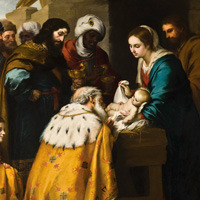
5. People Put the Wise Men at the Manger, But Matthew Suggests a Later Visit
This one may be the biggest shock to anyone who grew up arranging nativity figures on a coffee table. In most displays, the shepherds and wise men arrive together, creating one big Christmas crowd. Luke gives us shepherds visiting the baby in a manger. Matthew gives us magi visiting Jesus in a house. The two scenes are not described as happening at the same moment.
Matthew says the magi came after Jesus was born. When they find him, they enter a house and see the child with Mary. The text does not place them at the manger. It also does not say they arrived on the night of Jesus’ birth. Herod later orders the killing of boys in Bethlehem who were two years old and under, based on the time he learned from the magi. That grim detail suggests some time may have passed.
Why Nativity Sets Combine the Scenes
So why do nativity sets put everyone together? Because visually and devotionally, it works. Shepherds represent local, humble witnesses. Magi represent distant, Gentile seekers. Angels represent heavenly announcement. Put them all around the Christ child, and you get a beautiful theological summary. It is not a timeline; it is a symbol.
That is fineas long as we know what we are looking at. A nativity set is more like a visual sermon than a documentary still frame. It compresses Matthew and Luke into one scene to communicate the meaning of Christmas: Jesus is good news for the poor, the powerful, the near, the far, Israel, and the nations.
6. People Imagine the Angels Sang, But Luke Says They Were Praising and Saying
Brace yourself: Luke does not specifically say the angels sang. The heavenly host appears with the angel, praising God and saying, “Glory to God in the highest heaven, and peace on earth to people he favors,” depending on the translation.
Now, could angelic praise have sounded musical? Sure. If a multitude of heavenly beings appeared in the sky, nobody on the ground would likely pause to argue about genre. Still, the text says “saying,” not “singing.” The idea of singing angels became deeply rooted through hymns, carols, art, and worship tradition.
Why This Detail Still Matters
This does not mean “Hark! The Herald Angels Sing” should be banned from the Christmas playlist. Please do not start a family argument over this while someone is carving ham. The point is not to become a holiday fact-checking goblin. The point is to notice how tradition expands the biblical scene.
Luke’s focus is proclamation. Heaven announces the birth of the Savior to shepherds. The message is public, joyful, and disruptive. The shepherds are terrified at first, then they go to Bethlehem, find the child, and spread the word. Whether the angels sang or spoke, Luke wants readers to hear the announcement: glory to God, peace on earth, and good news arriving in an unexpected place.
Why These Christmas Story Misconceptions Matter
Some people hear corrections like these and worry that the Christmas story is being taken apart. But careful reading does not ruin the story. It often makes it stronger. The actual biblical accounts are leaner, stranger, and more powerful than the polished holiday version.
The popular version can become too comfortable. It turns the birth of Jesus into a cozy snow-globe scene: cute animals, soft straw, clean robes, calm baby, glowing star, and everyone politely gathered as if posing for a church bulletin cover. The biblical version is more challenging. It includes political power, imperial census, poverty, fear, travel, outsiders, divine messages, and a child whose birth unsettles kings.
Matthew and Luke are not simply giving readers decorative Christmas content. They are making claims about identity, power, promise, and hope. Jesus is connected to David’s line. His birth fulfills God’s purposes. His arrival is announced to the humble and recognized by foreigners. The powerful feel threatened. The ordinary are invited close. That is much richer than a greeting card.
How to Read the Bible’s Christmas Story More Carefully
If you want to understand the Bible’s Christmas story without getting tangled in tradition, start by reading Matthew 1–2 and Luke 1–2 separately. Notice what each Gospel includes and what each one leaves out. Matthew has Joseph’s dreams, the magi, Herod, the star, the flight to Egypt, and the return to Nazareth. Luke has Gabriel’s announcement to Mary, the journey to Bethlehem, the manger, shepherds, angels, and the presentation in the temple.
Then ask better questions. What does Matthew emphasize? What does Luke emphasize? Why are shepherds important in Luke? Why do magi matter in Matthew? Why is Herod troubled? Why is Mary repeatedly shown treasuring and pondering these events? These questions move us beyond “Was there a donkey?” into the meaning of the story itself.
Experiences Related to the Topic: Seeing the Christmas Story With Fresh Eyes
Many people first meet the Christmas story through childhood pageants, picture books, ornaments, and songs. That is not a bad beginning. In fact, it can be a lovely one. A child dressed as a sheep with cotton balls glued to a shirt may not deliver a historically precise reconstruction of first-century Bethlehem, but the memory can still carry warmth, wonder, and a sense that the story matters.
The interesting part comes later, when people return to the biblical text as adults and realize how much they have assumed. Someone reads Matthew and asks, “Wait, where are the shepherds?” Then they read Luke and ask, “Hold on, where are the wise men?” Suddenly the familiar story becomes new again. It feels a little like discovering that a favorite family recipe has ingredients nobody wrote down because Grandma just “knew.”
One common experience is surprise at how quiet the biblical text is about details modern readers want to know. We want to know what Mary felt during the journey. We want to know whether Joseph panicked. We want to know who helped with the birth. We want to know whether animals were nearby, what the weather was like, and how long the family stayed in Bethlehem. The Gospels do not answer all of that. Instead, they guide attention toward theological meaning.
Another experience is learning to appreciate tradition without confusing it with Scripture. A nativity scene can still be meaningful even if it combines events. Christmas carols can still be beautiful even when they poetically expand the text. The key is honesty. We can say, “This is a beloved tradition,” without saying, “This is exactly what the Bible describes.” That distinction protects both faith and intelligence, which make a very underrated holiday pair.
People also often find that the more accurate version of the Christmas story feels more relevant, not less. A crowded home sounds more like real life than a spotless stable. A frightened group of shepherds sounds more human than a polished religious audience. Magi traveling from far away suggest that spiritual seeking can come from unexpected directions. Herod’s fear reminds readers that the story is not only sentimental; it is also political and disruptive.
For many readers, the biggest shift is emotional. The Christmas story stops being merely cute and becomes courageous. Mary is not just a porcelain figure in blue robes; she is a young woman receiving a life-changing message. Joseph is not a background statue; he is a man asked to trust God in confusing circumstances. The shepherds are not decorative extras; they are the first public witnesses in Luke’s account. The magi are not just gift delivery specialists; they are outsiders who recognize a king.
That kind of reading can deepen Christmas. It does not require throwing away the lights, music, cookies, or family traditions. Please keep the cookies. The world has enough problems. But it does invite readers to open the Bible alongside the holiday decorations and let the text speak in its own voice.
In the end, the Bible’s Christmas story is not weakened by clearing away misconceptions. It becomes more vivid. The real story is not less beautiful because there may be no innkeeper, no confirmed stable, no exact number of magi, and no stated December 25 birthday. It is beautiful because it tells of divine hope arriving in humility, being announced to ordinary people, recognized by unexpected visitors, and set against the anxieties of earthly power. That is a Christmas story sturdy enough to survive both scholarship and inflatable lawn decorations.
Conclusion
The Bible’s Christmas story is familiar, but it is not always familiar because people have read Matthew and Luke carefully. Often, it is familiar because art, music, pageants, and tradition have blended the details into one beloved scene. That scene can be meaningful, but it should not replace the biblical text.
The six common misunderstandings are simple: the Bible does not name December 25 as Jesus’ birthday; it does not mention an innkeeper; it does not directly say Jesus was born in a stable; it does not say there were exactly three wise men; it does not place the magi at the manger; and it does not specifically say the angels sang. Knowing these things does not cancel Christmas. It helps readers understand it better.
When we let Scripture speak clearly, the Christmas story becomes less like a decorative scene and more like a powerful announcement. It is a story about humility, promise, fear, worship, outsiders, ordinary workers, and the surprising ways God works in the world. That is far more compelling than a perfectly arranged holiday display. And yes, your nativity set can stay on the mantel. Just maybe let the wise men travel a little.












