
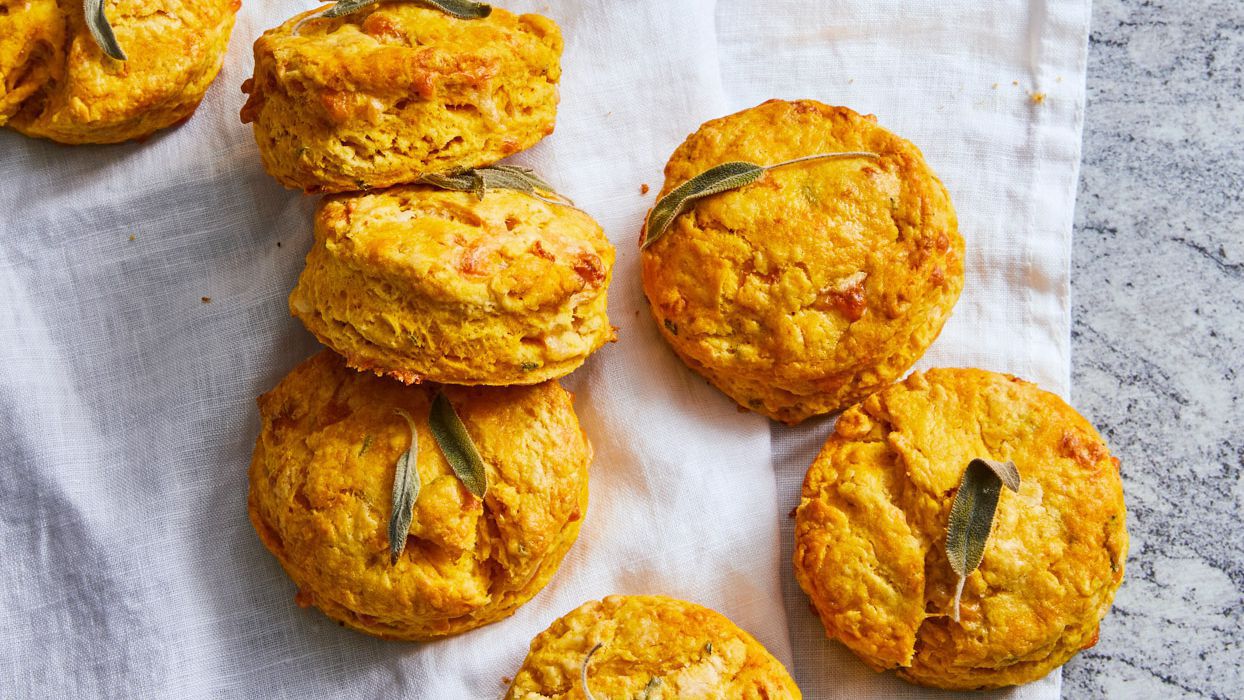
Some recipes walk into the kitchen wearing fuzzy socks and carrying a mug of cider. These Pumpkin-Sage White Cheddar Biscuits are exactly that kind of recipe: warm, savory, buttery, a little rustic, and just fancy enough to make people think you planned dinner three days in advance. You did not. The biscuits are simply doing excellent public relations for you.
This recipe brings together creamy pumpkin puree, sharp white cheddar, fresh sage, cold butter, and a tender buttermilk-style biscuit dough. The result is a batch of golden biscuits with flaky edges, soft centers, and a flavor that lands somewhere between Thanksgiving side dish, cozy brunch hero, and “I accidentally ate three before dinner.”
The beauty of pumpkin biscuits is that pumpkin adds moisture, color, and gentle earthiness without turning the dough into dessert. Sage gives the biscuits a woodsy, savory lift, while white cheddar brings salt, tang, and richness. Together, they make a biscuit that works with roasted turkey, creamy soups, scrambled eggs, honey butter, or a quiet moment over the sink when nobody is watching.
Why This Pumpkin-Sage White Cheddar Biscuits Recipe Works
A great biscuit is all about balance. Too much liquid and the dough becomes heavy. Too much mixing and the biscuits turn tough. Too little fat and, frankly, why are we even here? This recipe keeps the method simple while paying attention to the small details that make homemade biscuits rise high and taste bakery-worthy.
Cold butter is the first secret. When bits of butter stay solid in the dough, they melt in the oven and create steam pockets. Those pockets help form the flaky layers everyone wants. The second secret is using plain pumpkin puree, not pumpkin pie filling. Pumpkin pie filling contains sweeteners and spices that can push the flavor in the wrong direction. Plain puree keeps the biscuit savory and lets the cheddar and sage shine.
The third secret is restraint. Biscuit dough does not want a motivational speech or a full-body workout. It wants to be gently stirred, lightly folded, patted into shape, and left alone. Treat it kindly and it rewards you with tender layers. Overwork it and it becomes a tiny orange hockey puck with herbs.
Ingredients for Pumpkin-Sage White Cheddar Biscuits
This recipe makes about 10 to 12 biscuits, depending on the size of your cutter. For taller biscuits, use a 2 1/2-inch round cutter and press straight down without twisting.
Dry Ingredients
- 2 1/2 cups all-purpose flour, plus more for dusting
- 1 tablespoon baking powder
- 1/2 teaspoon baking soda
- 1 tablespoon light brown sugar
- 1 teaspoon kosher salt
- 1/4 teaspoon freshly ground black pepper
- 1/8 teaspoon ground nutmeg, optional
Flavor and Fat
- 1/2 cup very cold unsalted butter, cut into small cubes or grated
- 1 cup shredded sharp white cheddar cheese
- 1 1/2 tablespoons finely chopped fresh sage
Wet Ingredients
- 3/4 cup plain pumpkin puree
- 1/3 cup cold buttermilk, plus 1 to 2 tablespoons more if needed
- 1 large egg, lightly beaten
For Brushing
- 2 tablespoons melted butter
- 1 teaspoon chopped fresh sage, optional
- A tiny pinch of flaky salt, optional
How to Make Pumpkin-Sage White Cheddar Biscuits
Step 1: Prepare the Oven and Pan
Preheat your oven to 425°F. Line a baking sheet with parchment paper. A hot oven is important because biscuits need quick heat to rise before the butter fully melts. Think of it as giving the dough a dramatic entrance.
Step 2: Mix the Dry Ingredients
In a large bowl, whisk together the flour, baking powder, baking soda, brown sugar, salt, black pepper, and nutmeg if using. The brown sugar does not make the biscuits sweet; it rounds out the pumpkin and helps the tops brown beautifully.
Step 3: Cut in the Butter
Add the cold butter to the flour mixture. Use a pastry cutter, two forks, or your fingertips to work the butter into the flour until the mixture looks like coarse crumbs with some pea-size pieces remaining. Those visible pieces of butter are not mistakes. They are future flakiness wearing a disguise.
If your kitchen is warm, use frozen grated butter. Grating helps distribute the butter quickly without melting it. If the butter begins to soften, place the bowl in the freezer for 10 minutes before continuing.
Step 4: Add White Cheddar and Sage
Stir in the shredded sharp white cheddar and chopped fresh sage. Sharp white cheddar is ideal because its flavor does not disappear during baking. Mild cheddar works, but it whispers when this recipe really wants a friendly shout.
Step 5: Combine the Wet Ingredients
In a separate bowl, whisk together the pumpkin puree, cold buttermilk, and beaten egg until smooth. If your pumpkin puree seems watery, blot it gently with paper towels before measuring. Pumpkin adds moisture, but too much can make biscuits dense.
Step 6: Make the Dough
Pour the pumpkin mixture into the flour mixture. Stir gently with a fork or spatula just until the dough begins to come together. It should look shaggy, not smooth. If dry flour remains at the bottom of the bowl, add 1 tablespoon of cold buttermilk at a time until the dough holds together.
Step 7: Fold for Layers
Turn the dough out onto a lightly floured surface. Pat it into a rectangle about 1 inch thick. Fold the dough in half, pat it down again, and repeat this folding process 2 or 3 times. This simple technique creates layers without requiring pastry-school energy or emotional support.
Step 8: Cut the Biscuits
Pat the dough to about 3/4 to 1 inch thick. Cut out biscuits with a floured round cutter, pressing straight down. Do not twist the cutter, because twisting can seal the edges and limit the rise. Gather scraps gently and cut more biscuits, knowing the second round may be a little more rustic. Rustic is just French for “still delicious.”
Step 9: Bake Until Golden
Place the biscuits close together on the prepared baking sheet for softer sides or spaced apart for crispier edges. Bake for 15 to 18 minutes, or until the tops are golden and the biscuits are cooked through.
Step 10: Brush and Serve
Stir the melted butter with chopped sage if desired. Brush it over the hot biscuits and finish with a tiny pinch of flaky salt. Serve warm, preferably before someone asks, “Are these homemade?” and you have to pretend to be humble.
Tips for the Best Pumpkin Cheddar Biscuits
Use Plain Pumpkin Puree
Choose canned plain pumpkin puree or homemade pumpkin puree that has been drained well. Avoid pumpkin pie filling because it contains sugar and spices that may overpower the cheddar and sage.
Keep Everything Cold
Cold butter, cold buttermilk, and a cool mixing bowl help create flaky biscuits. If the dough feels sticky or the butter begins melting, chill the dough for 15 minutes before cutting and baking.
Do Not Overmix
Overmixing develops gluten, which can make biscuits chewy instead of tender. Mix only until the dough comes together. A few rough spots are fine. Biscuit dough is supposed to look slightly messy; it is not applying for a passport photo.
Choose a Strong Cheese
Sharp white cheddar gives the best flavor. Extra-sharp cheddar also works well if you want a bolder biscuit. For a softer, creamier note, try a mix of white cheddar and Gruyere.
Fresh Sage Is Worth It
Dried sage can work in a pinch, but fresh sage gives a brighter, cleaner flavor. If using dried sage, reduce the amount to about 1 1/2 teaspoons because dried herbs are more concentrated.
Flavor Variations
Honey Butter Pumpkin Biscuits
Brush the baked biscuits with melted butter mixed with 1 tablespoon honey. This version is perfect for brunch or holiday breakfast boards.
Spicy Pumpkin Cheddar Biscuits
Add 1/4 teaspoon cayenne pepper or 1 finely chopped jalapeño to the dough. The heat plays nicely with the sweet earthiness of pumpkin.
Garlic-Sage Cheddar Biscuits
Add 1/2 teaspoon garlic powder to the dry ingredients for a more savory dinner biscuit. Serve with chili, roasted chicken, or creamy potato soup.
Maple Breakfast Biscuits
Add 1 tablespoon maple syrup to the wet ingredients and reduce the buttermilk slightly if needed. These are excellent with eggs, sausage patties, or apple butter.
What to Serve With Pumpkin-Sage White Cheddar Biscuits
These biscuits are flexible enough to move from breakfast to dinner without changing outfits. Serve them with scrambled eggs, omelets, or a breakfast casserole. At lunch, split them open and add turkey, cranberry sauce, and a little mayonnaise for a fall sandwich that tastes like the day after Thanksgiving got promoted.
For dinner, pair them with roasted chicken, turkey, pork tenderloin, beef stew, butternut squash soup, tomato soup, or chili. They are especially good beside creamy soups because the sharp cheddar and sage cut through richness.
For a holiday table, place the biscuits in a basket lined with a clean towel and serve them warm with salted butter, honey butter, or whipped maple butter. They look beautiful, smell incredible, and disappear faster than the one clean spoon in a busy kitchen.
How to Store and Reheat
Store leftover biscuits in an airtight container at room temperature for up to 2 days. For longer storage, refrigerate them for up to 5 days or freeze them for up to 2 months.
To freeze, let the biscuits cool completely, then wrap them tightly and place them in a freezer-safe bag. Reheat frozen biscuits in a 350°F oven for 10 to 15 minutes, or until warmed through. Avoid microwaving if possible because it can soften the flaky texture. The microwave is fast, yes, but it has never cared about biscuit dignity.
Can You Make the Dough Ahead?
Yes. You can cut the biscuits, place them on a parchment-lined baking sheet, cover them, and refrigerate for up to 12 hours before baking. Bake them straight from the refrigerator, adding 1 to 2 extra minutes if needed.
You can also freeze unbaked biscuits. Cut them out, freeze them on a tray until firm, then transfer them to a freezer-safe bag. Bake from frozen at 425°F, adding a few extra minutes to the baking time. This is a smart move before Thanksgiving, holiday brunch, or any weekend when you want homemade biscuits without flour on your shirt before 9 a.m.
Common Mistakes to Avoid
Using Too Much Pumpkin
Pumpkin puree is moist, so more is not always better. Extra pumpkin can make biscuits heavy and gummy. Measure carefully and blot watery puree if needed.
Twisting the Biscuit Cutter
Press straight down and lift straight up. Twisting seals the edges, which can stop the biscuits from rising properly.
Baking at Too Low a Temperature
Biscuits need high heat. A 425°F oven helps the butter release steam quickly, giving the biscuits lift and flaky layers.
Skipping the Salt
Salt balances the pumpkin, cheese, and butter. Without enough salt, the biscuits can taste flat. Use kosher salt in the dough and finish with flaky salt if you want a bakery-style touch.
Recipe Experience: What It Feels Like to Make These Biscuits at Home
Making Pumpkin-Sage White Cheddar Biscuits is one of those kitchen experiences that feels more impressive than it actually is. The dough comes together quickly, but the aroma makes the whole house smell like you have been calmly preparing for fall since sunrise. In reality, you may have started 35 minutes ago while also looking for the measuring spoons. The biscuits do not judge.
The first thing you notice is the color. Once the pumpkin puree hits the flour, the dough turns a soft orange-gold, the kind of color that makes you want to put on a sweater even if the weather has other plans. Then the sage joins in, bringing a savory, almost piney fragrance. It keeps the recipe from drifting into dessert territory. This is not pumpkin spice cake pretending to be breakfast. This is a real biscuit with a savory backbone.
The cheddar is where things get serious. Sharp white cheddar melts into little pockets throughout the dough, giving every bite a salty, creamy edge. If a bit of cheese escapes onto the baking sheet and turns crisp around the bottom of a biscuit, consider that a bonus snack from the universe. Do not apologize for eating it before serving. That crispy cheese has a very short life expectancy.
One practical experience worth mentioning: the dough may feel slightly softer than classic buttermilk biscuit dough because pumpkin adds moisture. That is normal. The goal is not to force it into a perfectly smooth ball. Keep your hands lightly floured, pat the dough gently, and move with confidence. If it sticks a little, dust the surface. If it feels too warm, chill it. Biscuits respond well to calm problem-solving and poorly to panic kneading.
The folding step is especially satisfying. Each fold makes the dough look more organized, and when the biscuits bake, those folds become tender layers. You do not need a rolling pin unless you like using one. Your hands are enough. Patting the dough instead of rolling also makes the process feel more relaxed, like something your grandmother might do while telling a story that begins with “Back when butter tasted like butter.”
When the biscuits come out of the oven, the tops should be lightly golden, the edges set, and the bottoms just crisp enough to hold together when split. Brush them with sage butter while they are still hot so the butter sinks into the tops. This is the moment when people wander into the kitchen pretending they came in for water.
The best way to enjoy them is warm, split open, with a little salted butter. Honey butter is wonderful if you want a sweet-savory bite. For a meal, they are excellent beside soup or used as the base for mini breakfast sandwiches. They also make leftovers feel intentional. A reheated biscuit with scrambled eggs the next morning tastes less like leftovers and more like a tiny brunch plan.
In short, this recipe is approachable, cozy, and forgiving. It has enough personality for a holiday table but is simple enough for a weekend bake. The biscuits taste like fall without being predictable, and they bring together pumpkin, sage, and white cheddar in a way that feels comforting but not heavy. They are the kind of biscuits that make people ask for the recipe before they finish chewing, which is both flattering and slightly dangerous.
Conclusion
Pumpkin-Sage White Cheddar Biscuits are the perfect savory fall biscuit: flaky, tender, buttery, cheesy, and warmly flavored with pumpkin and fresh sage. They are simple enough for beginner bakers but special enough for Thanksgiving, brunch, potlucks, soup night, or any meal that could use a little golden comfort on the side.
The key is to keep the butter cold, use plain pumpkin puree, avoid overmixing, and let sharp white cheddar do what sharp white cheddar does best: make everything taste more exciting. Once you master the basic recipe, you can customize it with garlic, jalapeño, maple butter, honey, or extra herbs. However you serve them, these biscuits bring cozy flavor without making the process complicated.













