
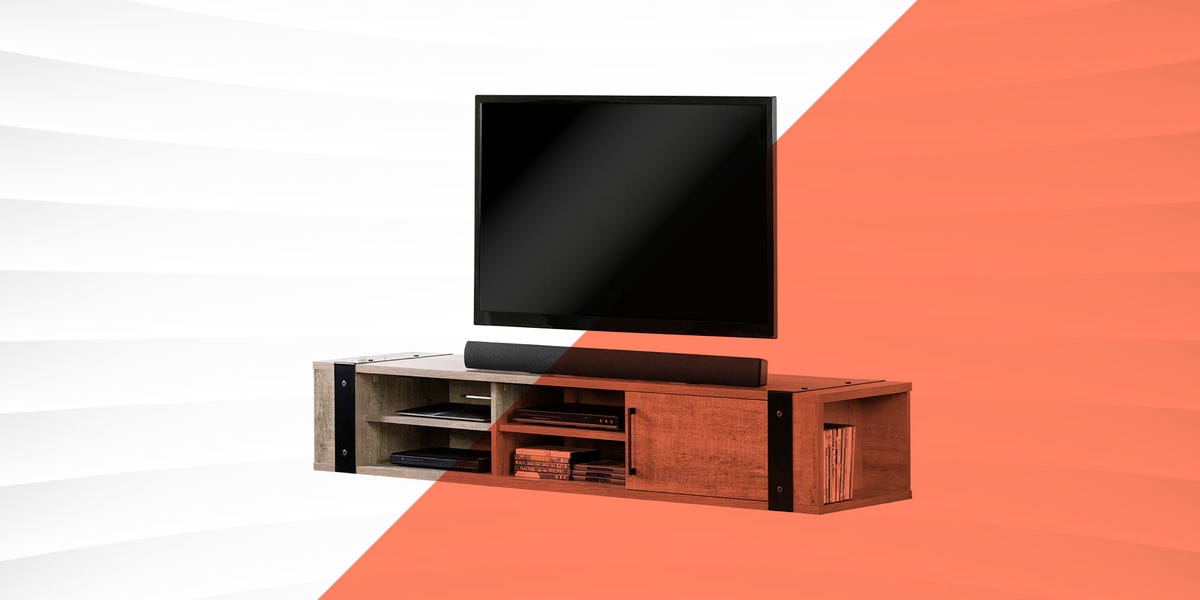
A floating TV stand is one of those home upgrades that looks fancy, saves space, and quietly tells your clutter, “Please find another planet.” Unlike a traditional media console that sits on the floor and collects dust bunnies with suspicious confidence, a floating TV stand mounts to the wall, opens up the room visually, and gives your entertainment area a cleaner, lighter, more modern look.
The best floating TV stands do more than hold a streaming box and hide a few cables. They help organize game consoles, remotes, routers, soundbars, books, decor, and all the tiny mysterious cords that multiply when nobody is watching. Whether you live in a compact apartment, a family home, a dorm-style setup, or a living room that needs a serious glow-up, the right wall-mounted media console can make your TV zone feel intentional instead of “electronics pile with snacks nearby.”
Below, we break down the 9 best floating TV stands by style, function, storage, and room type. You will also find a practical buying guide, installation tips, and real-life experience notes at the end to help you choose a floating entertainment center that looks good, works hard, and does not make you regret owning a screwdriver.
Why Choose a Floating TV Stand?
A floating TV stand is a wall-mounted media console designed to sit below a mounted television or support media components under a TV. Its biggest advantage is simple: it frees up floor space. That makes the room look bigger, especially in apartments, bedrooms, and narrow living rooms where every inch matters.
Floating TV stands also make cleaning easier. No legs to vacuum around. No awkward gap where dust gathers like it pays rent. Many designs include cable management holes, closed cabinets, open shelves, LED lighting, power outlets, or soundbar-friendly layouts. In other words, they are not just pretty shelves. The good ones are tiny command centers for modern entertainment.
How We Chose the Best Floating TV Stands
To build this list, we considered the features shoppers actually care about: size range, weight capacity, storage layout, materials, cable management, style, value, assembly requirements, and compatibility with common TV sizes. We also looked at popular models and product categories from major U.S. retailers such as Wayfair, Home Depot, Target, Walmart, IKEA, and specialty furniture brands.
The result is not a random list of “things that attach to a wall.” It is a practical guide to the best floating TV stands for different homes, budgets, and personalitiesfrom minimalist white cabinets to rattan doors, LED-lit consoles, budget shelves, and extra-wide media units for big-screen setups.
The 9 Best Floating TV Stands
1. Best Overall: A 60- to 70-Inch Wood Floating Media Console
For most homes, the best floating TV stand is a mid-size wood or wood-look console in the 60- to 70-inch range. This size works well under 55-, 65-, and many 70-inch TVs, giving the wall a balanced look without turning the room into a furniture showroom.
A strong overall pick should include closed cabinet storage, at least one cable pass-through, a sturdy wall-mounting system, and enough depth for a router, streaming device, gaming console, or soundbar. Natural oak, walnut, black oak, and white finishes are especially versatile because they work with modern, farmhouse, Scandinavian, and transitional decor.
This style is ideal for homeowners who want a clean living room without going too futuristic. It gives you the “designer media wall” effect while still being practical. The closed doors hide everyday mess, while the top surface can hold a soundbar, small plant, framed photo, or one tasteful candle that you will probably forget to light.
Best for: Most living rooms, apartments, and family rooms.
Look for: 60–70 inches wide, cable holes, enclosed cabinets, and sturdy mounting hardware.
2. Best Budget Floating TV Stand: A Compact Wall-Mounted Shelf Console
If you want the floating look without spending too much, a compact wall-mounted TV shelf is the smartest budget option. These stands are usually 40 to 56 inches wide and often feature open compartments, lightweight manufactured wood, and simple cable cutouts.
Budget floating TV stands are great for bedrooms, guest rooms, rental apartments, and small offices. They are not usually designed to carry heavy electronics or become a full storage cabinet, but they can easily hold a streaming stick, router, remote controls, and a few decorative items.
The key is to manage expectations. A budget floating TV stand should not be treated like a gym bench. Check the weight capacity, use proper wall anchors, and mount into studs whenever possible. If you only need a neat under-TV shelf, this category delivers plenty of style for a small price.
Best for: Small rooms, rentals, and low-cost upgrades.
Look for: Lightweight design, open shelves, clear instructions, and cable openings.
3. Best for Large TVs: An Extra-Wide Floating Entertainment Center
Large TVs need visual support. A tiny floating shelf under an 85-inch screen can look like a toothpick under a billboard. For 75-, 80-, 85-, or 90-inch TVs, choose an extra-wide floating TV stand between 78 and 95 inches.
These longer wall-mounted media consoles create balance and give you enough storage for multiple devices. Some models include three or four cabinet sections, long open shelving, drawers, or fluted doors. Walnut and black finishes are popular because they ground the look of a large screen without overwhelming the room.
Before buying, measure carefully. The stand should generally be wider than the TV or at least wide enough to visually anchor it. Also check whether the unit is meant to support a TV placed directly on top or simply sit below a wall-mounted TV. Many floating consoles are designed for storage only, not for carrying a heavy television.
Best for: Big-screen living rooms and home theaters.
Look for: 78 inches or wider, multiple cabinets, high weight capacity, and strong mounting rails.
4. Best Minimalist Floating TV Stand: A White or Matte Black Low-Profile Console
Minimalist floating TV stands are for people who believe clutter should be seen never, not rarely. A low-profile white or matte black console blends beautifully with modern interiors and keeps attention on the screen, artwork, or architecture of the room.
White floating TV stands are especially useful in small spaces because they visually disappear against light walls. Matte black, on the other hand, creates contrast and pairs well with black-framed TVs, dark hardware, and contemporary decor.
The best minimalist models have flat slab doors, push-to-open hardware, hidden storage, and discreet cable cutouts. Avoid overly shiny finishes unless you like fingerprints as a design feature. A clean floating console should make your room look calm, not like a nightclub met a fingerprint museum.
Best for: Modern apartments, minimalist homes, and Scandinavian interiors.
Look for: Flat-front doors, neutral colors, hidden storage, and slim depth.
5. Best Floating TV Stand with LED Lights: A High-Gloss Media Console
Some floating TV stands whisper. Others arrive with LED lights and say, “Welcome to movie night.” LED floating TV stands are popular for gaming rooms, teen bedrooms, media rooms, and anyone who enjoys a little atmosphere with their streaming marathon.
Many LED models feature high-gloss black or white finishes, open shelves, drawers, and built-in lighting strips. Some include multiple color options, which can look fun when used thoughtfully. The trick is moderation. Soft backlighting can make a room feel cozy; neon green flashing lights during a quiet drama may make your living room feel like a spaceship with emotional issues.
Choose this category if you want a more entertainment-focused design. Just make sure the lighting system is easy to access, the wiring can be hidden, and the shelves are deep enough for your consoles or media equipment.
Best for: Gaming setups, media rooms, and modern entertainment spaces.
Look for: Adjustable LED lighting, open shelves, drawers, and cable management.
6. Best Rattan Floating TV Stand: A Warm Natural Media Console
Rattan floating TV stands are having a moment, and honestly, they deserve it. They soften the look of a TV wall, add texture, and bring warmth to rooms that might otherwise feel dominated by a big black screen.
These wall-mounted media consoles often combine wood-look frames with woven rattan or cane-style cabinet doors. They fit beautifully in boho, coastal, mid-century modern, organic modern, and casual farmhouse spaces. Better yet, rattan doors can hide clutter while still allowing some airflow for electronics.
If your room has lots of white walls, beige textiles, plants, baskets, or warm wood tones, a rattan floating TV stand can pull everything together. It says “relaxed but stylish,” which is much better than “I bought the first black box I saw online at 1 a.m.”
Best for: Boho, coastal, farmhouse, and organic modern rooms.
Look for: Cane-style doors, warm wood finish, airflow, and enclosed storage.
7. Best IKEA-Style Modular Floating TV Stand: BESTÅ Wall-Mounted Units
For shoppers who want customization, IKEA-style modular systems are hard to ignore. Wall-mounted cabinet systems such as BESTÅ allow you to choose size, door style, finish, layout, and storage configuration. You can create a simple floating TV bench or build a larger media wall with cabinets around the screen.
The biggest advantage is flexibility. Need white doors now and walnut later? Want drawers instead of shelves? Prefer glass doors for display? Modular systems let you tweak the design over time. That makes them excellent for renters who move often or homeowners who like to redesign without buying entirely new furniture.
The trade-off is planning. You must confirm wall compatibility, mounting hardware, cabinet depth, and total load. Modular floating units can look custom when installed well, but the measuring stage matters. Measure twice, mount once, and avoid the deeply humbling experience of discovering your cabinet is level but your TV is not.
Best for: Custom layouts, evolving homes, and modern storage walls.
Look for: Modular cabinets, suspension systems, door options, and cable management accessories.
8. Best Floating TV Stand with Power Outlet: A Plug-In Media Shelf
A floating TV stand with a built-in power outlet is a small luxury that quickly feels essential. These models often include AC outlets, USB ports, or internal cable routing so you can charge devices, power a streaming box, or plug in a game console without creating a cord jungle.
This type is especially useful in bedrooms and apartments where the nearest wall outlet is not exactly where your TV setup wants it to be. It also helps reduce visible cables, which is half the reason people buy floating furniture in the first place.
When shopping, check the outlet placement, cord length, and safety details. Also think about what you actually need to plug in. A router, soundbar, game console, and streaming device can fill outlets quickly. If the stand only has two ports and your setup has six devices, you may still need a surge protector.
Best for: Tech-heavy setups and bedrooms.
Look for: Built-in outlets, USB ports, cable channels, and safe cord routing.
9. Best Small-Space Floating TV Stand: A Corner or Narrow Wall Console
Small rooms need furniture that behaves. A narrow floating TV stand or corner floating console can help you create an entertainment area without blocking traffic flow. These compact designs are ideal for bedrooms, studio apartments, dorm-inspired spaces, and awkward corners.
The best small-space models are not necessarily the tiniest ones. Instead, they are the ones that offer the right storage in the least visual space. A 43- to 50-inch floating shelf with open compartments may be perfect for a 40- to 55-inch TV, especially when the television itself is wall-mounted.
Choose light colors if the room feels tight. White, light oak, and natural wood finishes can make the wall feel more open. Dark finishes work too, but they look best when paired with light walls or strong contrast.
Best for: Bedrooms, studios, dorm-style rooms, and tight layouts.
Look for: Slim depth, simple shelves, light finishes, and easy cable routing.
Floating TV Stand Buying Guide
Measure Your TV and Wall First
Before falling in love with a floating TV stand, measure your TV width, wall width, and available space below the screen. A common design rule is to choose a console that is slightly wider than the TV, or at least wide enough to visually balance it. For example, a 65-inch TV often looks good over a 60- to 75-inch floating stand, depending on the room.
Check Weight Capacity Carefully
Not every floating stand is designed to hold a television directly. Many are meant to be mounted below a wall-mounted TV and used for storage only. Always check the listed weight capacity and follow installation instructions. If you plan to place a TV on the console, choose a model specifically rated for that use.
Think About Wall Type
Drywall, plaster, brick, concrete, and wood studs all require different mounting approaches. Stud mounting is usually the strongest option for drywall installations. Heavy consoles should be secured properly, and when in doubt, hiring a professional installer is cheaper than replacing a broken cabinet, a damaged wall, and your sense of peace.
Choose Storage Based on Your Devices
Open shelves are convenient for gaming consoles and cable boxes because they allow ventilation and remote signal access. Closed cabinets hide clutter but may need ventilation holes. Drawers are great for remotes, controllers, manuals, batteries, and the random HDMI cable you are afraid to throw away because “what if?”
Look for Cable Management
Cable holes, rear cutouts, cord channels, and built-in outlets can make a huge difference. The clean floating look disappears fast when five black cords dangle down the wall like electronic spaghetti. Plan cable paths before mounting the stand.
Match the Finish to Your Room
Walnut adds warmth. White opens up small rooms. Black feels sleek and modern. Oak works with nearly everything. Rattan adds texture. High-gloss finishes look bold but show fingerprints. The best floating TV stand should complement your room, not fight with your sofa for attention.
Installation Tips for Floating TV Stands
Start by locating studs and marking the wall carefully. Use a level, because even a small tilt becomes painfully obvious once the cabinet is mounted. Keep the stand at a comfortable height below the TV, leaving enough space for a soundbar if you use one.
Do not overload the stand. Even if the product photo shows books, speakers, consoles, plants, candles, and what appears to be half a design magazine, your wall has limits. Spread weight evenly and avoid placing heavy objects at the front edge.
If you are mounting into masonry or an unusual wall type, use the correct anchors. If the unit is long or heavy, a second person is not optionalit is wisdom with arms.
Extra Experience Notes: What Living With a Floating TV Stand Is Really Like
After the shiny product photos and perfectly folded throw blankets, the real question is: what is a floating TV stand like in everyday life? In practice, the experience is mostly excellentas long as you choose the right size and install it properly.
The first thing people usually notice is how much bigger the room feels. Because the floor remains visible under the console, the TV area feels lighter. This is especially helpful in apartments and small living rooms where traditional furniture can make the space feel boxed in. Even a narrow floating shelf can make a wall look more intentional.
Cleaning is another major win. Anyone who has tried to vacuum around the legs of a bulky entertainment center knows the struggle. With a floating media console, you can sweep or vacuum underneath in seconds. If you have pets, this matters even more. Pet hair has an Olympic-level ability to hide under furniture, and a floating stand removes one of its favorite training facilities.
Storage, however, depends heavily on the design. Closed cabinets look clean, but they can become tiny caves of forgotten remotes and tangled cords if you do not organize them. Open shelves are easier for electronics, but they show clutter. A good compromise is a stand with both: open space for devices that need ventilation and closed storage for everything else.
One practical lesson: plan for cable management before installation. Many people mount the stand first, celebrate briefly, and then realize the cords are still visible. The best setup usually includes a wall-mounted TV, a floating console below it, cable pass-throughs, and possibly an in-wall cable management kit if your wall allows it. Even simple adhesive cord covers can make the final result look much cleaner.
Another experience-based tip is to think about soundbar placement. A floating TV stand that looks perfect online may not leave enough room between the console and TV for a soundbar. Measure the soundbar height and depth before choosing the mounting height. Otherwise, your soundbar may end up awkwardly squeezed in like it arrived late to the furniture party.
For families, floating stands can be helpful because they keep certain items off the floor and away from small children. But they are not magic. Cabinet doors should close securely, cords should be managed safely, and heavy items should be mounted or stored carefully. If kids are likely to pull on the stand, professional installation is strongly recommended.
For renters, floating TV stands can be both exciting and slightly complicated. They save floor space and look built-in, but they also require wall holes. If you rent, check your lease and consider lighter models. A compact floating shelf may be easier to patch later than a large multi-cabinet system.
Style-wise, the biggest mistake is going too small. A tiny console under a huge TV can make the setup feel unbalanced. If you are unsure, choose a slightly wider unit. It usually looks more polished and gives you more storage. The second mistake is ignoring depth. Some floating stands are shallow, which is great for tight rooms but not ideal for larger electronics.
Overall, a floating TV stand is one of the most satisfying upgrades for a modern entertainment area. It makes the room look cleaner, helps hide clutter, improves floor space, and creates a polished focal point. Choose the right size, respect the wall, manage the cables, and your TV area will look less like a tech corner and more like a room designed by someone who has definitely not lost three remotes this month.
Final Verdict
The best floating TV stand for most people is a 60- to 70-inch wall-mounted wood media console with closed storage, cable management, and a finish that matches the room. It offers the best balance of style, function, and everyday usability.
If you have a large TV, choose an extra-wide console. If you are decorating a small bedroom or apartment, go compact and light-colored. If your home leans boho or coastal, a rattan floating TV stand adds warmth and texture. For gamers and movie lovers, an LED floating media console can add atmosphere without taking over the room.
In the end, the best floating TV stand is the one that fits your TV, supports your gear, hides your clutter, and makes your living room feel like an intentional spacenot a charging station with a couch nearby.











