
Kidnapping is one of those words our brains love to file under “movie plot, not my life”right next to
surprise inheritances and dramatic courtroom monologues. Then a TikTok creator drops a short, punchy video about
what to do if someone tries to abduct you, and suddenly millions of people are in the comments arguing about
shoes, keys, screaming, and whether you can actually “flip the script” on a predator.
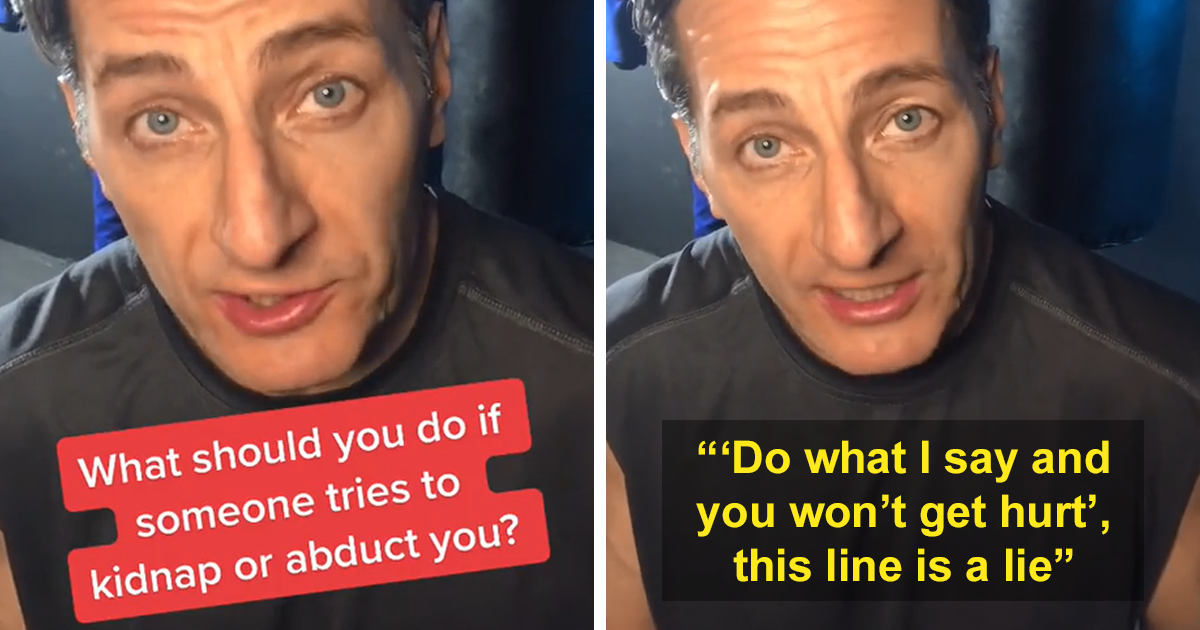
A Bored Panda story captured that exact moment: a self-defense creator goes viral by telling viewers to stop
acting like the “perfect victim” and start acting like an unpredictable problem. It’s catchy, it’s shareable,
and it scratches a very human itchthe desire to feel prepared for something terrifying.
This article breaks down why that advice resonates, what mainstream safety experts consistently agree on, what
social media sometimes oversimplifies, and how to build a realistic plan that doesn’t depend on superhero reflexes.
We’ll keep it practical, respectful, and yeslight enough to read without clutching your phone like it’s a life raft.
Why this “flip the script” TikTok advice hit a nerve
Viral safety videos usually explode for the same reasons recipe hacks do: they’re simple, they’re visual, and
they make you think, “Oh, I can do that.” The phrase “flip the script” is basically a trailer voice-over
for personal safetythree words that promise control in a situation that feels uncontrollable.
But there’s more going on under the hood. When people watch a kidnapping survival tip, they’re often reacting to:
- Uncertainty: Most people have never trained for high-stress situations.
- Fear of freezing: “What if I panic?” is a universal concern.
- Stories online: News, true crime, and social feeds can make rare events feel constant.
- Desire for a script: Ironically, we want a “script” for how to avoid becoming someone else’s script.
The best version of viral advice doesn’t make you paranoidit makes you more aware, more decisive, and more likely
to seek help early. The worst version turns safety into performative bravado. The goal is to land in the middle:
calm, alert, and ready to act.
What “flipping the script” really means in real life
Here’s the helpful translation: don’t cooperate with secrecy. Predators and abductors often rely on
speed, surprise, and silencegetting you away from people, away from cameras, away from help, before you can
think clearly.
“Flipping the script” is about doing the opposite of what they’re counting on:
- Visibility over privacy: Move toward people, light, and cameras when possible.
- Noise over politeness: Make it obvious something is wrong.
- Delay over speed: Create frictionquestions, attention, interruption, obstacles.
- Help over handling it alone: Pull others into the situation fast.
The “worst nightmare” idea isn’t about being the toughest person in the parking lot. It’s about being the most
inconvenient person to target: loud, memorable, and hard to move.
Kidnapping, abduction, and trafficking: why the words matter
Social media often uses “kidnapping” as a catch-all for any scary approach by a stranger. But safety planning gets
clearer when you separate concepts:
-
Abduction/kidnapping: Being taken or held against your will. This can happen in many contexts
(domestic violence, family disputes, criminal acts). -
Human trafficking: A form of exploitation involving force, fraud, or coercion for labor or commercial sex.
It’s not synonymous with every attempted abduction, but it’s part of the broader safety conversation. -
Child abduction: Often involves someone the child or family knows (including family abduction),
which is why “stranger danger” alone misses important risks.
This matters because the best prevention steps are different depending on the situation: a teen walking home from
practice needs different planning than a family dealing with custody conflict, and both look different from travel-related
security risks.
Practical safety moves that don’t require movie stunts
1) Start before anything happens: reduce opportunity
Most prevention advice sounds boring because it works. Think “seatbelt energy,” not “action hero energy.”
Your goal is to be harder to isolate and easier to help.
- Stay aware in transition zones: parking lots, garages, stairwells, elevators, and ride-share pickup areas.
- Limit distractions: headphones low, eyes up, phone use minimal when walking alone.
- Choose visibility: well-lit routes, populated entrances, and places with staff or cameras when possible.
- Trust the weird feeling: you don’t owe anyone your time just because they ask politely.
If you want a “flip the script” mantra here, it’s this: don’t wait for proof of danger. Your instincts are an early-warning
system, not a courtroom.
2) If you think you’re being followed or approached
The safest “first move” is often to change the environmentget closer to people and resources.
- Go public fast: walk into a store, hotel lobby, coffee shop, or any staffed place.
- Make it social: approach a group and say, “Hey, can I stand with you? I think I’m being followed.”
- Call for help: if you can safely do so, call emergency services or a trusted person and narrate where you are.
- Be specific out loud: “I don’t know you. Stop following me.” Clear language pulls bystanders out of “maybe it’s nothing” mode.
Many people hesitate because they fear being dramatic. Safety experts tend to agree: being “a little dramatic” is cheaper than being silent.
3) If someone tries to force you somewhere
A common principle in safety training is that being moved to a second location can increase danger.
That doesn’t mean you should take reckless actionsit means you should focus on interrupting the attempt early, if you can.
- Make noise early: shout, yell, and use plain words that help others understand immediately.
- Drop “polite voice”: this is not the moment for subtle hints. Direct statements help bystanders act.
- Create attention: knock items over, set off an alarm, trigger a car horn if you can safely do so.
- Run to the nearest help: populated areas, security desks, employees, or open businesses.
Important note: every situation is different. If a weapon is involved, the safest option can shift quickly.
The point is not “always fight.” The point is don’t cooperate with quiet if you have safe options to be seen and heard.
4) If you end up trapped, your job becomes survival + communication
Social media loves a single bold move. Real-world safety is usually a series of small decisions:
staying alive, staying alert, and getting help as quickly as possible.
- Look for safe moments to signal: a phone call, a message, a note, a chance to be seen by staff or strangers.
- Remember details: voices, accents, clothing, cars, locations, landmarksanything that could help responders.
- Keep your body and mind steady: slow breathing, small grounding routines, and focusing on “next best step” can help reduce panic.
“Flipping the script” here may simply mean refusing to disappear mentally: staying observant, looking for patterns,
and taking opportunities to be found.
What to teach kids without turning the world into a horror movie
When adults talk about kidnapping, kids can hear: “Everyone is dangerous.” That’s not helpful. Child safety programs
generally push a different message: know safe adults, know safe places, and practice what to do when something feels wrong.
Consider a simple, repeatable framework for children:
- Check first: always ask a parent/guardian before going anywhereyes, even if it’s with someone familiar.
- Move to safety: if scared, go to a pre-chosen safe place (store counter, teacher, front desk, security).
- Use a big voice: yell phrases like “This is not my parent!” or “I need help!”
- Practice: role-play “what if” moments calmly, like fire drills for boundaries.
For parents, preparation also includes practical organizationrecent photos, updated emergency contacts, and knowing
who to call if a child is missing. That’s not fear. That’s readiness.
Where TikTok advice shinesand where it can mislead
Viral safety tips can be genuinely useful because they:
- give people permission to be loud and “impolite” when something feels off,
- normalize asking for help and involving bystanders,
- push viewers to think through scenarios before they happen.
But here’s what short-form content can’t do well:
- Context: the safest option changes if weapons are involved or if you’re protecting a child with you.
- Trauma reality: freezing is normal. A plan should include what to do if you freezelike a single phrase you can say out loud.
- False certainty: no tactic is guaranteed. Safety is risk reduction, not a magic spell.
The healthiest way to consume this content is as a prompt: use it to build your own plan, practice a few key behaviors,
and learn from credible organizationsnot as a replacement for training or professional guidance.
A simple “flip the script” safety plan you can actually remember
If the worst day ever tries to happen, your brain won’t want a 27-step flowchart. It will want a few sturdy anchors.
Here’s a short plan many people find memorable:
- Notice: scan your surroundings in transition areas; trust discomfort.
- Close distance to help: people, staff, cameras, light.
- Name it out loud: “Stop following me.” “I need help.”
- Call in support: emergency services, security, or nearby adults.
- Afterward: report quickly and write down details while they’re fresh.
And if you want one “sticky” sentence to practice: “I don’t know youback uphelp!”
It’s direct, it’s clear to bystanders, and it interrupts the silence abductors often rely on.
Extra : “experience-style” lessons people recognize in real life
The tricky part about kidnapping content is that many of us don’t have personal storiesand if we do, they’re not
exactly party conversation. So instead of pretending we all have a dramatic escape montage, let’s talk about the
everyday experiences that echo the same safety principles: the moments where you realized your instincts
were right, your voice mattered, or your “politeness reflex” nearly got you into trouble.
Experience #1: The “too close” conversation that wasn’t really a conversation
Picture a grocery store parking lot. Someone approaches with a question that doesn’t quite landsomething vague,
something that keeps you standing still. The experience most people report isn’t immediate terror; it’s confusion.
That’s why “flip the script” works: you stop trying to be a helpful stranger and start acting like a person with
somewhere to be. You create distance, angle your body toward the store, and use a firm line like, “I can’t help you.”
The lesson: confusion is a tool. If you feel it, you can leave it.
Experience #2: The moment you decided to be “rude” on purpose
Many safety trainers talk about a social rule that backfires: we don’t want to offend. So we smile, we nod, we
wait for “enough evidence” before we act. The experience that changes people is often smallchoosing to walk into
a lobby instead of toward your car, or calling a friend on speaker even though it feels awkward. The lesson:
awkward is a safety strategy. It buys you time and witnesses.
Experience #3: The bystander effectuntil you give people a job
A lot of folks assume that if they shout, everyone will help. Sometimes they do. Sometimes they freeze, too.
That’s why specific language matters. Instead of yelling something general, you give a clear task: “You in the
blue jacketcall 911!” or “Can you walk me inside?” The experience here is realizing that people often want to help,
but they need clarity. The lesson: direct requests beat vague distress.
Experience #4: Safety planning that isn’t dramatic, just practical
The most “grown-up” safety experience is realizing preparation can be boring and still powerful: sharing your
location on a night out, setting a check-in text, choosing pickup spots you trust, and knowing which places near
home have staff late at night. It’s not fear; it’s systems. The lesson: small routines reduce big risks.
Experience #5: After a scare, your brain wants to minimize it
People often downplay a close call: “It was probably nothing.” That’s a normal self-protection response, but it
can erase learning. The better “experience” is the after-action review: you write down what happened, you tell
someone you trust, and you adjust your habits without spiraling into panic. The lesson: take yourself seriously.
You don’t need a headline to justify a safety upgrade.
Put together, these experiences reinforce the core idea behind that viral TikTok: you don’t need to “win a fight.”
You need to interrupt isolation, create attention, and move toward help.
That’s what flipping the script looks like in the real worldless Hollywood, more human.
Conclusion
The reason the “flip the script” message spreads is simple: it gives people permission to choose safety over social comfort.
If you remember nothing else, remember this: secrecy helps the offender, visibility helps you.
When something feels wrong, move toward people, use direct language, and get help early.
TikTok can spark the conversation. But your best protection is a realistic plan, practiced boundaries, and trusted
resources you can lean on quicklywhether you’re planning for yourself, your kids, or your whole household.












