
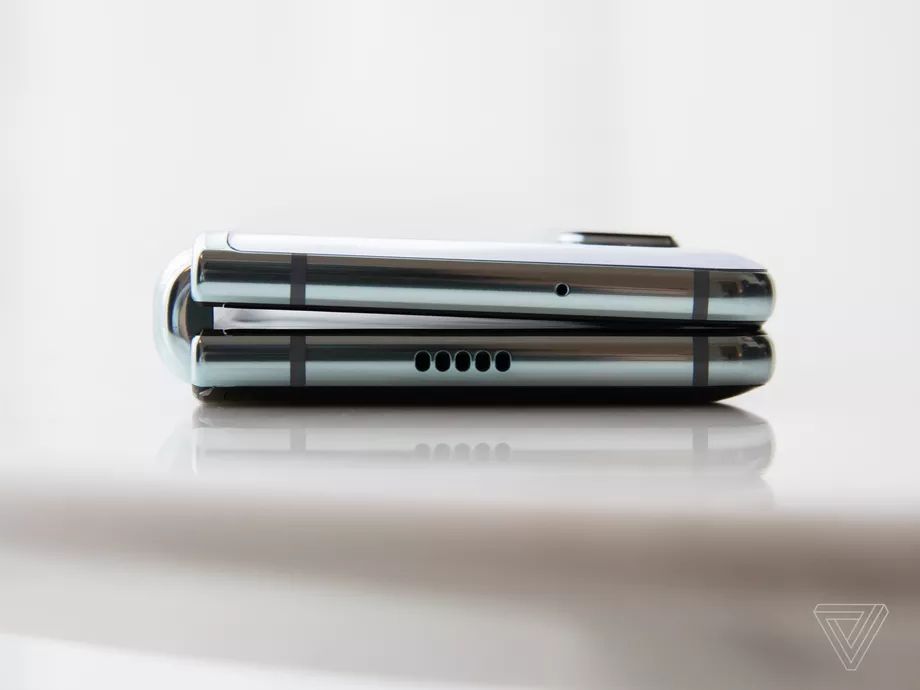
Editor’s Note: This is a retrospective analysis of the original 2019 Samsung Galaxy Fold and the first wave of consumer foldables. Later devices improved many of these issues, but the first Fold remains an important lesson in the difference between an exciting prototype and a stress-free daily product.
For years, the smartphone industry had a shape problem. Every new flagship arrived as a slightly thinner rectangle with a slightly better camera and a slightly more dramatic commercial involving someone skateboarding through a neon city at 2 a.m. Then Samsung introduced the Galaxy Fold, a phone that opened like a book and transformed into a small tablet.
It was the kind of idea that makes technology fans sit up straighter. A 7.3-inch tablet display that could fold into a pocketable phone? Multiple apps on one screen? A device that could turn a commute into a tiny mobile office? The Galaxy Fold promised that the rectangular slab had finally met its evolutionary next step.
Then, almost immediately, several review units developed serious screen problems. Some users removed a layer that looked exactly like a disposable screen protector but was actually part of the display assembly. Others experienced failures that appeared connected to debris near the hinge. Samsung delayed the launch, redesigned parts of the device, and eventually released the Fold later in 2019.
The episode did not prove that foldable phones were foolish. It proved something more useful: flexible OLED technology was astonishing, ambitious, and not yet as forgiving as the ordinary glass-screen smartphone people had learned to treat like a pocket-sized cutting board.
The Original Promise: A Phone That Could Do More Than Be a Phone
The Galaxy Fold was not merely a large phone. Samsung positioned it as a hybrid device: a compact handset when closed and a tablet when opened. Its small outer screen handled quick tasks, while the expansive inner display was designed for reading, video, maps, multitasking, and apps that benefited from more room.
That basic idea remains compelling. A larger screen makes email less cramped, spreadsheets less ridiculous, and web pages less likely to look as though they were designed for ants. On a standard phone, opening two apps side by side can feel like trying to host a dinner party in an elevator. On the Fold, the bigger interior display gave multitasking a fighting chance.
App Continuity Was a Smart Idea
Samsung also promoted app continuity, which let compatible apps move from the narrow outside display to the larger inner display when the phone opened. In theory, you could start reading an article on the cover screen, unfold the device, and continue without losing your place.
That sounds simple now, but it represented a major software challenge in 2019. Android apps had to adjust to unusual screen sizes, different aspect ratios, and a device that could change shape in the middle of use. Hardware innovation gets the glamorous launch-stage lighting, but software has to quietly clean up afterward with a mop and a calendar full of bug reports.
A Tablet in Your Pocket Had Real Appeal
The Fold’s best moments were easy to understand. Reading on a larger OLED panel was more comfortable than reading on a traditional phone. Streaming video felt more immersive. Maps were easier to see. Split-screen multitasking became practical instead of merely available in the same way that a hotel treadmill is “available” at 5:30 in the morning.
The problem was not that the Galaxy Fold lacked a purpose. The problem was that its purpose arrived wrapped in a set of compromises that were difficult to ignore at almost every other moment.
The Flexible OLED Challenge: A Display That Must Bend but Also Survive
Traditional smartphones use rigid glass displays because glass is relatively hard, smooth, and resistant to everyday scratches. It is not invincible, of course. Anyone who has dropped a phone face-first onto pavement knows that glass has an emotional range from “beautiful” to “spiderweb nightmare.” Still, rigid glass works well because it does not need to fold in half thousands of times.
Flexible OLED changes the equation. OLED pixels can be built on flexible layers, allowing the panel to bend. But the display must also contain touch sensors, protective films, adhesives, polarizers, and other delicate components. Every layer must flex repeatedly without separating, creasing too aggressively, or allowing pressure and debris to damage the panel.
That is an extraordinary engineering problem. The display cannot be too rigid, because then it will not bend. It cannot be too soft, because then it will scratch or dent easily. It cannot fold too sharply, because tight bends create stress. It cannot leave too much space around the hinge, because dust and debris may find the opening as inviting as a cat finds an unattended cardboard box.
The Crease Was Not Just Cosmetic
The original Galaxy Fold had a visible crease where the screen bent. In normal use, the crease could fade into the background when viewed straight on. At an angle, however, it became easier to see, and users could feel it while scrolling across the middle of the display.
A crease is not necessarily a deal-breaker. People adapt to visual quirks quickly. The notch, the camera hole-punch, and the giant rear camera bump all caused temporary outrage before becoming part of modern phone furniture. But the Fold’s crease mattered because it reminded users that the screen was under mechanical stress every time they opened and closed the device.
It was a physical receipt for the compromise: yes, you can have a tablet that folds into a phone, but the display will never quite forget that it has been folded.
Plastic Protection Felt Too Familiar
One of the first Galaxy Fold’s most public problems involved the top layer of the inner display. Several reviewers mistook it for a removable screen protector and peeled it away. That was understandable. Smartphones often arrive with thin plastic films that are meant to be removed immediately, usually before the owner has even found the charger.
On the Fold, that layer was not packaging. It was part of the display structure. Removing it could damage the screen. The lesson was not that reviewers were careless. The lesson was that a product should not make a crucial structural component look identical to something consumers have been trained to throw away for a decade.
When a $1,980 device requires a warning label that practically says, “Please do not accidentally unassemble your phone,” the product is asking ordinary people to behave like laboratory technicians. That is not a comfortable place for consumer technology to live.
The Hinge Was Both the Hero and the Weak Spot
The Galaxy Fold’s hinge was an impressive piece of mechanical design. It had to open smoothly, support the screen, keep the device aligned, and withstand repeated movement. The hinge was the reason the Fold existed at all.
It was also the reason the phone became difficult to protect. A folding device has moving parts, and moving parts create gaps. Gaps can let in dust, lint, and small particles. On a standard sealed smartphone, dirt might remain on the surface or collect around a charging port. On an early foldable, debris near the hinge could create more serious risks because the moving mechanism and flexible screen were so closely connected.
The original Fold’s early failures showed that a strong hinge alone was not enough. The entire system mattered: the display edge, the protective layer, the bezel, the hinge openings, and the way those pieces behaved when dirt or pressure entered the equation.
Samsung’s redesign addressed several of these concerns. The company extended the display’s protective layer farther into the bezel to make it less likely to be removed, reinforced vulnerable hinge areas, and added protective elements intended to reduce the risk of debris entering the device. Those were meaningful improvements, but they also confirmed the central reality: the first version had reached consumers before every weak link had been fully solved.
Why the Galaxy Fold Felt Like a Beta Test With a Luxury Price Tag
Early adopters expect trade-offs. They buy new technology partly because they enjoy being first, partly because they like experimenting, and partly because they have made peace with the fact that someone must discover the bugs before the rest of the world gets the polished version.
The Galaxy Fold, however, asked consumers to pay a premium price for that privilege. At nearly $2,000, it cost far more than many top-tier smartphones and more than some capable laptops. For that price, buyers reasonably expected excellent cameras, strong performance, durable materials, and a device they could carry without constantly wondering whether their pocket lint had become a hostile force.
The Fold delivered premium specifications and a remarkable display concept. But it also brought bulk, a narrow cover screen, unusual ergonomics, a visible crease, and a level of fragility that felt uncomfortable at its price. It was not simply expensive. It was expensive in a category where replacing or repairing the most important component could be painful.
The Outer Screen Was a Compromise Too
The original Fold’s outer display was functional, but narrow. It worked for checking notifications, taking calls, and handling quick tasks, yet typing and browsing could feel cramped. That meant the device often encouraged users to unfold it for activities that a normal phone handled comfortably.
This created a strange daily rhythm. A conventional phone lets you do nearly everything immediately. The Fold sometimes made you pause, open the device, adjust your grip, and then begin. It was not a disaster, but it added friction to tasks that should have been nearly invisible.
Convenience is often the true benchmark for consumer technology. People do not buy phones merely to admire their processors. They buy them to answer messages while walking, scan a boarding pass, look up a recipe with flour on one hand, and watch a video without turning a simple action into a small ceremony.
Software Was Catching Up to the Shape-Shifting Hardware
Foldable hardware introduced new software questions. Which apps should expand gracefully? Which ones should preserve their layout? How should games respond? What happens to a video call when the device changes orientation and size? How should keyboard layouts work on a screen that can be either narrow or tablet-like?
Samsung and Google made progress with foldable-friendly Android features, but the original Fold arrived during a transitional period. Some apps looked excellent on the bigger display. Others simply stretched, rearranged awkwardly, or treated the new screen shape like an unexpected pop quiz.
This matters because hardware can only be “ready for prime time” when the entire experience is ready. A great folding OLED panel is not enough if the keyboard feels strange, the apps fail to adapt, the front screen feels cramped, or the most common tasks require extra steps.
The Galaxy Fold Was Not a Failure. It Was a Very Public Prototype.
Calling the original Galaxy Fold a failure would be too simple. It was a bold product that exposed difficult problems in public. It showed that a folding phone could be useful, exciting, and dramatically different from the standard smartphone formula. It also showed that consumers expect mature durability from devices that cost mature-device money.
In that sense, the Fold did something valuable. It forced the industry to confront the hard parts of flexible OLED: scratch resistance, crease management, hinge reliability, dust protection, repairability, app design, and the uncomfortable distance between a product demo and a product people can safely toss into a bag.
Later foldables improved their hinges, materials, software, water resistance, and overall durability. Yet the first Galaxy Fold remains the clearest reminder that innovation is not finished when a device works under stage lights. It is finished when the device works after months of pockets, backpacks, crumbs, hurried messages, accidental bumps, and the occasional mysterious object that appears at the bottom of a purse.
Experience: Living With the Idea of a First-Generation Galaxy Fold
Imagine starting the day with a Galaxy Fold on the kitchen counter. Closed, it looks unusual but manageable: taller and thicker than a typical phone, with a narrow screen that handles the urgent parts of modern life. A weather alert appears. A message arrives. Someone has sent a link to a video that absolutely cannot wait until breakfast is over. The Fold can handle all of that, although typing a long response on the smaller outer display may feel a little like writing a thank-you note on a receipt.
Then comes the first magical moment. Open the device, and the cramped phone becomes a broad OLED canvas. A news article is easier to read. A map becomes easier to understand. You can compare a calendar, a chat, and a browser window without making each app compete for the last square inch of screen space. This is where the Fold’s pitch makes immediate sense. It feels less like carrying a large phone and more like carrying a tiny tablet that happens to fold itself into a pocket.
But first-generation technology has a way of making itself known. While using the unfolded display, your finger crosses the center crease. It is not always distracting, but it is there. In bright light, the line can become more obvious. You notice it most when scrolling through a white page or moving your finger across the middle of the screen. It is a little like the seam in a convertible car roof: the feature still works, but you are never allowed to forget how it works.
During a commute, the Fold is excellent for reading, watching video, and answering several messages at once. Yet it is also heavier and thicker than a normal phone. Pulling it from a pocket feels more deliberate. Opening it in public attracts attention. People ask whether it is a phone, a tablet, or a highly expensive wallet. Most of the time, the answer is “yes.” The device creates a sense of technological theater, and that can be fun, but theater is not always the same as convenience.
By the end of the day, the first Fold experience becomes a mixture of admiration and caution. You admire the engineering because the device performs a trick that once seemed impossible. You remain cautious because the flexible screen feels more vulnerable than the glass panel on a conventional flagship. You think about fingerprints, dust, pressure, scratches, and whether the strange-looking top layer is supposed to stay exactly where it is. A normal phone rarely asks for this much emotional attention.
That is why the original Galaxy Fold was fascinating rather than fully effortless. It gave users a glimpse of a future where one device could replace both a phone and a small tablet. But it also made users participate in the engineering compromise. The Fold was thrilling when opened, useful when multitasking, and occasionally stressful when remembered as a $2,000 object with a screen designed to bend. Flexible OLED was not a bad idea. It was simply still learning how to survive ordinary human behavior.
Conclusion: Flexible OLED Needed More Time Outside the Lab
The Galaxy Fold proved that foldable phones could be more than a science-fiction prop. Its large interior display, multitasking potential, and compact tablet concept gave the industry a new direction. At the same time, its early screen failures, fragile materials, hinge challenges, visible crease, awkward outer display, and premium price showed why flexible OLED was not yet a completely mainstream experience.
The original Fold was a brave first chapter, not the final answer. It reminded consumers and manufacturers that a breakthrough is not defined by whether a device can bend. It is defined by whether it can bend, survive, fit naturally into daily life, and make people forget they are carrying an engineering experiment.











