
Note: This article is a retrospective of a public social-media dispute that unfolded during the 2024 Paris Olympics, primarily from June through August 2024.
Olympic gymnastics is usually a world of stuck landings, chalk clouds, impossible balance-beam nerves, and leotards that sparkle like they have their own electricity bill. In the summer of 2024, however, one of the loudest aftershocks from Team USA’s women’s gymnastics triumph did not come from a vault or a floor routine. It came from social media.
After Simone Biles, Suni Lee, Jordan Chiles, Jade Carey, and Hezly Rivera won the women’s team gold medal in Paris on July 30, 2024, Biles posted a celebratory message that fans quickly connected to comments made earlier by former teammate MyKayla Skinner. The post read: “Lack of talent, lazy, Olympic champions.” Soon after, Biles added another viral update: “Oop, I’ve been blocked.”
The Simone Biles and MyKayla Skinner feud became bigger than a few pointed captions. It opened a conversation about athlete criticism, public platforms, old-school training culture, accountability, SafeSport, and what happens when Olympians stop keeping their opinions inside the group chat.
How the Simone Biles and MyKayla Skinner Feud Began
The tension started before the 2024 Paris Olympics were even underway. In a now-deleted YouTube video discussing the U.S. Olympic gymnastics team, MyKayla Skinner questioned the team’s depth and work ethic outside of Simone Biles. Skinner, who won a silver medal on vault at the Tokyo Olympics, compared the current generation of gymnasts with athletes from earlier eras.
Her remarks landed badly with fans and members of the gymnastics community. The biggest issue was not simply that she offered an opinion about competition. Sports commentary is practically a national hobby, right behind yelling at the television and pretending we could coach an NFL team from a recliner. The criticism struck a nerve because it appeared to minimize the effort of athletes who had just survived an exhausting Olympic selection process.
Skinner also connected her thoughts to SafeSport rules and changing coaching standards. That connection made the reaction even stronger. For many gymnasts and supporters, athlete protection is not a side issue or a trendy policy word. It is part of a major cultural shift in American gymnastics after years of institutional failures, abuse revelations, and calls for safer environments for young athletes.
Why the Work Ethic Comments Sparked Such a Strong Reaction
Calling elite gymnasts “lazy” is a bold move. Calling Olympic-level gymnasts lazy shortly before they compete on the biggest stage in sports is the verbal equivalent of poking a sleeping tiger with a pool noodle.
Every athlete on the 2024 U.S. women’s gymnastics team had a resume that reflected years of training, injuries, pressure, travel, qualifying meets, and constant evaluation. Suni Lee had fought through major health challenges. Jade Carey entered Paris as a reigning Olympic floor champion. Jordan Chiles had become one of Team USA’s most reliable and emotionally expressive competitors. Hezly Rivera earned her place as the youngest member of the group. And Simone Biles, already the most decorated American gymnast in Olympic history, returned to Olympic competition after stepping away from several events in Tokyo to protect her safety and well-being.
That context matters. Olympic gymnastics is not an activity people casually fit between brunch and laundry. It requires years of structure, strength, discipline, coaching, repetition, recovery, and courage. Fans saw Skinner’s remarks as a broad dismissal of athletes who had earned their way to Paris.
MyKayla Skinner’s Apology and Clarification
After receiving backlash, Skinner said her comments had been misunderstood and explained that she was speaking partly from her own experience in the previous Márta Károlyi era. She later issued a formal apology to Team USA and the gymnastics community, saying she did not intend to disrespect the athletes or take away from their hard work.
Her apology added an important layer to the story. Skinner acknowledged that her own experiences with harsh training environments and emotional pressure may have influenced the way she spoke about modern gymnastics. That does not erase the impact of the original comments, but it does make the situation more complicated than a simple “good person versus bad person” internet storyline.
Public apologies are difficult because they are often judged in real time, sentence by sentence, emoji by emoji. Some readers saw Skinner’s response as genuine accountability. Others believed the clarification came only after the criticism became intense. Both reactions can exist at once. The internet tends to prefer a neat ending, but real people are usually messier than a chalk bag after a floor routine.
Team USA’s Olympic Gold Changed the Tone
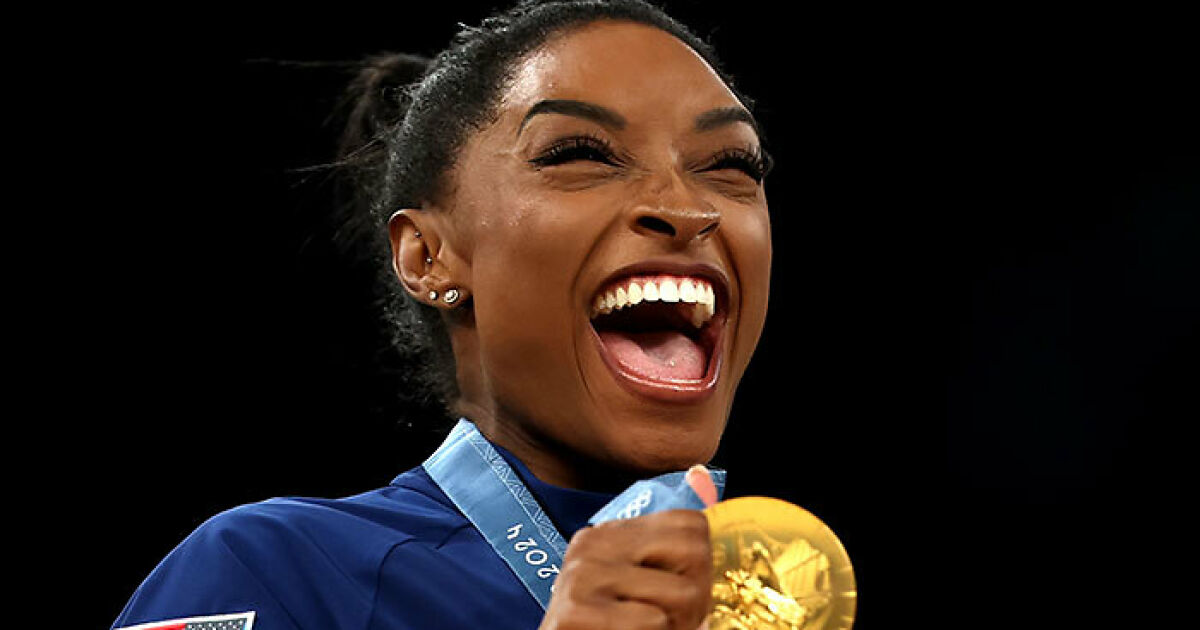
On July 30, 2024, Team USA won the women’s artistic gymnastics team title in Paris. Biles, Lee, Chiles, Carey, and Rivera delivered a confident, high-scoring performance that gave the United States another Olympic gold medal and confirmed the team’s depth under pressure.
The result itself was powerful. The U.S. women did not just win because one gymnast carried the entire group. The team earned the title through multiple strong routines across vault, uneven bars, balance beam, and floor exercise. That made Biles’ celebratory caption feel especially sharp: the athletes who had been questioned had just produced the kind of performance that does not need a debate panel.
In sports, results do not answer every question. A medal cannot repair every broken relationship or solve every cultural problem. Still, a team gold medal is a very effective rebuttal when the criticism centers on talent, depth, and commitment. It is difficult to argue with a podium when it is wearing gold.
“Lack of Talent, Lazy, Olympic Champions”
Biles’ caption did not name Skinner directly, but the connection was obvious to many fans. It reflected the team’s awareness of the earlier criticism and turned it into a moment of unity. The message was short, funny, and pointed without becoming a long public argument.
That was part of why the post traveled so quickly. It had the economy of a perfect gymnastics routine: no extra steps, no wobble, and a very clear landing. Instead of writing a 14-part speech about motivation, Biles used the team’s success as the answer.
Jordan Chiles and other gymnasts also appeared to support the moment online. The team’s response showed how closely athletes can protect one another when outsiders question their preparation, resilience, or legitimacy.
“Oop, I’ve Been Blocked”: The Social Media Moment That Kept the Story Going
After the gold-medal celebration post, Biles wrote that she had been blocked. Jordan Chiles also shared an Instagram Story that appeared to confirm the situation. Suddenly, the story went from a disagreement about gymnastics culture to a full-scale Olympic social-media subplot.
Blocking someone online is not a criminal trial, a diplomatic summit, or even necessarily a permanent decision. Sometimes it is simply a boundary. Sometimes it is an emotional reaction. Sometimes it is the digital version of closing a door after someone has made the room uncomfortable. But because both athletes were famous Olympians with a shared Team USA history, the block became part of the news cycle.
Fans naturally treated it like a dramatic final scene. Screenshots spread. Reactions multiplied. Memes arrived with the speed of a Yurchenko double pike. Yet the underlying issue remained serious: former teammates were publicly navigating hurt feelings, criticism, reputation, and a sport with a difficult history.
The Bigger Issue: Gymnastics Culture Has Changed
The Simone Biles vs. MyKayla Skinner dispute was not only about one YouTube video or one Instagram caption. It also reflected a larger argument over what elite gymnastics should look like.
For decades, many high-level gymnastics programs were built around fear, silence, extreme control, and the belief that intense pressure was necessary for success. The sport has been reckoning with the damage caused by those systems. Athletes have pushed for better mental-health support, stronger abuse prevention, more respectful coaching, and greater freedom to speak openly.
That does not mean elite gymnastics has become easy. No one earns an Olympic medal by taking a few motivational walks and manifesting a perfect beam routine. Training is still intense. Standards are still high. Competition is still brutal. The difference is that many athletes and advocates argue excellence should not require humiliation, abuse, or silence.
Simone Biles has become one of the most visible symbols of that change. Her decision to prioritize safety during the Tokyo Olympics helped broaden public understanding of mental health in sports. Her return in Paris demonstrated that protecting an athlete’s well-being does not weaken competitiveness. In fact, it can help create stronger, more sustainable careers.
SafeSport Is Not the Enemy of Hard Work
One of the central debates around Skinner’s comments involved SafeSport and athlete protection policies. Critics of modern sports sometimes frame safeguards as proof that coaches cannot be demanding anymore. That is a false choice.
A coach can be demanding without being degrading. A training program can be intense without becoming harmful. An athlete can be pushed toward excellence without being treated as disposable. Those ideas should not be controversial, especially in a sport where young athletes often depend heavily on adults for guidance, travel, medical care, selection opportunities, and emotional support.
The best coaching combines high expectations with clear communication, technical expertise, accountability, and respect. That approach may not always produce flashy reality-TV drama, but it is far better for athletes than treating fear like a performance-enhancing supplement.
Why Fans Responded So Emotionally
Fans were not only defending Simone Biles. They were defending the entire Team USA women’s gymnastics group and the idea that hard work can look different across generations.
Modern athletes are more visible than ever. Supporters see training clips, recovery routines, behind-the-scenes videos, personal struggles, and celebrations in real time. That visibility creates a stronger relationship between athletes and fans, but it also raises the temperature whenever criticism becomes public.
The backlash toward Skinner also showed the danger of online pile-ons. Criticism is fair. Harassment, threats, and attacks on someone’s family are not. Skinner later asked for the online attacks to stop, and that request should have been respected. People can disagree with her comments while still recognizing that public accountability should never turn into cruelty.
That distinction matters. The lesson is not that athletes should never speak honestly. The lesson is that people with large platforms should choose their words carefully, especially when discussing younger athletes or former teammates. A hot take may create engagement, but it can also create damage that lasts longer than the algorithm’s attention span.
What the Simone Biles and MyKayla Skinner Feud Revealed
The public disagreement revealed several things about modern sports culture. First, athletes are no longer expected to silently absorb criticism from former teammates, coaches, commentators, or strangers online. They have platforms, voices, and the ability to answer back.
Second, Olympic success does not happen in a vacuum. Every medal is attached to a larger story involving training systems, public expectations, media narratives, and personal histories. Team USA’s 2024 gold medal became both a sporting victory and a statement about the current generation of gymnasts.
Third, social media can turn a short comment into a global conversation within hours. That can be empowering when athletes use their voices to defend themselves. It can also be destructive when fans forget that public figures are still people with families, stress, and complicated emotions.
Ultimately, the strongest response from Team USA was not the caption, the block, or the meme. It was the gymnastics. Biles, Lee, Chiles, Carey, and Rivera performed under enormous pressure and left Paris with a gold medal. Their routines made the case better than any comment section ever could.
Extended Perspective: The Experience of Watching a Sports Feud Go Public
Watching the Simone Biles and MyKayla Skinner situation unfold felt familiar to anyone who has seen a disagreement escape the private room where it probably should have stayed. One person says something broad. Another person feels hurt. Friends take sides. Screenshots appear. People who were never part of the original conversation suddenly arrive carrying opinions, popcorn, and suspicious confidence.
In everyday life, a disagreement might happen in a classroom, a workplace, a friend group, or a family chat. In elite sports, the same emotional pattern can happen in front of millions of people. That is what made this story so compelling and so uncomfortable. It had the recognizable shape of a personal conflict, but it was amplified by Olympic fame, national pride, social media, and a sport with a painful history.
For athletes, public criticism can feel different from ordinary criticism. Elite competitors are evaluated constantly. Judges score them. Coaches analyze them. Fans debate them. Broadcasters replay every wobble, step, and landing. By the time an athlete reaches the Olympics, they have already spent years being measured against impossible standards. When another former athlete questions their work ethic, it can feel less like analysis and more like someone trying to rewrite the effort behind the performance.
That is why Biles’ response resonated. She did not write a long essay defending every teammate’s training schedule. She let the Olympic win do the talking. The moment was funny, but it also carried a message: you do not get to decide someone else’s dedication from the outside, especially after they have earned a place on the world’s biggest stage.
At the same time, Skinner’s experience is a reminder that accountability should not become a mob. People can criticize a comment, reject an argument, and still refuse to participate in harassment. Online platforms often flatten every conflict into two teams, as if the only choices are total support or total destruction. Real maturity is harder. It asks people to hold a person responsible for harmful words without treating them as permanently beyond growth.
The broader experience also shows why athletes need better spaces for disagreement. Former teammates should be able to talk about changing sports culture, coaching styles, and athlete expectations without turning every disagreement into public combat. That requires honesty, but it also requires humility. A former athlete can share their perspective without declaring that a new generation lacks grit. A current athlete can defend herself without having to carry the responsibility for every fan’s reaction.
In the end, the Simone Biles and MyKayla Skinner feud was memorable because it mixed competition, identity, history, and social media into one very modern Olympic story. But the most lasting image remains the team standing together after winning gold. The message was simple: they were talented, they were prepared, and they had earned every bit of that moment.
Conclusion
The Simone Biles and MyKayla Skinner feud became one of the most talked-about side stories of the 2024 Paris Olympics because it connected sports results with larger questions about respect, athlete safety, and public accountability. Skinner’s comments about Team USA’s work ethic created real frustration, while Biles’ celebratory response after the women’s gymnastics team won gold became an instant social-media landmark.
Still, the story should not be reduced to a block button and a viral caption. It is also about a sport learning how to value excellence without romanticizing harmful systems. Team USA’s Olympic win was not only a medal moment. It was a reminder that discipline, joy, safety, and competitive greatness can exist on the same podium.












