
Note: This article is based on verified film-history details, archival production notes, copyright history, cast interviews, and reputable entertainment reporting about Frank Capra’s 1946 classic.
For a movie that ends with neighbors singing around a Christmas tree, It’s a Wonderful Life had a surprisingly chaotic life of its own. Behind the warm glow of Bedford Falls were scorching summer temperatures, fake snow experiments, war trauma, casting switcheroos, budget anxiety, censorship concerns, and enough legal weirdness to make Mr. Potter call his attorney before breakfast.
Today, the film is treated like a sacred holiday ornament: handle carefully, quote annually, cry predictably. But when Frank Capra made it in 1946, nobody knew it would become one of the most beloved Christmas movies in American film history. In fact, much of its behind-the-scenes story looks less like a smooth Hollywood production and more like a blizzard hitting a bank audit during a dance contest. Let’s open the production files, step into the snow machine, and look at 15 times It’s a Wonderful Life was pure chaos behind the scenes.
Behind the Holiday Magic: 15 Chaotic Stories From the Making of It’s a Wonderful Life
1. The Story Began as a Christmas Card Nobody Wanted
Before George Bailey became the patron saint of small-town exhaustion, he began in Philip Van Doren Stern’s short story The Greatest Gift. Stern struggled to sell the tale to magazines, so he privately printed it and sent copies to friends as a Christmas card. That is both charming and wildly relatable: when publishing says no, mail your masterpiece like festive stationery. Eventually, the story found its way to Hollywood, proving that sometimes the slush pile really does contain a future classic.
2. RKO Bought It for Cary Grant, Then the Whole Plan Changed
RKO originally acquired the screen rights with Cary Grant in mind. That version never happened. Other drafts circulated, other stars were discussed, and the project sat around like a fruitcake nobody knew where to put. When Frank Capra’s Liberty Films later acquired the property, it shifted from a possible Cary Grant vehicle into a James Stewart comeback picture. The story’s road to the screen was not a straight line; it was more like Clarence trying to navigate without earning his wings yet.
3. Liberty Films Was a New Company With Huge Pressure
It’s a Wonderful Life was the first release from Liberty Films, the independent company formed by major directors including Frank Capra, William Wyler, and George Stevens after World War II. That sounds glamorous until you remember what “independent production” often means: big dreams, terrifying budgets, and everyone quietly hoping the audience shows up. The film carried the weight of Capra’s postwar return, Stewart’s comeback, and Liberty’s future. No pressurejust the emotional survival of a fictional banker and a real production company.
4. James Stewart Was Returning From War, Not a Vacation
For James Stewart, George Bailey was not simply another role. It was his first film after years of military service in World War II. He had flown combat missions and returned to Hollywood changed, uncertain, and physically worn down. That gave the performance its rawness, but it also meant the set carried emotional tension beneath the movie’s hopeful surface. George Bailey’s despair feels real because, in many ways, Stewart understood exhaustion, fear, and the strange difficulty of coming home.
5. Stewart Wasn’t Immediately Thrilled About Playing a Suicidal Banker
After the war, Stewart reportedly wanted lighter material. Understandably, after years of global conflict, “how about a man considering suicide on Christmas Eve?” was not exactly the pitch of a breezy comedy. Capra believed deeply in the story, but Stewart had doubts about his acting future and about the role itself. The eventual performance became iconic, but the path there included hesitation, anxiety, and the kind of career crossroads that would make anyone stare dramatically into the middle distance.
6. The Bar Prayer Scene Became Too Real
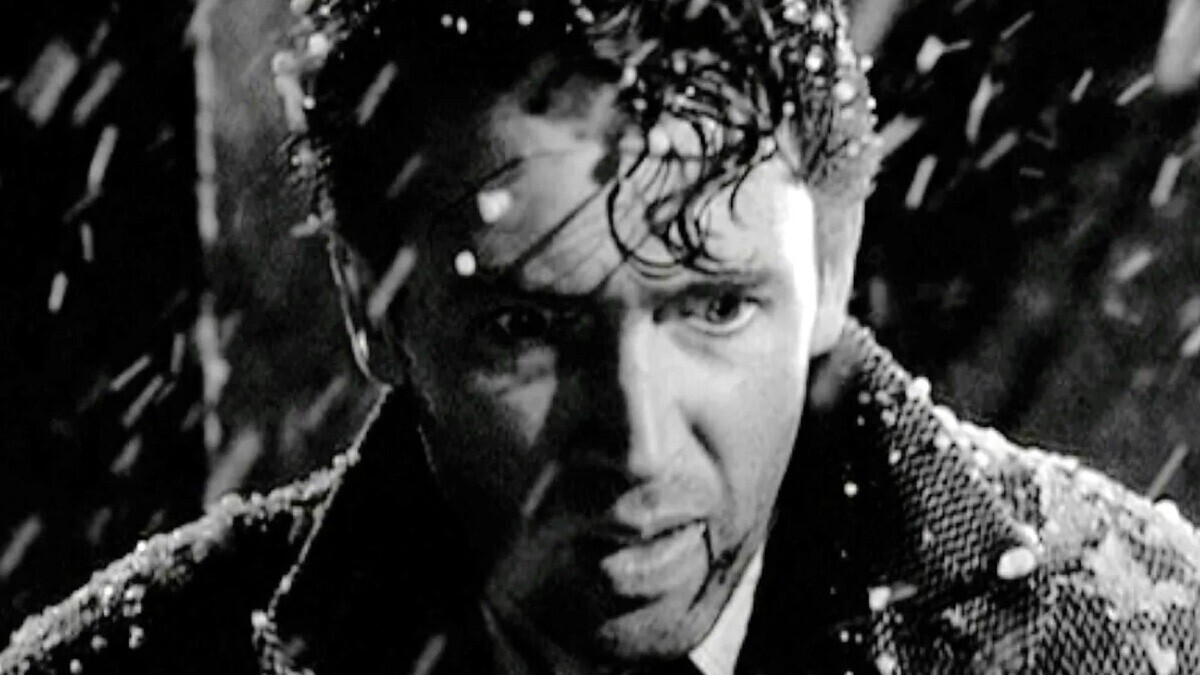
One of the most powerful moments in the film comes when George Bailey breaks down at Martini’s bar and prays for help. Stewart’s tears were not planned in the ordinary sense. The emotion overtook him, and Capra realized he had captured something unusually honest. The problem? The camera setup was not ideal for the close-up Capra wanted. Since Stewart could not simply summon the same raw emotion again on command, the filmmakers had to enlarge the footage to intensify the moment. The result is haunting, but the process was technically and emotionally messy.
7. Bedford Falls Was Basically a Small Town Built From Scratch
The Bedford Falls set was enormous. Built at the RKO Ranch in Encino, it covered several acres and included a long Main Street, dozens of buildings, residential areas, a factory district, and even full-grown trees. Capra wanted a town that felt lived-in, not like a cardboard street where actors avoid leaning too hard on the doors. The ambition paid off beautifully, but constructing a functioning fantasy town is not exactly a quiet Tuesday. It was Hollywood world-building before “world-building” became a franchise buzzword.
8. They Shot Winter During a Heat Wave
Nothing says Christmas like actors pretending to freeze while California heat tries to melt their souls. Principal photography ran from spring into summer 1946, and the production endured hot weather while filming scenes set in snowy Bedford Falls. Imagine wearing winter clothes, acting emotionally devastated, and being blasted by artificial snow while the air feels like July because it is, in fact, July. The cast deserved hazard pay in peppermint sticks.
9. Fake Snow Was a Major Technical Problem
Old Hollywood fake snow was often made from painted cornflakes, which looked passable but sounded like breakfast being murdered underfoot. That was a nightmare for live sound recording. For It’s a Wonderful Life, the effects team developed a quieter, more realistic snow mixture using materials such as foamite, water, sugar, and soap-like compounds. It could be sprayed through machines and cling to clothing and streets. The innovation helped create the film’s dreamlike snow scenes, but it also turned Bedford Falls into a laboratory with carols.
10. The Snowstorm Was Huge, Expensive, and Slightly Alarming
The production did not sprinkle a few flakes and call it Christmas. It staged one of the largest movie snowstorms of its era, using massive quantities of materials to dress the set. The artificial snow was impressive enough to earn technical recognition, but the behind-the-scenes reality involved machines, wind, wet surfaces, and crews trying to control fake weather on a giant outdoor set. In other words, Capra did not just direct actors; he basically negotiated with climate.
11. Some Old Snow Materials Were Not Exactly Comforting
Film sets of the era sometimes used materials that modern crews would treat with extreme caution. Historical accounts of It’s a Wonderful Life production note that substances such as dolomite and even asbestos were among old standbys used for snowy dressing in Hollywood. That detail lands today with the subtle charm of finding out your Christmas garland was made of liability. The movie looks magical, but some old studio practices were less “holiday wonder” and more “please call the safety department.”
12. The Gym Floor Opened Into a Real Swimming Pool
The famous Charleston dance scene, where the gym floor opens and dancers tumble into a pool, was filmed at Beverly Hills High School. The retractable floor was real. Capra reportedly used the location after learning about the unusual gym setup. It is one of the funniest sequences in the film because the chaos is physical, public, and wet. Also, it proves that every school dance would be more memorable if the floor contained a surprise aquatic trapdoor.
13. Donna Reed Outsmarted the Stunt Plan With One Perfect Throw
In the scene at the old Granville house, Mary throws a rock through a window while making a wish. Capra had reportedly arranged backup help in case the throw missed. Donna Reed, however, had a strong arm from playing baseball and nailed the window herself. First try. It was a tiny production miracle and a reminder that Mary Bailey was not merely wholesome; she was accurate. Somewhere, a hired marksman probably reconsidered his career.
14. The Breen Office Thought the First Kiss Was Too Intense
The Production Code era could make even romance feel like a legal deposition. The famous phone scene, where George and Mary move from awkward tension into a passionate kiss, was reportedly considered too heated by the Breen Office. Watching it now, the scene feels emotionally honest rather than scandalous, but in 1946 Hollywood, chemistry had to pass inspection. Capra’s movie may be family viewing today, yet one of its most beloved romantic moments apparently arrived with a faint whiff of censor panic.
15. The FBI Later Read the Movie Like a Communist Plot
Perhaps the strangest post-production chaos came after release, when the film appeared in FBI discussions about alleged Communist influence in Hollywood. The concern centered partly on Mr. Potter, the rich banker villain, and whether the movie unfairly attacked bankers and the upper class. This is hilarious in hindsight because the hero, George Bailey, also runs a financial institution. The film is less anti-capitalist than anti-being-a-soul-devouring-gargoyle-in-a-wheelchair. Still, in the Red Scare climate, even Bedford Falls could be treated like suspicious territory.
Why the Chaos Made the Movie Better
The odd thing about It’s a Wonderful Life is that the behind-the-scenes chaos did not weaken the movie. It deepened it. The hot-weather winter scenes give the film a slightly feverish energy. The new snow technology makes Bedford Falls feel soft, hushed, and dreamlike. Stewart’s postwar vulnerability gives George Bailey a desperation that polished acting alone might not have produced. Even the giant set matters because the town feels like a real place full of people who might actually pass a hat when a neighbor is in trouble.
Capra’s film is often remembered as sentimental, but that word can be misleading. The movie is not soft for most of its running time. It is anxious, angry, crowded, financially stressed, and emotionally bruised. George yells at his family. Uncle Billy loses money. Potter steals it. The bank examiner arrives at the worst possible time because apparently even Christmas Eve has paperwork. The sweetness at the end works because the film walks through darkness first.
That may be the secret reason the production chaos still fascinates audiences. We sense that the movie was not made in a snow globe. It was made by people coming out of war, rebuilding careers, testing new technology, spending too much money, battling censors, and hoping a strange story about one man’s invisible value would connect. The film’s message says that no life is insignificant. Its production history says no classic arrives without bruises.
Extra Experiences: Watching It’s a Wonderful Life After Knowing the Behind-the-Scenes Chaos
Watching It’s a Wonderful Life with the production history in mind changes the experience. At first, many viewers approach it as a cozy Christmas ritual: dim lights, hot cocoa, maybe someone in the room insisting they “won’t cry this year” while already blinking suspiciously. But once you know what was happening behind the camera, the film becomes less like a holiday decoration and more like a survival story disguised as one.
The snow is a perfect example. Before learning about the technical struggle, it is easy to see the snowfall as simple movie atmosphere. It is pretty, soft, and nostalgic. After learning that the crew had to solve the noise problem of old fake snow, invent a better material, and blanket a huge outdoor set during warm weather, the snow becomes a character. Every flake looks like a tiny production meeting that somehow went right. The fact that the storm feels peaceful onscreen while being carefully manufactured offscreen is part of the magic.
The same thing happens with James Stewart’s performance. George Bailey can be difficult to watch because his frustration is so recognizable. He is not a perfect saint; he is a man who has postponed himself for so long that the bill finally comes due. Knowing Stewart had recently returned from war makes the performance feel heavier. His anger in the living room, his trembling prayer in the bar, and his exhausted run through Bedford Falls all carry the weight of someone who understands what it means to be changed by life and still asked to keep going.
Donna Reed’s behind-the-scenes stories also add a spark to Mary. Viewers sometimes underestimate the character because she is framed through domestic devotion, but Reed gives her steel. Knowing she broke the Granville house window herself on the first throw makes Mary’s quiet determination feel even more fitting. She is not just the woman waiting at home; she is the person who sees potential in a broken house, organizes the final rescue, and apparently has the arm of a small-town shortstop.
The film’s later history adds another layer. It was not immediately crowned the king of Christmas movies. It underperformed financially, lost its major Oscar races, drifted through legal complications, fell into the public domain, and became famous because television stations played it over and over. That is oddly perfect. A movie about a man who thinks he has failed became a classic only after seeming, for a while, like a disappointment. Its redemption arc happened offscreen too.
That is why the chaos matters. It makes the movie feel human. The production was imperfect, expensive, stressful, and occasionally absurd, yet it created something that still helps people name their own fear, gratitude, regret, and hope. Every year, audiences return to Bedford Falls not because it is flawless, but because it understands that life is messy before it is wonderful.
Conclusion
It’s a Wonderful Life endures because its sincerity was forged in chaos. The film’s behind-the-scenes story includes a rejected short story, shifting stars, postwar uncertainty, massive sets, dangerous old materials, technical snow experiments, censorship concerns, and one of the strangest copyright journeys in Hollywood history. Yet all that disorder somehow produced one of the most emotionally precise American films ever made.
Behind every bell, there was a budget. Behind every snowflake, an effects crew. Behind George Bailey’s tears, an actor carrying memories no script could fully contain. That is the real wonder of It’s a Wonderful Life: the mess did not hide the meaning. It helped create it.













