
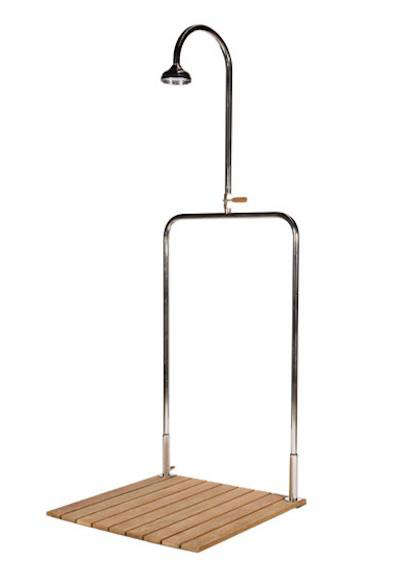
An outdoor shower sounds like a luxury until you own one. Then it becomes the most practical thing in the yard, right after shade, a good chair, and a cold drink that somehow does not attract every wasp in the county. Tectona outdoor showers sit right in that sweet spot between design object and daily workhorse: handsome enough for a pool terrace, useful enough for sandy feet, salty hair, muddy dogs, sweaty gardeners, and children who appear to be coated in sunscreen, popsicle, and mystery.
Tectona, the French outdoor furniture brand known for teak garden furniture and refined outdoor living, has built a collection of showers that feel more like sculptural garden pieces than hardware-store afterthoughts. The designs use teak, stainless steel, chromed brass, and simple plumbing concepts to create outdoor showers that blend naturally into decks, pool areas, beach houses, lake cabins, and modern patios. Some models connect to an ordinary garden hose, which means the fantasy of rinsing under the open sky does not always require a contractor, a plumbing saga, or a budget meeting with your future self.
In this guide, we will explore what makes Tectona outdoor showers special, how the main models differ, where they work best, how to think about installation and drainage, and how to keep a teak outdoor shower looking beautiful through sun, rain, sea air, and the occasional dramatic thunderstorm.
Why Tectona Outdoor Showers Feel Different
Most outdoor showers fall into one of two categories. The first is purely functional: a pipe, a showerhead, and a cheerful lack of glamour. The second is overdesigned: expensive, complicated, and sometimes better suited to a boutique hotel than a normal backyard where someone still has to store pool noodles.
Tectona outdoor showers succeed because they stay restrained. The brand’s design language is clean, natural, and quietly luxurious. Teak brings warmth. Stainless steel adds precision. The forms are simple enough to disappear into a landscape but distinctive enough to make guests say, “Wait, is that a shower?” in the impressed tone usually reserved for hidden wine cellars.
The collection includes teak garden showers, stainless steel structures, compact foot-wash posts, and sculptural freestanding models. Tectona describes its shower range as designed to blend into the outdoor environment while remaining easy to use and resistant to corrosion. That matters because an outdoor shower lives a rough life. It faces sunlight, rain, wind, temperature changes, wet feet, chlorine, salt, and the occasional leaf invasion. A shower that looks charming in May but sulks by September is not a long-term relationship.
The Key Materials: Teak, Stainless Steel, and Outdoor Common Sense
Teak is one of the classic materials for outdoor furniture because it is dense, naturally oily, and well suited to weather exposure. Over time, untreated teak develops a silvery-gray patina. This change is cosmetic, not a sign that the wood has given up and joined a witness protection program. Many homeowners love the weathered look because it helps the shower blend with stone, gravel, coastal grasses, and sun-faded decking.
Stainless steel is equally important in outdoor shower design. It resists corrosion better than ordinary metal and works visually with modern architecture, pool paving, and minimalist landscapes. In coastal areas, where sea air is basically a tiny salt shaker with a breeze, stainless steel quality and maintenance become especially important. Tectona’s Niagara model, for example, combines teak with stainless steel piping and a stainless steel showerhead designed to withstand sun, rain, cold, and sea air.
The result is a product category that feels both relaxed and engineered. You get the natural beauty of teak without sacrificing the functional reliability needed for a fixture that spends its life outdoors.
A Closer Look at Popular Tectona Outdoor Shower Models
Tectona’s shower collection is not one-size-fits-all. Different models suit different yards, habits, and levels of ambition. Choosing the right one depends on how you plan to use it: quick pool rinse, beach-house essential, sculptural garden feature, or low-key foot-wash station that saves your interior floors from becoming a sandy documentary.
Tropic: The Rainforest Moment
The Tropic shower is one of the most expressive Tectona outdoor showers. Its wide teak column is cut from a single block of teak, giving it the presence of a tree trunk. The generous showerhead creates a fine, continuous rainfall effect, making it ideal for anyone who wants the outdoor shower experience to feel like a miniature tropical escape rather than a practical rinse behind the garage.
Tropic is available with or without a mixer. The version without a mixer can connect to a garden hose, while versions with a mixer are better suited to a fixed plumbing installation. That flexibility is useful. A pool owner who only wants a cool rinse may be perfectly happy with hose-fed water. A year-round outdoor shower enthusiast, however, may prefer hot and cold mixing, especially on days when “refreshing” becomes “why did I do this to myself?”
Delta: Minimalism by Inga Sempé
Delta is a design-forward outdoor shower created by French designer Inga Sempé. It begins with a simple teak duckboard base and adds a stainless steel structure reduced to the essentials. The result is clean, architectural, and quietly confident. Delta connects to an ordinary garden hose, making it a smart choice for homeowners who want a refined freestanding outdoor shower without a major installation project.
This model works especially well in modern gardens, pool decks, and restrained landscapes where every object needs to earn its place. It does not shout. It stands there calmly, looking like it was invited by the architect.
Niagara: Sculptural and Sensual
Niagara is one of the most elegant models in the Tectona collection. It features a round teak duckboard and a smooth-cornered teak column, with stainless steel water pipe and showerhead. The shower is relatively easy to move and connects to an ordinary garden hose, making it more flexible than its polished appearance might suggest.
Niagara is a strong choice for spaces where the shower will be visible even when not in use. Place it near a pool, on a gravel pad beside ornamental grasses, or at the edge of a terrace, and it reads like a piece of outdoor sculpture. Then someone uses it to rinse a muddy Labrador, and the sculpture becomes practical. That is good design: beauty with a job.
California: Compact, Discreet, and Useful
The California Post is a smaller teak structure designed with a tap for rinsing feet and a handheld showerhead. At about one meter high, it is not trying to be a full rainforest moment. It is trying to solve a real problem: dirty feet, sandy sandals, poolside rinsing, and quick cleanup in tight spaces.
California is ideal for small patios, compact pool areas, beach house entries, and garden paths. It can act as a foot wash, pet rinse, or low-profile utility station. For homeowners who like the idea of an outdoor shower but do not need a full-height installation, this model offers a discreet way into the category.
Where a Tectona Outdoor Shower Works Best
A Tectona outdoor shower can work in more places than people expect. The obvious location is beside a pool, where it encourages swimmers to rinse before and after a dip. That helps reduce sunscreen, sweat, grass clippings, and general backyard evidence from entering the water. It also gives guests a spa-like transition from pool to lounger, which is far nicer than sprinting across hot paving while pretending your feet are not on fire.
Beach houses are another natural fit. A teak outdoor shower near the entry path can catch sand before it migrates into rugs, sofas, beds, and every corner of the human soul. Lake houses and river cabins benefit too, especially when the day includes swimming, kayaking, fishing, or children discovering mud with scientific enthusiasm.
Gardeners also love outdoor showers. After pruning, planting, mowing, composting, or wrestling with a hose that has developed a personality, a quick rinse outside can be a small luxury. Even urban patios can benefit from a compact model like California, particularly where space is limited but outdoor living still matters.
Installation: Garden Hose Simplicity or Full Plumbing?
One reason Tectona outdoor showers are appealing is that several models can connect to an ordinary garden hose. This makes installation much simpler than a custom built-in shower. For many homeowners, the hose-connected version is enough. It provides cold water, quick setup, and seasonal flexibility. You can place the shower where it makes sense, move some models if needed, and avoid opening walls or running new supply lines.
A fixed plumbing installation, however, may be worth considering if you want hot and cold water, a mixer, year-round convenience, or a more permanent outdoor bathing area. Hot water turns an outdoor shower from a pool accessory into a true open-air bathroom experience. It also makes shoulder-season use much more pleasant. There is a big difference between “refreshing outdoor rinse” and “I have made a terrible plumbing-adjacent life choice.”
Before installing a permanent outdoor shower, check local building codes, plumbing requirements, and drainage rules. Outdoor water fixtures may require shutoff valves, backflow prevention, frost protection, and approved drainage. A licensed plumber is a wise investment for hot and cold lines, especially in climates with freezing winters.
Do Not Forget Drainage
Drainage is the unglamorous hero of outdoor shower planning. Everyone wants to discuss teak, rainfall showerheads, and whether the shower should face the sunset. Fewer people want to discuss where the water goes. Unfortunately, water is very committed to going somewhere, whether or not you planned for it.
For occasional use, a gravel bed, stone base, or well-draining landscape area may be enough, depending on soil, slope, and local rules. For heavier use, especially near a house foundation, deck, or hardscape, a dry well or underground drainage pipe may be necessary. The goal is simple: move water away from structures, prevent pooling, and avoid creating a permanent swamp where mosquitoes can hold board meetings.
Soap and shampoo also matter. If the shower drains into soil or planting beds, choose biodegradable, outdoor-safe products and use them sparingly. Better yet, treat the shower primarily as a rinse station unless your drainage system is designed for regular bathing.
Privacy: From Practical Screens to Garden Theater
An outdoor shower does not always require a full enclosure. If it is mainly used for rinsing feet or cooling off in swimwear, a freestanding model near a pool may need no privacy at all. For a more complete shower experience, privacy becomes essential unless you are determined to become the neighborhood’s most talked-about landscaping feature.
Good privacy solutions include slatted teak screens, cedar panels, tall ornamental grasses, hedges, pergolas, woven fencing, or masonry walls. The best designs feel integrated rather than defensive. A shower tucked between planting beds and a simple screen feels serene. A shower surrounded by a six-foot panic fence feels like it is hiding from the authorities.
Keep airflow in mind. Outdoor showers should dry quickly to prevent mildew and keep materials in good condition. Slatted screens are excellent because they allow privacy, light, and ventilation at the same time.
How to Style a Tectona Outdoor Shower
Tectona outdoor showers already have strong design character, so styling should be simple. Let the materials lead. Pair teak with limestone, gravel, concrete pavers, weathered decking, or natural stone. Add a hook for towels, a small shelf for soap, and perhaps a stool or bench if the space allows. Avoid clutter. An outdoor shower should feel like a pause, not a storage closet with plumbing.
For a coastal look, combine the shower with pale gravel, dune grasses, white towels, and brushed metal accents. For a modern pool terrace, use large-format pavers, black planters, and minimal planting. For a lush garden setting, surround the shower with ferns, bamboo, banana plants, or tall grasses to create a private, resort-like atmosphere.
Lighting can extend the experience into evening. Low-voltage path lights, warm wall sconces, or discreet uplighting can make the shower area feel intentional after sunset. Just make sure electrical fixtures are rated for outdoor wet locations and installed safely.
Care and Winter Storage
Tectona’s care guidance is refreshingly practical. Outdoor showers should be winterized in freezing climates by turning off water supplies, disconnecting water inlets, and leaving taps open. For handheld showerheads, the flexible hose should be unscrewed so water does not remain trapped in the curved section. For showers with thermostatic fittings, sensitive components may need extra protection from cold.
Wooden parts can be cleaned once a year with soapy water and a gentle brush to remove impurities. Stainless steel or powder-coated metal components can be cleaned with appropriate stainless steel cleaner. The point is not to make the shower look brand new forever. The point is to keep it clean, functional, and aging gracefully.
If you love golden teak, use products designed for teak maintenance and be ready for regular upkeep. If you prefer the natural silver patina, relax and let the wood weather. Teak is very good at being teak. It does not require micromanagement, which is more than can be said for most group chats.
Is a Tectona Outdoor Shower Worth It?
A Tectona outdoor shower is not the cheapest way to rinse off outside. A basic hose attachment can do that. But price is not the only measure of value. Tectona showers offer durability, refined materials, design pedigree, and a visual quality that makes them part of the landscape rather than an accessory to hide when guests arrive.
They are especially worth considering if your outdoor space is already thoughtfully designed, if you spend significant time around a pool or beach, or if you want a product that can age beautifully instead of looking tired after a few seasons. A well-placed outdoor shower can also change how people use a backyard. It invites longer pool days, easier cleanup, and a more relaxed transition between outside and inside.
Experience Notes: Living With an Outdoor Shower
The first surprise about an outdoor shower is how quickly it becomes part of a routine. At first, it feels like a novelty. Guests notice it. Children want to test it immediately. Adults make jokes about luxury resorts. Someone inevitably says, “I could get used to this,” while standing under cold water and pretending not to squeal. But after a few weeks, the shower stops feeling like a decorative feature and starts feeling like the missing link in outdoor living.
After swimming, the value is obvious. A quick rinse removes chlorine, salt, sunscreen, and grass before anyone heads inside. Towels stay cleaner. Floors stay less slippery. The house smells less like wet swimwear. If the shower is near the pool, people use it naturally because it is easier than walking indoors. That convenience matters. The best outdoor features are the ones people do not have to think about.
For beach homes, the outdoor shower becomes a gatekeeper. Sand is charming when it is on the shore. It is less charming in bedsheets, sofa cushions, car mats, and the mysterious pocket of every tote bag. A teak outdoor shower or compact foot-wash post near the entry creates a small ritual: rinse feet, shake towels, hang swimsuits, enter the house as a civilized person instead of a mobile dune.
Gardeners may appreciate the shower even more. There is something deeply satisfying about rinsing arms, legs, tools, and boots after a long afternoon outdoors. A handheld showerhead is particularly useful for this because it gives control. You can rinse muddy ankles, clean a dog’s paws, wash off a planter, or cool down after hauling mulch while questioning your weekend decisions.
The design experience matters too. A Tectona shower does not visually punish you when it is not in use. In fact, that may be its greatest everyday advantage. Some outdoor showers look like temporary equipment. Tectona models look intentional. The teak warms the space, the stainless steel adds crispness, and the whole object can sit comfortably beside furniture, planting, stone, and water. Even when nobody is showering, it contributes to the atmosphere.
There are practical lessons, of course. Put the shower where people will actually use it. Plan drainage before installation, not after your first puddle develops a personality. Add at least one towel hook. Choose a surface that is comfortable for bare feet and not dangerously slick. If you live in a freezing climate, winterize early. The outdoor shower season should end with a peaceful shutoff, not a surprise repair bill delivered by January.
The best experience is when the shower feels effortless. You come back from the pool, turn the tap, stand on warm teak or stone, and rinse under open air. Birds are making noise. The garden smells alive. The water runs clear. For a minute, your backyard feels like a small private resort, except you know where the snacks are and nobody charges you twenty dollars for sparkling water.
Note: Product availability, dimensions, finishes, plumbing requirements, and installation costs can vary by region and model. Before buying or installing any outdoor shower, confirm current specifications with the retailer or manufacturer and check local plumbing, drainage, and winterization requirements.













