
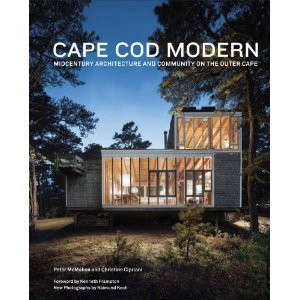
If the phrase Cape Cod Modern makes you picture a white cottage with blue hydrangeas, a rope mirror, and exactly one decorative oar, it is time for a gentle architectural intervention. Cape Cod Modern is not coastal décor with a better publicist. It is a real design movement, rooted in the Outer Cape, shaped by émigré modernists, and defined by houses that sit lightly on dunes, hillsides, and piney slopes as if they politely asked the landscape for permission first.
At its heart, Cape Cod Modern is the story of how European modernist ideas met the weathered pragmatism of New England. Bauhaus-trained architects and their creative circles found the Outer Cape irresistible in the mid-20th century: remote, inexpensive, intellectually lively, and wildly beautiful. Instead of building grand mansions, many of them created modest summer houses with glass walls, simple forms, decks, breezy interiors, and astonishing sensitivity to site. The result was architecture that felt radical without being loud, sophisticated without being fussy, and modern without pretending nature was an inconvenience.
That balance is exactly why Cape Cod Modern still matters. These houses are not just pretty relics of midcentury taste. They offer a durable lesson in how to build with restraint, adapt to climate, honor local tradition, and make small spaces feel generous. In an era when square footage often behaves like a competitive sport, Cape Cod Modern remains refreshingly sane.
What Does “Cape Cod Modern” Actually Mean?
Broadly speaking, Cape Cod Modern refers to the cluster of modernist houses built on the Outer Cape, especially between the 1940s and 1960s, along with the creative culture that grew around them. Many were built in places like Wellfleet, Truro, and Provincetown, often tucked into woods, set above ponds, or positioned for breezes and long views. These were not urban glass boxes dropped onto the sand with all the subtlety of a piano landing in a tide pool. They were carefully adapted structures that drew from both modernist principles and local building traditions.
That blend is the magic. Cape Cod Modern took the clean lines, minimal ornament, and functional thinking of modern architecture and combined them with lessons learned from the Cape itself: how to live with wind, light, dampness, changing temperatures, rough terrain, and the sheer emotional force of a horizon. It is modernism with sandy shoes.
How the Outer Cape Became a Modernist Hideaway
A landscape that invited experimentation
The Outer Cape offered something many architects and artists desperately wanted in the mid-20th century: distance. Before highways made weekend travel easier, getting there from Boston took commitment. That remoteness helped preserve a sense of escape, and it also kept land comparatively affordable. For creative people connected to Harvard, MIT, and the wider intellectual orbit around Boston, the Cape was not simply a beach destination. It was a retreat for thinking, making, swimming, arguing, and occasionally doing all four in the same day.
The landscape itself pushed design in a specific direction. Dunes, kettle ponds, scrub pines, ocean wind, and fragile topography did not reward heavy-handed building. The best modern houses on Cape Cod were not designed to dominate the site. They were designed to perch, hover, frame, open, shade, and breathe.
The Bauhaus arrives, but politely
A major force behind the movement was the arrival of European modernists in New England. Walter Gropius, Marcel Breuer, and others associated with Bauhaus ideas helped shape the intellectual and design culture of the region. On the Outer Cape, those ideas became less theoretical and more intimate. Summer houses offered room for experimentation with materials, planning, furniture, and ways of living. Instead of monumental statements, architects explored how little a house could be while still feeling rich in experience.
This is one reason Cape Cod Modern feels so fresh today. The movement was not obsessed with luxury. It was obsessed with usefulness, proportion, view, air, light, and human pleasure. In other words, it had better priorities than many contemporary waterfront developments with five bathrooms and the soul of an airport lounge.
The Design DNA of Cape Cod Modern
Simple forms, smart siting
One of the clearest traits of Cape Cod Modern is its geometry. Many of the houses use simple rectangles, shed roofs, post-and-beam construction, and crisp volumes. But the real sophistication lies in placement. A house might be anchored on concrete piers at one end and lifted on stilts at the other, allowing it to adapt to a slope rather than flatten it. Another might turn its glazed side to a pond while using more solid walls where privacy or wind protection matters.
These decisions were never random. They were acts of editing: keep the views, catch the breezes, reduce disturbance, and let the building feel almost provisional, even when it is meticulously planned.
Modernism shaped by vernacular clues
Cape Cod Modern is not pure International Style transplanted from Europe. The best houses show a clear interest in local precedents, especially utilitarian structures such as wharves, sheds, docks, fishing buildings, and other humble forms shaped by weather and work. That influence gave the architecture a practical, almost handmade quality. The houses feel intelligent, but not precious.
Materials mattered too. Wood siding, plywood, prefabricated components, screened porches, and open decks helped these homes feel at home on the Cape. Large windows and ribbon windows connected interiors to woods and water, while overhangs and shaded outdoor spaces kept the houses livable through changing light and temperature. The effect is not showy. It is calm, direct, and deeply observant.
Small houses with large ideas
Another defining feature is scale. Many Cape Cod modernist houses were modest in size, especially compared with contemporary vacation homes. Yet they often feel expansive because the planning is so disciplined. Living areas open to decks. Circulation is efficient. Private zones are compact. Views do half the decorating. The architecture trusts that space does not need to be oversized to be memorable.
That trust is part of the movement’s enduring appeal. These homes remind us that comfort comes from proportion and atmosphere, not just acreage. A well-placed window can outperform an extra 700 square feet every single time.
Key Houses That Define Cape Cod Modern
Marcel Breuer’s Wellfleet house
If Cape Cod Modern has a celebrity residence, Marcel Breuer’s Wellfleet house is it. Built in 1949, the house became a touchstone for the movement and a vivid example of how modern architecture could merge with the Cape’s terrain and vernacular logic. Breuer’s so-called Long House concept used simple timber-framed volumes, shed roofs, ribbon windows, and an elevated relationship to the land. The house was modest, experimentally minded, and deeply site-specific.
It also worked as a social and creative center. Over time, it became a place where architects, artists, writers, and designers gathered, making the house important not only as an object but also as a cultural node. Its recent restoration has renewed attention to the movement as a whole and shown that preservation can be both rigorous and alive.
The Weidlinger House
Designed by Paul Weidlinger, this 1953 house in Wellfleet is one of the finest examples of structural imagination serving landscape experience. Perched high above the ground, it reads almost like a white box suspended in air. The dramatic lift is not just visual theater. It helps the building engage the slope lightly while emphasizing views and breezes. The house also reveals the mind of a structural engineer at play, turning support, balance, and force into part of the architectural language.
The Hatch House
Built in 1961 by Jack Hall, the Hatch House shows how the Cape’s modernism extended beyond the earlier Bauhaus-linked circle into later regional practice. It is celebrated for its careful siting and memorable setting, including panoramic bay views and a hillside presence that feels both exposed and sheltered. Like other important examples, it demonstrates that Cape Cod Modern is less about a single look than a shared ethic of placement, restraint, and engagement with nature.
The Kugel/Gips and Kohlberg houses
The movement did not end with its most famous early figures. Later houses such as the Kugel/Gips House and the Kohlberg House show how the modern spirit continued to evolve on the Outer Cape. The Kugel/Gips House, designed by Charlie Zehnder in 1970, extended the story into a later moment while still embracing modesty, landscape, and experimentation. The Kohlberg House, associated with local builder-designer Luther Crowell, reveals how modern ideas were absorbed and reinterpreted through a more local lens. Together, these homes make clear that Cape Cod Modern was not a one-season trend. It was a durable regional conversation.
Why Preservation Became the Next Chapter
For a long time, many of these houses existed in an awkward position. They were historically important but easy to overlook because they were small, hidden, and not always flashy enough to trigger the usual preservation reflex. Some stood on land within Cape Cod National Seashore. Others suffered from vacancy, deferred maintenance, development pressure, rising real estate values, and the Outer Cape’s famously unforgiving climate. Salt air, moisture, storms, and time are not known for their sympathy.
This is where preservation became the most compelling part of the Cape Cod Modern story. The Cape Cod Modern House Trust emerged as a key force in documenting, restoring, and interpreting this body of work. Its mission goes beyond saving structures as static artifacts. It has worked to relaunch restored houses as places for tours, rentals, scholarship, and new creative activity. That is a crucial distinction. The goal is not to embalm the movement. The goal is to keep it inhabited, useful, and culturally meaningful.
That approach is particularly fitting because these houses were never meant to be frozen in silence. They were made for summer living, conversation, experimentation, and close contact with the landscape. Preserving them as active places feels truer than turning them into fragile design trophies nobody is allowed to exhale near.
What Cape Cod Modern Can Teach Us Today
Build less, but build better
Perhaps the most obvious lesson is that size is overrated. Cape Cod Modern homes often did more with less, using disciplined planning and site intelligence to create memorable living environments without excess bulk. In today’s conversations about sustainability, cost, and housing design, that lesson lands hard. A smaller house can still feel generous if it is oriented well, ventilated naturally, and connected to outdoor space.
Let the site lead
Too much contemporary residential design begins with a floor plan and bullies the site into cooperation. Cape Cod Modern reverses that logic. It treats the site as a partner. Topography, vegetation, wind, sun, privacy, and view all shape the architecture. This does not just produce better aesthetics. It usually produces better living.
Modern does not have to mean cold
One of the movement’s quiet triumphs is emotional warmth. Yes, the houses are modern. Yes, they use clean lines and minimal forms. But they do not feel sterile. Wood, landscape, porches, fireplaces, and human scale soften the geometry. The result is modernism that feels companionable rather than intimidating. It does not ask you to admire it from a distance. It asks you to settle in, open a window, and notice the light moving across the wall.
The Experience of Cape Cod Modern
What makes Cape Cod Modern so memorable is not just what these houses look like in photographs. It is how they choreograph daily life. Morning light arrives sideways through trees. Decks become outdoor rooms. A shaded veranda changes the pace of the day. A window at the end of a narrow corridor turns a simple walk to the bedroom into a small cinematic event. The houses make ordinary routines feel precise and satisfying.
They also encourage a particular kind of attention. You notice wind direction. You notice the difference between pond light and ocean light. You notice when the house feels cool because air is moving correctly rather than because machinery is humming in the background. In that sense, Cape Cod Modern is not just a design style. It is an attitude toward living more deliberately.
What It Feels Like to Experience Cape Cod Modern in Real Life
To really understand Cape Cod Modern, imagine arriving not at noon in a crowd with a frozen drink and a parking problem, but early, when the air still has a little edge and the trees are doing that dry whispering thing they do near the dunes. A modern house on the Outer Cape rarely announces itself from far away. It tends to appear gradually, almost shyly, between pines or above a slope, as if it would rather be discovered than advertised. That first impression is part of the thrill. The building does not try to overpower the setting. Instead, it seems to have entered into a pact with it.
Walk closer and the details begin to do their work. The lift of a structure on piers. The long line of a roof. The restrained rhythm of windows. The deck that seems to extend thought itself toward the landscape. Everything feels measured, and yet nothing feels stiff. There is a kind of freedom in that restraint. You sense immediately that the house was designed for living, not for posing. It is stylish, yes, but it is a style that would happily let you track in sand and sit with wet hair after a swim.
Inside, the experience becomes even richer. Cape Cod Modern interiors often feel simultaneously compact and expansive, which sounds like architectural cheating but is actually just very good design. Rooms are not oversized, yet they open visually into trees, sky, pond, or dune. The boundary between indoors and outdoors softens. A breakfast table becomes a viewing platform. A narrow hall becomes a frame for the afternoon sun. A screened porch becomes the place where the entire day quietly lands.
Then there is the soundscape, which no photograph can really capture. Wind in scrub pine. Screens rattling lightly. Footsteps on wood. Maybe the distant hush of the ocean if the weather is right. These houses do not isolate you from the environment. They tune you to it. Even the changing temperature becomes part of the experience. Morning coolness, midday brightness, evening breeze, the way a room gathers warmth and then releases it. You become aware, in the best possible way, that comfort is not only mechanical. It can be architectural.
By sunset, Cape Cod Modern makes its strongest argument. Light slides low across wood walls, decks glow softly, and the geometry of the house suddenly feels less abstract and more emotional. You understand why artists, writers, scholars, and architects were drawn to these places. They provide solitude without deadness, clarity without austerity, and beauty without performance. You are not just looking at a historic style. You are inhabiting a way of seeing.
That is why the movement continues to resonate. Cape Cod Modern offers more than nostalgia for midcentury design. It offers a blueprint for a calmer, smarter relationship with place. And honestly, in a world full of oversized houses shouting for attention, that quiet intelligence feels almost rebellious.
Conclusion
Cape Cod Modern deserves its reputation as one of the most distinctive regional expressions of American modernism. It transformed the Outer Cape into a laboratory for modest, deeply site-aware houses that fused Bauhaus thinking with New England practicality. The movement produced iconic homes, fostered a remarkable creative community, and left behind a powerful design lesson: architecture becomes most memorable when it works with the land instead of against it.
Its continued preservation matters because these houses still speak directly to contemporary concernssustainability, scale, climate responsiveness, and meaningful simplicity. Cape Cod Modern is not merely a chapter in design history. It is an argument for how we might build, restore, and live more thoughtfully now.












