
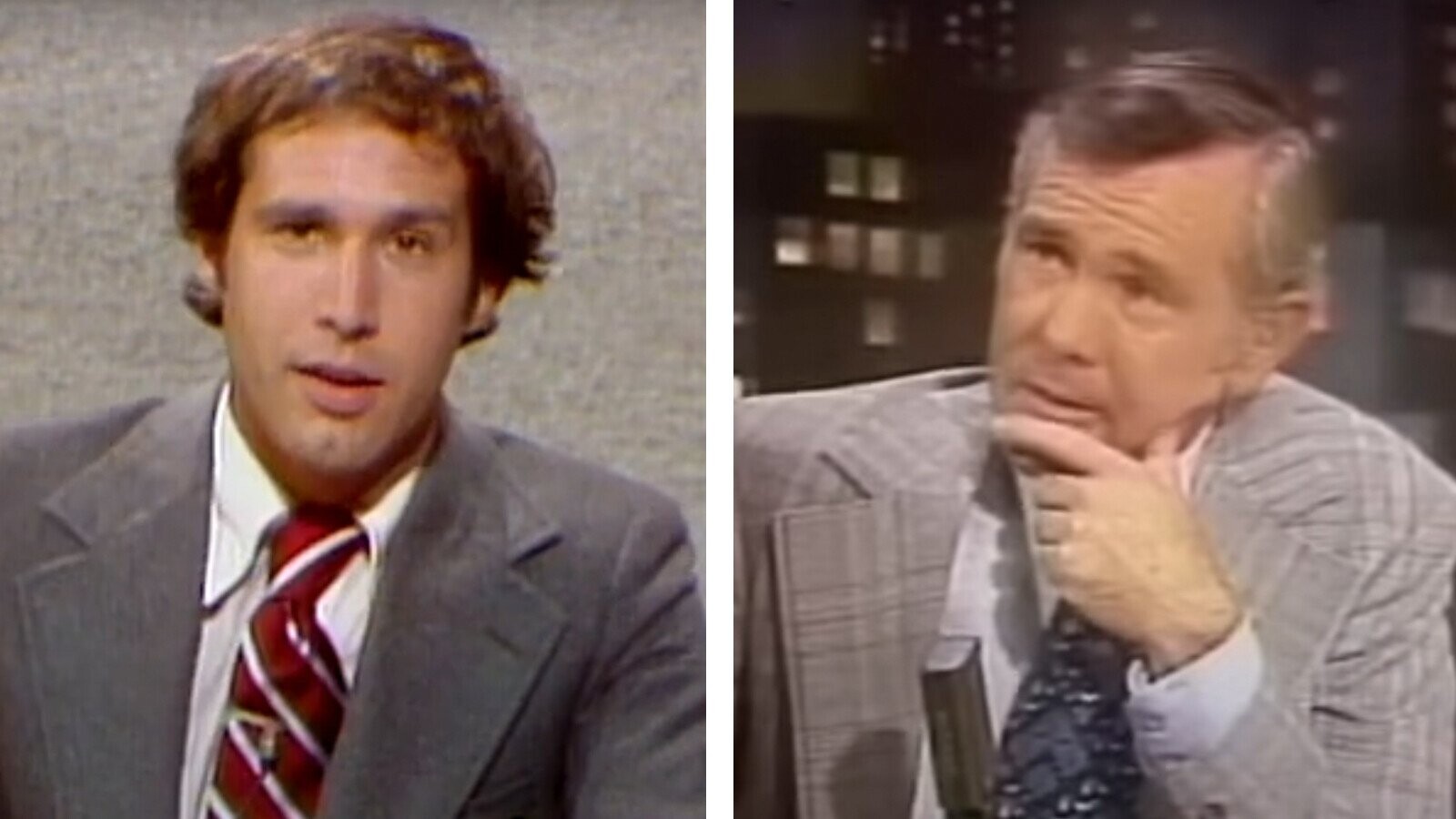
Television history is full of grand origin stories: bold visionaries, cultural revolutions, executives pacing in smoke-filled rooms, and someone yelling, “We’re going live!” But one of the most influential comedy institutions in America began with something wonderfully human: Johnny Carson wanted more time off.
Yes, Saturday Night Live, the show that launched generations of comedians, reshaped political satire, turned catchphrases into national currency, and made millions of viewers argue every Sunday morning about whether “the old cast was better,” exists partly because the king of late night wanted NBC to stop burning through his reruns on weekends.
Before SNL became a cultural landmark, NBC’s late Saturday-night schedule was not exactly a glamorous comedy laboratory. It was mostly a place to park reruns of The Tonight Show Starring Johnny Carson. Affiliates were fine with that. Viewers were fine with that. NBC was certainly fine with getting extra value from Carson’s popularity. Carson, however, was not fine with it forever. By 1974, he wanted those reruns saved for weeknights, which would allow him to tape fewer fresh shows and take more time away from the grind.
That scheduling request created a problem for NBC: what should fill the Saturday 11:30 p.m. slot? The answer, after some executive maneuvering, became a live comedy-variety experiment created by Lorne Michaels and developed with Dick Ebersol. It premiered on October 11, 1975, under the title NBC’s Saturday Night. Nobody involved could have known that a request for vacation flexibility would become a half-century comedy machine.
The Late-Night Kingdom Before SNL
To understand why Carson’s request mattered, we have to remember how powerful Johnny Carson was in the 1970s. The Tonight Show was not just a talk show; it was the late-night show. Carson’s monologue could shape the next morning’s office chatter. His couch could mint stars. His approval could make a comedian’s career. In an era before YouTube clips, TikTok trends, and streaming chaos, Carson owned the hour when America loosened its tie, poured one last drink, and let television tuck it into bed.
NBC understood the value of that throne. Weekend reruns of The Tonight Show, often packaged as “Best of Carson” broadcasts, were a low-risk programming choice. The network already had the material. The host was beloved. Local stations had something reliable to air. It was basically television’s version of reheating great leftoversexcept the leftovers were Johnny Carson, and the microwave was a national network.
But Carson saw a different problem. If his best material ran on weekends, NBC could not easily use those same episodes during the week when he wanted breaks. Carson had already earned the right to negotiate from strength. He was too important to ignore, and NBC knew it. When he pushed to end the weekend reruns and reserve them for weeknight use, he was not merely asking for a calendar adjustment. He was forcing the network to reimagine a neglected time slot.
How Carson’s Vacation Request Created a Comedy Opening
The legend is sometimes simplified into one sentence: Johnny Carson wanted more time off, so NBC created Saturday Night Live. That is basically true, but the real story is more interesting. Carson did not sit down and say, “Please invent a sketch show with killer bees, fake commercials, political impressions, and a guy saying, ‘Well, excuuuuse me!’” He simply wanted NBC to stop using his reruns on Saturday nights.
That left NBC president Herbert Schlosser with a programming hole. The Saturday 11:30 p.m. slot was not considered valuable in the way prime time was. Many people assumed the young audience NBC wanted was out at movies, bars, parties, concerts, or doing whatever people did before phones made everyone silently stare at glowing rectangles in public. Still, the vacancy had to be filled.
Schlosser turned to Dick Ebersol, a young NBC executive with sports television experience and an instinct for energy. Ebersol then connected with Lorne Michaels, a Canadian-born writer and producer who had worked on shows such as Rowan & Martin’s Laugh-In and Lily Tomlin specials. Michaels had an idea that was not quite a traditional variety show, not quite a sketch show, not quite a concert, and not quite anything executives could easily explain in a memo without reaching for antacids.
What Michaels proposed was a weekly live show made for younger viewers: topical comedy, short films, unusual musical guests, stand-up elements, and a repertory cast that did not look or behave like polished prime-time entertainers. It would be messy, immediate, stylish, and slightly dangerous. In other words, it would feel like Saturday night.
Lorne Michaels’ Big Bet: Make TV Feel Young
By the mid-1970s, network television was often safe, broad, and tidy. Michaels wanted something different. He wanted comedy that felt like it came from the same world as underground newspapers, college humor magazines, improv clubs, rock concerts, and post-Watergate skepticism. The show would not beg every viewer to love it. That was part of the point. It would speak to people who felt that television had become too square, too packaged, and too eager to please Uncle Morty in Des Moines.
That attitude became one of SNL’s defining traits. From the beginning, the show operated with the thrill of possible failure. It was live. It was late. It was written quickly. It mixed polished talent with raw nerves. The host might be a comedian, actor, athlete, politician, or musician. Some sketches would land beautifully. Others would stagger around like a deer learning jazz. But even the failures carried a kind of electricity because viewers knew the performers were doing it right now.
Michaels also understood that the cast had to feel like a gang. The original “Not Ready for Prime Time Players” included Chevy Chase, John Belushi, Dan Aykroyd, Gilda Radner, Jane Curtin, Garrett Morris, and Laraine Newman. They did not resemble the shiny variety-show ensembles of earlier television. They looked like the funniest people at an after-hours party you were slightly nervous to attend.
The First Night: October 11, 1975
The first episode of NBC’s Saturday Night aired on October 11, 1975. George Carlin appeared as the first host, with Billy Preston and Janis Ian as musical guests. Andy Kaufman performed his now-famous “Mighty Mouse” routine, a strange and brilliant bit of anti-comedy that announced, in its own tiny way, that this program would not behave like everything else on television.
That first broadcast was not yet the fully formed SNL viewers know today. It had more variety-show DNA, more stand-up interludes, more experimental pieces, and a looser sense of structure. Even original writer Anne Beatts later suggested the show did not truly become itself until later in that first season. That makes sense. New shows often need time to discover their own rhythm. SNL was like a baby giraffe with a typewriter: wobbly, fascinating, and somehow already taller than expected.
Still, the ingredients were there. The cold open format began taking shape. Weekend Update gave the show a satirical news desk. Fake commercials mocked consumer culture. Political sketches responded to the national mood. Musical guests brought credibility and unpredictability. The show was not just presenting comedy; it was absorbing the week and throwing it back at America before the week had even cooled.
Why the Original Title Was Not Saturday Night Live
One fun piece of trivia: the show was not originally called Saturday Night Live. It debuted as NBC’s Saturday Night because ABC had a program titled Saturday Night Live with Howard Cosell. After that competing show disappeared, NBC eventually adopted the title that became famous. By 1977, the name Saturday Night Live stuck.
The title change matters because it shows how accidental the whole enterprise was. Today, “SNL” sounds inevitable, like Coca-Cola, the Super Bowl, or your aunt forwarding holiday recipes in all caps. But at the start, even the name was a workaround. The show grew into its identity in public, one risky broadcast at a time.
Carson Was Not the Villain of the Story
Modern retellings sometimes dramatize the relationship between Carson and SNL as a showdown: old late-night king versus young comedy rebels. That makes good movie tension, but reality was subtler. Carson was powerful, protective of his turf, and reportedly skeptical of some of the new show’s more outrageous humor. But he was not simply standing backstage in a cape, twirling a mustache, and plotting to destroy sketch comedy.
In fact, Carson’s request created the opportunity. Without his desire to move reruns from weekends to weeknights, NBC might have continued filling Saturday late night with inexpensive repeats. Instead, the network had a reason to try something new. Carson did not create SNL creatively, but his scheduling power made space for it physically. Sometimes history turns not on a manifesto, but on a calendar.
The Business Lesson Hidden in the Joke
The origin of Saturday Night Live is funny because it sounds so accidental. Yet it also reveals something important about media innovation. Breakthroughs often happen when an old system has an inconvenience it can no longer ignore. NBC did not wake up one day feeling spiritually called to reinvent American comedy. It had a hole in the schedule. Carson wanted flexibility. Affiliates needed programming. Executives needed a solution. Michaels supplied a vision big enough to turn a problem into a platform.
This is how many cultural revolutions begin: not with perfect confidence, but with a practical headache. A network loses reruns and gains a live sketch institution. A young producer gets a neglected time slot and turns it into a national stage. A cast of misfits gets a weekly deadline and becomes comedy royalty. It is almost enough to make every office scheduling conflict seem historic. Almost.
How SNL Changed American Comedy
Once SNL found its voice, it changed the pipeline of American comedy. The show became a proving ground for performers, writers, directors, musicians, and future movie stars. Alumni went on to shape film, sitcoms, late-night television, animation, political satire, and digital comedy. From the original cast to Eddie Murphy, from Phil Hartman to Tina Fey, from Will Ferrell to Kate McKinnon, the show repeatedly introduced performers who became part of the national vocabulary.
It also changed how Americans processed politics. SNL did not invent political satire, but it gave television a recurring weekly ritual for it. Presidents, candidates, scandals, debates, and cultural panics could be filtered through sketches before the public had finished reading the Sunday paper. Sometimes the impressions were sharper than the editorials. Sometimes they were just silly. Either way, they stuck.
The show’s influence extended beyond sketches. It helped normalize the idea that comedy could be current, fast, self-aware, and openly imperfect. A sketch did not need to be timeless; it needed to capture the weirdness of now. That urgency became part of the SNL brand. Viewers tuned in not only for jokes, but to see how the show would respond to whatever America had just done to itself.
Why the Carson Connection Still Fascinates Viewers
The phrase “SNL exists because Johnny Carson wanted more time off” remains irresistible because it compresses a huge cultural shift into one delightfully mundane human desire. Everyone understands wanting time off. Not everyone can turn that desire into a programming domino that eventually produces the Blues Brothers, Wayne’s World, Church Lady, Celebrity Jeopardy, Sarah Palin sketches, digital shorts, and thousands of late-night arguments about whether a sketch was “actually funny.”
It also reminds us that television is not created in a vacuum. Art, commerce, ego, exhaustion, timing, and real estate all collide. Studio 8H became legendary not only because Michaels had taste, or because the cast had talent, but because NBC had room. That room existed because Carson, the biggest late-night star in America, had enough leverage to change how his reruns were used.
The Enduring Magic of Studio 8H
Studio 8H at 30 Rockefeller Plaza became the show’s home, and over time it turned into a kind of comedy pressure cooker. The weekly schedule is famously brutal: pitch, write, rewrite, rehearse, cut, panic, perform, collapse, repeat. That machine has produced brilliant television and spectacular disasters, often in the same episode. But the format survives because live comedy carries a special charge. The audience is not just watching content. It is watching risk.
That risk is why SNL can remain relevant even when individual sketches miss. The show is a weekly negotiation with the present. It asks, “What happened this week, and can we make it funny by 11:30?” That question has kept the format alive through political eras, media revolutions, cast changes, critical backlash, and the rise of streaming platforms that supposedly made appointment television obsolete.
Experience Section: What This Origin Story Teaches Viewers, Writers, and Creators
The story of Saturday Night Live beginning with Johnny Carson’s desire for more time off offers a surprisingly useful lesson for anyone who creates, manages, writes, performs, or simply tries to survive modern work. The lesson is this: opportunities often arrive disguised as annoyances. NBC did not initially receive Carson’s request as a golden creative invitation. It received it as a scheduling problem. Yet inside that problem was one of the most durable formats in television history.
For writers, the story is a reminder that constraints can be creative fuel. SNL had a tough slot, a live deadline, limited time, and a skeptical network environment. Those constraints could have crushed it. Instead, they gave the show its personality. The frantic pace forced decisions. The live format created urgency. The late hour allowed attitude. The young audience gave permission to be weird. Many creators wait for ideal conditions before making something brave. SNL suggests the opposite: imperfect conditions may be exactly what gives a project its edge.
For performers, the early history of the show shows the value of being unmistakable. The first cast members were not interchangeable entertainers. Gilda Radner brought warmth and joyful oddness. John Belushi brought explosive physical energy. Dan Aykroyd brought strange precision. Jane Curtin brought deadpan intelligence. Garrett Morris brought range and musical skill. Chevy Chase brought smug silliness and camera confidence. Laraine Newman brought character-driven eccentricity. Together they created a comedy texture that could not have come from a safer casting process.
For businesses, the lesson is even sharper: do not waste empty space. NBC had a slot many executives might have treated as disposable. Instead, that slot became a laboratory. In today’s world, “empty space” might mean an unused social channel, an overlooked audience, a neglected product feature, a quiet time of day, or a customer complaint that keeps coming back. The easy response is to patch the hole. The better response is to ask whether the hole is actually a doorway.
For viewers, the Carson-to-SNL story adds a layer of charm to every episode. Behind the celebrity hosts and viral sketches sits a very practical origin: a tired superstar wanted breathing room. That makes the show feel more human. It did not descend from the clouds fully formed. It came from negotiations, doubts, experiments, bad sketches, brilliant sketches, awkward transitions, and people trying to make a deadline. In other words, it came from work.
There is also a healthier lesson about rest. Carson’s wish for more time off was not laziness. He had carried a demanding late-night institution for years. Creative work requires recovery, even when the person doing it is famous, powerful, and seemingly effortless on camera. Ironically, one performer’s need for rest created space for hundreds of other performers to work. That is the kind of workplace ripple effect no human resources seminar could invent.
Finally, the origin of SNL teaches that culture is often built sideways. Rarely does someone announce, “Today I shall create an American institution.” More often, someone solves a problem with enough imagination that the solution outgrows the problem. Johnny Carson wanted his reruns moved. NBC needed a replacement. Lorne Michaels wanted television to feel cooler, younger, and more alive. Put those forces together, add live cameras, musical guests, writers running on terror, and a studio audience, and suddenly a scheduling headache becomes history.
Conclusion
Saturday Night Live exists because of talent, timing, nerve, and a little network panic. But at the center of its origin story is Johnny Carson’s very relatable desire for more time away from work. His request forced NBC to rethink Saturday late night, and that opening allowed Herbert Schlosser, Dick Ebersol, and Lorne Michaels to take a chance on something strange, live, youthful, and unpredictable.
Nearly five decades later, the result is one of the most influential shows in American television. It has survived cast changes, bad reviews, cultural shifts, political storms, and the eternal complaint that it “used to be funnier.” Maybe it was. Maybe everyone just loves the cast from when they were 16. Either way, the show remains a rare piece of live national comedy ritual.
So the next time someone says they need a vacation, listen carefully. They may not be avoiding work. They may be accidentally creating the next great American comedy institution.
Note: This article is written in original language for web publication and is based on verified historical information about Johnny Carson, NBC late-night programming, Lorne Michaels, Dick Ebersol, and the 1975 launch of Saturday Night Live.











