
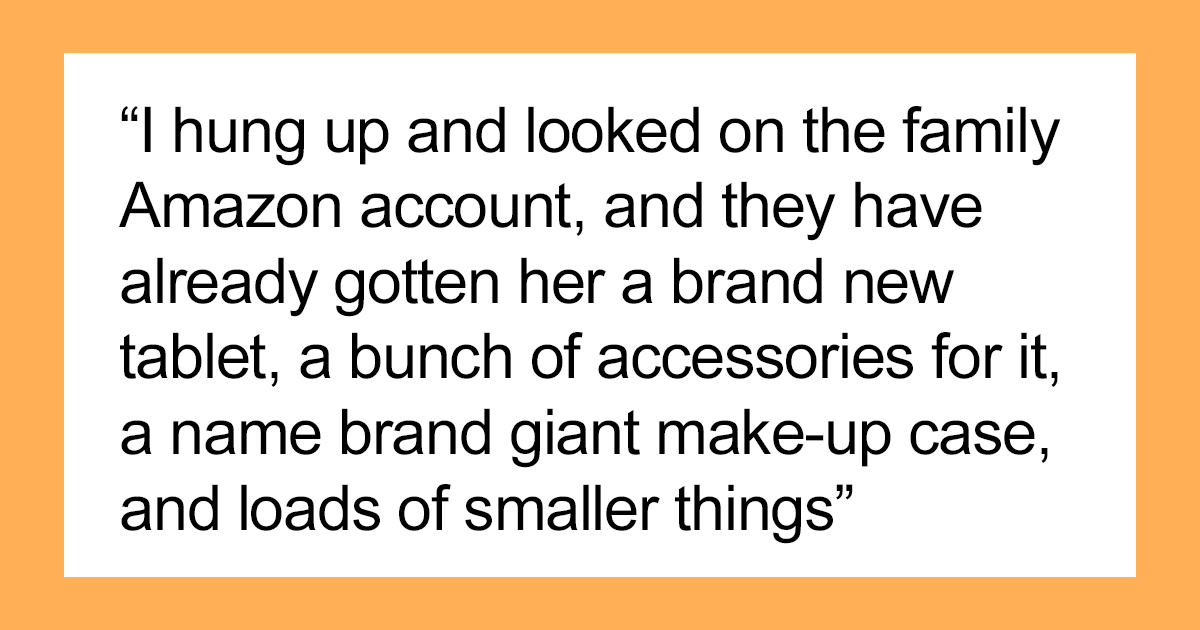
Christmas is supposed to be the season of twinkly lights, hot cocoa, and pretending nobody noticed that Aunt Linda brought the same store-bought pie for the seventh year in a row. But sometimes, the holidays turn into a full-contact emotional sport. One 19-year-old found himself in exactly that kind of festive chaos after discovering that his parents had bought gifts for his younger siblingeven though the family had agreed that nobody would be getting gifts that year.
At first glance, it sounds like a small argument over presents. But anyone who has ever been the “responsible one,” the “older one,” or the child who somehow became emotionally self-sufficient at age twelve knows the truth: the gift was not really the point. The point was the broken agreement. The point was feeling like the rules changed only after he left the room. And, yes, the point was also that Christmas morning is a terrible time to discover you have been quietly sorted into the “understanding adult” category while your sibling still gets the full holiday magic package.
This story hit a nerve online because it touches several very real family issues: parental favoritism, sibling resentment, holiday expectations, unequal treatment, and the tricky transition from teenager to adult child. At 19, someone may be legally grown, but emotionally, they are often still learning where they fit in the family structure. When parents suddenly treat one child as “too old” for care while treating another as “still young enough” for special attention, hurt feelings can arrive faster than a last-minute Amazon package.
What Happened: A “No Gifts” Agreement That Wasn’t Really No Gifts
According to the story, the young man and his family had agreed not to exchange Christmas gifts. That kind of arrangement is common, especially when money is tight, family members are busy, or everyone wants to avoid turning December into a budgeting obstacle course with tinsel. A no-gifts rule can be healthy when everyone understands it, respects it, and follows it.
The problem began when he called home and learned that his parents had bought gifts for his younger sibling. Not only that, but he was reportedly told what he should buy for the sibling too. That detail is important. It shifted the situation from “parents quietly made an exception” to “the family rule apparently applies to him, but not to everyone else.” That is the kind of emotional fine print no one wants to discover three days before Christmas.
He tried to explain that he was not simply demanding a present. His frustration came from being treated differently. From his perspective, the family had agreed to one standard, then created another standard for the child who still lived at home. His parents argued that the sibling’s living situation made the difference. He responded by saying that unless they got him a gift too, he would not come home for Christmas.
Was that response dramatic? Maybe. Was it understandable? Also maybe. Family conflict rarely arrives dressed in perfect emotional maturity. More often, it shows up wearing pajama pants and saying, “Fine, I just won’t come then.”
Why This Story Feels Bigger Than a Christmas Present
People who read stories like this often split into two camps. One group says, “He is nineteen, not nine. Grow up.” The other group says, “No, this is clearly about favoritism.” Both reactions reveal why the topic is so emotionally loaded. Gift-giving inside families is rarely just about the object. A wrapped box can symbolize love, fairness, attention, memory, apology, obligation, status, or old wounds that somehow learned how to wear ribbon.
For a young adult, especially one who has recently moved out or started living more independently, family traditions can become complicated. Parents may assume the child no longer needs the same rituals. The child may assume that independence should not mean emotional exile. When nobody says this out loud, Christmas becomes less “silent night” and more “silent resentment.”
The young man’s reaction suggests he felt excluded from the family’s warmth. The younger sibling still received the comfort of being treated like a child at Christmas. He, meanwhile, was expected to accept the practical adult version: no gifts, no fuss, and perhaps no complaint. That can feel like being promoted to adulthood without a raise, benefits, or even a decent office chair.
Parental Favoritism: Real, Painful, and Often Denied
Parental favoritism does not always look like a parent proudly announcing, “This one is my favorite; the rest of you may collect your emotional baggage at the door.” More often, it appears in patterns: one child gets more patience, more help, more excuses, more gifts, or more emotional cushioning. Another child is expected to be mature, flexible, forgiving, and low-maintenance.
Research on parental differential treatment has shown that siblings are sensitive to unequal treatment, especially when they perceive it as unfair. Even when parents have practical reasons for treating children differentlyage, needs, distance, health, finances, or living arrangementsthe explanation matters. Children, including adult children, tend to handle differences better when parents communicate clearly and acknowledge the emotional impact.
In this story, the parents may have believed they were being reasonable. Perhaps the younger sibling lived at home and still depended on them. Perhaps they thought the 19-year-old was old enough to understand. Perhaps they assumed a small exception would not matter. But good intentions do not automatically erase hurt. Parents can mean well and still create a situation that feels unfair.
The “Older Child Tax” Is Very Real
Many older children know the unofficial family policy: because you are older, you are supposed to understand. You understand when plans change. You understand when money is limited. You understand when the younger sibling gets more attention because “they need it more.” You understand so much that eventually you start wondering whether anyone understands you.
This is sometimes called parentification when it goes too far, but even in milder forms, the older child may become the family’s emotional shock absorber. They are expected to be calm when others are upset, generous when others are needy, and quiet when fairness becomes inconvenient. By the time they reach young adulthood, they may be praised for being independent while privately feeling forgotten.
That does not mean every older sibling is mistreated, and it certainly does not mean younger siblings are villains. In many families, younger children also carry their own burdens. But when parents repeatedly send the message that one child’s feelings matter less because they are “mature,” resentment can grow. And resentment, like fruitcake, can last much longer than anyone expects.
Why “No Gifts” Rules Need Clear Boundaries
A no-gifts agreement sounds simple, but it needs rules as clear as a board game manual written by someone who is not trying to start a fight. Does “no gifts” mean no gifts for everyone? Does it mean no gifts among adults, but gifts for kids? Does it include siblings who are teenagers? What about stocking stuffers? What about handmade presents? What about one person who “just couldn’t resist” and arrives with a suspiciously gift-shaped tote bag?
Families often run into trouble because they use vague phrases and assume everyone shares the same definition. In this case, the 19-year-old heard “no gifts for anyone.” The parents apparently interpreted it as “no gifts for the older child, but gifts for the younger child are still allowed.” Those are not the same agreement. They are not even cousins.
If a family wants to reduce holiday stress, the better approach is to be specific. For example: “This year, adults will not exchange gifts, but we will still buy for kids under eighteen.” Or: “Everyone gets one small gift under twenty dollars.” Or: “We are doing stockings only.” Or: “No purchased gifts, but cards and homemade items are welcome.” Clarity prevents disappointment from putting on a Santa hat and kicking down the door.
Was He Wrong to Refuse to Come Home?
Refusing to come home for Christmas is a serious emotional move. It can protect a boundary, but it can also escalate a conflict. In this situation, the young man’s feelings seem valid: he felt excluded, misled, and treated as less deserving. However, the condition “get me a gift or I won’t come” risks making the issue look materialistic, even if his deeper concern is fairness.
A stronger response might have sounded like: “I am hurt because I thought we agreed no one was exchanging gifts. Finding out that my sibling is getting presents makes me feel left out. I need you to understand that this is about equal treatment, not the price of a gift.” That kind of statement keeps the focus on the emotional issue instead of turning the argument into a receipt-checking contest.
Still, young adults do not always have perfect language when they feel rejected. A 19-year-old is navigating independence, family loyalty, money, identity, and emotional boundaries all at once. That is a lot, especially when the soundtrack is “Jingle Bell Rock” playing in every store like a psychological experiment.
What the Parents Could Have Done Differently
The parents had several better options. First, they could have explained the exception before gifts were purchased. If the younger sibling was still considered a child for Christmas purposes, they should have said so clearly. Second, they could have offered the 19-year-old a small token gift as a gesture of inclusion. It did not need to be expensive. A favorite snack, a handwritten note, a book, or even a stocking could have communicated, “You still matter here.”
Third, they could have avoided asking him to buy a gift for the sibling after telling him no one was exchanging presents. That request probably intensified the sting. It suggested that he was not only excluded from receiving but still expected to participate in giving. That is like being told the buffet is closed, then being asked to help serve dessert.
Most importantly, the parents could have listened without immediately defending themselves. When a child says, “I feel treated differently,” parents often rush to explain why the difference is reasonable. But explanation without empathy can feel like dismissal. A better first response is: “I can understand why that hurt. We should have communicated better.” Those two sentences can do more for family peace than a mountain of wrapping paper.
What the 19-Year-Old Could Do Next
If he wants to repair the situation without swallowing his feelings, he can separate the boundary from the demand. Instead of making attendance dependent on receiving a present, he could say he needs an honest conversation before deciding whether to come home. That keeps his dignity intact and gives the parents a chance to respond like adultswhich, rumor has it, parents are also supposed to be.
He might also ask direct questions: “Did the no-gifts rule apply to me only?” “Do you still see me as part of the family traditions?” “When I move out or become more independent, does that mean I stop being included?” These questions reveal the real wound. They are much harder to dismiss than “Where is my gift?”
If his parents respond with care, the holiday may still be salvageable. If they mock him, call him selfish, or refuse to acknowledge the unequal treatment, then spending Christmas elsewhere may be a reasonable boundary. Family togetherness is meaningful only when it does not require one person to pretend they are not hurt.
How Families Can Prevent Gift Drama Before It Starts
1. Define the Gift Rules Early
Do not wait until the week before Christmas to clarify who is buying what. Families should decide early whether they are doing gifts, stockings, Secret Santa, experience gifts, charity donations, or no gifts at all. The more specific the plan, the less room there is for festive chaos.
2. Make Exceptions Visible
If younger children, students, unemployed relatives, or family members with special circumstances are exceptions, say so. Hidden exceptions create suspicion. Visible exceptions create understanding.
3. Avoid Using “You’re Older” as a Blanket Excuse
Age can explain different responsibilities, but it should not erase someone’s need to feel loved. A 19-year-old may not need the same gifts as a child, but they may still need reassurance that adulthood has not made them invisible.
4. Keep Money Separate From Meaning
Fair does not always mean identical spending. One child may need winter boots while another gets a book. The emotional problem begins when one child receives thoughtfulness and the other receives assumptions.
5. Talk Before the Holiday Table Becomes a Courtroom
Holiday gatherings are not ideal places for surprise emotional trials. If there is tension, discuss it before everyone is trapped in a living room with cranberry sauce, cousins, and no escape route.
The Bigger Lesson: Fairness Is Emotional, Not Just Financial
One of the biggest mistakes families make is assuming that fairness can be measured only in dollars. But emotional fairness matters just as much. Did everyone feel considered? Did everyone know the plan? Did anyone feel singled out, excluded, or taken for granted? A five-dollar gift can feel priceless if it says, “I remembered you.” A hundred-dollar gift can feel hollow if it comes with resentment or comparison.
In this story, the young man’s pain likely came from feeling that his place in the family had changed without his consent. He was old enough to be left out, but not respected enough to be told the truth. He was mature enough to understand, but apparently not important enough to be included. That is a painful combination.
Christmas has a way of magnifying family patterns. If a family already has issues with favoritism, communication, or unequal expectations, December will not politely ignore them. It will wrap them in shiny paper and place them directly under the tree.
Experiences Related to This Topic: When Christmas Gifts Reveal Family Patterns
Many people have lived through some version of this story. Maybe it was not Christmas. Maybe it was a birthday, graduation, vacation, wedding, or family dinner where one sibling’s preferences quietly shaped the entire event while everyone else was told to be flexible. These moments hurt because they are small enough for others to dismiss but meaningful enough to remember for years.
Imagine a college student coming home after months away and realizing their old room has become storage, while a younger sibling’s room has been redecorated with care. Nobody meant harm, perhaps, but the message lands anyway: your space here is temporary now. Or picture an older sibling who gets a practical gift like socks while the younger sibling gets a carefully chosen item connected to their hobbies. Socks are useful, yes, but they rarely whisper, “We see your soul.” Unless they are extremely dramatic socks.
Another common experience is the “you don’t need as much” argument. The older child works part-time, so parents assume they can buy their own things. The younger sibling does not work, so the parents provide more. On paper, that may seem logical. Emotionally, it can feel like success is punished. The more responsible child becomes, the less nurturing they receive. Over time, they may learn not to ask for anythingnot because they need nothing, but because asking has started to feel pointless.
Some families also use gifts as a way to avoid harder conversations. A parent may buy one child expensive presents because they feel guilty, because that child is more demanding, or because the relationship is easier when money fills the silence. Meanwhile, the quieter child gets less because they complain less. This creates a backward reward system: the loudest person gets the most care, and the calmest person gets praised for needing less.
For young adults, the holiday season can be especially confusing because their role is changing. They may be expected to contribute financially, travel independently, help cook, buy presents, and behave like adults. At the same time, they may still crave small signs of childhood belonging: a stocking, a favorite dessert, a family joke, a parent remembering what they like. That does not make them immature. It makes them human.
The healthiest families learn to update traditions without deleting people from them. They say things like, “You’re grown now, but you’re still our kid.” They create new rituals for adult children instead of quietly removing the old ones. Maybe the gifts become smaller. Maybe the focus shifts to dinner, games, or shared experiences. But the emotional message stays consistent: you are still included.
When conflict does happen, repair matters more than perfection. A parent can say, “We handled that badly.” A young adult can say, “I reacted strongly because I felt hurt.” A sibling can say, “I didn’t realize this made you feel left out.” None of these statements require anyone to wear a holiday sweater with feelings embroidered on it. They simply require honesty.
The lesson from this 19-year-old’s Christmas conflict is not that every family must buy equal gifts forever. The lesson is that agreements matter. Communication matters. Emotional inclusion matters. A no-gifts Christmas can be lovely when it is truly mutual. But when “no gifts” secretly means “no gifts for you,” the problem is not the missing present. The problem is the message inside the empty box.
Conclusion
The story of a 19-year-old refusing to come home for Christmas after discovering his sibling received gifts despite a no-gifts agreement is not just internet drama. It is a sharp reminder that families run on more than traditions; they run on trust. When parents make exceptions without explaining them, especially in families where sibling favoritism may already be suspected, small holiday decisions can trigger big emotional reactions.
The young man may have expressed his hurt imperfectly, but the hurt itself makes sense. Gifts are symbols. So are empty hands. If families want peaceful holidays, they need clear expectations, honest conversations, and enough empathy to understand that adulthood does not cancel a child’s need to feel loved.
Note: This article is an original, fully rewritten analysis based on publicly available information about family dynamics, holiday stress, gift-giving etiquette, sibling rivalry, parental favoritism, and young-adult boundaries. It is written for informational and editorial purposes, not as mental-health, legal, or family therapy advice.












