
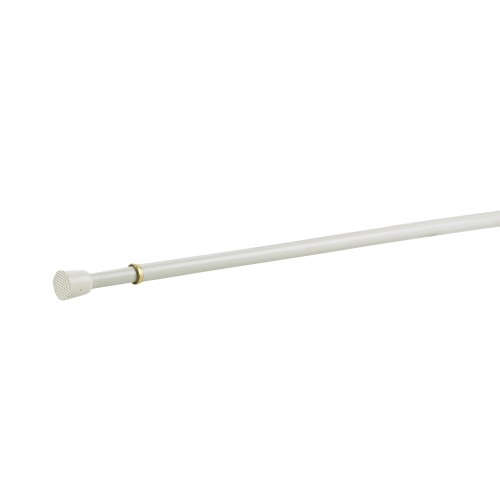
The Levelor 18in – 28in Round Spring Tension Rod (1912461) is one of those tiny home-improvement items that looks almost suspiciously simple. No brackets. No screws. No weekend-long installation drama. Just a slim white tension rod, a spring mechanism, rubber gripper ends, and the quiet promise that your window, cabinet, closet, or DIY curtain project can finally get its act together.
For renters, dorm dwellers, small-space decorators, and anyone who has ever looked at a drill and thought, “Absolutely not today,” a spring tension rod can be a small miracle. This specific Levelor tension rod is designed to adjust from 18 inches to 28 inches, making it especially useful for narrow windows, sidelight curtains, small bathroom openings, kitchen café curtains, cabinet interiors, and creative storage hacks. It is not a glamorous chandelier. It will not make guests gasp from across the room. But it may solve five annoying household problems before lunch, which is arguably more impressive.
This guide breaks down what the Levelor 18in – 28in Round Spring Tension Rod is, where it works best, how to install it, what kind of curtains to pair with it, and what to expect in real-life use. Consider it a love letter to the humble no-drill curtain rod: small, practical, and more useful than it has any right to be.
What Is the Levelor 18in – 28in Round Spring Tension Rod?
The Levelor 18in – 28in Round Spring Tension Rod (1912461) is a compact adjustable curtain rod made for inside-mount applications. Instead of using wall brackets, screws, or anchors, it relies on spring pressure to hold itself between two opposing flat surfaces. You twist or adjust the rod to the desired width, compress it slightly, then let the spring tension push the rubber ends outward against the frame.
Its key specifications are straightforward: it adjusts from 18 inches to 28 inches, has a round shape, typically comes in a white finish, and has a slim 7/16-inch diameter. The rubber gripper ends help protect surfaces and improve hold, while the twist-adjust design allows the rod to be shortened or lengthened to fit the space.
Key Features at a Glance
- Adjustable length: 18 inches to 28 inches
- Round spring tension design
- Approximate 7/16-inch diameter
- White finish for a clean, low-profile look
- Rubber gripper ends for secure placement
- No drilling, screws, or brackets required
- Best for lightweight curtains, sheers, valances, and small fabric panels
The most important thing to understand is that this is a lightweight tension rod. It is excellent for small-scale jobs, but it is not meant to wrestle heavy blackout drapes into submission. If you try to hang thick velvet panels from a slim 7/16-inch rod, gravity will win. Gravity is undefeated.
Why a Small Tension Rod Still Matters
In the world of window treatments, bigger hardware often gets all the attention: decorative finials, chunky black rods, double curtain systems, ceiling-mounted drapery tracks, and custom shades that cost more than a used refrigerator. But the smaller spring tension rod has a different superpower: convenience.
The Levelor 18in – 28in tension rod is useful because it solves common home problems without turning them into construction projects. Need privacy on a small bathroom window? Done. Want to hang a tiny café curtain under the kitchen sink? Easy. Need to cover glass cabinet doors without drilling into wood? This rod says, “I was born for this.”
It is especially helpful in rentals, older homes, dorm rooms, temporary living situations, craft rooms, laundry areas, and spaces where permanent hardware would be overkill. A no-drill tension rod lets you experiment with style and function without committing to holes in the wall. That is a major advantage for anyone who changes their mind about décor more often than they change streaming passwords.
Best Uses for the Levelor 18in – 28in Round Spring Tension Rod
Because this rod is short and slim, it shines in compact spaces. It is not the rod you choose for a wide living room window, but it can be ideal for small areas where traditional curtain hardware feels too bulky.
1. Small Bathroom Windows
Bathroom windows often need privacy more than drama. A lightweight sheer, café curtain, or moisture-friendly fabric panel can be paired with this tension rod to soften light while keeping the room from feeling like a stage. The white finish blends easily with most white trim, tile, and painted frames.
2. Kitchen Café Curtains
For a charming kitchen-window look, install the rod inside the lower half of the window frame and hang a short café curtain. This keeps the room bright while adding privacy near eye level. It also gives the kitchen a cozy, lived-in feeling without requiring a full curtain setup.
3. Cabinet and Shelf Covers
Open shelving is beautiful when everything is styled like a magazine photo. Unfortunately, most real shelves contain cereal boxes, spare cords, and the mysterious container lid that fits nothing. A small tension rod can hold a fabric panel across a cabinet opening or shelf niche, hiding visual clutter in seconds.
4. Laundry and Utility Areas
Use the rod to hang a small curtain in front of cleaning supplies, exposed pipes, or a laundry nook. Because it is removable, it works well in areas that may need regular access.
5. Craft and Organization Projects
Small tension rods can also help organize ribbon, wrapping paper, fabric scraps, lightweight spray bottles, and small hanging accessories. The 18-to-28-inch size range makes it suitable for drawers, narrow cabinets, and craft stations where a longer rod would be awkward.
How to Measure Before Buying or Installing
Measuring sounds boring, but it is the difference between a tension rod that sits neatly in place and one that launches itself across the room like a tiny home décor javelin.
Measure the inside width of the space where the rod will be installed. The Levelor 18in – 28in Round Spring Tension Rod is designed for openings within that range. For best performance, choose a space comfortably inside the rod’s adjustment range rather than pushing the rod to its absolute limit. A rod that is barely long enough may not create enough pressure, while a rod that is overly compressed may be harder to place and adjust.
Also check the mounting surfaces. Tension rods work best between two flat, parallel surfaces. Wood trim, painted window jambs, tile, and smooth cabinet interiors usually work well. Irregular stone, heavily textured walls, curved surfaces, or dusty areas can reduce grip.
How to Install the Levelor 18in – 28in Tension Rod
Installation is refreshingly simple. You do not need a drill, stud finder, wall anchor, or that one screwdriver that always disappears the moment you need it.
Step-by-Step Installation
- Measure the inside width of the window frame, cabinet, or opening.
- Twist the rod to extend it slightly wider than the measured opening.
- Slide your curtain, sheer, or fabric panel onto the rod.
- Compress one end of the rod inward.
- Place the rod between the two flat surfaces.
- Release slowly and allow the rubber ends to grip.
- Check that the rod is level and secure.
- Gently tug the curtain to test the hold before walking away proudly.
If the rod slips, remove it and extend it slightly more before reinstalling. If it feels too tight to place without scraping the frame, shorten it a little. The goal is firm pressure, not a wrestling match.
Choosing the Right Curtains for This Rod
The Levelor 18in – 28in Round Spring Tension Rod works best with lightweight window treatments. Think sheers, voile panels, thin cotton café curtains, lace curtains, lightweight linen blends, small valances, or DIY fabric panels.
Rod-pocket curtains are usually the easiest match because the slim rod slides directly through the sewn pocket. Clip rings can also work, but they may add weight and make the setup look busier. For a small rod, simple is usually better.
Good Fabric Choices
- Sheer polyester
- Light cotton
- Voile
- Lace
- Thin linen blends
- Lightweight café curtain fabric
Fabrics to Avoid
- Heavy blackout curtains
- Thick velvet
- Thermal insulated drapes
- Multiple layered panels
- Heavy outdoor fabric
Remember: this rod is a clever little helper, not a structural beam. Treat it kindly, and it will do its job.
Design Tips for Making a Small Tension Rod Look Better
A tension rod can look polished when it is styled with intention. Because this model is slim and white, it tends to disappear visually against white frames. That can be an advantage if you want the fabric to be the star.
Match the Rod to the Trim
If your window trim is white, the white finish keeps the rod subtle. If your trim is dark or natural wood, the white rod may stand out more. In that case, choose a curtain fabric that includes white or light tones so the rod feels intentional rather than accidental.
Use the Right Curtain Length
For café curtains, the panel should usually cover the lower portion of the window without bunching heavily at the sill. For cabinet covers, let the fabric hang cleanly without dragging on shelves or stored items.
Keep Fullness Moderate
A little gathered fabric looks charming. Too much fabric on a tiny rod looks like the curtain is wearing a winter coat. Aim for gentle fullness rather than a thick, crowded gather.
Pros and Cons of the Levelor 18in – 28in Round Spring Tension Rod
Pros
- Affordable and practical for small spaces
- Easy no-drill installation
- Removable and renter-friendly
- Rubber ends help protect surfaces
- Simple white finish blends with many interiors
- Great for lightweight curtains and DIY projects
Cons
- Not suitable for heavy drapes
- Requires two flat, opposing surfaces
- Can slip if overloaded or under-tensioned
- Limited to narrow spaces from 18 to 28 inches
- More functional than decorative
The verdict is simple: this is a smart buy when the project matches the product. It is not meant to transform a giant picture window, but it can make a small window, cabinet, or awkward nook much more useful.
Common Mistakes to Avoid
The most common mistake is using a tension rod for the wrong job. If the curtain is too heavy, the rod will sag or fall. If the surface is dusty, slick, or uneven, the rubber ends may not grip well. If the rod is not extended enough, it will not create adequate pressure.
Another mistake is assuming all tension rods are interchangeable. A shower tension rod, for example, is usually larger and stronger than a slim café curtain tension rod. The Levelor 18in – 28in model is best for lightweight, narrow applications.
Finally, avoid installing the rod on freshly painted surfaces before the paint has fully cured. Rubber ends can sometimes stick to soft paint or leave marks if the surface is not ready. Patience is cheaper than repainting.
Maintenance and Cleaning
Maintenance is minimal. Wipe the rod with a soft damp cloth to remove dust. Avoid abrasive cleaners that could scratch the finish. If the rubber gripper ends collect lint or grime, clean them gently so they maintain traction.
Every few months, check that the rod remains level and secure, especially in humid rooms like bathrooms or laundry areas. Temperature changes, moisture, and repeated curtain movement can affect tension over time. A quick twist adjustment is usually all it takes.
Who Should Buy This Tension Rod?
The Levelor 18in – 28in Round Spring Tension Rod is a strong fit for renters, homeowners with small windows, DIY decorators, college students, apartment dwellers, and anyone who wants a low-commitment window treatment solution. It is also ideal for people who want privacy without hardware, or who enjoy quick home upgrades that do not require protective eyewear.
It may not be the right choice if you need to hang heavy curtains, cover a wide window, mount outside the frame, or create a dramatic designer-style drapery installation. For those projects, a bracket-mounted curtain rod or custom shade will be more reliable.
Creative Ideas Beyond Curtains
One reason tension rods remain popular is that they are secretly organization tools disguised as curtain hardware. The Levelor 18in – 28in size is especially useful in small storage zones.
- Use it inside a cabinet to hang lightweight cleaning cloths.
- Create a mini curtain under a sink.
- Hold rolls of ribbon in a craft cabinet.
- Divide cutting boards or baking sheets vertically in a narrow cabinet.
- Hang a tiny fabric skirt across open shelving.
- Create a lightweight privacy panel in a glass-front cabinet.
Small rods reward creative thinking. Once you install one, you may start noticing other places where a tiny spring-loaded bar could bring order to chaos. This is how a simple curtain project turns into a full-house organizing phase. Do not be alarmed. It happens.
Experience: Living With the Levelor 18in – 28in Round Spring Tension Rod
In real life, a small tension rod like the Levelor 18in – 28in Round Spring Tension Rod is best appreciated after you stop expecting it to be fancy. It is not there to impress anyone. It is there to quietly fix an annoying little problem and then disappear into the background like a very polite stagehand.
One of the best uses is a small bathroom window where privacy matters but bulky hardware feels ridiculous. A lightweight white café curtain on this rod can soften the window without making the room feel smaller. The installation takes only a few minutes: measure, twist, compress, place, adjust, and admire. There is a special satisfaction in finishing a home project before your coffee gets cold.
The rod also performs well in kitchen spaces. Imagine a lower cabinet with cleaning supplies, extra dish towels, and one bottle of mystery cleaner that nobody remembers buying. Add a small fabric panel on the tension rod, and suddenly the area looks intentional. Did you organize everything behind the curtain? Maybe. Did you create the appearance of organization? Absolutely, and sometimes that is the victory we need.
What stands out most is the flexibility. Because the rod is removable, you can test different fabrics, heights, and placements without consequences. If you dislike the look, take it down. If you move apartments, bring it with you. If you decide the cabinet curtain should become a craft-room ribbon holder, congratulations: your rod has been promoted.
There are limits, of course. The rod should not be overloaded. Lightweight curtains glide and hang nicely, but heavy panels can make the rod slip. If the mounting surface is dusty or slightly uneven, you may need to clean the area and adjust the tension. The rubber ends are helpful, but they are not magic suction cups. They need a fair chance.
The slim diameter also affects the final look. On a tiny window, it feels proportionate. On a larger opening, it may look undersized. That is not a flaw; it is a reminder to match the tool to the task. A teaspoon is excellent for coffee, less excellent for digging a swimming pool.
Overall, the experience is positive when expectations are realistic. The Levelor 18in – 28in Round Spring Tension Rod is affordable, easy to use, and surprisingly versatile. It is the kind of product you buy for one small project and later wish you had bought two more. For renters, small-space decorators, and DIY problem-solvers, it offers a simple way to add privacy, hide clutter, and finish those “I’ll deal with it later” corners of the home.
Final Thoughts
The Levelor 18in – 28in Round Spring Tension Rod (1912461) proves that not every home upgrade needs to be expensive, complicated, or accompanied by a 37-minute tutorial video. Sometimes the right solution is a slim white rod with a spring inside and enough grip to hold a lightweight curtain where you need it.
Its best qualities are simplicity, removability, and versatility. It works well for small windows, café curtains, cabinet covers, lightweight fabric panels, and clever organization projects. As long as you respect its size and weight limits, it can be one of the most useful little pieces of hardware in the house.
Note: Product details, availability, packaging, and pricing can vary by retailer and over time. Always confirm the current specifications before purchasing, especially if you need an exact color, diameter, or fit for a specific project.












