
Some photographers chase sunsets. Some wait patiently for birds to land on branches. I, apparently, stand in parks with grass stains on my knees, a camera pressed to my face, whispering, “Please jump again,” to a dog who has already decided the real art is eating a tennis ball like it owes him money.
Welcome to the joyful, muddy, high-speed world of dog action photography. It is part sport, part comedy show, part cardio workout, and part emotional therapy with fur. Dogs do not pose the way human models do. They do not care about your composition, your autofocus mode, or the fact that you just cleaned your lens. They care about running, leaping, splashing, catching, rolling, sniffing, and occasionally photobombing themselves with their own ears.
That is exactly why I love photographing dogs in action. A still portrait can show a dog’s sweetness, but an action shot reveals the full personality: the wild eyes before a frisbee catch, the superhero leap over a log, the dramatic splash after a lake jump, the tiny dog running with the confidence of a caffeinated racehorse. These are the moments that turn a good dog photo into a story.
This article explores the magic behind 12 action-packed dog photos, along with practical tips for capturing sharp, expressive, memorable images of dogs on the move. Whether you are using a professional camera, a mirrorless setup, or a phone with surprisingly ambitious “portrait mode,” the goal is the same: freeze the fun without freezing the dog’s spirit.
Why Dogs In Action Make Such Powerful Photos
Dogs are natural performers, but they are not performing for applause. They move because joy has entered their bloodstream and demanded an exit through all four paws. That authenticity is what makes action dog photography so appealing. You are not just documenting a pet; you are photographing energy, trust, athleticism, and personality in one beautifully chaotic frame.
A running dog photo can feel cinematic. A dog mid-leap can look like a poster for an adventure movie. A wet dog shaking off water can become abstract art, assuming you are far enough away not to become abstract art yourself. The best images capture the “peak moment,” that tiny slice of time when the body shape, expression, light, and background all cooperate.
In the 12 pictures behind this idea, the theme is simple: dogs are at their best when they forget the camera exists. A Border Collie flying after a disc, a Labrador blasting through water, a Dachshund sprinting with ears wide open like emergency parachuteseach frame celebrates movement and individuality.
The Secret Ingredient: Patience With Paws
Photographing dogs in motion begins long before the shutter clicks. The most important tool is not the camera. It is patience. Dogs need time to relax, explore the space, understand the game, and decide that the photographer is not a suspicious statue with a black box for a face.
For successful pet photography sessions, preparation matters. Bring treats, toys, water, towels, and a flexible plan. Know the dog’s energy level. A young herding dog may need a few minutes to burn off excitement before focusing. A senior dog may offer slower but deeply expressive movement. A rescue dog may need space and quiet encouragement. A tiny terrier may need no encouragement whatsoever and will begin the session by trying to reorganize the universe.
The best dog action photos happen when safety and comfort come first. Watch for relaxed body language: loose movement, soft eyes, open mouth, wagging that involves the whole body, and playful bows. Also watch for stress signals such as tucked tails, pinned ears, repeated lip licking, excessive panting, or a stiff posture. A photograph is never worth making a dog uncomfortable. Happy dogs make better pictures, and they also make fewer complaints to management.
12 Dog Action Photo Moments Worth Chasing
1. The Full-Speed Sprint
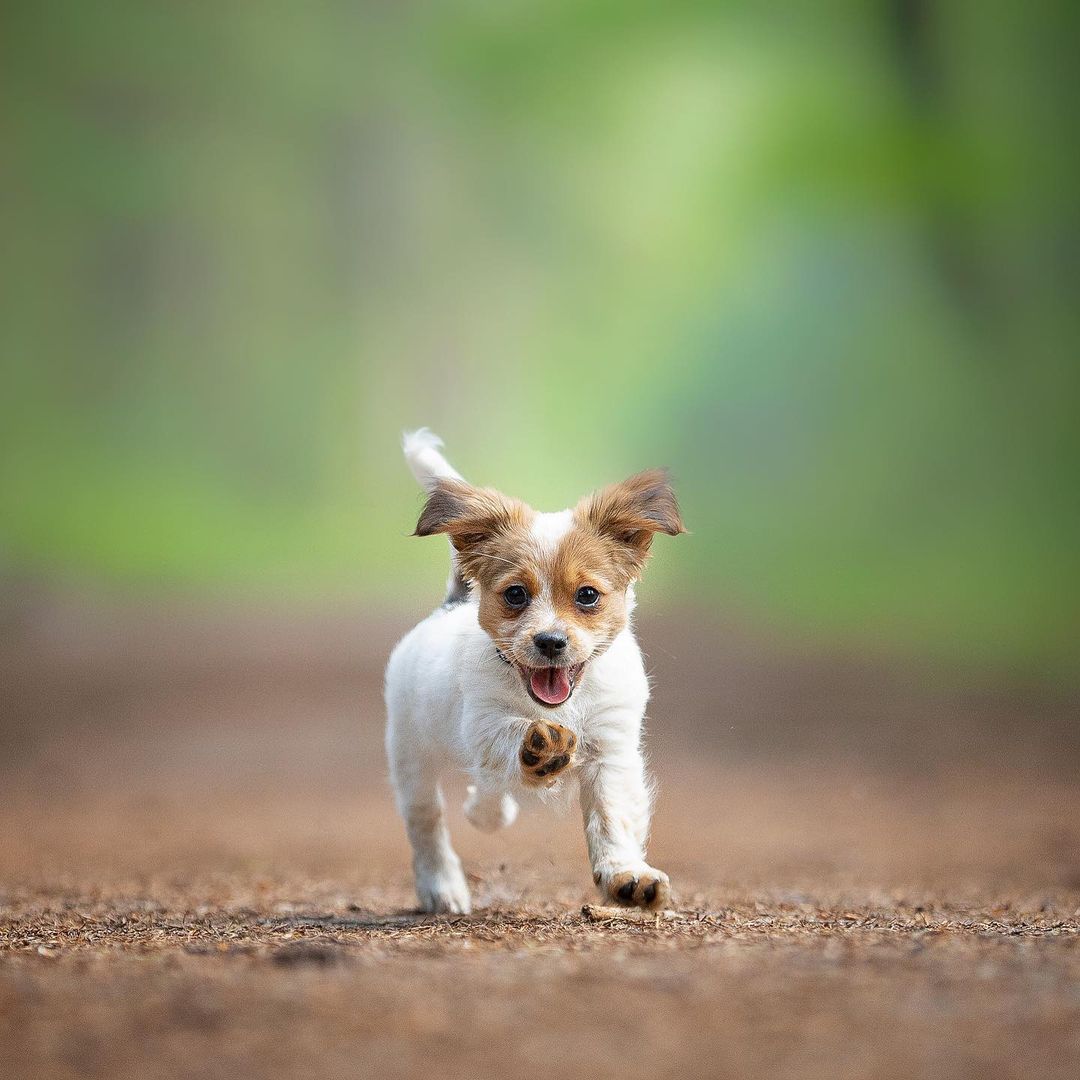
Few images are more thrilling than a dog running straight toward the camera. The paws lift, the ears bounce, and the face usually says, “I am coming to you at maximum friendship.” To capture this shot, place yourself low to the ground and have someone release the dog from a short distance. Use continuous autofocus and burst mode to increase your chances of catching the stride at its most dramatic point.
2. The Frisbee Launch
A frisbee dog is basically a furry physics experiment. Timing is everything. The best frame usually happens just before the catch or at the instant the dog twists midair. Keep the background clean, give the dog room in the frame, and avoid cutting off the tail unless you enjoy explaining visual crimes.
3. The Splash Explosion
Water creates instant drama. A dog charging into a lake or jumping through a puddle gives you flying droplets, reflections, and maximum comedy. A fast shutter speed helps freeze the water, while backlighting can make droplets sparkle. Just remember: dogs do not understand “personal camera equipment boundaries.”
4. The Agility Jump
Agility courses are perfect for action photography because they give you predictable movement. Dogs move through tunnels, jumps, weave poles, and platforms with speed and focus. Position yourself where the dog will emerge, pre-focus when possible, and look for the moment when the dog’s eyes lock on the next obstacle.
5. The Muddy Victory Lap
Mud is not a problem in dog photography. Mud is texture. Mud is mood. Mud is the dog’s way of adding special effects. A muddy running shot communicates freedom and mischief. Shoot low, use a fast shutter speed, and embrace the fact that clean dogs are lovely but dirty dogs often tell better stories.
6. The Snow Zoomies
Snow turns many dogs into cartoon characters. The white background reflects light beautifully, but exposure can be tricky. Cameras often underexpose snowy scenes, so you may need to brighten the image slightly. Look for contrast: dark coats against white snow, flying powder around paws, and joyful faces that say winter has been personally approved.
7. The Beach Chase
A beach gives dogs space, texture, and natural movement. Sand, waves, and open sky create a clean stage. Early morning or late afternoon light works especially well, giving warm tones without harsh shadows. The best beach action photos often happen when dogs chase toys along the shoreline, where wet sand reflects their movement.
8. The Tiny Dog With Giant Energy
Small dogs are action heroes in travel size. Photograph them from ground level to make their movement feel powerful. A Chihuahua sprinting across a yard can look like a champion athlete if you treat the moment with the same respect you would give a racehorse. Also, small dogs often have spectacular ear motion, which should be recognized as an art form.
9. The Golden Hour Gallop
Golden hour is beloved for a reason. Soft, warm light adds depth and emotion to dog action photos. It reduces harsh shadows, flatters fur, and gives movement a glowing edge. Place the sun behind or beside the dog for rim light, and expose carefully so the highlights do not become a glowing blob of mystery.
10. The Toy Catch Face
Every dog has a toy-catching face. Some look heroic. Some look surprised. Some look like they have just remembered tax season. These expressions are priceless. Use burst mode, throw the toy in a predictable arc, and keep the focus on the dog’s eyes whenever possible.
11. The Pack Play Moment
Photographing multiple dogs adds energy and unpredictability. Look for role reversals, play bows, loose bodies, and relaxed mouths. Group play can create beautiful layered compositions, but it also requires careful observation. Keep sessions safe, avoid crowded chaos, and remember that one dog will almost always choose to run behind another dog at the exact wrong time. This is tradition.
12. The Quiet After The Action
Not every action story ends midair. Sometimes the best final image is the dog after the run: tongue out, chest rising, eyes bright, sitting proudly beside the toy they have conquered. These quieter frames give emotional balance to an action series. They show the bond, the satisfaction, and the simple happiness of a dog who has lived fully for the last five minutes.
Camera Settings For Better Dog Action Photography
Dogs move fast. Very fast. Sometimes faster than your confidence. To freeze motion, start with a fast shutter speed. For general action, 1/1000 second is a practical starting point. For intense running, jumping, or frisbee catches, 1/1600 to 1/2000 second can help preserve sharper detail. If the dog is moving more slowly, you can use less speed, but when in doubt, go faster.
A wide aperture, such as f/2.8 to f/5.6, can help separate the dog from the background. However, very wide apertures make focus more challenging when the subject is charging toward you like a happy missile. For beginners, f/4 or f/5.6 may provide a helpful balance between background blur and enough depth of field.
Use continuous autofocus because dogs rarely respect single-shot focus. Select an autofocus mode designed to track moving subjects, and aim for the eyes. A sharp nose is nice. A sharp tail is technically impressive but emotionally confusing. The eyes carry the connection.
Burst mode is your friend. It will produce many unusable photos, including several where the dog looks like a folding chair with fur. That is normal. Action photography is a numbers game. You shoot many frames to find the one where the stride, expression, and composition align.
Composition: Get Low, Leave Space, Tell The Story
The fastest way to improve dog action photos is to get down to the dog’s level. Shooting from human height often makes dogs look small and ordinary. Shooting from ground level makes them look heroic, intimate, and alive. Yes, you may get grass on your elbows. This is the official uniform of pet photographers.
Leave space in the direction the dog is moving. If a dog is running left, give the frame room on the left. This creates visual momentum. Cropping too tightly in front of the dog makes the image feel blocked, as if the dog is about to run into the edge of the internet.
Clean backgrounds matter. A beautiful leap can lose impact if there is a trash can, parking sign, or random stranger’s knee growing out of the dog’s head. Before the action starts, scan the scene. Move a few steps if needed. Small adjustments can transform a snapshot into a polished image.
Lighting: Natural, Soft, And Dog-Friendly
Natural light is often the best choice for photographing dogs in action. Early morning and late afternoon provide soft, warm light that flatters fur and reduces harsh contrast. Cloudy days can also be excellent because the sky acts like a giant softbox, giving even light across the scene.
Midday sun is harder to manage. It creates strong shadows, bright highlights, and squinty expressions. Black dogs may lose detail, while white dogs may become glowing clouds with paws. If you must shoot in bright sun, look for open shade, position the light carefully, and check your exposure often.
Backlighting can be magical for action shots. It outlines fur, highlights dust or water droplets, and creates a sense of drama. The challenge is maintaining detail in the dog’s face. A little exposure compensation, careful metering, or post-processing can help bring balance back to the image.
Editing Dog Action Photos Without Overcooking The Biscuit
Post-processing can turn a strong photo into a finished image, but restraint is important. Adjust exposure, contrast, shadows, highlights, and color so the dog looks natural. Bring attention to the eyes. Remove distractions such as leashes, small debris, or background clutter when appropriate. The goal is to polish the moment, not make the dog look like it belongs on a fantasy cereal box.
For dark-coated dogs, lifting shadows carefully can reveal texture and expression. For white-coated dogs, recovering highlights helps preserve fur detail. Sharpening should be applied thoughtfully, especially around the eyes and face. Too much sharpening can make fur look crunchy, and no dog wants to be described as crunchy.
Why These 12 Pics Matter
The 12 pictures in a dog action series are not just cute images. They are small records of joy. They show movement, trust, personality, and the relationship between dogs and the people who love them. A great dog action photo says, “This is who this dog is when no one asks them to sit still.”
That matters because dogs live in the present better than almost anyone. They do not postpone happiness. They do not wait until Monday to start enjoying life. Give them a ball, a trail, a puddle, or a patch of sunlight, and they turn an ordinary afternoon into a full production.
As a photographer, the challenge is to keep up. The reward is that occasionally, for 1/2000 of a second, you catch pure happiness in perfect focus.
Extra Experience Notes: What Photographing Dogs In Action Has Taught Me
After spending time photographing dogs in action, I have learned that every session begins with optimism and ends with me checking my shoes for mud. The first lesson is that dogs do not follow a shot list. You may arrive dreaming of a majestic jumping photo, only to discover that the dog’s true passion is rolling on one particular smell in the grass. At that point, you can either fight reality or photograph the comedy. Comedy usually wins.
I have also learned that the best images often happen between the planned moments. While everyone is resetting the toy, the dog may suddenly shake water into the sunlight. While the handler is calling the dog back, the dog may turn with a perfect expression. While you are lowering your camera because you think the action is over, the dog may leap again, because dogs enjoy making photographers question their reflexes.
One of my favorite experiences is photographing dogs that start shy and slowly open up. At first, they may stay close to their person, sniff the camera bag, and avoid eye contact. Then a toy appears. A few minutes later, their ears lift, their stride lengthens, and their personality steps into the frame. Capturing that transformation feels more meaningful than getting a technically perfect shot right away.
Another lesson: bring more towels than you think you need. A wet dog contains enough water to irrigate a small herb garden. If the session involves lakes, sprinklers, puddles, or snow, protect your gear and accept that you may become part of the splash zone. The dog will look amazing. You may look like you lost an argument with a car wash.
I have learned to respect each dog’s rhythm. Some dogs explode into motion immediately. Others need a warm-up. Some love fetch, while others consider fetch an unpaid internship. Some chase frisbees. Some chase bubbles. Some chase absolutely nothing and still look delighted. The more you adapt to the dog instead of forcing the dog into your idea, the better the photographs become.
Working with handlers is just as important. A good helper can release the dog, throw the toy, give commands, reward good behavior, and keep the energy positive. Clear communication helps. Before shooting, decide where the dog will start, where it will run, and where the reward will happen. This keeps the dog safe and gives the photographer a better chance of predicting the action.
Most of all, photographing dogs in action has taught me not to obsess over perfection. Yes, sharp focus matters. Good light matters. Composition matters. But some slightly imperfect photos still carry enormous life. A blurred tail, a crooked ear, or a flying clump of dirt can make an image feel honest. Dogs are not polished statues. They are motion, emotion, and snack-based enthusiasm. The best action photos honor that.
Every time I photograph a dog running, I am reminded that joy has a shape. Sometimes it looks like four paws off the ground. Sometimes it looks like a face full of lake water. Sometimes it looks like a dog sprinting toward the camera with no concern for framing, dignity, or my personal safety. And honestly, that is why I keep coming back.
Conclusion
Photographing dogs in action is one of the most rewarding forms of pet photography because it captures dogs as they truly are: energetic, expressive, unpredictable, and wonderfully ridiculous. From frisbee jumps to muddy sprints, from beach runs to quiet post-play portraits, every frame tells a story about freedom and personality.
To create better dog action photos, focus on safety, patience, fast shutter speeds, continuous autofocus, soft natural light, low angles, and clean backgrounds. But beyond the technical details, remember the heart of the work: let dogs be dogs. Give them room to move, time to relax, and a reason to have fun. The best photos will follow, usually at top speed.
If these 12 dog action pictures prove anything, it is that happiness can be photographed. It just might be covered in mud, flying through the air, and carrying a tennis ball.












