
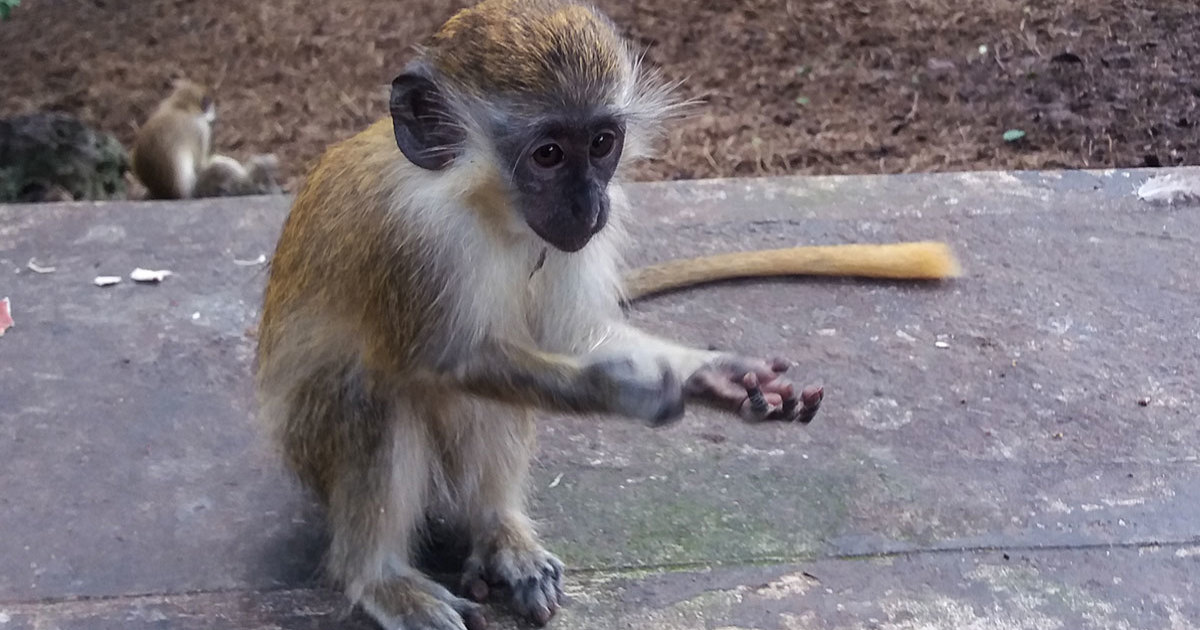
Some travel days announce themselves with big-ticket drama: turquoise beaches, rum punch sunsets, and hotel towels folded into swans that look like they know more than you do. My afternoon at the Barbados Wildlife Reserve was quieter, greener, and considerably more judgmentalmostly because several monkeys watched me eat a snack with the facial expression of tiny island accountants reviewing my life choices.
Located in Farley Hill, St. Peter, the Barbados Wildlife Reserve is one of the most memorable nature attractions in Barbados. It is not a giant, flashy zoo with neon signs and snack stands every nine feet. Instead, it feels like a shaded forest walk where animals wander, pause, stare, snack, and occasionally remind visitors that humans are not always the main event. And honestly? Refreshing.
The reserve is best known for the Barbados green monkey, a charismatic creature with a dark face, pale fur, quick hands, and a talent for making every visitor suddenly become a wildlife photographer. But the monkeys are only part of the story. During a few slow, curious hours, I saw tortoises moving with the confidence of retired CEOs, peacocks acting like they had been personally hired by the tourism board, deer slipping between trees, and iguanas blending into stone like nature’s own camouflage interns.
Why the Barbados Wildlife Reserve Is Worth Visiting
The main keyword here is simple: Barbados Wildlife Reserve. But the real reason people search for it is even simplerthey want to know whether it is worth carving time out of a beach vacation. My answer: yes, especially if you enjoy animals, shaded walks, relaxed attractions, and the kind of travel experience that makes you slow down instead of speed through a checklist.
The reserve covers a compact forested area, so it does not require a full-day commitment. That makes it ideal for families, couples, solo travelers, cruise visitors, photographers, and anyone who wants a break from sand in places sand should not be. You can walk the paths at an easy pace, stop often, and still feel like you have had a complete experience in a few hours.
Unlike many traditional zoos, the reserve has a more open feel. Many animals roam freely within the grounds, while animals that need safer separation are kept enclosed. The result is a visitor experience that feels informal and immersive without becoming chaotic. You are not just looking at wildlife from far away; you are sharing space with it. A tortoise may cross the path in front of you. A peacock may turn a corner like it owns the deed. A monkey may appear above you, then vanish into leaves before your camera decides to focus on the wrong branch. Classic camera behavior.
The Famous Barbados Green Monkeys
The green monkeys are the headline act, the surprise guests, and the tiny celebrities of the Barbados Wildlife Reserve. They are not native to Barbados; their ancestors came from West Africa centuries ago. Over time, they adapted to the island and became one of its most recognizable animals.
At the reserve, the monkeys are free to come and go, which adds a little suspense to the visit. This is not a scheduled theater performance where the curtain rises and every monkey hits its mark. It is nature. Sometimes they are everywhere. Sometimes they are hidden. Sometimes they appear exactly when food enters the conversation, proving that across species, snack timing is universal.
Best Time to See the Monkeys
Feeding time is the golden hour for monkey watching. Visitors often plan around the late morning or afternoon feeding sessions because that is when the monkeys are most likely to gather. The afternoon feeding is especially popular, and it can turn a quiet forest path into a full wildlife scene.
One moment the reserve feels calm. The next, monkeys begin arriving from trees, walls, and mysterious monkey-only shortcuts. They move with confidence, pause to inspect the food, and interact with each other in ways that reveal a tiny social universe. There are bold monkeys, cautious monkeys, babies learning the rules, and older monkeys who seem to have seen enough tourists to write a memoir titled Humans: Loud, Sunburned, Often Carrying Cameras.
Animals You May See Beyond the Monkeys
Although the green monkeys get top billing, the supporting cast is excellent. The Barbados Wildlife Reserve is home to a range of animals including tortoises, deer, iguanas, peacocks, pelicans, caimans, parrots, flamingos, and other birds. Depending on the day, weather, timing, and animal mood, each visit can feel a little different.
Tortoises With Main Character Energy
The tortoises were one of my favorite surprises. They move slowly, but not timidly. A tortoise crossing a path does not ask permission; it simply advances with the steady determination of someone who left the house three hours early and still expects everyone else to wait. Watching them eat, wander, and gather in small groups is oddly calming. In a world of notifications and traffic, a tortoise is basically a wellness coach with a shell.
Peacocks, Birds, and Tropical Color
Then there are the birds. Peacocks wander through the reserve as if they are aware of their own branding. Their colors pop against the earthy forest floor, and when one decides to display its feathers, the whole area briefly becomes a fashion runway. Parrots, lovebirds, and other colorful species add flashes of movement and sound, making the reserve feel alive from ground level to treetop.
Iguanas, Deer, and Quiet Forest Moments
Iguanas are easy to miss if you walk too quickly. Their stone-like coloring helps them disappear into the landscape, so spotting one feels like winning a tiny nature puzzle. Deer and other mammals add gentler moments, often appearing between trees or near feeding areas. The key is patience. This is not a place to rush. Walk slowly, look low, look high, and give your eyes time to adjust to the forest.
The Setting: Mahogany Trees, Coral Stone, and Island History
Part of the charm of the Barbados Wildlife Reserve is its setting. The reserve sits in a mahogany forest near Farley Hill, close to Grenade Hall Forest and Signal Station. The shade makes the visit more comfortable, especially on a hot day, and the natural paths create a peaceful rhythm. You hear leaves, birds, footsteps, and the occasional burst of animal drama.
The reserve also carries a sense of Barbados history. Coral stone structures, old sugar-era materials, and nearby Grenade Hall Signal Station connect the animal experience with the island’s cultural landscape. This matters because the best travel attractions are rarely just one thing. Here, wildlife, history, forest, and local character all overlap.
Grenade Hall Forest and Signal Station
Admission to the Barbados Wildlife Reserve often includes access to Grenade Hall Forest and Signal Station, making the visit feel like a two-for-one nature and history outing. After spending time with the animals, the forest walk offers a quieter extension of the day. The signal station adds context and views, reminding visitors that Barbados is not only beaches and resorts but also hills, forests, heritage sites, and old communication routes.
If you enjoy photography, Grenade Hall is worth the extra steps. The light changes under the trees, the paths feel peaceful, and the views give a broader sense of the island’s geography. It is also a good way to stretch the visit if you arrived mainly for the monkeys but want a deeper experience.
Practical Tips for Visiting the Barbados Wildlife Reserve
Arrive Around Feeding Time
If your schedule allows, time your visit around feeding. That is when wildlife activity usually increases, especially among the green monkeys. Arriving a little early gives you time to buy tickets, settle in, and find a good viewing spot without sprinting through the entrance like you are late for a monkey wedding.
Wear Comfortable Shoes
The reserve is walkable, but the paths can be uneven or slippery after rain. Comfortable shoes with decent grip are a smart choice. Flip-flops may work for the beach, but in a forest full of roots, stones, and wandering tortoises, proper footwear is your friend.
Bring Water and Move Slowly
Barbados can be warm, and even shaded walks are more enjoyable when you stay hydrated. Bring water, take your time, and avoid turning the visit into a speedrun. The best animal sightings often happen when you stop moving and simply observe.
Respect the Animals
This should be obvious, but travel has taught us that “obvious” sometimes needs a megaphone. Do not chase, grab, feed, or crowd the animals. Keep a respectful distance, follow posted rules, and let wildlife behave naturally. The animals are not props. They are residents. You are the guest with the camera and sunscreen.
Is the Barbados Wildlife Reserve Good for Kids?
Yes, the reserve can be excellent for children. It is compact enough that kids will not feel trapped in an endless forced march, and the free-roaming animals create constant moments of discovery. A child who might yawn through a museum label may suddenly become deeply invested in a tortoise crossing the path.
Parents should still keep children close, especially near animals and uneven paths. The experience works best when kids understand that quiet observation leads to better sightings. In other words, whispering improves your odds. Screaming “MONKEY!” every six seconds may feel emotionally honest, but it is not always strategically brilliant.
Photography Tips for Better Wildlife Shots
The Barbados Wildlife Reserve is photogenic, but it also comes with classic wildlife photography challenges: moving animals, patchy shade, and subjects that do not care about your composition. For better photos, use natural light, avoid flash, and be patient. Feeding time gives you more opportunities, but some of the best shots happen away from the crowd.
Look for behavior rather than just portraits. A monkey reaching for fruit, a tortoise passing another tortoise, a peacock stepping through sunlight, or an iguana resting against coral stone can tell a stronger story than a simple close-up. Also, take a moment to put the camera down. Memories do not need batteries.
How This Visit Fits Into a Barbados Itinerary
The reserve pairs well with other attractions in northern Barbados. Depending on your route, you can combine it with Farley Hill National Park, St. Nicholas Abbey, Cherry Tree Hill, Morgan Lewis Windmill, or scenic stops along the rugged east coast. This makes the Barbados Wildlife Reserve a strong half-day itinerary anchor.
If you are staying on the west coast, the trip is especially convenient. From Bridgetown or the south coast, it takes more planning, but the drive offers a chance to see more of the island beyond beaches and boardwalks. For travelers who like variety, this is exactly the point.
What I Loved Most
What I loved most was the pace. The reserve does not shout for attention. It invites you to notice. A leaf moves, and it is a monkey. A rock blinks, and it is an iguana. A shadow shifts, and a deer steps into view. The longer you stay, the more the place opens up.
There is also something funny and humbling about being surrounded by animals who are entirely unimpressed by you. The monkeys do not care about your itinerary. The tortoises do not care about your dinner reservation. The peacocks may care slightly, but only because they assume they are dressed better than you. They are probably correct.
Extra Experience Notes: A Few More Hours I Would Happily Repeat
If I had to describe the experience in one sentence, I would say this: I went to see monkeys and accidentally remembered how nice it is to move slowly. That may sound dramatic for a wildlife reserve, but travel has a way of sneaking up on you. One minute you are checking the time; the next you are standing completely still because a tiny monkey is sitting on a branch above you, calmly eating fruit like it has never once worried about email.
The most enjoyable part was not a single big moment. It was the accumulation of small ones. A tortoise nudged through dry leaves. A peacock made a dramatic entrance for no clear reason. A monkey baby clung close to an adult, then got brave for three seconds before deciding bravery was overrated. A deer paused in the shade, perfectly still, as if posing for a painting no one had commissioned.
I also appreciated how the reserve changed my attention. At first, I looked for the obvious animals. After a while, I started noticing textures: coral stone, tree bark, feathers, shells, shadows, and the green-gold light that filtered through the canopy. That is when the visit became less about “seeing attractions” and more about being present. It is a small difference, but it changes the whole mood of the day.
There were funny moments too. Monkeys have a way of making humans look deeply awkward. We shuffle for the perfect angle, whisper too loudly, and react to every movement like wildlife documentary narrators with budget camera phones. Meanwhile, the monkeys simply continue being monkeys. They leap, snack, squabble, groom, and ignore us with professional consistency. It is impossible not to respect that level of brand discipline.
For anyone planning a Barbados trip, I would not treat the Wildlife Reserve as a box to check. Treat it as a breather. Go when you have enough time to wander. Arrive near feeding time, but do not leave the second the main event ends. Some of the best moments happen afterward, when the crowd thins and the forest feels quieter again.
I left with dusty shoes, too many photos, and a renewed admiration for animals that make ordinary movements look interesting. The Barbados Wildlife Reserve is not about spectacle in the theme-park sense. It is about proximity, patience, and the pleasure of watching another world carry on right beside you. And if a monkey silently judges your snack choices along the way, consider it part of the admission value.
Final Thoughts
Spending a few hours with the animals at the Barbados Wildlife Reserve gave me one of those travel memories that feels simple at first and richer later. It was not loud, rushed, or overproduced. It was shaded paths, watchful monkeys, slow tortoises, flashy birds, and the gentle reminder that the best parts of a trip are often the ones where you stop performing vacation and start paying attention.
For travelers searching for things to do in Barbados beyond the beach, the reserve deserves a spot on the itinerary. It is family-friendly, photographer-friendly, nature-lover-friendly, and wonderfully different from the usual island postcard. Go for the green monkeys, stay for the forest, and leave with the strange satisfaction of knowing that a tortoise may have had a more relaxed day than youand frankly, good for the tortoise.
Note: Visitor details such as hours, admission, and feeding times can change, so travelers should confirm current information with the reserve or local tourism resources before visiting.












