
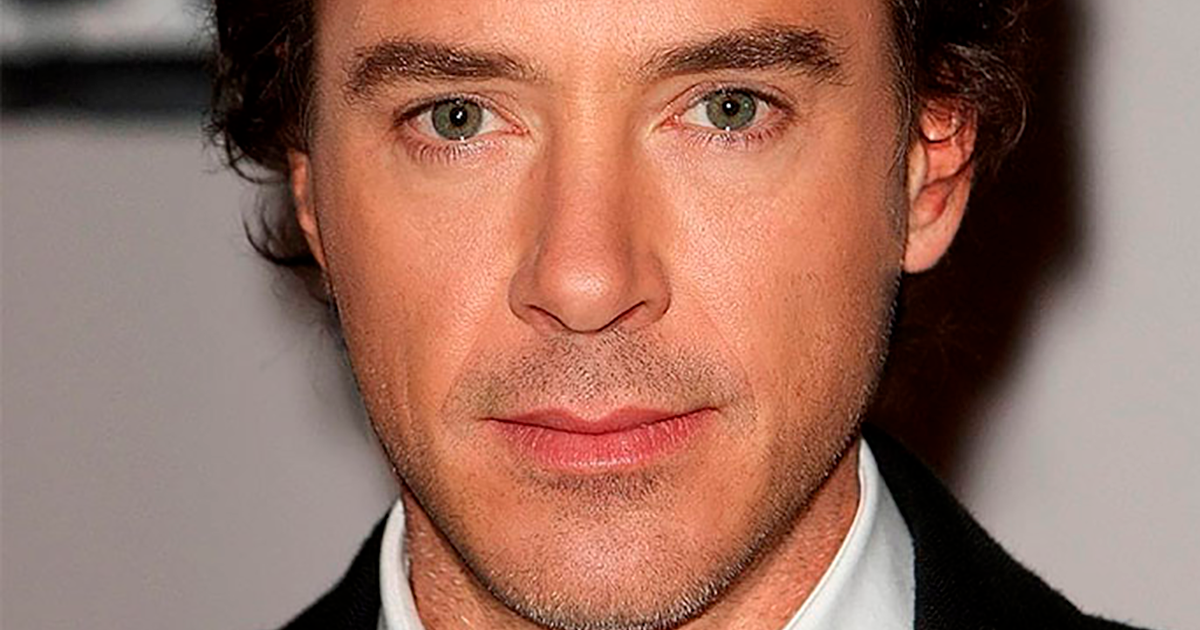
Some corners of Instagram are built for lunch photos, gym mirrors, and the mysterious art of pretending a coffee cup is a personality. Then there are accounts like @morphy_me, where French digital artist Benji takes familiar celebrity faces and blends them into portraits of people who look real enough to have an IMDb page, a skincare contract, and a suspiciously good jawline.
One of the most entertaining examples is his series of Avengers cast face morphs. The concept is simple, almost dangerously addictive: combine two or three Marvel actors and see whether fans can recognize who is hiding in the finished portrait. The result is not a random filter slapped onto a selfie. It is a polished piece of digital art that sits somewhere between Photoshop wizardry, Marvel fandom, and a party game designed to make everyone shout, “Wait, is that Thor’s hair or Loki’s cheekbones?”
Originally highlighted by Bored Panda in 2019, the project introduced many casual viewers to Benji’s playful celebrity mashups. His work became popular because it taps into something Marvel fans already love: comparing characters, actors, chemistry, rivalries, friendships, and all the tiny facial details we pretend not to notice but absolutely do. In a franchise where fans can debate Captain America’s beard with the seriousness of a Supreme Court hearing, a face-morph account is basically catnip.
What Is the Instagram Account That Merges Avengers Cast Members?
The account behind these face-blending creations is Morphy Me, known on Instagram as @morphy_me. The artist, Benji, has spent years creating celebrity face mashups that combine recognizable features from two or more famous people. His subjects range from movie stars and musicians to actors who share similar roles, public personas, or fan-favorite comparisons.
In the Avengers-themed series, the fun comes from using cast members from the Marvel Cinematic Universe and blending them into new, fictional faces. These portraits are not meant to replace the original actors or create fake news. They are visual puzzles. They ask a harmless but surprisingly difficult question: if two beloved Marvel performers became one person, would we recognize the ingredients?
The answer is usually yes, no, and “give me five more seconds.”
Why Avengers Face Morphs Work So Well
The Avengers cast is ideal for this kind of digital experiment because the actors are already culturally burned into our collective memory. Robert Downey Jr. is Tony Stark. Chris Evans is Steve Rogers. Chris Hemsworth is Thor. Scarlett Johansson is Natasha Romanoff. Tom Hiddleston is Loki. These performers have spent years appearing in posters, trailers, memes, interviews, red carpets, and dramatic slow-motion shots where someone definitely needed a haircut but looked heroic anyway.
That familiarity makes the morphs satisfying. Viewers know the faces, but the merged portraits interrupt that recognition. Your brain sees something familiar, then something wrong, then something strangely perfect. It is the same little mental glitch that happens when you spot someone who looks like your cousin, your dentist, and a wax figure of Chris Pratt at the same time.
Chris Hemsworth and Tom Hiddleston: The Asgardian Blend
One of the most memorable Avengers face morphs combines Chris Hemsworth, who plays Thor, with Tom Hiddleston, who plays Loki. On screen, Thor and Loki are brothers, rivals, allies, enemies, and emotional support disasters with excellent hair. Their faces already belong in the same mythological universe, so the merged portrait feels oddly believable.
The final image carries Hemsworth’s heroic structure and Hiddleston’s sharper, more mischievous elegance. It looks like a third Asgardian brother who was probably banished for stealing Odin’s Wi-Fi password. That is what makes the morph so effective: it does not merely blend two actors; it accidentally invents a character with a backstory.
Robert Downey Jr. and Benedict Cumberbatch: The Genius Mustache Multiverse
Another fan-favorite mashup merges Robert Downey Jr. and Benedict Cumberbatch, better known in Marvel circles as Iron Man and Doctor Strange. Both characters are brilliant, arrogant, wounded, dramatic, and deeply committed to facial hair. The combination almost feels like a boardroom decision: “What if we took every sarcastic genius in the MCU and made one man too powerful for group projects?”
The result naturally invites jokes about intellect, ego, and magical engineering. Tony Stark builds suits. Stephen Strange bends reality. The hybrid looks like someone who would invent a time machine, insult your coffee, and then save the universe before brunch.
The Three Chrises: Evans, Hemsworth, and Pratt
No Avengers face-morph article would be complete without discussing the Holy Trinity of Hollywood Chrises: Chris Evans, Chris Hemsworth, and Chris Pratt. Their combined portrait is pure internet bait in the best way. Fans have spent years ranking, comparing, defending, and joking about the Chrises, so a single merged version feels like the final boss of celebrity-name confusion.
The finished image usually gives viewers a flash of Captain America’s clean-cut sincerity, Thor’s Norse-god architecture, and Star-Lord’s approachable goofball charm. In other words, it looks like a man who could lead a battle, swing a hammer, and still forget where he parked the spaceship.
Scarlett Johansson and Elizabeth Olsen: Black Widow Meets Scarlet Witch
When Scarlett Johansson and Elizabeth Olsen are blended together, the result is softer, more subtle, and harder to decode. Johansson’s Black Widow and Olsen’s Scarlet Witch occupy very different emotional zones in the MCU. Natasha Romanoff is grounded, tactical, and disciplined. Wanda Maximoff is cosmic, grief-powered, and capable of turning reality into a very expensive therapy session.
The morph feels compelling because it bridges those two energies. It is not just “two pretty actresses combined.” It becomes a study in how small facial cues change our sense of personality. A slight change in the eyes can make a face seem warmer, colder, more mysterious, or more intense. That is where Benji’s work becomes more than a novelty. It reminds us that recognition is built from tiny details.
Chadwick Boseman and Michael B. Jordan: Wakanda’s Rival Reflections
The morph of Chadwick Boseman and Michael B. Jordan carries extra emotional weight for Marvel fans. Boseman’s T’Challa and Jordan’s Killmonger created one of the MCU’s most memorable hero-villain dynamics in Black Panther. Their conflict was not just physical; it was ideological, historical, and personal.
Blending their faces creates a striking portrait because the two characters are already mirror images in the story. T’Challa represents responsibility, restraint, and inherited duty. Killmonger represents rage, pain, and the demand for justice by any means necessary. The merged face becomes a visual metaphor for the movie’s central tension: two men shaped by the same world but pointed in different directions.
The Art Behind Celebrity Face Morphs
At first glance, face morphing may look easy. Choose two photos, press a magic button, wait for the internet to clap. In reality, believable face blending requires careful control of proportion, lighting, skin tone, shadows, hairlines, eyes, mouth shape, and expression. A lazy morph looks rubbery. A good morph looks like a person who might actually exist.
Benji’s celebrity mashups stand out because they usually avoid the cheap “plastic mask” effect. The best images preserve the identity of both sources while creating a third face with its own personality. That balance is difficult. If one actor dominates too strongly, the game is over. If both disappear completely, the image becomes generic. The sweet spot is confusion with clues.
This is why the Avengers cast works especially well. Their faces are instantly recognizable, but many of them share cinematic styling: dramatic lighting, symmetrical promotional portraits, superhero grooming, and the kind of cheekbone visibility usually reserved for marble statues. Those conditions help the blends look polished while still challenging the viewer.
Why Fans Love These Marvel Mashups
Part of the appeal is simple curiosity. People love “what if” questions. What if Iron Man and Doctor Strange were one character? What if Thor and Loki looked like one person? What if the three Chrises merged into a single leading man and Hollywood immediately collapsed from casting confusion?
But there is also a deeper reason these posts spread. They invite participation. A viewer does not passively consume the image; they solve it. The comment section becomes a guessing game, a joke factory, and a tiny fandom reunion. Someone sees Tom Hiddleston’s eyes. Someone else sees Chris Evans’ jaw. A third person confidently announces the wrong answer with the energy of a detective who has never solved a case.
That interaction is perfect for Instagram. The platform rewards images that make people pause, zoom, comment, and share. A celebrity morph does all four. It is visual, fast, funny, and just strange enough to trigger conversation.
Digital Art, AI Confusion, and the New Age of Fake Faces
In today’s internet culture, any realistic fake face immediately raises the question: was this made with AI? That question is understandable. Generative AI has made synthetic images faster, cheaper, and harder to identify. But Morphy Me’s long-running work belongs more to the tradition of digital photo manipulation and Photoshop artistry than one-click AI image generation.
That distinction matters. A skilled morph artist makes deliberate creative choices. They select source images, align features, adjust lighting, smooth transitions, and keep the portrait recognizable without turning it into a waxy nightmare. The craft is in the judgment. A machine can generate a face; an artist decides why the blend is funny, interesting, or emotionally satisfying.
Still, the broader conversation around manipulated media is important. Celebrity likenesses can be used for harmless fan art, but they can also be misused in misleading ads, scams, political content, or fake endorsements. That is why transparency matters. A playful Avengers mashup should be clearly understood as an edited artwork, not a real person, real casting news, or proof that Marvel secretly created a new superhero named Captain Thunderstrange.
What These Morphs Reveal About Celebrity Culture
Celebrity culture has always been about recognition. We know stars by their faces, voices, gestures, and roles. The MCU intensified that recognition by turning actors into long-running icons. Robert Downey Jr. did not just play Tony Stark once; he helped define the tone of an entire cinematic era. Chris Evans became attached to Captain America’s moral clarity. Chris Hemsworth transformed Thor from a mythic warrior into a thunder god with comic timing and gym membership goals.
Face morphs play with that attachment. They show how much of celebrity identity is visual shorthand. A beard, a brow, a smile, a hairstyle, or a certain stare can carry years of audience memory. When those details are rearranged, fans still recognize the emotional residue of the original performers.
That is why these images feel both funny and uncanny. They are not random faces. They are remixed fame.
Why This Trend Still Feels Fresh
Even years after the original Avengers morphs circulated, the idea remains entertaining because Marvel itself is built on remixing. Comics constantly reinvent characters through alternate universes, variants, timelines, clones, masks, mantles, and “surprise, that person was someone else all along” reveals. The MCU brought that logic to mainstream movie culture.
So when an Instagram artist merges Avengers cast members, it feels naturally connected to the franchise’s DNA. These images are not official Marvel content, but they fit the spirit of fan imagination. They ask the same question comic books have asked for decades: what happens if we combine familiar pieces in a new way?
The answer, apparently, is a lot of handsome confusion.
Experience: What It Feels Like to Explore an Avengers Face-Morph Account
Scrolling through an account like Morphy Me is a strange little adventure. At first, you think you are just looking at celebrity edits. Then your brain starts acting like it has joined S.H.I.E.L.D. Every image becomes a mission. You zoom in. You tilt your head. You cover half the face with your thumb like a low-budget forensic expert. You whisper, “That has to be Chris Evans,” and then immediately doubt your entire visual memory.
The Avengers morphs are especially fun because Marvel fans already carry a mental catalog of these actors. You have seen them in armor, capes, leather suits, talk-show chairs, Comic-Con panels, emotional death scenes, and interviews where someone asks them the same question for the 400th time. That familiarity makes the guessing game more personal. You are not identifying strangers. You are identifying people whose faces have been part of pop culture for more than a decade.
One enjoyable experience is comparing the morph to the characters’ personalities. A Chris Evans and Robert Downey Jr. blend immediately invites a Civil War joke. Is this person Team Cap or Team Iron Man? Would he sign the Sokovia Accords or build a robot to read them for him? A Hemsworth and Hiddleston morph raises a different question: would this person save Asgard or dramatically betray it while wearing green?
That is the charm. The best morphs do not stop at the face. They make you imagine a character. They turn a portrait into a tiny fan-fiction prompt. A Scarlett Johansson and Elizabeth Olsen blend feels like a spy with chaos magic. A Boseman and Jordan blend feels like a king with a revolutionary edge. A Zoe Saldana and Karen Gillan blend feels like a cosmic warrior who has absolutely survived some family drama.
There is also a social experience. These images are perfect for group chats. Send one to a Marvel-loving friend and watch the debate begin. Someone will answer instantly and be wrong. Someone else will say, “I can see the nose,” as if they are presenting evidence in court. Another friend will ignore the challenge entirely and comment only on how attractive the fictional person is. This is the internet doing what it does best: turning one edited image into ten minutes of nonsense and joy.
From a creative perspective, browsing these morphs can also make you appreciate how delicate faces are. Move one feature slightly and the whole identity changes. A mouth can carry humor. Eyes can carry warmth or suspicion. A jawline can make someone look heroic, villainous, or like they are about to sell an expensive watch. The Avengers cast has been photographed so often that fans know these details without realizing it. The morphs expose that hidden knowledge.
The experience is also a reminder that digital art does not always need to be heavy, political, or grand to be worthwhile. Sometimes art can be a clever visual joke executed with serious skill. It can be a beautifully edited portrait that makes you laugh, stare, and question whether Marvel has secretly been casting from the same cheekbone laboratory. In a noisy online world, that kind of playful creativity has real value.
Most importantly, the account proves that fandom is not only about consuming movies. It is about remixing them, joking with them, reimagining them, and keeping them alive between official releases. The Avengers face morphs are not canon, but they belong to the wider Marvel conversation. They are fan culture in visual form: affectionate, weird, clever, and just dramatic enough to deserve its own end-credits scene.
Conclusion
This Instagram account merges The Avengers cast to create new people, and the reason it works is simple: the images are funny, skillful, and oddly believable. Benji’s Morphy Me project turns celebrity recognition into a game, blending familiar Marvel actors into portraits that look like alternate-universe casting announcements. The results are not just digital tricks; they are small studies in fame, facial memory, fandom, and the internet’s endless appetite for “wait, who is that?” moments.
The Avengers cast is already larger than life, but these morphs make them feel newly strange. Thor meets Loki. Iron Man meets Doctor Strange. Black Widow meets Scarlet Witch. The three Chrises become one dangerously marketable human. Each blend gives fans a reason to look closer and laugh harder. In the age of AI images and endless filters, the best lesson here may be that human-made digital art still has its own spark: intention, humor, timing, and a delightful willingness to mess with our brains.
Note: This article is original editorial content written in standard American English and synthesized from publicly available information about Morphy Me, Marvel cast culture, Instagram digital art, face morphing, and modern discussions around edited media.











