
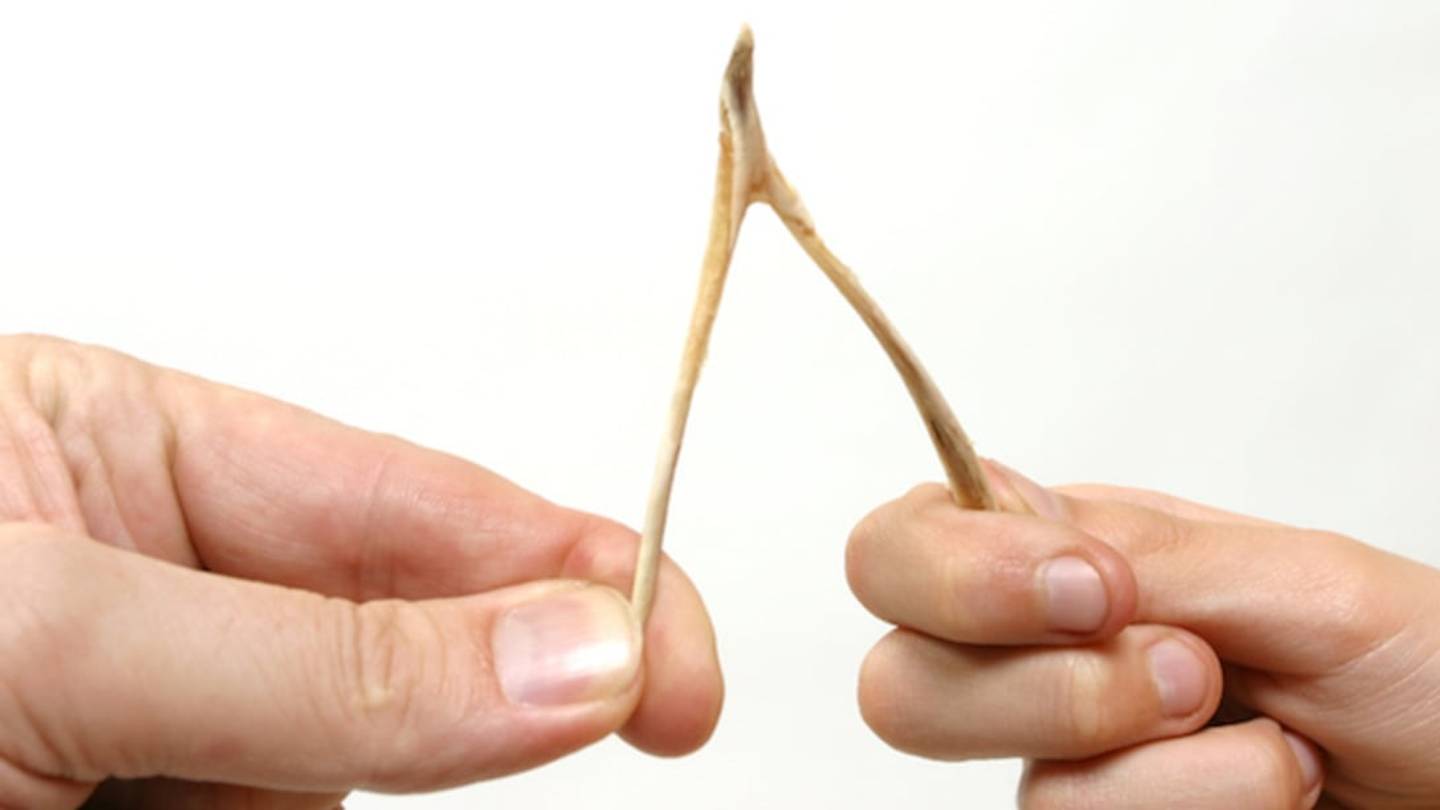
Every Thanksgiving table has its rituals. Someone carves the turkey with the seriousness of a surgeon. Someone guards the mashed potatoes like a dragon protecting treasure. Someone says, “I’ll only have a small slice of pie,” then mysteriously returns with a plate large enough to require zoning approval. And somewhere in the middle of all this delicious chaos, two people grab a tiny V-shaped bone, make a silent wish, and pull.
That little bone is the turkey’s wishbone, also known as the furcula. The game is simple: two people each hold one side, pull until it snaps, and the person who gets the larger piece is said to have their wish granted. It sounds like a charmingly odd family custom, but the turkey wishbone tradition is much older, stranger, and more fascinating than most people realize.
So why do we wish on the turkey’s wishbone? The answer takes us from bird anatomy to ancient Italy, from Roman superstition to English dining tables, and finally to the American Thanksgiving feast. In other words, this tiny bone has traveled farther than your uncle’s story about “the good old days.”
What Is the Turkey’s Wishbone?
The wishbone is not just a festive prop hiding in the turkey. Anatomically, it is called the furcula, a forked bone formed by the fusion of two clavicles, or collarbones. In birds, this bone sits near the chest and shoulders, helping support the body during wing movement. Even though your Thanksgiving turkey is not exactly planning a dramatic takeoff from the roasting pan, the bone is part of a structure connected to flight in birds.
The furcula acts like a springy support between the shoulders. In flying birds, it helps absorb stress and stabilize the body as the wings move. That makes the wishbone more than a lucky charm. It is a small piece of engineering created by nature, tucked inside a holiday dinner and later promoted to household fortune-teller.
Turkeys, chickens, ducks, geese, and many other birds have this V-shaped bone. Its shape makes it easy to recognize, easy to dry, and, as generations of competitive cousins have discovered, very easy to argue over.
Why Is It Called a “Wishbone”?
The name “wishbone” comes from the belief that the person who wins the larger piece after the bone breaks will have a wish come true. Before that term became common in American English, the bone was often known in Britain as the “merrythought.” That older name sounds like something a cheerful Victorian ghost would say before stealing your pudding, but it referred to the same forked bone from a bird.
The word “wishbone” became popular because the ritual itself was centered on wishing. Two people pulled, luck chose a winner, and the larger fragment became a tiny trophy of hope. The name stuck because it is wonderfully direct. No committee meeting needed. You make a wish on it; it is a wishbone.
The Ancient Roots of Wishing on Bird Bones
The turkey wishbone tradition did not begin with Thanksgiving, Pilgrims, or anyone wearing a paper turkey hat in elementary school. Its roots reach back to the ancient Etruscans, a civilization in what is now Italy. The Etruscans believed birds had special powers of prophecy. Birds flew through the sky, seemed closer to the heavens, and were thought to carry signs from the gods.
Because of this belief, poultry bones became connected with divination, or the practice of seeking knowledge about the future. The Etruscans reportedly used bird bones, including the furcula, as objects of luck and prediction. They did not originally snap the bone the way we do today. Instead, the bone might be dried and kept or touched as a charm for good fortune.
From a modern point of view, this may sound unusual. But ancient people often looked to nature for signs. The movement of birds, the weather, the harvest, and even the shape of bones could become part of a larger system of meaning. Today we check weather apps. They checked omens. Both methods occasionally fail right before a picnic.
How the Romans Spread the Wishbone Custom
When the Romans encountered Etruscan customs, they absorbed many of them, including traditions connected with birds and fortune-telling. As Roman influence spread across Europe, so did variations of these rituals. Over time, the idea of using bird bones for luck moved into other regions and cultures.
The breaking of the bone may have developed because wishbones were limited. If one bone held good luck, but several people wanted some of that luck, snapping it created a convenient solution. It was ancient problem-solving: not enough magical poultry parts for everyone? Split the asset.
Eventually, the practice moved through Europe and became associated with domestic birds such as chickens, geese, and turkeys. The custom survived because it was simple, social, and fun. It turned luck into a little game, and people love gamesespecially games that require no batteries, no app download, and no explanation longer than ten seconds.
From Europe to America: How the Wishbone Reached Thanksgiving
European settlers brought many food traditions, superstitions, and holiday customs with them to North America. The wishbone ritual likely arrived as part of this cultural baggage. In Europe, people had commonly used chicken or goose bones. In America, wild turkeys were abundant, large, and eventually became strongly associated with Thanksgiving meals.
It is important to note that the famous 1621 harvest gathering between English colonists and the Wampanoag people was not identical to the modern Thanksgiving dinner. Historians debate exactly what was served, though wild fowl was likely present. Turkey may or may not have been on the table in the way we imagine it today. The modern Thanksgiving menu evolved over centuries.
By the nineteenth century, turkey had become a powerful symbol of Thanksgiving in the United States. When Abraham Lincoln proclaimed a national Thanksgiving holiday in 1863, the celebration became more standardized over time. As the holiday grew into a national family feast, the turkey became the star of the table, and the wishbone became one of its most memorable after-dinner traditions.
How the Turkey Wishbone Game Works
The classic wishbone game is delightfully low-tech. After the turkey has been cooked and carved, the wishbone is removed, cleaned, and dried. Two people each hold one end of the V-shaped bone. Both make a silent wish. Then they pull until the bone cracks. Whoever ends up with the larger piece is the winner, and tradition says that person’s wish will come true.
Of course, most families have their own rules. Some insist the bone must dry for several days. Others allow next-day snapping. Some people believe the wish must remain secret or it will not work. Others are mainly interested in winning bragging rights over a sibling who has been “cheating since 2009.”
For best results, the wishbone should be dry before breaking. A fresh bone is too flexible and may bend instead of snapping cleanly. Drying helps the bone become brittle enough to break. This is why many families save the wishbone for the day after Thanksgiving rather than pulling it immediately after dinner.
Can You Increase Your Chances of Winning?
Wishbone victory has inspired many unofficial strategies. Some people try to choose the thicker side, believing it is less likely to break. Others grip closer to the base of the V for better leverage. Some pull slowly, while others go for a quick snap. The science is not exactly peer-reviewed, but the family confidence is usually very high.
The truth is that the bone’s shape, thickness, dryness, and tiny natural weak points all affect where it breaks. A person can try to improve the odds, but luck still plays a major role. That is part of the charm. The wishbone game feels fair enough to be fun and random enough to feel magical.
If you are playing with children, it is better to focus on the joy of the ritual rather than winning. Let the wish be silly, hopeful, or sweet. A child wishing for snow, a puppy, or “more pie forever” understands the spirit of the tradition perfectly.
Why Do We Connect the Wishbone With Luck?
The wishbone tradition survives because it connects three things people love: food, family, and hope. A wishbone is not valuable in a financial sense. It is small, fragile, and easy to overlook. But during Thanksgiving, it becomes meaningful because people gather around it and agree to treat it as special.
That is how many traditions work. A birthday candle is just wax until someone makes a wish before blowing it out. A four-leaf clover is just a plant until someone decides it means good luck. A wishbone is just part of a bird skeleton until two people pull it apart while hoping the universe is paying attention.
Luck rituals give people a playful way to express desire. We may wish for love, success, health, peace, or simply a calmer holiday season. The wishbone gives that private hope a physical moment. It turns an invisible wish into a shared action.
The Wishbone and Thanksgiving Symbolism
Thanksgiving is built around memory, gratitude, abundance, and family connection. The wishbone adds a small symbol of the future. While the meal often celebrates what we already have, the wish looks ahead to what we hope will come next.
That makes the tradition surprisingly poetic. After a meal focused on thanks, the wishbone asks, “What are you still dreaming about?” It gives people permission to hope, even in a lighthearted way. Maybe that is why the custom has lasted. It is not only about superstition. It is about imagination.
The wishbone also gives the holiday a moment of suspense. Thanksgiving can be predictable: turkey, sides, dessert, dishes, leftovers. But the wishbone adds drama. Two people face off. Everyone watches. The bone snaps. Someone cheers. Someone demands a rematch that is anatomically impossible.
How to Find and Remove the Wishbone
If you want to use the wishbone at Thanksgiving, you need to locate it near the front of the turkey’s breast, close to the neck opening. Some cooks remove it before roasting because it can make carving easier. Others wait until after the bird is cooked. Either method can work, but removing it before cooking requires a steady hand and a small sharp knife.
After removing the wishbone, rinse away any bits of meat and let it dry thoroughly. Some people leave it on a windowsill or plate for several days. Others speed up the drying process gently in a low oven. The goal is not to cook the bone into oblivion; it is simply to make it dry enough to snap.
Food safety still matters. Handle raw turkey carefully, wash hands and tools after contact, and cook the turkey to a safe internal temperature. The wishbone may be fun, but nobody wants their Thanksgiving memory to include the phrase “foodborne illness.”
Why the Tradition Still Feels Fun Today
In a world full of screens, schedules, and complicated entertainment, the wishbone remains refreshingly simple. It needs no setup beyond a turkey dinner. It creates a tiny competition without ruining the mood. It gives children and adults the same chance to win. And it lets everyone participate in a tradition that feels old without feeling dusty.
The wishbone also works because it is just silly enough. Adults know a snapped bone does not guarantee a new job, a dream house, or a perfectly behaved family group chat. But we play anyway because traditions do not need to be logical to be meaningful. Sometimes the ritual is the point.
Thanksgiving itself is full of these little moments. People use the “good plates.” Recipes are defended like legal documents. Someone always has a strong opinion about cranberry sauce. The wishbone fits right in: part history, part luck, part comedy, and part family theater.
Common Myths About the Turkey Wishbone
Myth 1: The Wishbone Tradition Started at the First Thanksgiving
The custom is much older than the American Thanksgiving holiday. Its roots are usually traced to ancient European beliefs about birds, luck, and prophecy. Thanksgiving helped popularize the turkey version, but it did not invent the idea.
Myth 2: The Wishbone Is Unique to Turkeys
Many birds have a furcula, including chickens and geese. Turkeys became the most famous wishbone source in the United States because they became the centerpiece of Thanksgiving dinner.
Myth 3: The Wish Comes True Automatically
Tradition says the person with the larger piece gets the wish, but reality remains stubbornly reality. Think of the wishbone as a hopeful symbol, not a legally binding contract with the cosmos.
Myth 4: You Must Break It Immediately
A dry wishbone snaps better than a fresh one. Waiting a few days can make the game cleaner and more satisfying. Patience, in this case, may be the true secret ingredient.
Experiences Related to Wishing on the Turkey’s Wishbone
Ask people about the turkey wishbone, and many will not begin with ancient history. They will begin with a kitchen. Maybe it was their grandmother’s kitchen, warm from the oven and foggy at the windows. Maybe it was a crowded dining room where folding chairs appeared from mysterious storage places. Maybe it was a first apartment Thanksgiving, where the turkey was slightly dry, the gravy was aggressively lumpy, and everyone pretended it was perfect because love was doing its best.
For many families, the wishbone is less about superstition and more about memory. Children often watch the carving closely, waiting for the moment when an adult announces, “Here it is!” That small bone suddenly becomes more exciting than the centerpiece. It may be set aside on a saucer, placed near the windowsill, or hidden somewhere “safe” and then forgotten until someone finds it in January, looking like a tiny artifact from a poultry museum.
One common experience is the sibling showdown. Two kids stand face-to-face, each convinced destiny has chosen them. They grip the bone, make secret wishes, and pull. The winner celebrates as if crowned ruler of Thanksgiving. The loser immediately claims the other person had the better side. This is not just a game; it is a courtroom drama with stuffing.
Another experience happens when adults join in. The mood changes. Suddenly, the wishes become quieter. A parent may wish for health. A grandparent may wish for another year together. A young adult may wish for a job, a move, a relationship, or a little direction in life. The wishbone is playful, but the wishes can be deeply human. That contrast is part of its beauty.
Some families turn the wishbone into a yearly tradition between the same two people. A father and daughter. Two cousins. A married couple. A grandparent and the youngest child. Over time, the record becomes part of family legend. “Grandma won five years in a row” becomes a statistic repeated with suspicious seriousness. The bone is small, but the stories around it grow larger every year.
There are also funny failures. Sometimes the wishbone refuses to snap. Sometimes it breaks unevenly before both people are ready. Sometimes it crumbles because it was dried too long. Sometimes the family dog steals it, briefly becoming the most powerful wish-holder in the house. These moments are not interruptions of the tradition; they become the tradition.
For people hosting Thanksgiving for the first time, saving the wishbone can feel like joining a long chain of cooks before them. It is a tiny reminder that holiday meals are not only about recipes. They are about gestures. Passing a plate, saving the last roll, teaching a child how to fold a napkin, or setting aside a little bone for a wishall of these actions say, “This matters because we do it together.”
Even if no one truly believes the wish will magically come true, the act of wishing still has value. It gives people a moment to name what they want. It makes hope feel acceptable at the dinner table. And after a year of ordinary worries, a small ceremony of optimism can be surprisingly comforting.
That is why the turkey wishbone continues to matter. Not because it can control the future, but because it helps people pause and imagine one. It turns leftovers into lore. It gives the holiday a tiny spark of suspense. And it proves that sometimes the smallest part of the turkey carries one of the biggest memories.
Conclusion: A Tiny Bone With a Big Story
So, why do we wish on the turkey’s wishbone? Because ancient people saw birds as symbols of mystery and luck. Because Romans and Europeans carried old customs across generations. Because American Thanksgiving turned the turkey into a holiday icon. And because families love traditions that are simple, funny, and just magical enough to survive.
The wishbone is a piece of bird anatomy, a relic of ancient superstition, a Thanksgiving game, and a symbol of hope all at once. It reminds us that traditions do not have to be grand to be meaningful. Sometimes they are small enough to fit between two fingers and strong enough to hold a wish.
Note: This article is synthesized from reputable U.S. historical, museum, dictionary, anatomy, food-safety, and holiday-culture references, rewritten in original language for publication.












