
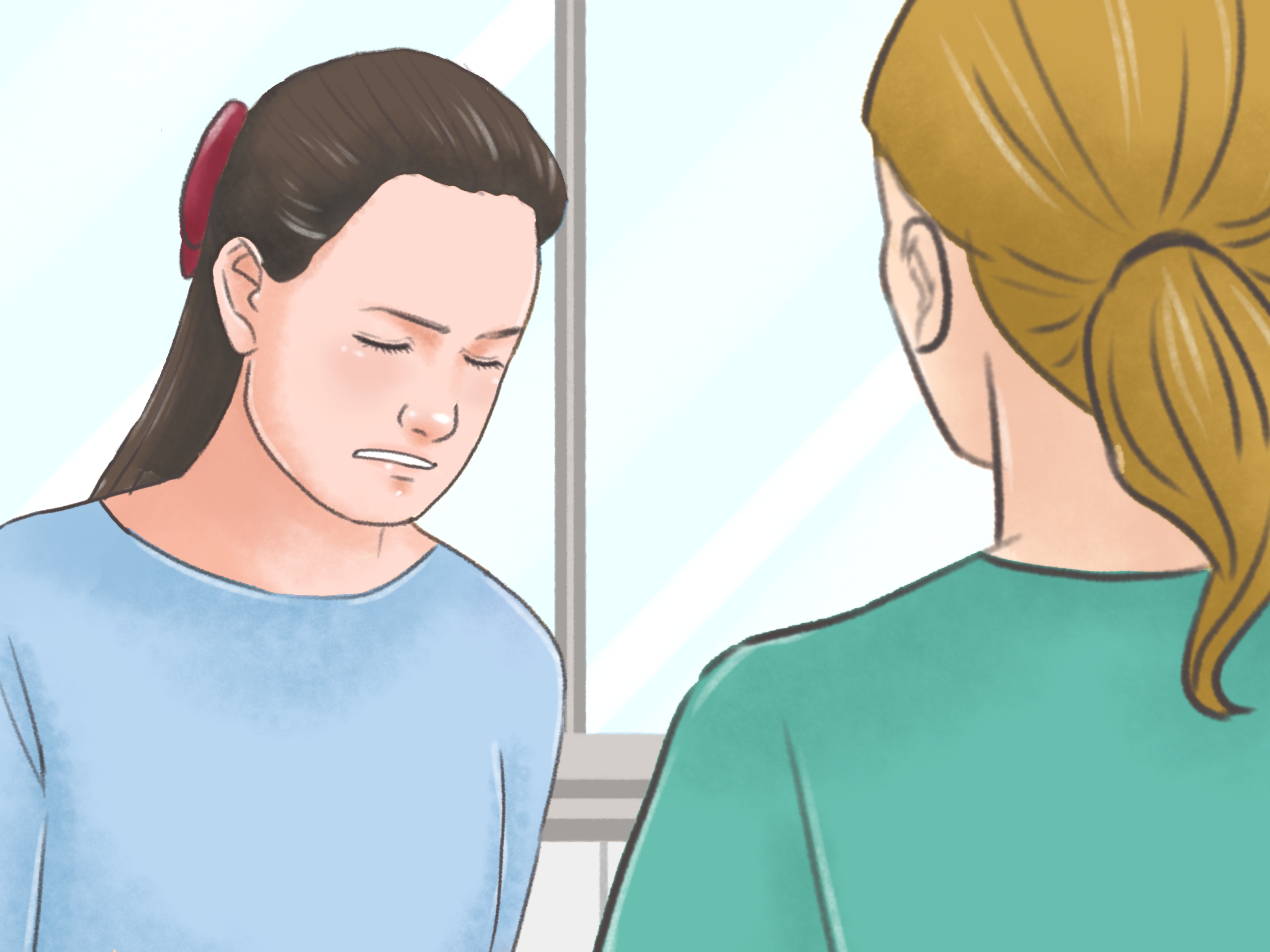
Bombing a test feels dramatic. One minute you are thinking, “I probably got a B.” The next minute, your paper comes back looking like it survived a red-pen tornado. At that point, the dream of a retake can feel less like an academic plan and more like a rescue mission.
But here is the good news: asking a teacher to let you retake a test is not impossible. It just has to be done the right way. Teachers are far more likely to respond well when a student is respectful, honest, prepared, and focused on learning instead of simply begging for points. In other words, your goal is not to perform a courtroom drama. Your goal is to show maturity, accountability, and a believable plan for doing better next time.
This guide walks you through 14 practical steps for how to convince a teacher to let you retake a test without sounding entitled, defensive, or suspiciously allergic to responsibility. You will also find examples, mistakes to avoid, and real-world style experiences that show what tends to work in the classroom.
Why Your Approach Matters More Than Your Panic Level
If you want a teacher to say yes, you need to understand what they are thinking. Most teachers are not against helping students. What they are against is unfairness, repeated excuses, last-minute drama, and requests that create more work without proving any real learning happened. That means your request has a much better chance if you show three things clearly:
- You understand what went wrong.
- You have a realistic plan to improve.
- You are asking respectfully, not demanding a miracle wrapped in extra credit.
Also, keep one thing in mind: some teachers or schools have a strict no-retake policy. If that is the case, your job shifts from “How do I make them break the rules?” to “Is there another way I can show improvement?” That difference matters. A lot.
How to Convince a Teacher to Let You Retake a Test: 14 Steps
1. Do not ask while your emotions are still doing cartwheels
Your first instinct may be to march up to the teacher’s desk and say, “This grade does not represent me as a person.” Please do not. Right after a bad grade, you are more likely to sound frustrated, embarrassed, or defensive. Take a breath. Give yourself a little time to cool down so you can talk like a student who wants help, not a contestant on a reality show called Grade Wars.
Waiting even one day can help you sound more thoughtful. It also shows maturity. Teachers usually respond better when students approach them calmly rather than emotionally.
2. Check the class policy before you say a word
Before asking for a retake, look at the syllabus, class rules, grading policy, or any posted instructions. Some teachers already explain whether retakes, corrections, or reassessments are allowed. Others may allow them only under certain conditions, such as attending tutoring, completing corrections, or asking within a specific time frame.
This step matters because you do not want to ask a question that was already answered on page one of the syllabus. That is the academic version of knocking on a door with a giant sign that says “Use the other entrance.”
3. Review the test carefully and figure out what actually went wrong
Do not just stare at the score and whisper, “Wow, rude.” Review the questions. Look for patterns. Did you misunderstand vocabulary? Run out of time? Forget formulas? Misread directions? Panic? Study the wrong material?
The more specific you are, the stronger your request becomes. “I studied hard” is vague. “I realized I understood the chapter definitions, but I did not practice applying them to short-answer questions” sounds much more credible. Specific reflection shows that you are serious about learning, not just grade shopping.
4. Own your part of the problem
This is the big one. If you want a teacher to trust your request, start with accountability. That means being honest about whether you procrastinated, got distracted, underestimated the test, skipped practice, or simply had a bad strategy.
Teachers hear excuses all the time. What stands out is responsibility. Saying, “I should have started studying earlier, and I can see that now,” lands much better than, “The test was confusing, the room was weird, and Mercury was probably in retrograde.”
Even if outside factors played a role, keep your tone grounded. If you were sick, had a family emergency, or were dealing with something documented, mention it clearly and briefly. Do not build a five-act tragedy when two honest sentences will do.
5. Create a concrete improvement plan before asking
A teacher is more likely to consider a retake if you can explain what you will do differently. Make a short, realistic plan. For example:
- Redo every missed problem.
- Meet with the teacher during office hours or after class.
- Attend tutoring or a study group.
- Practice with new question types.
- Study in shorter sessions over several days instead of cramming.
This turns your request from “Please save me” into “Here is how I plan to earn another chance.” That is a much better look.
6. Gather proof that you are making an effort
If appropriate, bring evidence. This could be corrected answers, new study notes, practice problems, flashcards, or a written reflection on what you missed. You do not need to carry in a three-inch binder labeled Operation Academic Redemption, but it helps to show that you already started fixing the problem.
Effort is more persuasive when it is visible. A teacher who sees real preparation is more likely to believe a second attempt would be meaningful.
7. Choose the right time and setting
Do not spring this request on a teacher while they are taking attendance, answering five other students, and trying to rescue a jammed printer. Ask to speak after class, during office hours, or by email if that is the teacher’s preferred method.
A private, calm setting gives you a much better chance of being heard. It also makes the conversation less awkward for everyone involved. Nobody wants a front-row seat to your grade negotiation.
8. Start by asking for feedback, not just a retake
This is a smart move. Instead of opening with, “Can I retake the test?” try, “Could we talk about what I got wrong and how I can improve?” That tells the teacher you care about learning first.
Sometimes teachers are more open to a retake after they see you engaging seriously with the feedback. In some cases, they may offer an alternative on their own, such as corrections, a makeup assignment, or a partial retest. Let the conversation breathe before you jump straight to the request.
9. Be respectful, brief, and direct
When you make your request, keep it simple. Do not ramble. Do not guilt-trip. Do not compare yourself to other students. And absolutely do not say, “I really need an A because my parents will lose it.” While that may be true, it does not answer the teacher’s real question: Why should I believe a retake would reflect more learning?
Try this kind of wording:
“I reviewed my test and I can see where I struggled, especially on the short-answer questions. I should have practiced applying the material instead of only rereading my notes. I’ve already started correcting my mistakes and making a study plan. If your policy allows it, would you consider letting me retake the test or do corrections to show improvement?”
That is clear, respectful, and focused on growth. No violin music required.
10. Make your request reasonable
A reasonable request is easier to approve. You might ask for one of the following:
- A full retake.
- A partial retake on the sections you missed.
- Test corrections for partial credit.
- An oral explanation of missed concepts.
- An alternate assignment that demonstrates mastery.
If you show flexibility, you seem more focused on learning than on controlling the outcome. Teachers appreciate that.
11. Offer to meet conditions
One of the best ways to convince a teacher is to make the retake feel earned. You can say you are willing to:
- Complete corrections first.
- Attend a help session.
- Retake the test before or after school.
- Accept a score cap, such as up to a B.
- Use a different version of the test.
Teachers often worry that second chances will be unfair or too easy. Offering conditions shows that you understand the retake should come with responsibility, not a free academic coupon.
12. Keep your tone non-defensive during the conversation
If the teacher explains why you lost points, listen. Do not interrupt. Do not argue every question like you are appealing a parking ticket. Ask follow-up questions if you need clarity, but stay open. The whole point is to show that you can handle feedback and use it.
Students often hurt their chances by getting defensive too quickly. Ironically, the more teachable you sound, the more likely a teacher may be to help you.
13. Accept “no” gracefully if that is the answer
Sometimes the answer will still be no. That does not mean the conversation was a failure. A calm response can still help you build trust for the future. You can say:
“I understand. Thank you for explaining. Could you still give me advice on how to prepare better for the next test?”
That response is powerful because it shows maturity. Teachers remember students who handle disappointment well. Also, a respectful “no problem” today can lead to more support later, whether that means better feedback, extra help, or more flexibility next time.
14. Follow through like your credibility depends on it, because it does
If your teacher gives you another chance, do not waste it. Study differently. Show up prepared. Use the strategies you promised to use. If you said you would attend extra help, go. If you said you would fix your study habits, fix them.
The retake is not just about the grade. It is about proving that you can learn from setbacks. That is the part teachers really want to see.
Sample Email to Ask for a Retake
If your teacher prefers email, here is a simple version you can adapt:
Subject: Request to Discuss My Test and Possible Retake
Dear Mr. Reynolds,
I hope you are doing well. I wanted to ask if I could meet with you to review my recent test. After looking at my score, I realized I need to improve how I prepared, especially on the application questions.
I have already started reviewing my mistakes and making a better study plan. If your class policy allows it, I would be grateful for the chance to retake the test or complete corrections to show that I understand the material better.
I understand if that is not possible, but I would still appreciate any advice on how I can improve for the next test.
Thank you for your time.
Sincerely,
Your Name
Class/Period
Mistakes That Can Ruin Your Chances
- Blaming the teacher: “Your test was unfair” is not the magical phrase people think it is.
- Begging without a plan: Emotion alone is rarely persuasive.
- Waiting too long: Asking three weeks later is not ideal.
- Sending a sloppy email: One giant text blob full of typos does not scream “responsible student.”
- Comparing yourself to others: “But you let Jason retake his quiz” is not a strong strategy.
- Asking for special treatment without effort: Teachers can usually spot this from orbit.
What Actually Makes a Teacher More Likely to Say Yes?
Usually, it comes down to a few simple things: timing, honesty, respect, and evidence that you are trying to learn from the mistake. Teachers are educators, not score vending machines. When your request centers on improvement instead of entitlement, it becomes much easier to support.
So yes, you can absolutely ask for a retake. Just remember that the strongest request is not the saddest one. It is the one that sounds thoughtful, accountable, and ready to do the work.
Experiences Related to How to Convince a Teacher to Let You Retake a Test
One student, let’s call her Maya, handled it the wrong way at first. She saw her test grade, panicked, and sent an email five minutes later that basically translated to, “I swear I’m smart, please fix this immediately.” Her teacher did not say yes. In fact, the teacher asked her to come by after school and discuss what happened. Maya expected a lecture. Instead, the teacher asked one question: “What would you do differently if I gave you another chance?” Maya had no answer. That was the moment she realized the grade was only half the issue. The bigger issue was that she had no improvement plan.
A day later, she came back prepared. She had reviewed every missed problem, highlighted the concepts she misunderstood, and made a schedule to study for three nights instead of cramming in one heroic-but-terrible evening. This time, the teacher agreed to let her do test corrections for partial credit and retake one section. Her grade improved, but more importantly, so did her approach. She stopped seeing teachers as people to persuade with panic and started seeing them as people who wanted proof of learning.
Another student, Jordan, had a very different situation. He really had studied, but he froze during the test. Instead of storming up to the teacher and blaming anxiety for everything, he waited until the next day and asked for a quick meeting. He calmly explained that he had prepared, but he could tell from the result that his test-taking strategy had fallen apart under pressure. He brought his notes, a list of the questions that tripped him up, and a short plan for how he would practice under timed conditions. What impressed the teacher was not the request itself. It was the preparation. Jordan was not asking for pity. He was asking for a chance to demonstrate what he actually knew. The teacher allowed a retake before school the next week, and Jordan did significantly better.
Then there was Ava, who did not get the answer she wanted. She asked respectfully, admitted she had procrastinated, and requested a retake. Her teacher said no because the class policy did not allow it. That could have been the end of the story. Instead, Ava asked, “Could you help me understand how to prepare better for the next one?” That question changed the whole conversation. Her teacher gave her study advice, suggested practice problems, and even checked in with her before the next exam. Ava never got a retake, but she did get something just as valuable: support, trust, and a much better grade on the next test.
These experiences all point to the same lesson. Students usually have the best chance when they replace embarrassment with reflection and replace desperation with a plan. A teacher may or may not allow a retake, but a mature conversation can still open doors. Sometimes the second chance comes as a retest. Sometimes it comes as corrections, tutoring, or better guidance for next time. Either way, the students who do best are the ones who show they are ready to learn, not just ready to negotiate.
Final Thoughts
If you want to convince a teacher to let you retake a test, the smartest move is not to act like a lawyer, a victim, or a motivational speaker. Act like a student who is learning how to recover from mistakes. That means checking the policy, reflecting honestly, asking respectfully, and showing a clear plan for improvement.
Sometimes you will get the retake. Sometimes you will get a different opportunity. Sometimes you will simply get advice that helps you crush the next exam. All three outcomes are useful. Because in school, as in life, the ability to recover well is often more impressive than never messing up in the first place.













