
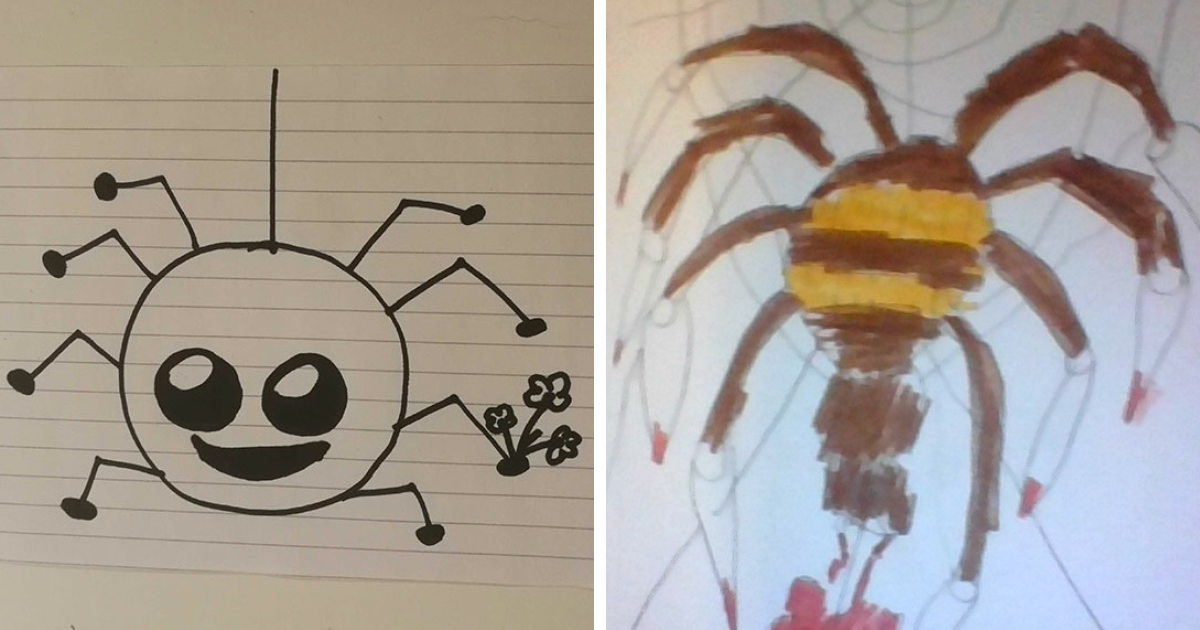
Some internet challenges ask people to show off their best recipes, their dream homes, or their pets doing something criminally adorable. Then there are prompts like “Hey Pandas, Draw A Spider”simple, silly, and somehow powerful enough to reveal a person’s entire artistic personality in eight suspiciously wobbly legs.
At first glance, drawing a spider sounds easy. Two circles, eight legs, maybe a web, done. Congratulations, you have created either a spider, a sun with anxiety, or a potato that joined a tap-dancing class. But that is exactly why the prompt works. A spider drawing can be cute, creepy, elegant, dramatic, cartoonish, scientifically accurate, or so cursed that it deserves its own tiny haunted gallery.
Online community prompts thrive because they remove pressure. Nobody is asking for a museum-ready masterpiece. The fun is in seeing how different people interpret the same idea. One person draws a fuzzy jumping spider with glittery eyes. Another draws a Halloween nightmare with fangs sharp enough to cut the Wi-Fi. Someone else adds a top hat, because apparently even arachnids deserve formalwear.
Why “Draw A Spider” Is the Perfect Internet Art Prompt
The magic of this challenge is that almost everyone knows what a spider is supposed to look like, but almost nobody agrees on how to draw one. That gap between “I know this creature” and “why does mine look like a walking meatball?” is where comedy lives.
Spiders are instantly recognizable. They have eight legs, a compact body, and often a web nearby. Scientifically, spiders are arachnids, not insects. Unlike insects, which usually have six legs and three main body sections, spiders have eight legs and two main body parts: the cephalothorax and abdomen. They also have spinnerets, the silk-producing structures that help many species make webs, shelters, egg sacs, or safety lines.
That real-world structure gives artists a useful starting point. But the internet is not a biology exam, and that is good news for anyone whose spider has nine legs, one confused eyebrow, and the emotional energy of a middle manager on a Monday.
The Spider: Creepy, Cute, or Secretly Misunderstood?
Spiders have a public relations problem. They show up uninvited in bathtubs, move like they know something we do not, and appear in horror movies whenever a director wants the audience to immediately regret having skin. Yet spiders are also fascinating animals. Many are skilled hunters, web engineers, pest controllers, and surprisingly delicate creatures.
Most spiders are not interested in people. They would rather eat insects, hide in corners, or continue their mysterious spider errands. In gardens and homes, spiders often help reduce populations of flies, mosquitoes, and other pests. Even the ones that look like they were designed by a committee of nightmares are usually just trying to survive.
That is why drawing spiders can be oddly wholesome. When you sketch one, you stop treating it only as “the thing in the corner” and start noticing its shape, balance, eyes, leg angles, patterns, and personality. A spider becomes less of a jump scare and more of a tiny design challenge with legs.
How to Draw a Spider Without Losing Your Dignity
You do not need expensive supplies to join the fun. A pencil, pen, tablet, napkin, receipt, or the back of an envelope will do. The spider does not care. The spider has no thumbs and therefore cannot judge your technique.
Step 1: Start With the Body
Begin with two simple shapes: a smaller circle or oval for the front body section and a larger oval for the abdomen. If you want a cartoon spider, make the abdomen round and plump. If you want a realistic spider, stretch the shapes and think about proportion. If you want a spider that looks like it just heard gossip, tilt the head slightly.
Step 2: Add Eight Legs
This is where many drawings go from “spider” to “octopus with rent due.” The trick is to draw four legs on each side. Spider legs often bend in segments, so avoid drawing them as straight spaghetti lines. Add little angles: out, down, out again. The legs can be long and elegant, short and stubby, or dramatically villainous.
Step 3: Give It Eyes
Many spiders have multiple eyes, though the number and arrangement can vary by species. For a cute spider drawing, oversized front eyes work beautifully. Jumping spiders, in particular, are famous for their large forward-facing eyes, which make them look less like monsters and more like tiny forest puppies who make questionable life choices.
Step 4: Add Details
Now comes the personality. Add stripes, spots, fuzzy hairs, tiny feet, a web, a shadow, a bow tie, headphones, a coffee cup, or a sign that says “I live here now.” A good spider drawing does not have to be realistic. It just has to make someone look twice.
Funny Spider Drawing Ideas for Pandas Who Need Inspiration
If the blank page is staring at you like a judgmental refrigerator light, try one of these spider drawing ideas:
1. The Fancy Spider
Draw a spider wearing a monocle, tiny boots, and a top hat. Give it the confidence of someone who owns a haunted mansion and corrects people’s grammar at dinner.
2. The Nervous Spider
This spider is more afraid of you than you are of it. Add huge eyes, shaky legs, and a speech bubble that says, “Please do not scream. I am also screaming internally.”
3. The Gym Spider
Eight legs means four leg days at once. Draw a spider lifting weights, doing squats, or refusing to skip cardio. This is scientifically ridiculous and emotionally correct.
4. The Web Designer
Yes, this joke is old. No, we are not above it. Draw a spider at a laptop designing an actual web. Add coffee, sticky notes, and a client asking for “just one small revision.”
5. The Dramatic Halloween Spider
Use sharp angles, dark shading, moonlight, and a giant web. Make it cinematic. Make it spooky. Make it look like it has a theme song played on an organ.
6. The Baby Jumping Spider
Round body, enormous eyes, tiny fuzzy legs, and maximum cuteness. This is the spider drawing for people who want to say, “I was scared of spiders until this one looked politely at me.”
What Makes a Spider Drawing Look Good?
A strong spider drawing usually has three things: shape, rhythm, and contrast. Shape helps viewers understand the body. Rhythm makes the legs feel natural instead of randomly stapled on. Contrast gives the drawing energy, whether through dark outlines, soft shading, bold colors, or a funny expression.
For beginners, symmetry helps. Draw one leg on the left, then a matching leg on the right. Repeat until the spider has all eight legs and does not look like it lost a bar fight. For more advanced artists, asymmetry can make the spider feel alive. One leg raised, one tucked back, one reaching forwardsuddenly the creature has motion.
Texture also matters. Spiders are not always smooth. Some are glossy, some are fuzzy, some have patterned abdomens, and some look like nature said, “Let’s add racing stripes.” A few short lines can suggest hair. Small dots can suggest eyes. Curved lines can make the abdomen feel round. A cast shadow can make even a cartoon spider look grounded.
Why People Love Sharing “Bad” Drawings Online
One reason prompts like “Hey Pandas, Draw A Spider” spread is that they welcome imperfection. The internet can be exhausting when everything looks polished, filtered, sponsored, and arranged under suspiciously perfect lighting. A quick spider doodle is refreshingly human.
Bad drawings are often funnier than perfect ones because they show the thought process. You can see where someone meant to draw a leg and accidentally created a noodle. You can see the moment confidence left the room. You can see creativity trying its best while anatomy quietly files a complaint.
That honesty makes people want to participate. A professional artist might post a beautifully rendered orb-weaver with delicate shading. A beginner might post a blob with eight lines and the caption, “He is trying.” Both belong. The challenge is not about winning. It is about joining the joke.
The Science Behind Why Drawing Feels Good
Creative activities like drawing can support relaxation, focus, and emotional expression. Art-making is often used in therapeutic settings because it gives people a way to communicate feelings that may be hard to put into words. Even casual doodling can help a person slow down, concentrate, and shift attention away from stress.
That does not mean every spider sketch is a deep emotional breakthrough. Sometimes a spider wearing sunglasses is simply a spider wearing sunglasses. But the act of making somethingespecially something low-pressurecan be surprisingly satisfying. You begin with a blank page. A few minutes later, there is a tiny eight-legged character looking back at you like it pays taxes.
Drawing also strengthens observation. Once you try to sketch a spider, you notice details you may have ignored before: how the legs bend, how the body sections connect, how webs are not random scribbles but carefully arranged structures. Art turns casual looking into active seeing.
Spider Webs: Nature’s Most Dramatic Background Prop
No spider drawing is required to include a web, but a web can instantly add atmosphere. A few curved lines can suggest a corner web. A radial web can create a classic Halloween look. A messy cobweb can make the spider seem like it lives in an attic full of secrets and tax documents from 1987.
Real spider silk is famous for being lightweight, flexible, and strong for its size. Spiders use silk in many ways: catching prey, protecting eggs, lining burrows, traveling short distances, and creating shelters. From an artist’s point of view, webs are useful because they frame the subject. They can make a simple drawing feel complete.
To draw a basic web, start with several straight lines radiating from one point, like slices of pizza. Then connect the lines with curved bands. Keep the curves slightly uneven for a natural feel. Add your spider hanging from one thread, and suddenly the page has a story.
Realistic Spider vs. Cartoon Spider: Which Style Wins?
The best style depends on the mood. A realistic spider drawing works well when you want detail, anatomy, and texture. Study photos, pay attention to leg segments, and use shading to show form. Orb-weavers, tarantulas, wolf spiders, and jumping spiders all offer different shapes and patterns.
A cartoon spider is better when you want charm, humor, or meme energy. You can exaggerate the eyes, simplify the legs, and add props. Cartoon spiders can be scared, smug, sleepy, heroic, fashionable, or completely confused by the modern world.
The secret is not choosing the “right” style. The secret is choosing the style that makes you want to keep drawing. If realism motivates you, draw the spider like a field guide illustration. If comedy motivates you, draw it holding a tiny protest sign that says, “Stop calling me a bug.”
A 500-Word Experience: What Happens When You Actually Draw a Spider
The first time you sit down to draw a spider for a prompt like this, you may feel strangely confident. After all, how hard can it be? You have seen spiders. You know the basic ingredients. Body, legs, eyes, web. Simple. Then your pencil touches the paper, and suddenly the spider looks like a meatball trying to escape a pile of broken umbrella parts.
That is the beauty of the experience. Drawing a spider reminds you that simple things are not always easy, and easy things do not have to be serious. You begin by sketching two ovals. They look fine. You add the first two legs. Still fine. You add the next two. Acceptable. By leg seven, your spider has developed a limp, a backstory, and possibly a legal dispute with gravity.
But instead of ruining the drawing, those mistakes often make it better. The crooked leg gives it personality. The uneven eyes make it look startled. The oversized abdomen turns it into a cartoon. The accidental extra line becomes a shadow, or a hair, or a dramatic battle scar from the Great Shoe Encounter of 2026.
When people share these drawings online, the comments become part of the artwork. Someone says the spider looks like it forgot where it parked. Someone else names it Gerald. Another person posts a more realistic spider, and suddenly the thread becomes a tiny museum of chaos: cute spiders, scary spiders, fashionable spiders, spiders with boots, spiders that look like coffee stains, spiders that appear to be auditioning for a low-budget superhero movie.
The experience also changes how you see real spiders. Maybe you still do not want one sprinting across your bathroom floor at midnight. Fair. No one is asking you to become roommates. But after drawing one, you may notice that spiders are built from interesting shapes. Their bodies are balanced. Their legs have rhythm. Their webs are not just spooky decorations but careful structures. Even a house spider in a corner starts to look less like a villain and more like a tiny contractor working overtime.
Drawing a spider can also be a social icebreaker. Ask a room full of people to draw one in two minutes, and you will learn more about them than expected. The perfectionist counts every leg twice. The comedian adds sunglasses. The horror fan adds fangs. The minimalist draws a dot and says, “It is far away.” The overachiever draws a full web, a moon, fog, and a tragic spider origin story.
By the end, the point is not whether the drawing is beautiful. The point is that you made something. You responded to a silly prompt with your own tiny piece of creativity. And if your spider looks weird, congratulations. Spiders are weird. You captured the essence perfectly.
Conclusion: Pick Up the Pencil, Pandas
“Hey Pandas, Draw A Spider” works because it is playful, accessible, and just specific enough to spark imagination. A spider can be a science lesson, a Halloween doodle, a cute character, a comedy sketch, or an accidental masterpiece born from questionable leg placement.
Whether your spider is realistic, adorable, terrifying, or built like a confused raisin with knees, it belongs in the great messy gallery of internet creativity. The prompt is not asking you to prove you are an artist. It is asking you to participate, laugh, observe, and maybe appreciate one of nature’s most misunderstood little architects.
So grab a pencil. Draw the body. Count the legs. Add the eyes. Give it a web, a hat, a dramatic shadow, or a tiny emotional crisis. Then share it proudly. Somewhere out there, another Panda is drawing a spider that looks even stranger than yoursand honestly, that is what makes the whole thing wonderful.
Note: This article synthesizes general information from reputable educational, science, museum, university extension, pest-awareness, and art-learning resources. It is written as original publishable content without source-link clutter, repeated templates, or citation placeholders.












