
Somewhere around age 50, cardio gets a weird reputation. One person says running will ruin your knees. Another says walking “doesn’t count.” Someone at the gym insists you must train like a caffeinated superhero or not bother. Meanwhile, your body is quietly saying, “Could we please just move in a way that doesn’t feel like a medieval punishment device?”
Here is the truth: cardio over 50 is not about chasing your 25-year-old mile time, punishing yourself for dessert, or proving anything to the treadmill next to you. It is about keeping your heart, lungs, blood vessels, muscles, brain, joints, balance, mood, and independence working together like a well-rehearsed bandpreferably one that does not throw out its back during sound check.
The best cardio for people over 50 is safe, consistent, enjoyable, and properly matched to fitness level. It may include brisk walking, cycling, swimming, dancing, hiking, water aerobics, rowing, elliptical training, pickleball, low-impact aerobics, or short intervals. The key is not whether the activity looks impressive on social media. The key is whether it raises your heart rate, gets you breathing more deeply, and can be repeated regularly without leaving you injured, exhausted, or emotionally committed to the couch for three days.
Why Cardio Matters More After 50
Cardio exercise, also called aerobic or endurance exercise, trains the body to use oxygen more efficiently. During aerobic activity, your heart pumps more blood, your lungs work harder, and your muscles become better at using oxygen for energy. Over time, regular cardio can help support healthy blood pressure, cholesterol levels, blood sugar control, circulation, stamina, weight management, sleep, mood, and cognitive health.
After 50, those benefits become especially valuable because aging naturally brings changes in muscle mass, joint mobility, balance, recovery time, and cardiovascular function. That does not mean your body is falling apart like a discount lawn chair. It means the maintenance schedule matters more. Cardio is one of the most reliable ways to keep the engine running smoothly.
Major U.S. health organizations generally recommend that adults aim for at least 150 minutes of moderate-intensity aerobic activity per week, or 75 minutes of vigorous-intensity activity, plus muscle-strengthening activities at least two days per week. Older adults also benefit from balance training, especially if they are at risk of falls. In plain English: move your body most days, lift or strengthen something twice a week, and do not ignore balance unless you enjoy surprise floor meetings.
Myth 1: “I’m Too Old to Start Cardio”
Fact: It Is Almost Never Too Late to Benefit
One of the biggest myths about cardio over 50 is that if you did not build a fitness habit earlier in life, the ship has sailed. Fortunately, your body did not read that memo. Research and public health guidance consistently show that adults can gain meaningful benefits from becoming more physically active later in life.
Starting cardio after 50 may improve endurance, confidence, energy, and everyday function. You may notice practical wins first: climbing stairs with less huffing, carrying groceries more easily, sleeping better, or walking farther without needing to negotiate with a park bench.
The smartest approach is to begin with what your body can currently handle. For many beginners, that means walking 10 minutes at a comfortable pace, then slowly adding time or pace over several weeks. A person who has been inactive does not need to leap into vigorous cycling classes or sprint intervals. The first goal is consistency. Fitness is not built by one heroic workout. It is built by repeating manageable efforts until your body says, “Oh, we do this now.”
Myth 2: “Walking Is Not Real Cardio”
Fact: Brisk Walking Absolutely Counts
Walking is often underrated because it is simple, free, and does not require a machine with blinking lights. But brisk walking is one of the best cardio exercises for adults over 50. It is accessible, joint-friendly for many people, easy to adjust, and surprisingly powerful when done regularly.
The phrase “brisk walking” matters. A slow stroll is still better than sitting, but moderate-intensity walking usually means you are moving fast enough to breathe harder while still being able to talk in short sentences. This is sometimes called the “talk test.” If you can sing an entire chorus from a 1980s power ballad, you may be under the moderate zone. If you cannot speak at all, you may be pushing too hard.
Walking can be modified easily. New exercisers can start with short walks on flat ground. People with more stamina can add hills, intervals, longer routes, or trekking poles. Those with arthritis or joint pain may prefer smooth surfaces, supportive shoes, or water walking. The point is not to make walking fancy. The point is to make it regular.
Myth 3: “Cardio Will Destroy My Knees”
Fact: The Right Cardio Can Support Joint Health
Cardio does not automatically wreck your knees. Poor progression, bad footwear, too much impact too soon, weak supporting muscles, and ignoring pain are more likely culprits. For many people over 50, low-impact cardio can actually help joints by improving circulation, reducing stiffness, supporting weight management, and strengthening the muscles that protect the hips, knees, and ankles.
Low-impact options include walking, swimming, water aerobics, cycling, elliptical training, rowing, and dancing with controlled movement. These activities can raise your heart rate without pounding your joints like a drum solo.
That said, pain is information. Mild muscle fatigue is normal. Sharp joint pain, swelling, limping, chest pain, dizziness, or unusual shortness of breath is not something to “tough out.” Adults over 50, especially those with arthritis, heart disease, diabetes, balance issues, or long periods of inactivity, should choose activities carefully and consider medical guidance before making big changes in exercise intensity.
Myth 4: “High-Intensity Workouts Are Only for Young People”
Fact: Intensity Can Be Useful, But It Must Be Personalized
High-intensity exercise is not automatically off-limits after 50. Some adults over 50 thrive with intervals, cycling climbs, fast walking bursts, swimming sprints, or short jogs. The problem is not intensity itself. The problem is copying workouts designed for people with different bodies, histories, joints, sleep habits, medications, and recovery needs.
Intensity should be relative to your current fitness. A hill walk may be high intensity for one person and a warm-up for another. A gentle water aerobics class may be moderate for someone recovering from knee pain. This is why rating your effort is often more useful than chasing a generic number on a watch.
A safe interval session might look like this: warm up for five to ten minutes, walk briskly for one minute, recover at an easy pace for two minutes, repeat five to eight times, then cool down. That is cardio with structure, not cardio with a death wish.
Myth 5: “Cardio Is All You Need”
Fact: Cardio Works Best With Strength, Balance, and Flexibility
Cardio is powerful, but it is not a complete fitness plan by itself. After 50, muscle-strengthening exercise becomes essential because adults naturally lose muscle mass and power with age. Strength training helps support metabolism, posture, bone health, joint stability, balance, and daily activities like lifting luggage, opening stubborn jars, or getting out of a low chair without making dramatic sound effects.
Balance training also matters. Falls become more dangerous with age, and many falls happen during ordinary moments: stepping off a curb, turning quickly, walking on uneven ground, or navigating a dark hallway. Balance work can include tai chi, yoga, heel-to-toe walking, single-leg stands near a counter, step-ups, or gentle agility drills.
Flexibility and mobility exercises help maintain range of motion. They are not a replacement for cardio, but they make cardio feel better. Think of your weekly fitness plan as a four-legged table: cardio, strength, balance, and mobility. Remove one leg and dinner gets weird.
Myth 6: “If I’m Not Sweating Buckets, It Doesn’t Count”
Fact: Moderate Effort Countsand Small Bouts Add Up
Sweat is not a perfect fitness meter. Some people sweat heavily while tying their shoes in July. Others barely sweat during a solid workout. What matters more is effort, breathing, heart rate, duration, and consistency.
Moderate-intensity cardio is enough to provide major health benefits. You do not have to crawl away from every session like a movie hero escaping an explosion. In fact, for many adults over 50, moderate cardio is the sweet spot because it is effective and easier to recover from.
Short sessions count too. Three 10-minute walks can be a practical way to build toward 30 minutes per day. A few minutes of stair climbing, gardening, active housework, or dancing in the kitchen may not replace a structured workout, but it still helps reduce sedentary time. Your body does not require all movement to occur in expensive leggings under fluorescent gym lights.
Myth 7: “My Heart Rate Must Hit a Magic Number”
Fact: Heart Rate Is Helpful, But It Is Not the Whole Story
Heart-rate zones can be useful, especially for people who enjoy data. But formulas such as “220 minus your age” are estimates, not commandments carved into stone tablets. Medications, caffeine, stress, sleep, heat, hydration, and fitness level can all affect heart rate.
A simpler method is the talk test. During moderate cardio, you should be able to talk but not sing. During vigorous cardio, you may only be able to say a few words before needing a breath. During easy recovery, conversation should feel comfortable.
Wearable devices can help track trends, but they are not perfect. If your watch says you are fine while your chest feels tight, believe your body. If your watch says you are “unproductive” after a pleasant walk, kindly remind it that it is a tiny computer with no knees.
How Much Cardio Should You Do After 50?
A practical goal for most healthy adults is 150 to 300 minutes of moderate-intensity cardio per week. That could be 30 minutes of brisk walking five days per week, 25 minutes of cycling six days per week, or several shorter sessions spread throughout the day.
For vigorous cardio, 75 to 150 minutes per week may offer similar benefits. However, vigorous exercise requires more recovery and may not be appropriate for everyone. Adults with heart conditions, uncontrolled blood pressure, dizziness, chest discomfort, or major health concerns should talk with a healthcare professional before starting vigorous activity.
A balanced weekly plan might look like this:
- Monday: 30-minute brisk walk plus gentle stretching.
- Tuesday: Strength training for major muscle groups.
- Wednesday: 25-minute bike ride or water aerobics.
- Thursday: Balance work and a 15-minute easy walk.
- Friday: 30-minute walk with short faster intervals.
- Saturday: Strength training plus light mobility work.
- Sunday: Fun movement: dancing, hiking, gardening, or a relaxed walk.
This is not a rigid prescription. It is a template. The best cardio routine is one you can actually repeat without requiring a motivational speech, a new identity, or a rescue team.
Best Cardio Exercises Over 50
Brisk Walking
Walking is excellent for beginners and experienced exercisers alike. It is easy to scale by changing speed, distance, terrain, or intervals.
Swimming and Water Aerobics
Water supports the body, making these options helpful for people with joint discomfort, arthritis, or balance concerns. The water adds resistance while reducing impact.
Cycling
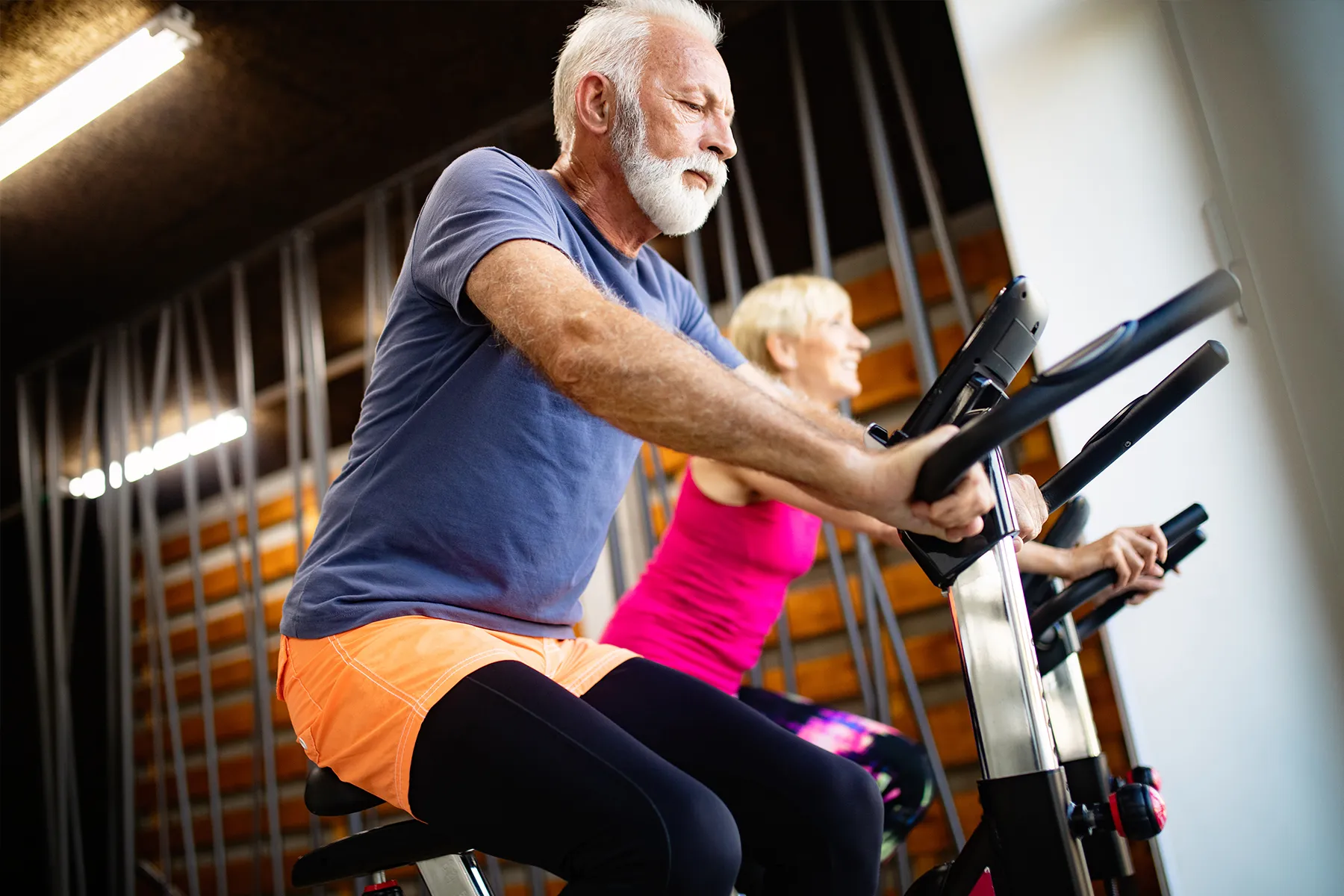
Stationary or outdoor cycling can improve endurance with less joint pounding than running. Recumbent bikes may be useful for people who need more back support.
Dancing
Dancing combines cardio, balance, coordination, memory, and joy. Also, it is one of the few workouts where forgetting the steps still counts as movement.
Elliptical Training
An elliptical can provide a low-impact cardio workout, though balance and machine setup matter. Start slowly and avoid aggressive preset programs if they change speed or resistance too abruptly.
Rowing
Rowing uses the legs, hips, back, arms, and core. Proper technique is important, so beginners should learn form before chasing intensity.
Safety Tips for Cardio Over 50
Start with a warm-up. Five to ten minutes of easy movement helps prepare your heart, muscles, and joints. End with a cool-down instead of stopping suddenly, especially after harder sessions.
Increase gradually. A common rule is to avoid increasing total weekly time, distance, or intensity too quickly. Your enthusiasm may be ready for a dramatic transformation montage, but your tendons prefer paperwork and advance notice.
Use supportive footwear, hydrate, and pay attention to weather. Heat, humidity, cold, poor lighting, uneven sidewalks, and slippery surfaces can turn a sensible workout into an avoidable accident.
Watch for warning signs. Stop exercising and seek medical help if you experience chest pain, pressure, fainting, severe shortness of breath, sudden weakness, irregular heartbeat with symptoms, or pain spreading to the jaw, neck, back, or arm. Cardio should challenge you, not scare you.
Common Mistakes to Avoid
The first mistake is doing too much too soon. Many people restart fitness with the emotional energy of a comeback movie, then meet reality in the form of sore calves and a suspicious knee. Begin smaller than you think you need to. You can always add more.
The second mistake is doing only one activity. Repeating the same workout every day can lead to boredom or overuse. Mix walking with cycling, swimming, strength work, mobility, and balance training.
The third mistake is ignoring recovery. Sleep, hydration, nutrition, and rest days help your body adapt. Recovery is not laziness. It is where the upgrade installs.
The fourth mistake is making cardio joyless. If you hate treadmills, do not build your entire plan around treadmills. Try trails, dance classes, water workouts, neighborhood walks, charity walks, cycling groups, or music-powered living room cardio. Enjoyment is not a luxury; it is a compliance strategy.
Real-Life Experiences: What Cardio Over 50 Actually Feels Like
One of the most common experiences people have with cardio after 50 is surprise. Not the “I suddenly became an Olympic athlete” kind of surprise, but the quieter kind: realizing that small, steady movement can change daily life. A person who starts with ten-minute walks may notice after a month that the mailbox no longer feels like a distant expedition. Stairs become less dramatic. The dog becomes the one who needs a break. These are not flashy results, but they are deeply meaningful because they show up in ordinary life.
Another common experience is learning humility without losing confidence. Many adults over 50 remember what they used to do: long runs, basketball games, tennis matches, mountain hikes, or gym sessions that ended with a smug smoothie. Returning to cardio can feel frustrating when the body does not immediately cooperate. The smart shift is to stop comparing today’s body with a younger version and start comparing today with last month. Progress might mean walking farther, recovering faster, sleeping better, or feeling less winded during errands. That counts.
People also discover that the best cardio is often social. A walking partner, dance class, water aerobics group, or cycling club can make exercise feel less like a medical assignment and more like a weekly appointment with fun. Social movement adds accountability and connection. It is harder to skip a walk when your friend is waiting at the corner, possibly holding coffee and judgment.
There is also the experience of negotiating with joints. Knees, hips, feet, and backs may have opinions. The goal is not to silence those opinions but to interpret them wisely. Many people find that switching surfaces, buying better shoes, warming up longer, adding strength training, or choosing lower-impact activities makes cardio comfortable again. Swimming, cycling, and elliptical training often become trusted options when running feels too harsh.
Some adults over 50 experience a mental shift: cardio becomes less about weight and more about freedom. Being able to travel, garden, play with grandchildren, carry groceries, climb bleachers, dance at weddings, or explore a new city matters more than a number on a scale. Fitness becomes practical. It becomes personal. It becomes the difference between watching life from a chair and participating in it.
The most encouraging experience is that confidence builds quickly when goals are realistic. A beginner who completes three walks in one week has proof. A person who adds five minutes to a bike ride has proof. Someone who takes a dance class despite feeling awkward has proof. Cardio over 50 is full of these small receipts. They remind you that the body is still trainable, still responsive, and still worth caring for.
Conclusion: Cardio Over 50 Is Not a MythIt Is a Strategy
Cardio over 50 is not about punishment, panic, or pretending age does not exist. It is about respecting your body enough to keep it moving. The facts are clear: regular aerobic activity supports heart health, endurance, circulation, mood, mobility, and independence. Walking counts. Low-impact workouts count. Short sessions count. Starting later counts. Strength, balance, and flexibility make cardio safer and more effective.
The best plan is simple: choose activities you enjoy, start at your current level, build gradually, include strength training twice a week, practice balance, and listen to your body. You do not need to become a fitness influencer. You just need to become a person who moves often enough that your heart, lungs, muscles, and future self send a thank-you note.
Note: This article is for general educational purposes and is based on reputable U.S. health guidance. Anyone with chest pain, dizziness, fainting, uncontrolled blood pressure, known heart disease, recent surgery, or major medical concerns should consult a qualified healthcare professional before changing exercise intensity.












