
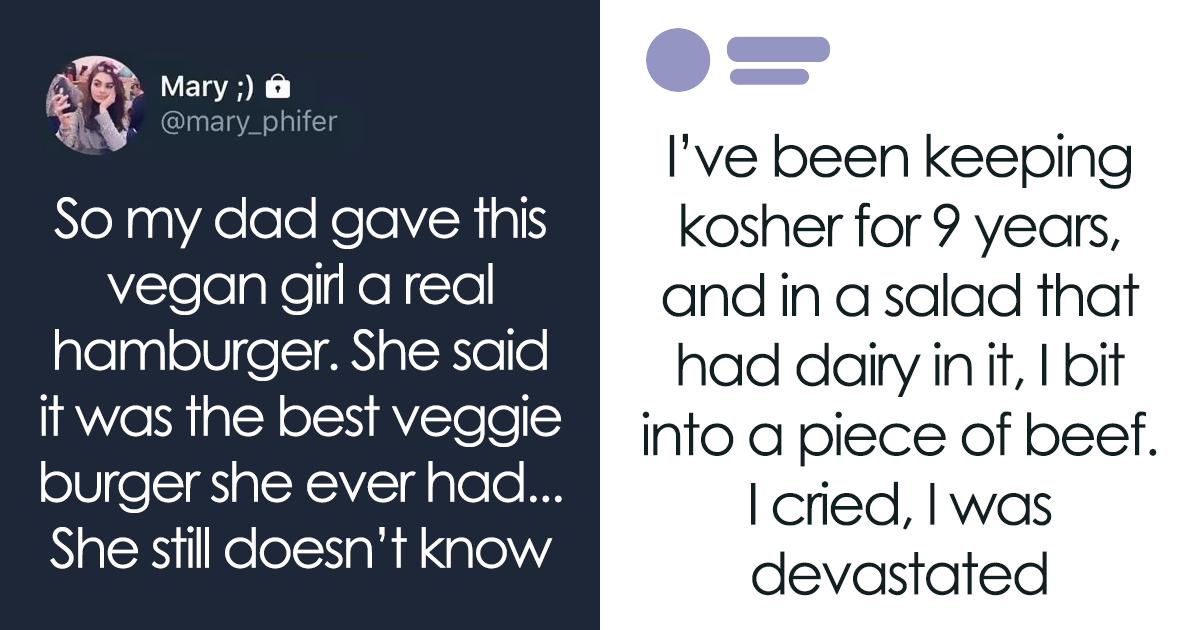
There are restaurant mistakes, and then there are restaurant mistakes that make the internet put down its fries, adjust its glasses, and say, “Actually, we need to talk about this.” A vegan being served a real burger without realizing it belongs firmly in the second category. At first glance, it may sound like a simple kitchen mix-up: wrong patty, wrong plate, wrong table. But the conversation that followed is much bigger than one unfortunate bite.
For many vegans, food is not just food. It can be tied to ethics, religion, health, identity, environmental concerns, or a deeply personal promise. So when someone orders a vegan burger and receives beef instead, the problem is not merely that dinner went sideways. The issue is consent, trust, food safety, and whether restaurants take dietary requests seriously when those requests do not involve a dramatic allergy bracelet or a medical warning label.
This story resonated because it lives in a modern dining gray zone. Plant-based burgers now look, smell, sizzle, and even “bleed” more like beef than ever before. Great news for innovation. Terrifying news for anyone trying to inspect their meal like a tiny edible detective. When a vegan burger is designed to taste convincingly meaty, a customer should not have to perform a forensic investigation before taking a bite.
Why One Burger Became A Bigger Conversation
The viral scenario was simple: a vegan ordered what she believed was a vegan burger, ate it, and later learned it was real meat. The reaction online was immediate and intense. Some people focused on the emotional betrayal. Others discussed food allergies, religious dietary laws, and the responsibility of servers. A few tried to minimize the mistake, treating it like receiving regular Coke instead of Diet Coke. That comparison, however, misses the point by several grocery aisles.
If someone avoids meat for ethical reasons, serving them beef removes their ability to choose. If someone avoids a food for religious reasons, the mistake can be spiritually distressing. If someone avoids an ingredient for medical reasons, the results can be dangerous. The burger may be small, but the principle is not. Customers should get what they ordered, especially when they clearly identify a dietary restriction.
This is why the discussion matters. A vegan meal is not a “preference” in the same way extra pickles are a preference. For some people, it is a boundary. Restaurants do not need to agree with that boundary, applaud it, or embroider it onto a throw pillow. They simply need to respect it.
Vegan, Plant-Based, Meatless: Words Matter
One reason mistakes happen is that food language has become crowded. “Vegan,” “vegetarian,” “plant-based,” “meatless,” and “dairy-free” are often tossed around like they mean the same thing. They do not. A vegan diet excludes animal-derived foods, including meat, fish, dairy, eggs, and honey. Vegetarian meals may include dairy or eggs. Plant-based can mean entirely vegan, mostly plants, or simply a marketing phrase wearing yoga pants.
That lack of clarity matters in restaurants. A “plant-based burger” might use a vegan patty but come with dairy cheese, egg-based mayo, or a bun containing milk. A “veggie burger” might include egg as a binder. A “meatless” patty may still be cooked on the same grill as beef unless the restaurant has separate procedures. For diners with strict vegan requirements, the label is only the beginning of the conversation.
The best menus make this easy. They clearly mark vegan items, identify modifications, and train staff to explain what is in the dish. The worst menus leave customers asking five increasingly awkward questions while the server slowly begins to look like they would rather be inside the walk-in freezer.
The Rise Of Realistic Vegan Burgers
Modern plant-based burgers are impressive. Companies have developed patties using ingredients such as pea protein, rice protein, soy, oils, natural flavors, and color compounds that mimic the taste and appearance of beef. Some products are engineered to satisfy meat eaters, not just longtime vegans. That is a major reason they have landed on mainstream menus.
But realism creates a trust problem. If a plant-based burger tastes wildly different from beef, a diner can spot the mistake immediately. If it tastes almost identical, the customer must rely on the restaurant’s labeling, kitchen workflow, and staff communication. In other words, the more convincing vegan burgers become, the more important accuracy becomes.
Restaurants should treat plant-based substitutions like any other critical order detail. The patty should be verified, the plate should be marked, and the server should know what they are delivering. A tiny flag, different plate, separate ticket note, or clear kitchen callout can prevent a lot of misery. Also, tiny flags make almost anything feel festive, which is a bonus.
It Is Not Just About Veganism
The strongest part of the online discussion was how quickly people connected the burger incident to broader dietary safety. A person who thinks it is funny to trick a vegan might also think it is harmless to ignore “no pork,” “no shellfish,” “gluten-free,” or “dairy-free.” That mindset is dangerous.
Food allergies affect millions of Americans, and the major U.S. allergens include milk, eggs, fish, crustacean shellfish, tree nuts, peanuts, wheat, soybeans, and sesame. While veganism itself is not an allergy, restaurants that build careful systems for allergen communication are usually better at respecting all dietary needs. A kitchen culture that says “close enough” is not a kitchen culture anyone should trust.
Cross-contact is another key issue. For allergies, even microscopic amounts can matter. For strict vegans, shared equipment may also be a concern, though the stakes are usually ethical rather than medical. The same basic solution helps everyone: clear communication, honest disclosure, and no guessing. Guessing belongs in game shows, not in food service.
What Restaurants Should Do Better
Restaurants do not have to become vegan temples with kombucha fountains and oat-milk chandeliers. They do, however, need practical systems. First, menus should use terms accurately. If an item is vegan, every component should be vegan unless the menu clearly says a modification is required. If a dish is only “plant-forward” or “meatless,” say that instead.
Second, staff should be trained to escalate dietary questions. If a server is unsure whether the bun contains milk or whether the sauce has egg, the correct answer is not a confident shrug. The correct answer is, “Let me check with the kitchen.” Customers do not need a performance of certainty; they need actual certainty.
Third, kitchens should separate similar-looking items. Beef patties and plant-based patties should not be stored, cooked, or plated in a way that makes confusion easy. When both patties are brown, round, and burger-shaped, relying on vibes is not a system. It is a recipe for internet drama with a side of fries.
Fourth, when a mistake happens, the restaurant should respond seriously. A refund is good. A sincere apology is better. A review of what went wrong is best. The customer should not be made to feel dramatic for caring about what entered their body.
What Customers Can Do Without Becoming Food Police
Customers should not carry the full burden of preventing restaurant mistakes, but a few habits can reduce risk. When ordering, use clear language: “I need the vegan version with no meat, dairy, eggs, or animal-based sauce.” If the restaurant offers both beef and plant-based patties, ask how the vegan order is marked. If shared grills matter to you, ask directly.
It can also help to choose restaurants that publish ingredient guides or allergen menus. Larger chains often have written nutrition information available, while smaller restaurants may rely more on staff knowledge. Neither system is perfect, but transparency is always a good sign.
If something looks suspicious, pause before eating. Ask politely. A good restaurant will not be offended. In fact, a good restaurant should want to fix a possible error before it becomes a bigger problem. The phrase “Can you please confirm this is the vegan patty?” is not rude. It is responsible.
The Ethics Of “Tricking” Someone With Food
One of the most disturbing reactions to stories like this is the occasional comment suggesting that tricking vegans is funny. It is not. Tampering with someone’s food choices is a violation of trust. It does not matter whether the person is vegan, kosher, halal, allergic, sober, pregnant, diabetic, or simply avoiding something that makes them feel unwell.
Food is intimate. We put it inside our bodies. That sentence sounds like it belongs on an inspirational kitchen magnet, but it is true. Serving someone a food they explicitly avoided is not a prank. It is a breach of consent.
The ethical rule is simple: do not lie about food. Do not “test” whether someone can tell the difference. Do not decide their beliefs are silly and therefore optional. You are not the main character in someone else’s digestive system.
Why This Conversation Is Good For Everyone
The burger incident sparked an important discussion because it revealed a shared concern: people want to trust what they are served. Vegans want vegan food. Allergy-sensitive diners want accurate ingredient information. Religious diners want meals that respect their faith. Health-conscious customers want nutrition claims that mean something. Even meat eaters benefit when restaurants are more precise, because nobody enjoys receiving the wrong order unless the wrong order is somehow free dessert.
As plant-based eating becomes more mainstream, restaurants have an opportunity to improve. Clearer labels, better staff training, and stronger kitchen systems are not just good for vegans. They are good hospitality. They tell customers, “We heard you, we understood you, and we care enough to get it right.” That is the kind of service people remember.
Additional Experiences: What This Feels Like In Real Life
Imagine being vegan for years and finally finding a restaurant that offers a burger you can order without constructing a custom meal out of lettuce, pickles, and hope. You ask the server twice. They nod. The plate arrives. It smells rich and smoky. You take a bite, and something feels off. But then again, plant-based burgers are so realistic now. Maybe this is just a fancy one. Maybe the chef is a wizard. Maybe you are overthinking it because every vegan has, at some point, stared suspiciously at a sauce.
Then the server returns and says the kitchen made a mistake. That was beef. Suddenly dinner is no longer dinner. It becomes a sinking feeling, a flash of anger, embarrassment, and maybe even guilt, even though you did nothing wrong. Some people feel physically sick after eating meat unexpectedly. Others feel emotionally shaken. Some are frustrated because they trusted the restaurant. Some are upset because friends at the table say, “Well, it was an accident,” as if accidents cannot still hurt.
Many vegans have stories like this. A soup described as vegetable-based arrives with chicken stock. A “dairy-free” coffee drink contains whipped cream residue. A veggie taco includes lard in the beans. A server says, “It has no meat,” but forgets the cheese, mayo, or egg wash. These experiences add up. After a while, dining out can feel less like relaxing and more like conducting a cross-examination with appetizers.
Restaurant workers have experiences too. Many genuinely want to help but are not trained well enough. A server may not know that pesto often contains Parmesan, that Worcestershire sauce may contain anchovies, or that brioche buns usually contain egg or dairy. A cook may be juggling twenty orders during a rush and grab the wrong patty. A manager may not realize that vague menu labels create confusion. Most mistakes are not malicious. But impact matters more than intent when the wrong food reaches the wrong person.
The best experiences happen when everyone communicates clearly. A diner says, “I am vegan, so no animal products at all.” The server repeats it back. The kitchen marks the ticket. The plate is checked before leaving the pass. If there is uncertainty, someone asks instead of assuming. This may sound like a lot, but it is simply hospitality with a clipboard.
The important lesson is not that vegans should never eat out or that restaurants are villains. The lesson is that food trust is fragile. Once broken, it is hard to rebuild. A single wrong burger can turn into a public conversation because it represents something bigger: people deserve honesty about what they are served. Whether the reason is ethics, faith, health, or personal choice, the boundary deserves respect.
Conclusion
The story of a vegan being served a real burger without knowing it is not just internet outrage over a sandwich. It is a reminder that food choices are personal, meaningful, and sometimes medically important. As vegan and plant-based options become more common, restaurants must match innovation with responsibility. Realistic vegan burgers are exciting, but they also make clear labeling and careful service more important than ever.
Customers should be able to order with confidence. Restaurants should be able to serve with accuracy. And everyone should agree on one basic rule: never treat another person’s food boundaries as a joke. The burger may be gone in a few bites, but the trust behind it lasts much longer.












