
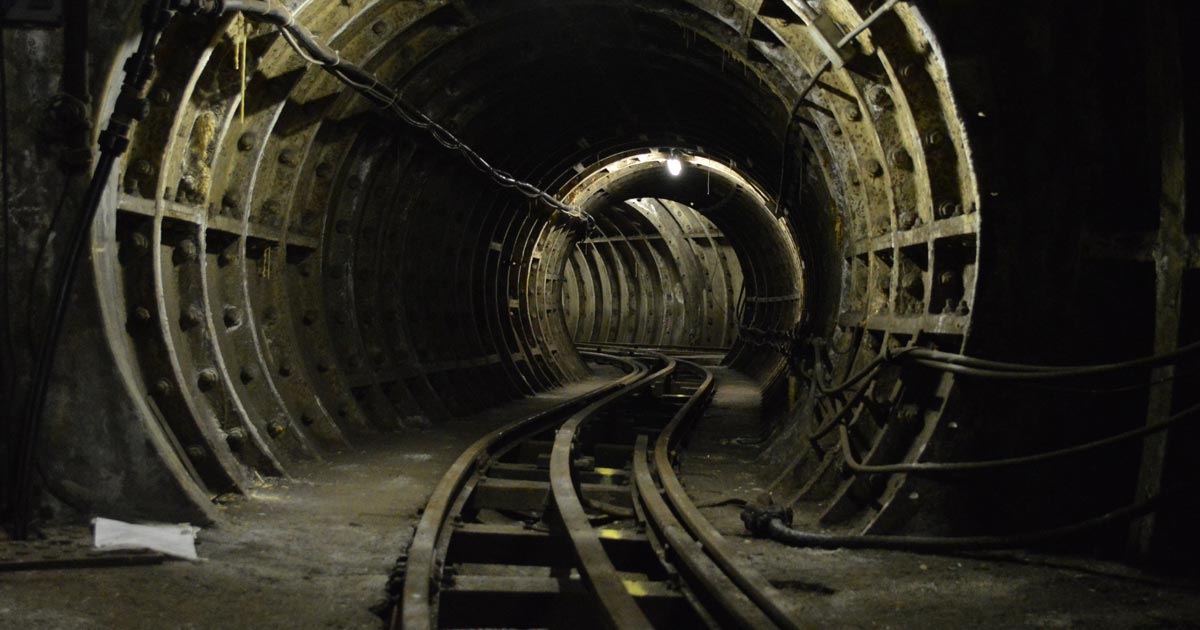
Some landmarks are famous because they are tall, shiny, ancient, photogenic, or conveniently located near a souvenir shop selling questionable refrigerator magnets. But a few of the world’s most recognizable places have another trick: their best stories are not above ground at all. They are buried below, tucked into tunnels, vaults, cisterns, service corridors, forgotten streets, and underground systems that helped cities survive, perform, govern, transport, or simply avoid smelling terrible.
These hidden networks beneath famous landmarks reveal a truth that travel brochures do not always mention: cities are layered. The polished plaza, the grand staircase, the marble dome, and the selfie-friendly facade are often just the top sheet of a much stranger architectural sandwich. Underneath, you may find bones, water, books, trains, old storefronts, Roman machinery, or enough engineering weirdness to make a civil engineer whisper, “Beautiful,” while everyone else backs away slowly.
Below are six real underground networks buried beneath or around famous landmarks, each with a story bigger than a trapdoor and more interesting than another “best views at sunset” list.
1. The Paris Catacombs: The City of Light’s Very Dark Basement
A landmark built from quarries, crisis, and millions of bones
Paris is known for the Eiffel Tower, Notre-Dame, the Louvre, chic cafés, and people who somehow make scarves look like a legal requirement. But roughly 65 feet below parts of the city lies one of the most famous underground networks in the world: the Paris Catacombs.
The Catacombs began not as a spooky attraction, but as a practical solution to a public health disaster. By the late 18th century, Paris cemeteries were overcrowded, especially the Saints-Innocents cemetery, which had served the city for centuries. The problem became impossible to ignore when burial grounds began affecting nearby neighborhoods. Authorities decided to move human remains into abandoned limestone quarries beneath the city.
That decision transformed sections of old quarry galleries into a municipal ossuary. Beginning in the 1780s, bones were transported at night and placed underground. Later, Inspector Héricart de Thury reorganized the remains into the haunting walls of skulls and femurs visitors recognize today. It was part engineering fix, part memorial, and part “well, that escalated quickly.”
The public route covers only a tiny portion of the larger quarry system. The official Catacombs are carefully maintained, but the broader underground quarry maze has long attracted unauthorized explorers known as cataphiles. That unofficial world adds to the legend, but it also reminds us that hidden urban networks are not theme parks. They are fragile, risky, and full of history that does not appreciate being poked by flashlights and bad decisions.
What makes the Paris Catacombs unforgettable is not just the bones. It is the way the network exposes Paris as a city built from itself. The limestone quarried underground helped construct the elegant buildings above. Later, the empty spaces below became the resting place for generations of Parisians. Few landmarks illustrate the connection between architecture, mortality, and municipal logistics so dramatically.
2. The Colosseum Hypogeum: Ancient Rome’s Backstage Machine
Where gladiator drama came with elevators, cages, and tunnels
The Colosseum looks like a monument to spectacle, and it absolutely was. Ancient Rome did not do subtle entertainment. Beneath the arena floor, however, was the hypogeum, a complex underground network of corridors, chambers, cages, lifts, and passageways that made the famous shows possible.
The word “hypogeum” means underground, which is refreshingly direct. This subterranean system was added after the Colosseum’s original construction and became the operational heart of the arena. From above, spectators saw sudden appearances of animals, fighters, scenery, and dramatic surprises. From below, workers, enslaved people, handlers, and performers dealt with cramped spaces, machinery, and the kind of pressure that comes from knowing thousands of Romans were waiting for a show.
The hypogeum included passages that connected the arena to nearby facilities such as the Ludus Magnus, the gladiator training school. Animals could be held in cages and raised to the arena floor using lifts and trapdoors. Scenery could appear as if by magic, except the magic involved ropes, pulleys, sweat, and probably a supervisor yelling in Latin.
For centuries after the games ended, the underground area filled with earth and debris. Its purpose was forgotten until excavations exposed the maze again. Today, visitors can see the skeletal remains of the system and understand that the Colosseum was not merely a stone bowl for violence. It was a highly organized performance machine.
This hidden network changes the way we understand the landmark. The Colosseum was not only about what happened in the arena; it was about what had to happen below it. Every grand illusion required infrastructure. Every dramatic entrance had a backstage. Rome understood show business long before anyone invented the phrase “technical difficulties.”
3. The Basilica Cistern: Istanbul’s Sunken Water Palace
A Byzantine reservoir hiding beneath one of the world’s great historic districts
In Istanbul’s historic heart, close to landmarks such as Hagia Sophia and the Blue Mosque, visitors can descend into a space that feels less like a utility system and more like a drowned cathedral. The Basilica Cistern, also known as Yerebatan Sarnıcı, is one of the most atmospheric underground networks ever built for something as unglamorous and essential as storing water.
Constructed during the Byzantine era under Emperor Justinian I, the cistern helped supply water to the Great Palace of Constantinople and nearby buildings. Inside, 336 marble columns rise from shallow water in neat rows, supporting vaulted brick ceilings. The scale is enormous, but the mood is strangely intimate: dim lights, dripping water, and the feeling that you have wandered into the basement of an empire.
The cistern was part of a broader water-management system that included aqueducts, reservoirs, and distribution routes. Constantinople needed reliable water not just for comfort, but for survival. During sieges, droughts, or disruptions, stored water could be the difference between a functioning imperial capital and a very tense group of thirsty people.
The Basilica Cistern is famous for its reused columns and two mysterious Medusa-head column bases. One Medusa is sideways; another is upside down. Scholars debate their exact origin and placement, but the effect is unforgettable. Even a water tank, apparently, can have dramatic branding.
What makes the Basilica Cistern so powerful is the contrast between purpose and beauty. It was infrastructure, not decoration. Yet its columns, arches, reflections, and silence have made it one of Istanbul’s most beloved hidden landmarks. It proves that ancient engineers did not always separate usefulness from wonder. Sometimes they built a reservoir and accidentally created one of the most cinematic rooms on Earth.
4. Grand Central Terminal’s M42: New York’s Secret Power Room
The hidden machinery beneath America’s most glamorous train station
Grand Central Terminal in New York City is famous for its celestial ceiling, grand concourse, elegant clock, and the daily ballet of commuters pretending they are not late. But deep beneath the terminal is a lesser-known space called M42, a sub-basement power facility that helped keep the railroad running.
M42 was tied to the electrification of rail operations in and around Grand Central. After deadly accidents and growing concern over steam locomotives in Manhattan tunnels, New York Central moved toward electric power. The underground substation converted alternating current into direct current for third-rail operations, helping power trains that moved through one of the busiest rail hubs in the United States.
The facility was not a decorative basement with a few dusty switches. It was a serious industrial room, filled with large electrical equipment, converters, switchboards, cranes, and systems essential to the railroad’s daily function. Some accounts describe its location as highly restricted and historically secretive, partly because disabling power to Grand Central could have created enormous transportation disruption.
Grand Central’s hidden network also includes tracks, service areas, and connections that most passengers never see. One of the best-known legends involves Track 61, associated with presidential travel and the Waldorf Astoria area. Whether one is following confirmed infrastructure history or the more dramatic mythology around secret access, the point remains: Grand Central is not just a station. It is a layered transportation machine.
M42 is fascinating because it flips the tourist experience upside down. Above ground, Grand Central is marble, stars, and Beaux-Arts beauty. Below, it is cables, rock, voltage, and machinery. The landmark’s elegance depended on hidden muscle. The ceiling may get the photographs, but the basement did the heavy lifting.
5. The U.S. Capitol Tunnels and Subway: Democracy With a Commute
How lawmakers, books, and messages traveled underground
The U.S. Capitol is one of America’s most recognizable landmarks, a symbol of government, debate, ceremony, and occasionally people speaking very slowly into microphones. Beneath Capitol Hill, however, is a practical underground network of tunnels and small subway systems designed to move lawmakers and materials efficiently between buildings.
The Capitol subway system began in the early 20th century, when a line connected the Russell Senate Office Building to the Capitol. Early battery-powered Studebaker cars transported senators through the tunnel. Later systems included monorail-style cars, updated rail vehicles, and automated service connecting Senate office buildings with the Capitol.
There is something delightfully odd about the idea of powerful lawmakers riding what has been nicknamed the “world’s shortest subway.” Yet the system had a real purpose. When votes are called, minutes matter. Underground transit helps members move quickly between offices and chambers without crossing streets, weather, crowds, or the general chaos of Washington, D.C.
The Capitol’s subterranean world also includes one of the strangest and most charming networks in American institutional history: the book tunnel between the Capitol and the Library of Congress. Built in the late 19th century, it used rails, electricity, telephone wires, pneumatic tubes, and a cable system to shuttle books and messages to members of Congress. Imagine a tiny underground railroad for research materials, basically the academic version of a secret agent.
Although the original book subway no longer operates, its history reveals how much hidden infrastructure supported government work. The Capitol’s underground networks are not spooky in the Paris Catacombs sense, but they are equally revealing. They show a government trying to solve practical problems: distance, time, communication, and the urgent need to get the right book before someone starts quoting the wrong one.
6. Seattle Underground: The City That Raised Its Streets
Buried sidewalks and storefronts beneath Pioneer Square
Seattle’s Pioneer Square is known as the city’s original downtown, with historic brick buildings and the kind of old-city atmosphere that makes coffee taste more serious. But beneath parts of the neighborhood is the Seattle Underground, a network of buried storefronts, sidewalks, and passageways created after one of the city’s defining disasters.
In 1889, the Great Seattle Fire destroyed much of the business district. As the city rebuilt, officials also confronted long-standing drainage problems. Pioneer Square had been built on low, muddy ground near Elliott Bay, and tides could make sewage systems behave in ways no city brochure wants to describe. The solution was to raise the street level, sometimes by one or two stories.
That left older sidewalks and ground-level storefronts below the new streets. For a time, pedestrians used ladders to move between levels, which sounds like a fun urban adventure until you imagine doing it in rain, mud, and 19th-century footwear. Eventually, the lower level was covered over, creating a buried network of passages and spaces.
Today, guided tours take visitors through parts of the Seattle Underground, where remnants of old storefronts and sidewalks reveal the earlier city level. It is not underground because ancient kings demanded secret tunnels or because gladiators needed dramatic entrances. It is underground because Seattle essentially said, “Let’s put the city on top of the city,” and then did.
The Seattle Underground is a perfect example of accidental archaeology. It shows how cities adapt after catastrophe, and how practical urban fixes can create future landmarks. What was once a messy rebuilding solution became one of Seattle’s most unusual historic attractions.
Why Hidden Underground Networks Fascinate Us
Hidden networks beneath famous landmarks fascinate us because they reveal the backstage of civilization. Above ground, landmarks tend to present a finished image: power, beauty, faith, entertainment, progress, national identity. Underground, things get messier and more honest. You find storage, drainage, bones, machinery, transport, labor, and the unglamorous systems that made the polished surface possible.
These places also remind us that history is not flat. A city is not simply old buildings lined up beside newer buildings. It is a stack of decisions. One generation digs a quarry. Another fills it with bones. One empire builds a cistern. Another turns it into a museum. One city burns down and raises its streets. One government installs tunnels so lawmakers can arrive before a vote closes. Every layer answers a problem from its own time.
There is also a little thrill in knowing that the obvious landmark is not the whole story. Tourists may stand in Grand Central and admire the ceiling, while below them equipment once helped move trains through the region. Visitors may photograph the Colosseum, unaware that the arena’s drama depended on an underground machine. People walk through Pioneer Square without realizing older sidewalks sleep beneath their feet like architectural leftovers.
In a world obsessed with visibility, underground networks feel deliciously private. They ask us to look closer, descend farther, and question the postcard version of history. They also make excellent reminders that infrastructure is never boring when you understand what it made possible.
Experience Section: What It Feels Like to Explore Hidden Networks Beneath Famous Landmarks
Exploring hidden networks beneath famous landmarks is different from normal sightseeing. Regular sightseeing often happens at eye level: you admire a facade, read a plaque, take a photo, and try not to stand in someone else’s family portrait. Underground exploration changes the mood immediately. The air feels cooler. Sounds become sharper. Stairs seem longer. Even your footsteps start acting dramatic, as if they have hired their own echo department.
The first experience many travelers describe is surprise. You may know, intellectually, that an underground network exists. But knowing is not the same as descending into it. In the Paris Catacombs, the shift from city traffic to silent ossuary is almost theatrical. One moment Paris is honking, glittering, and selling pastries. The next, you are surrounded by carefully arranged human remains and thinking very seriously about your life choices. It is humbling, eerie, and oddly peaceful.
At the Colosseum, the experience is less spooky and more mechanical. Standing near the hypogeum, you begin to understand the arena as an ancient production system. The underground passages make the spectacle feel less like legend and more like logistics. You can almost imagine the noise above, the animals below, the handlers waiting, the machinery creaking, and some Roman stage manager having the worst workday of the century.
The Basilica Cistern offers a completely different feeling. It is not tight or claustrophobic; it is grand and dreamlike. The rows of columns create a rhythm that pulls the eye into the distance. Reflections shimmer on the water. The Medusa heads add mystery without needing to explain themselves. It feels less like walking through infrastructure and more like entering the memory of a city that learned to store water with style.
In places like Grand Central or the U.S. Capitol, the fascination comes from contrast. You realize that prestigious public landmarks depend on invisible systems. Power rooms, tunnels, service corridors, rail lines, and communication routes are not side details. They are the hidden nervous systems of famous buildings. A landmark may symbolize beauty or authority, but underneath it, somebody had to solve wiring, timing, ventilation, transportation, and security.
Seattle Underground feels more playful, partly because its story is so stubbornly practical. The city had a fire, mud, drainage problems, and a strong desire not to live in a soggy mess forever. So it raised the streets. Walking through buried sidewalks and storefront remnants feels like browsing a city’s rough draft. It is funny, strange, and revealing because it shows that urban history is often made by people improvising under pressure.
The best way to experience these hidden networks is with patience. Do not treat them as quick checklist attractions. Look at the walls, floors, arches, columns, rails, and empty spaces. Ask what problem each space solved. Was it water supply? Transportation? Performance? Storage? Public health? Disaster recovery? Once you start asking that question, underground landmarks become more than curiosities. They become evidence of human creativity under very real constraints.
And yes, bring comfortable shoes. History is inspiring, but it is also extremely fond of stairs.
Conclusion: The Best Stories Are Sometimes Under Your Feet
Famous landmarks earn attention because they dominate skylines, postcards, history books, and travel feeds. But the hidden networks beneath them often tell the deeper story. The Paris Catacombs reveal how a city handled death and geology. The Colosseum hypogeum exposes the machinery behind ancient spectacle. The Basilica Cistern shows Byzantine engineering at its most beautiful. Grand Central’s M42 proves that elegance needs power. The U.S. Capitol tunnels turn government into a surprisingly literal underground operation. Seattle Underground preserves a city’s decision to rebuild by rising above its own past.
Together, these buried networks remind us that civilization is not only built upward. It is also dug downward, reinforced, repurposed, forgotten, rediscovered, and occasionally turned into a very memorable guided tour. The next time you visit a world-famous landmark, look at the ground beneath your feet. There may be more history below you than in the gift shop above you.












