
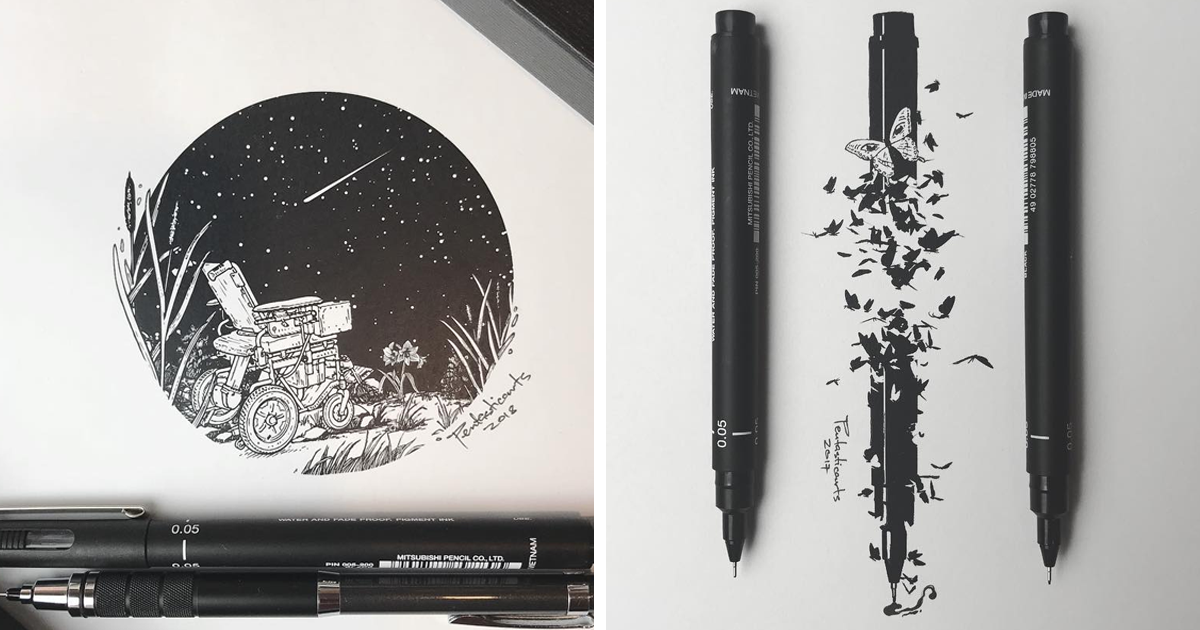
Some illustrations greet you politely. Others kick open the door, rearrange your furniture, and whisper, “You missed the real point, didn’t you?” That second category is where surreal illustration lives. It is playful, strange, unsettling, and often weirdly charming. More importantly, it rewards attention. The first glance gives you the scene. The second glance gives you the secret. The third glance is where things get personal.
This is exactly why surreal illustrations with hidden meaning are so irresistible. They do not just decorate a page or fill a screen. They create a small psychological trapdoor. One image becomes two ideas. A shadow turns into a warning. A flower becomes a memory. A staircase transforms into anxiety wearing decent shoes. Viewers are not only looking at art; they are decoding it. And let’s be honest, humans love feeling like detectives in a gallery-shaped mystery.
What makes surreal artwork so powerful is its ability to combine dream logic, symbolic art, visual storytelling, and emotional tension without spelling everything out in bold neon letters. The best surreal illustrations trust the audience. They leave clues. They hint. They hide meaning in plain sight and let the viewer do that delicious little mental double take.
Why Surreal Illustrations With Hidden Meaning Work So Well
Surreal illustrations thrive on contradiction. They can be beautiful and uneasy, funny and sad, literal and metaphorical all at once. A fish floating through a bedroom is not just a fish floating through a bedroom. It might represent grief, memory, suffocation, escape, or the feeling of trying to answer emails before coffee. In surreal visual storytelling, ordinary objects stop behaving like obedient objects and start acting like emotional informants.
That is why hidden meaning art keeps people staring longer. Viewers are drawn in by the dreamlike drawings, but they stay for the symbolism. A face made of windows suggests emotional distance. A tree growing through a rib cage hints at resilience or pain. A cracked teacup holding the moon says, in the gentlest possible way, “You are fragile, but somehow still carrying the impossible.”
In other words, surreal illustrations succeed because they make the invisible visible. Thoughts, fears, nostalgia, loneliness, hope, identity, burnout, and transformation all become image-ready. When done well, surreal artwork does not feel random. It feels inevitable, like the subconscious finally got a turn at art direction.
30 Surreal Illustrations and the Hidden Meaning Behind Each One
- A girl watering a cloud in her kitchen. On the surface, it is whimsical. Look closer, and it becomes a portrait of emotional maintenance. The cloud represents sadness, worry, or memory, and watering it suggests the strange way people sometimes nurture the very feelings they are trying to outgrow.
- A man with a birdcage for a head, door wide open, bird still inside. This illustration is about self-imposed limits. Freedom is available, but fear has made the cage feel like home. It is a tidy visual metaphor for hesitation, comfort zones, and the exhausting habit of waiting for permission.
- A staircase spiraling upward inside a coffee cup. This image speaks to ambition in miniature. Daily routine becomes a climb. The cup suggests energy, pressure, survival, and modern hustle culture. It asks whether we are building a life or just caffeinating our way through an elegant panic.
- A woman sewing stars back into a torn night sky. Hidden beneath the beauty is the labor of healing. This illustration turns recovery into handiwork. It says that restoration is not magical; it is manual. Someone has to sit there, thread by thread, and mend the darkness.
- A child opening an umbrella indoors while fish rain from the ceiling. This one captures overwhelm through absurdity. The fish symbolize thoughts, obligations, or emotional noise arriving all at once. The umbrella is preparation, but also innocence: the belief that one small tool can save you from an impossible forecast.
- A face reflected in a mirror, but the reflection is older. Here, time becomes visible. The image hints at identity, regret, and future self-awareness. It suggests that even when we look at ourselves in the present, we are haunted by who we were and who we are becoming.
- A city skyline growing from the roots of a sleeping person. This surreal illustration turns dreams into infrastructure. Hidden meaning lives in the idea that ambition, culture, pressure, and productivity are built on the invisible interior lives of people who rarely get to rest for real.
- A giant moth carrying a tiny streetlamp through the woods. Moths are drawn to light, but here the moth carries the light itself. That reversal suggests longing transformed into responsibility. It is about becoming the thing you were once searching for, which sounds inspiring until you realize how heavy that lamp must be.
- A dinner table where everyone’s plates hold little houses instead of food. Domesticity becomes hunger. This illustration explores the emotional cost of stability, family expectations, and the way “home” can nourish people or quietly consume them. It is cozy on the outside and existential in the center.
- A whale swimming through a library ceiling. This image pairs knowledge with depth. The whale symbolizes memory, silence, and emotional vastness, while the library stands for order and intellect. Together, they suggest that our most important truths are often too large to fit inside neat categories.
- A hand pulling a zipper down the side of a mountain. Hidden meaning enters through revelation. Nature becomes costume, or reality becomes surface. The illustration hints that what looks stable and solid may be only a layer, and that discovery often feels more unsettling than comforting.
- A girl made of flowers with one mechanical arm. Softness and machinery collide here. The image resists the idea that vulnerability and resilience are opposites. Instead, it suggests people can be bruised, blooming, exhausted, and incredibly capable at the same time.
- A fox wearing a business suit, carrying a briefcase full of feathers. This one leans funny before it turns sharp. It explores identity performance: the masks people wear to move through professional life while carrying the evidence of their instinctive, untamed selves in secret.
- A moon hanging from a clothesline with socks and shirts. Cosmic wonder gets domesticated. The hidden meaning is about routine shrinking mystery, but also about tenderness. Even the grandest things in life eventually get folded into everyday existence, which is either beautiful or mildly depressing depending on laundry day.
- An apartment hallway where each door opens into a different season. This illustration captures emotional unpredictability. Each door suggests a mood, memory, or phase of identity. It says that interior life is not a single stable climate. It is a whole weather system with terrible consistency.
- A woman combing seaweed from her hair while standing in a dry desert. Here, environments collide to show displacement. The hidden meaning points to homesickness, migration, or the feeling of carrying one world inside your body while living in another that never quite fits.
- A clock whose hands are tiny human legs running in circles. Time is no longer measured; it is exhausted. This surreal artwork makes burnout visible. It suggests that time pressure is not abstract at all. It is physical, repetitive, and always one deadline away from becoming a cardio event.
- A boy planting keys in a garden and growing doors. This is one of the gentler metaphors. Keys represent choices, access, and curiosity. Doors growing from the ground imply that opportunities are cultivated, not found. It is about imagination, patience, and the strange architecture of possibility.
- A train made of books moving through a tunnel shaped like an ear. Knowledge becomes communication. The hidden layer here is about stories as transport. Reading is not passive; it delivers voices into us. The ear-shaped tunnel reminds us that understanding begins with listening, not just looking smart in public.
- A woman painting a window onto a wall, but the paint becomes a real sky. This illustration is about creative power and survival. Art is not decoration here. It is an exit, a coping mechanism, a rebellion against confinement. Sometimes imagination is less fantasy than emergency architecture.
- A wolf made of smoke curled around a sleeping baby. At first it seems protective, then ominous. That ambiguity is the point. The wolf can represent instinct, inherited fear, or the primal uncertainty of parenthood. Love and terror often share a surprisingly awkward apartment.
- A violin with tree branches instead of strings. Music becomes growth. The hidden meaning lies in the idea that expression is organic, seasonal, and sometimes unruly. Creativity does not always obey technique. Sometimes it behaves more like weather, roots, sap, and an unreasonable amount of waiting.
- A man ironing wrinkles out of a map. This is about control, planning, and the fantasy that life can be flattened into clarity. Maps imply certainty, but wrinkles suggest history, damage, and lived experience. The illustration asks whether we seek direction or just cleaner-looking confusion.
- A woman carrying a fishbowl where the water is made of stars. Fragility and wonder occupy the same container. The fishbowl symbolizes limitation; the stars symbolize inner vastness. The hidden meaning is that people often carry universes inside forms the world mistakes for something small.
- A row of mannequins casting shadows shaped like dancing humans. This image explores authenticity. The mannequins are stiff, polished, performative. Their shadows reveal life and spontaneity. It is a reminder that what appears controlled and composed on the outside may conceal movement, desire, and messy humanity.
- A lighthouse standing in the middle of a living room. The home becomes a signal tower. Hidden meaning lives in emotional labor: the role of the person who guides, steadies, warns, and glows for everyone else while pretending the furniture arrangement is totally normal.
- A bouquet of balloons tied to an anchor. Opposing forces make this image memorable. It is about hope versus history, desire versus reality, elevation versus weight. In practical terms, it is what happens when optimism and baggage agree to share transportation.
- An eye with curtains pulled halfway closed. This one plays with perception itself. Seeing becomes selective. The hidden message is about denial, privacy, and the ways people manage truth by controlling how much of it is allowed onstage at once.
- A paper boat sailing across a sink full of teeth instead of water. Yes, it is weird. That is why it works. Childhood innocence crosses anxiety, danger, and vulnerability. The paper boat feels delicate and temporary, which is exactly how courage often looks before anyone writes inspirational quotes about it.
- A person hugging their own shadow while the body looks away. This final image lands on reconciliation. The hidden meaning is self-acceptance, especially the difficult kind. It suggests that healing begins not when the polished self takes over, but when the rejected parts finally get invited back in.
How Hidden Meaning Turns Good Art Into Memorable Art
The difference between a merely strange image and a meaningful surreal illustration is intention. Randomness can surprise viewers, but symbolism keeps them emotionally invested. When artists use recurring objects, visual contrasts, distorted scale, negative space, or dreamlike juxtapositions, they are not just being quirky for sport. They are building a second language inside the image.
That second language is what gives symbolic illustrations staying power. A viewer may not immediately identify why an image feels haunting, tender, or oddly familiar, but the hidden structure is doing the work. The best surreal artwork functions like a riddle that also has a pulse. It invites interpretation without becoming a cold puzzle.
For artists, this means every object matters. A key is never just a key. A moth is never just a moth. A window, staircase, cloud, cage, or shadow can all become emotional shorthand. And when those symbols interact in surprising ways, viewers start projecting their own stories into the piece. That is the magic trick: the image feels personal even when it came from someone else’s imagination.
My Experience With Surreal Illustrations and Why I Keep Returning to Them
I keep coming back to surreal illustrations because they feel closer to real life than realism sometimes does. Real life is not neat. It is layered, contradictory, symbolic, and often emotionally louder than it appears from the outside. A realistic drawing can show me a face. A surreal illustration can show me the fear behind the smile, the memory behind the silence, or the hope hiding inside a ridiculous floating whale. Frankly, that is a much better deal.
What I love most is the moment when an image changes while I am still looking at it. At first I see a bird. Then I realize the bird is made of folded letters. Then I notice the letters are all blank. Suddenly the illustration is not only beautiful. It is about unsent words, distance, and all the conversations that never happened. That tiny moment of discovery feels almost electric. It is quiet, but it hits hard.
I have also found that surreal visual storytelling mirrors how memory actually works. We do not remember our lives like tidy documentaries. We remember them as fragments, symbols, sounds, exaggerated objects, strange comparisons, and emotional weather. A childhood bedroom may feel enormous in memory and tiny in real life. A single lamp, hallway, or cracked cup can hold more meaning than a hundred literal details. Surreal artwork understands this instinctively. It knows the mind is part archive, part stage set, part very dramatic raccoon sorting shiny feelings in the dark.
Another reason these illustrations stay with me is that they leave room for the viewer. They do not bully you into one interpretation. They invite you in and let your own history finish the sentence. One person sees a birdcage and thinks about anxiety. Another sees it and thinks about family expectations. Someone else thinks about migration, faith, or love. That openness is not vagueness. It is generosity.
I also admire how surreal illustrations can discuss difficult emotions without becoming heavy-handed. Loneliness can appear as a lighthouse in a living room. Burnout can look like human legs running around a clock face. Identity can become a row of mannequins with human shadows. These images are easier to enter because they do not lecture. They suggest. They trust the audience to meet them halfway.
And yes, there is humor in that too. Surreal art often understands that absurdity is part of being human. Sometimes the clearest way to express stress is to draw a staircase inside a coffee cup. Sometimes the best way to explain emotional baggage is a bouquet of balloons tied to an anchor. That oddness does not weaken the meaning. It sharpens it. Humor slips the message past your defenses and lets it land where it needs to.
If I had to explain why I believe hidden meaning art matters, I would say this: it helps us see that the invisible parts of life are still real. Thoughts shape behavior. Memories shape identity. Fear shapes routine. Desire shapes choice. Surreal illustrations turn those invisible forces into objects, spaces, creatures, and symbols we can finally look at. Once they are visible, they are harder to ignore and easier to understand.
That is why I never get tired of looking closely. A good surreal illustration does not simply show imagination. It proves that imagination can carry truth. Not the tidy kind, not the polished kind, but the crooked, layered, honest kind that tends to hide in shadows, reflections, and impossible skies. And if that truth shows up disguised as a moon on a clothesline or a fishbowl full of stars, even better. Art has every right to be profound, but it should be allowed to be gloriously weird on the way there.
Conclusion
Surreal illustrations with hidden meaning do more than attract attention. They create participation. They ask viewers to slow down, look again, and discover the emotional architecture beneath the surface. Whether the image uses symbolism, dream logic, visual contrast, or playful absurdity, the goal is the same: to reveal something that ordinary representation often misses. The best surreal artwork does not just decorate the imagination. It challenges it, stretches it, and occasionally sneaks up behind it wearing a moth costume.
If you want your surreal illustrations to linger in people’s minds, do not just aim for strange. Aim for layered. Give every object a job. Let mood and meaning share the same frame. Hide something honest inside something impossible. That is when dreamlike drawings stop being clever and start being unforgettable.











