
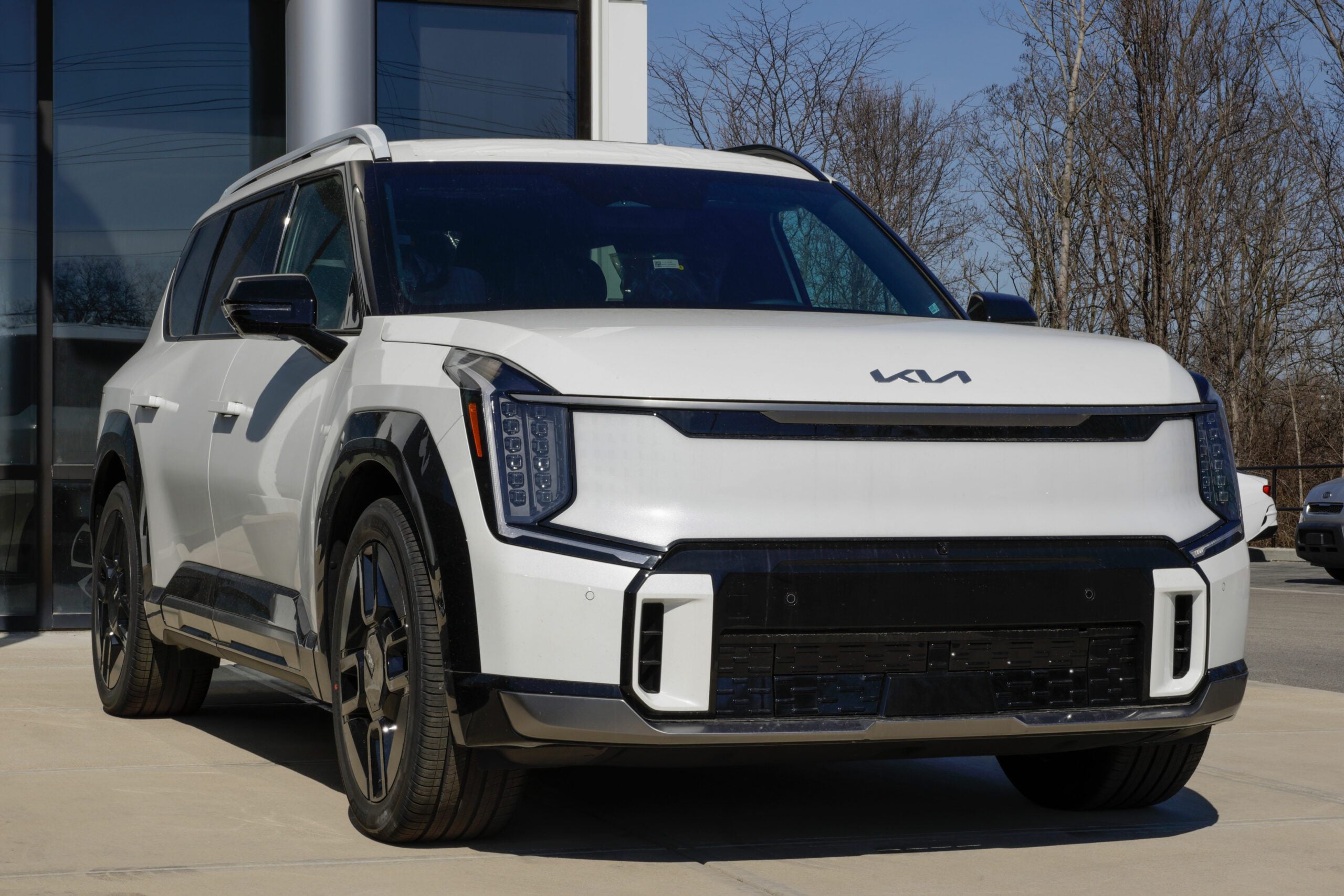
When your dashboard decides to take a coffee break, that is not a “minor tech quirk.” It is a safety problem. Kia America has recalled approximately 14,163 EV9 electric SUVs because the digital instrument cluster can go blank, leaving drivers without key information such as speed, warning lights, odometer readings, and turn signal indicators. In plain English: the car may still drive, but the screen that tells you what the car is doing may suddenly act like it forgot its job.
The recall affects certain 2024 Kia EV9 vehicles and one 2025 Kia EV9 sold in a U.S. territory. The issue is tied to a software logic error in the instrument cluster system. According to federal recall documents, the affected vehicles may fail to comply with Federal Motor Vehicle Safety Standard No. 101, “Controls and Displays,” because required telltales and indicators may not be visible when the cluster goes blank.
This article breaks down what happened, which vehicles are affected, why the problem matters, what Kia is doing to fix it, and what owners should do next. No panic requiredjust a little practical dashboard diplomacy.
What Is the Kia Instrument Panel Recall About?
The recall centers on the Kia EV9’s digital instrument cluster, the screen directly in front of the driver. This is where drivers expect to see the basics: speedometer, odometer, warning lights, turn signal indicators, gear status, and other vehicle information. In affected vehicles, that screen may intermittently go blank at vehicle startup.
The problem is not that the EV9 suddenly loses all mechanical or electrical function. The deeper concern is visibility. If the cluster is blank, the driver may not be able to see legally required and safety-critical information. Imagine driving at night and your dashboard turns into a black rectangle of mystery. That is not the futuristic electric-vehicle experience most people signed up for.
Kia’s internal campaign number for this recall is SC326, and the NHTSA recall number is 24V757. The remedy is an updated instrument cluster software package, performed either through an over-the-air update or by a Kia dealer free of charge.
Which Kia Vehicles Are Affected?
The recall covers approximately 14,163 Kia EV9 vehicles. The affected population includes certain 2024 model-year EV9 vehicles manufactured from September 25, 2023, through May 27, 2024, plus one 2025 model-year EV9 manufactured on August 6, 2024, for a U.S. territory.
Because affected vehicles were not produced in exact VIN sequence, owners should not rely only on model year, trim, paint color, or “my neighbor’s EV9 is fine” logic. The smart move is to check the vehicle identification number, also known as the VIN, through Kia, a Kia dealer, or the National Highway Traffic Safety Administration recall lookup tool.
Quick Recall Snapshot
| Recall item | Kia EV9 instrument panel / instrument cluster screen |
|---|---|
| Estimated affected vehicles | 14,163 |
| Model years | 2024 and limited 2025 EV9 vehicles |
| NHTSA recall number | 24V757 |
| Kia campaign number | SC326 |
| Main concern | Instrument cluster screen may go blank at startup |
| Repair | Free software update by dealer or over-the-air update |
Why a Blank Instrument Panel Is a Real Safety Issue
A dashboard is not just decoration. It is the car’s communication center. When it works, most drivers barely notice it. When it fails, suddenly you realize how much information you depend on every second.
A blank instrument panel can hide the speedometer, warning lights, odometer, turn signal indicators, and other telltales. That means a driver may not know how fast the vehicle is traveling, whether an important warning has appeared, or whether certain indicators are active. In a school zone, on a freeway ramp, in bad weather, or during heavy traffic, that missing information matters.
The risk is not that every affected vehicle will crash. The risk is that a missing driver display can increase the chance of unsafe decisions. Driving without a visible speedometer is like baking without a temperature setting: technically possible, but not exactly recommended unless you enjoy surprises.
What Caused the Kia EV9 Instrument Cluster Failure?
The issue appears to be software-related. Recall documents describe a communication error within the instrument cluster at vehicle startup due to a software logic error. Kia’s safety review also connected the blank-screen condition to an over-the-air software update released in August 2024. That earlier update was intended to address a quality issue involving an erroneous system-check pop-up message, but it may have unintentionally caused portions of the cluster screen to become blank during startup.
This is one of the realities of modern vehicles. Today’s cars are rolling computers with wheels, seats, batteries, sensors, and enough software to make your old desktop feel like a toaster. Over-the-air updates are convenient, but when software controls important vehicle displays, bugs can become safety recalls.
Kia discontinued the problematic update and developed improved software for the instrument cluster. The fix is designed to prevent the screen from becoming intermittently blank.
How Kia Plans to Fix the Problem
Kia will update the instrument cluster software free of charge. Depending on the vehicle and owner setup, the fix can be completed in one of two ways:
- Over-the-air update: Eligible vehicles with active Kia Connect service may receive a prompt on the infotainment screen. The driver can follow the instructions to install the software update.
- Dealer software update: Owners who do not have an active Kia Connect account, prefer not to use OTA updates, or need assistance can schedule service with an authorized Kia dealer.
Kia’s owner notice states that dealer service for this recall may take approximately one to two hours, though the vehicle may be at the shop longer depending on scheduling. Translation: bring patience, maybe a podcast, and avoid making a dentist appointment 40 minutes later.
What Owners Should Do Now
If you own or lease a Kia EV9, the first step is simple: check your VIN. Recall eligibility depends on the exact vehicle, not just the badge on the tailgate. Owners can contact Kia Customer Care, speak with a local authorized Kia dealer, or check with NHTSA.
If the instrument cluster goes blank at startup, Kia’s owner notice advises drivers to stop driving and contact Kia Roadside Assistance or an authorized dealership. The point is not to “wait and see if the screen feels better after lunch.” A blank cluster means important information is not visible, and the vehicle should be handled as a safety concern.
Owner Checklist
- Check your VIN for open recalls.
- Look for recall campaign SC326.
- Install the OTA update if your vehicle is eligible and prompts you.
- Schedule a dealer visit if OTA is unavailable or you prefer service support.
- Save receipts if you paid for a related repair before the recall notice.
- Do not continue driving if the instrument cluster is blank.
Can Owners Get Reimbursed?
Yes, in many cases. Kia’s recall documents state that owners who already paid to correct this issue before receiving the notice may be eligible for reimbursement under Kia’s reimbursement plan. Owners should keep repair orders, proof of payment, vehicle mileage at the time of repair, and documentation showing the VIN and the problem corrected.
As with any reimbursement request, paperwork matters. A vague credit-card statement that says “auto stuff” may not be enough. A detailed repair invoice is much more useful.
Why This Recall Matters Beyond Kia
The Kia EV9 recall is part of a larger trend in the auto industry: digital displays are replacing traditional gauges, and software problems can now create safety issues that once would have been purely mechanical. In older vehicles, a speedometer cable, sensor, or bulb might fail. In modern EVs, a software update can affect the entire driver display.
This does not mean digital dashboards are bad. They can be flexible, beautiful, and packed with useful information. The EV9’s interior is one reason many families are interested in it in the first place. But when screens become the primary source of legally required driving information, reliability is not optional. A gorgeous display that occasionally disappears is like a waiter who brings the dessert menu during a kitchen fire: stylish, but missing the point.
For shoppers, the lesson is not “avoid technology.” The lesson is “verify recall completion.” A recalled vehicle can still be a good vehicle once properly repaired. What matters is whether the fix has been applied.
What Used Kia EV9 Buyers Should Check
If you are shopping for a used Kia EV9, recall status should be part of your pre-purchase checklist. Ask the seller or dealer for proof that campaign SC326 has been completed. Then verify the VIN yourself. Do not assume a vehicle is updated because it is sitting on a dealership lot or because the salesperson says, “I’m pretty sure.” Pretty sure is for choosing sandwich toppings, not safety recalls.
Buyers should also test the instrument cluster during startup. Turn the vehicle on, confirm the display wakes up normally, and look for warning messages. A completed recall should give you more confidence, but documentation is still king.
How Serious Is the Recall?
This recall is serious enough to require official action, but it is also relatively straightforward to fix. The affected component is software, not a structural frame weld or a high-voltage battery fire concern. That is good news for owners, because software updates are usually faster and less invasive than parts replacement.
Still, “software-related” does not mean “ignore it.” When software prevents a driver from seeing speed, warning lights, and indicators, it crosses into safety territory. Treat the recall as important, schedule the repair promptly, and confirm completion in your service records.
Experience Section: What This Recall Feels Like for Real Drivers
For many EV9 owners, the most frustrating part of this issue is not the repair itself. It is the uncertainty. A blank instrument panel does not politely announce, “Hello, I am experiencing a software communication error.” It simply goes dark, leaving the driver staring at a dashboard that suddenly looks like an expensive tablet with a dead battery.
Imagine starting your EV9 on a busy morning. The kids are arguing over who touched whose backpack, the dog is fogging up the rear window, and your coffee is balanced in a cupholder like a tiny volcano. You press the start button, the vehicle is ready, but the driver display is blank. Now you have a question no one wants before 8 a.m.: “Can I safely drive this thing?”
That is why recalls like this create more than mechanical inconvenience. They affect confidence. Drivers want to trust that the information in front of them will be there every time. Speed, range, gear selection, warning icons, and turn signals are not luxury features. They are the basic language between car and driver. When that language disappears, even temporarily, the driving experience becomes stressful.
Some owners may be tempted to restart the vehicle, wait a few minutes, or hope the screen returns. In a driveway, that may feel harmless. On the road, however, relying on hope is not a maintenance strategy. The safer approach is to stop driving if the cluster is blank and arrange service or roadside assistance. Yes, that is inconvenient. But it is far less inconvenient than trying to explain to an officer, an insurance company, or your own nervous system why you were driving without a visible speedometer.
There is also a useful lesson here about over-the-air updates. Many drivers love OTA technology because it can fix problems without a shop visit. That convenience is real. But owners should still treat vehicle software updates differently from phone updates. If your phone update makes the weather widget weird, you can survive. If a vehicle update affects the instrument cluster, that becomes a safety issue. Owners should read update prompts, keep Kia Connect settings current when applicable, and pay attention to recall notices in the mail or email.
From a service experience perspective, this recall should be manageable. A software update is generally less painful than waiting weeks for a rare part. Dealers can perform the update, and eligible vehicles may receive it over the air. Still, owners should call ahead, provide the VIN, mention campaign SC326, and ask how long the appointment may take. A little preparation can turn a recall visit from “automotive chaos theater” into a boring errand, which is exactly what recall repairs should be.
For families considering the EV9, the recall does not automatically make the vehicle a bad choice. New models, especially tech-heavy electric SUVs, sometimes experience early software bugs. What matters is how quickly the automaker identifies the issue, communicates with owners, and provides a remedy. In this case, the key action for owners and shoppers is simple: verify that the recall has been completed. Once the update is installed, keep the record with the vehicle’s documents. Future youor a future buyerwill appreciate it.
Conclusion
The recall of roughly 14,000 Kia EV9 vehicles over failing instrument panels is a reminder that in modern cars, software is safety equipment. The affected EV9 instrument cluster may go blank at startup, hiding required driver information such as speedometer readings, odometer information, warning lights, and turn signal indicators. Kia’s fix is a free software update, available through a dealer or, for eligible vehicles, over the air.
Owners should not ignore the notice or assume the problem will politely fix itself. Check the VIN, complete the recall repair, keep documentation, and avoid driving if the display is blank. A dashboard should be boringly reliable. When it becomes dramatic, it is time for a recall appointment.
Note: This article is based on official U.S. recall information, Kia owner communications, dealer campaign details, and reputable U.S. automotive reporting available at the time of writing. Always verify your vehicle’s current recall status by VIN before scheduling service or buying a used EV9.












